

China said it would “resolutely strike” against the “Dalai Lama clique’s separatist activities” as protesters planned demonstrations in major world cities on Friday to mark the anniversary of a Tibetan uprising against Chinese rule in 1959.
The sensitive anniversary coincided with the yearly news conference of Tibet’s delegation to China’s annual meeting of parliament, under way in Beijing.

Che Dalha, Tibet’s governor, said the government would “hold a clear-cut stand against separatism, resolutely strike against the Dalai clique’s damaging and separatist activities”.
“The most important task is to protect our motherland’s frontier regions, build up our homes, absolutely not allow any groups to separate even one inch of our land from the motherland,” said Tashi Yangjen, a delegate representing the tiny Lhoba ethnic minority group of southeast Tibet.
Chinese troops marched in and took control of Tibet in 1950 in what Beijing calls a “peaceful liberation”.
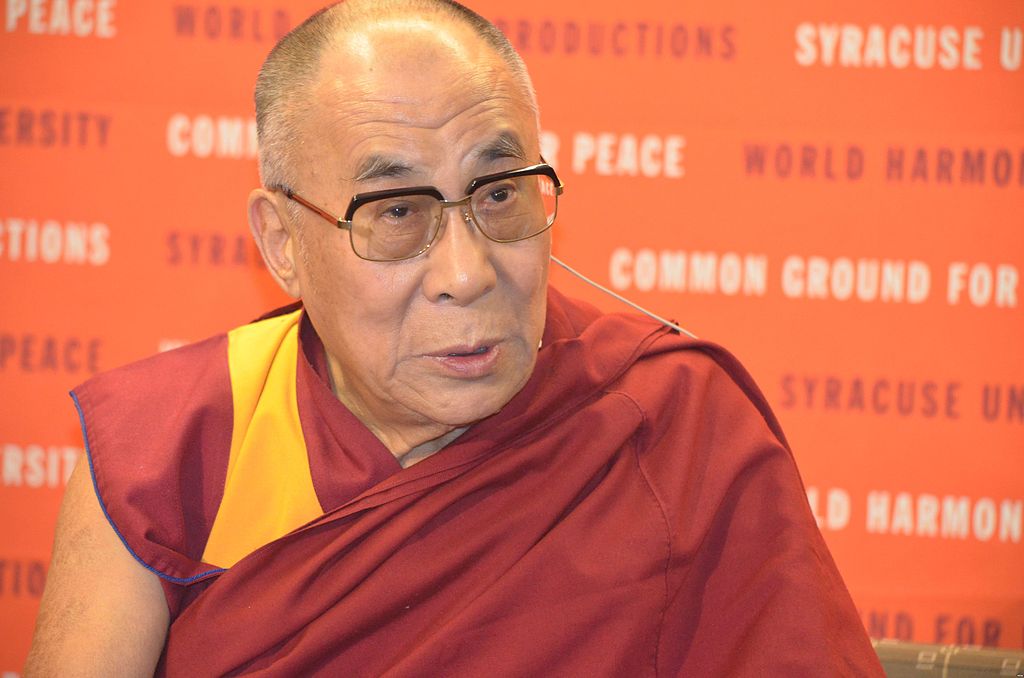
China views the Dalai Lama, Tibet’s Buddhist spiritual leader who fled into exile in India after the failed uprising, as a dangerous separatist. The Nobel Peace Prize laureate denies espousing violence and says he only wants genuine autonomy for Tibet.
International human rights groups and exiles routinely condemn what they say is China’s oppressive rule in Tibetan areas. They say pervasive surveillance and displays of military force are being used to intimidate and quell dissent, which has included Tibetan Buddhist monks self-immolating in protest at lack of religious freedoms.
Sophie Richardson, China director at Human Rights Watch, said Chinese authorities were again shutting off travel and holding military parades “to bully the Tibetan population into silence”.
“Progress on human rights is only going to happen if the Chinese government replaces its intimidation tactics with a more open approach to information, expression and peaceful dissent,” she said.
Foreign journalists are not allowed to travel to Tibet without government approval, while all foreigners have been barred from entering during sensitive periods.
Tibet’s most senior Communist Party official, Wu Yingjie, said foreign reporters were welcome as long as “they objectively and accurately report the changes in Tibet, the blissful lives of the masses, Tibet’s ethnic unity and religious harmony”.
International Protests
In Sydney, 200 protesters marched through the central business district to the Chinese consulate to protest against the lack of human rights in Tibet, with larger demonstrations planned later on Friday in cities including Taipei and London.

The protesters, many dressed in traditional Tibetan chupas, waved flags and shouted “human rights for Tibet” as they made their way past shoppers and office workers.
“We hope this kind of movement might bring the message to the world that we are still under Chinese suppression,” third generation Tibetan Tashi Gyatso said.
We are now walking to the Chinese Embassy in #Brussels to call for #humanrights in #Tibet! #TibetUprisingDay pic.twitter.com/NGLvYgB91F
— Mélanie Blondelle (@M_Blondelle) March 10, 2017
Chinese university student Nancy Cao, from Shijiazhuang, the capital of Hebei province in north China, said she was confused about the protest.
“Tibet is always a part of China in our history,” said Cao, adding that the Chinese government had helped Tibet develop.
In an interview with comedian John Oliver which aired this week, the Dalai Lama said Chinese hardliners had parts of their brain missing and suggested he might be the last Dalai Lama, prompting the Chinese Foreign Ministry to brand him a “deceptive actor”.
Reporting by Philip Wen in Beijing and Benjamin Weir and Aaron Bunch in Sydney; Editing by Nick Macfie.


