

As Donald Trump prepares to take office as the 45th president of the United States Friday, Beijing will be watching closely amid fears a trade war could break out between the world’s top two economies.
Trump has repeatedly blasted China’s trade policies and threatened to slap huge tariffs of up to 45 percent on its goods, while Chinese media have countered that imports of American aircraft, smart phones, and agricultural products could suffer retaliation in any conflict.

What’s at stake for the two countries, and the global economy as a whole? And who stands to lose more?
Why is Trump so fixated on US-China trade?
The brash billionaire politician has long slammed US trade with China as lopsided and accused the country of manipulating its currency to gain an unfair advantage over US manufacturers.
While he is wrong that Beijing is keeping its currency low — the central bank now spends heavily to support the yuan and stem capital outflows — recent studies claim that the US lost 2 million jobs after China joined the World Trade Organisation.

Trump claims he can bring some of those jobs back through tougher negotiations with Beijing, but China’s ministry of commerce warned Thursday that launching a trade war “will only make both countries suffer”.
Who stands to lose more?
On the face of it, China: it maintains a huge trade surplus with the US — roughly $30 billion per month in 2016, according to US Census data — and is in the midst of a tough economic transition that would become significantly tougher if exports plummeted.
To avoid that, Beijing is warning it could find ways to inflict maximum pain in event of a trade conflict, hinting through state media that it could retaliate against American companies that enjoy strong sales in China, such as Apple, GM, and Boeing.
American soybean exports to China would also likely take a hit, impacting Trump’s rural constituency in America’s red states.
So will it happen?
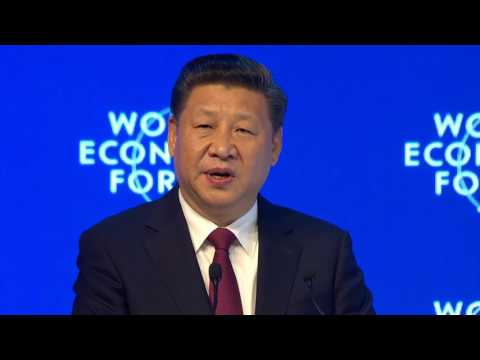
Nobody knows. But the message from China’s president Xi Jinping at Davos this week that “no one” will win in a trade war suggests an openness to compromise. And ahead of Trump’s inauguration the Ministry of Commerce said China is “willing to work” with his administration to “generate benefits for businesses and consumers on both sides”.
Trump’s secretary of commerce pick Wilbur Ross did not mention broad tariffs in his confirmation hearing, but suggested Washington could use existing rules to apply punitive measures against particular companies — a sign trade action could be less sweeping than feared.
Business leaders from both China and the US would also agitate strongly against any sharp deterioration in economic ties.
Last week’s meeting between billionaire entrepreneur Jack Ma and Trump saw the Alibaba founder pledging to create one million US jobs — a dubious promise, but music to the ears of the new administration.
Is there room for compromise?
Beijing has made some noise recently about further opening its market in a bid both to attract outside capital and to ward off criticism of an uneven playing field.
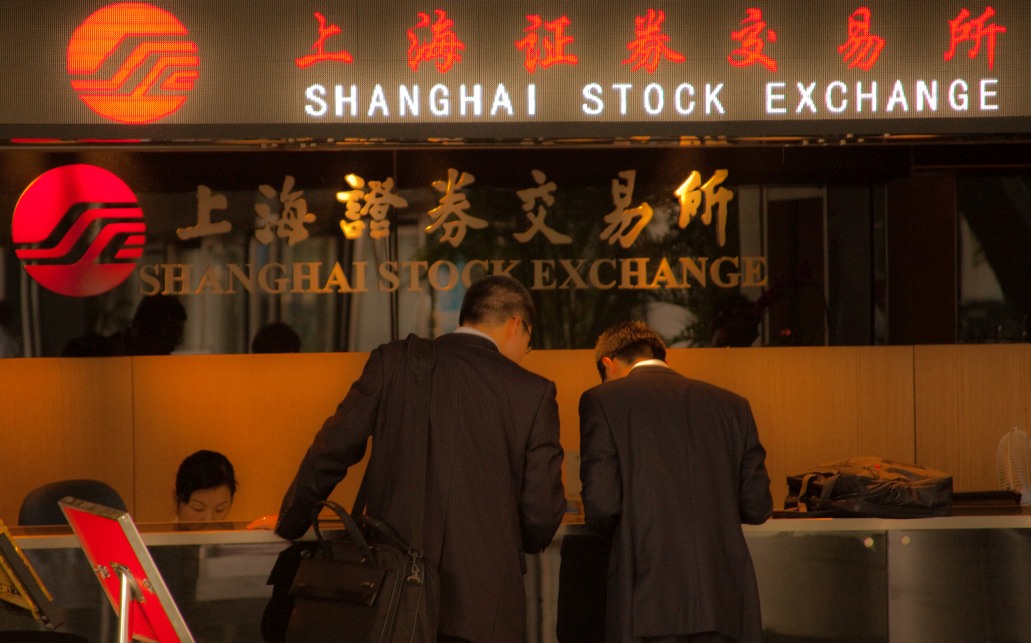
This week, China announced it would allow foreign companies to launch IPOs on its stock exchanges, and last month it said some foreign firms could operate fully-owned subsidiaries, rather than joint ventures, in sectors including rail transportation equipment and motorcycles.
Still, non-Chinese companies continue to complain about access, with 80 percent of US companies saying foreign firms feel less welcome in a recent American Chamber of Commerce in China survey.
China ranked 84th globally — behind Saudi Arabia and Ukraine — in the World Bank’s ease of doing business index for 2016, and second to last in an OECD report on restrictiveness towards foreign investment.
What next?
China’s leadership will be closely watching Trump’s first moves in office. (Though the inauguration is on Friday, he has said Monday will be day one of his administration.)
In a 100-day plan released before the election, Trump said that on his first day in office he would direct his secretary of the treasury to label China a currency manipulator.
But in a video released after Trump’s shock victory, the president-elect failed to mention the “day one” currency pledge.
He did, however, declare his intention to withdraw from the Trans-Pacific Partnership, an arduously negotiated Obama administration trade deal that Beijing detested as an effort to “contain” China.
That move, at least, could please the Communist Party leadership watching nervously in Zhongnanhai, its headquarters in Beijing.


