

China has passed a new wild animal protection law banning the sale of food from endangered species, but allowing other products to be made from them, state media said, amid controversy over its wildlife policies.
The measure, approved by China’s Communist Party-controlled parliament on Saturday, “strengthens regulation of the use of wild animals and products derived from them,” the official Xinhua news agency said.

Environmental campaigners previously slammed a draft of the law for treating animals, including tigers and bears, as commercial resources and saying it would not halt their slaughter.
The draft would “further entrench policies of captive-breeding for commercial use of parts and derivatives of captive tigers”, the Environmental Investigation Agency said.
China passed a law on wild animal protection in 1989, partly to give a framework for the export of products derived from wildlife, and it was previously revised in 2004.
The new law bans the production and sale of all food products made from endangered animals, according to a version posted on the website of the National People’s Congress, China’s rubber stamp legislature.
But it allows for “breeding and public performances” by endangered animals as well as “the sale, purchase and use” of products made from such animals, as long as permission was granted by “authoritative departments”.
It was not clear whether or how it differentiated between products and food.
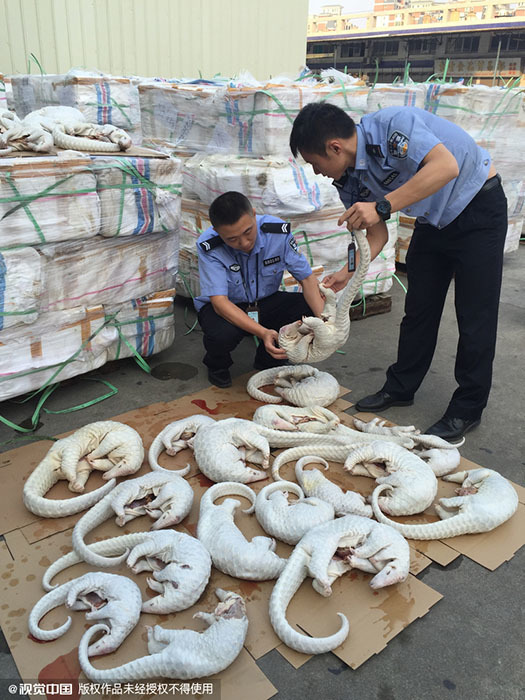
Campaigners say that legalised use of endangered species can be exploited as a cover for poaching, putting more pressure on already vulnerable animals.
Xinhua quoted official Yue Zhongming as saying under the new law “the use of wild animals and derived products should rely mainly on captive-bred animals, and it must not hurt wild populations and habitats”.
It was not immediately clear how such approvals would be managed.
Breeding of sika deer, a nationally-listed endangered animal, could be allowed as “millions have been bred under controlled conditions nationwide”, Xinhua quoted forestry official Zhou Xun as saying.
Captive tiger numbers are soaring in China, with up to 6,000 — twice the global wild population — in about 200 farms across the country, according to estimates.
Bears are also bred for use in traditional Chinese medicine — for which there is no orthodox scientific evidence — using a process to extract their stomach bile which many activists condemn as cruel.
China’s captive breeding industry is worth 7.8 billion yuan ($1.3 billion) a year, news website China Dialogue quoted expert Shi Haitao as saying last year.


