

Taiwan held the island’s first ever commemoration in parliament Friday of the 1989 Tiananmen Square crackdown as lawmakers urged the new government to address human rights issues in its dealing with China.
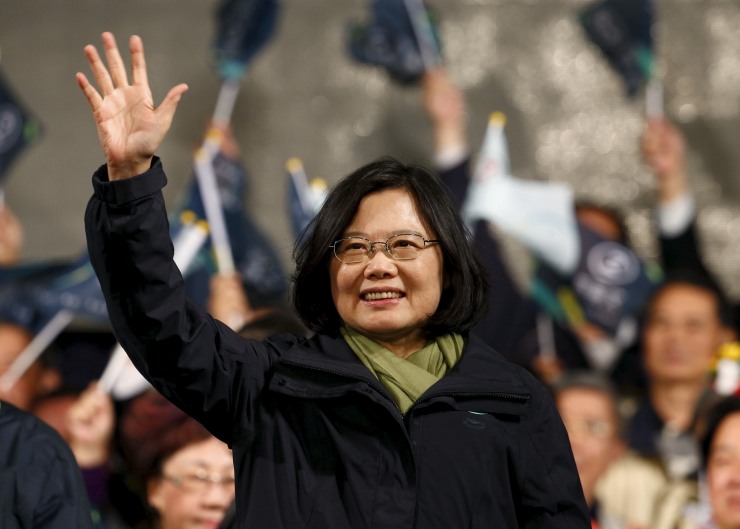
It comes weeks after China-sceptic Tsai Ing-wen was sworn in as president, succeeding Ma Ying-jeou who oversaw an unprecedented eight-year rapprochement with Beijing.

Ties have rapidly cooled since Tsai won the presidency in January, with Beijing highly distrustful of her traditionally independence-leaning Democratic Progressive Party (DPP).
In the past, Taiwan’s government has repeatedly urged China to learn lessons from the Tiananmen crackdown on pro-democracy protesters, in which more than 1,000 were killed according to some estimates.
But parliamentarians have never before gathered to voice their views.
A day ahead of the June 4 anniversary, senior lawmakers from the DPP and the Beijing-friendly Kuomintang (KMT) were joined by human rights activists and exiled Chinese dissident Wu’er Kaixi as they observed a minute’s silence.
They also signed a motion proposed by DPP lawmaker Yu Mei-nu to demand the government “express Taiwan’s serious concerns over redressing the June 4 incident at the appropriate time” in future interactions between the two sides.

“Taiwan and China have very close ties, so the suppression of human rights that happened to Chinese citizens could also threaten human rights in Taiwan,” Yu said.
KMT lawmaker Chen Shei-saint broke partisan ranks to voice his support, saying democratisation in China was “the biggest assurance for Taiwan’s security.”
Taiwan is self-ruling after splitting with China in 1949 following a civil war, but Beijing still sees it as part of its territory to be reunified.
Since Tsai took power Beijing has been pushing her to adhere to its “one China” concept.

Taiwan was left furious after its citizens were deported from Kenya and Malaysia to the mainland as part of fraud investigations, a move seen as a pressure tactic on Tsai.
For its part, the DPP this week dropped what were criticised as “China-centric” changes to the high school curriculum that triggered major protests last year while the KMT were still in power.
The repealing of the curriculum changes was criticised by Beijing, which warned Taiwan it would “shoulder the consequences for repeating the history of provoking tension and instability”.
Activists urged parliament to hold the Tiananmen commemoration every year.
“Please send a message to China’s authoritarian government that… you are standing beside pro-democracy campaigners and that you are different from the Chinese government,” said Wu’er, a prominent student leader in 1989 now living in exile in Taiwan.
Also speaking in parliament, Yang Sen-hong, chairman of Taiwan Association for China Human Rights, said Taiwan should “bravely tell (China) to stop the terror and end the disaster, otherwise Taiwan will suffer too”.


