Advertisement
Advertisement

Asia

Thailand's prime minister vows continued military action against Cambodia

Thai Prime Minister Anutin Charnvirakul's remarks come despite earlier claims by US President Donald Trump that he had brokered a ceasefire between the two nations.

Thailand's prime minister vows continued military action against Cambodia
Girls sit behind a tractor on the way to a refugee camp as they are evacuated amid deadly clashes between Thailand and Cambodia along a disputed border area, in Chong Kal, Oddar Meanchey Province, Cambodia, Dec 10, 2025. (Photo: REUTERS/Kimsee more
Read a summary of this article on FAST.
FAST

Thai Prime Minister Anutin Charnvirakul vowed on Saturday (Dec 13) to continue military action against Cambodia, despite earlier claims by United States President Donald Trump that he had brokered a ceasefire between the two nations.

“Thailand will continue to perform military actions until we feel no more harm and threats to our land and people," he said in a Facebook post.

The latest bout of unrest, which erupted on Dec 7, has killed at least 20 people, with more than 260 wounded, according to tallies by both countries.

It is the deadliest since five days of fighting in July that killed dozens before a shaky truce was agreed, following intervention by Trump. Thailand and Cambodia have blamed each other for reigniting the conflict.

Cambodia said on Saturday that Thailand continued dropping bombs on its territory.

"On December 13, 2025, the Thai military used two F-16 fighter jets to drop seven bombs" on a number of targets, the Cambodian defence ministry said in an X post.

"Thai military aircraft have not stopped bombing yet," it said. The strikes could not be independently verified.

Trump had announced on Friday that Bangkok and Phnom Penh had agreed to renew a truce, following calls with Anutin and Cambodian Prime Minister Hun Manet.

“They have agreed to CEASE all shooting effective this evening, and go back to the original Peace Accord made with me, and them, with the help of the Great Prime Minister of Malaysia, Anwar Ibrahim,” Trump said in his Truth Social post.

Thailand and Cambodia dispute the colonial-era demarcation of their 800km frontier, where competing claims to historic temples have spilled over into armed conflict.

Amid the rising tensions, Cambodia pulled its entire sporting delegation out of the 33rd SEA Games on Wednesday morning, citing safety reasons.

Anwar said early on Saturday that Malaysia will convene a special meeting of Association of Southeast Asian Nations (ASEAN) foreign ministers over the situation.

"As ASEAN Chair, Malaysia will convene a Special ASEAN Foreign Ministers’ Meeting soon, in a way to assess the situation and support de-escalation measures," Anwar wrote in a Facebook post.

Malaysia stands ready to support de-escalation efforts, "protect civilians and help restore regional stability", he added.

Source: Agencies/ws

Sign up for our newsletters

Get our pick of top stories and thought-provoking articles in your inbox

Subscribe here
Inbox
FAST
Advertisement

East Asia

North Korea acknowledges its troops cleared mines for Russia

Pyongyang has reportedly sent thousands of troops to fight for Moscow as it presses ahead with its nearly four-year invasion of Ukraine.

North Korea acknowledges its troops cleared mines for Russia

Russian and North Korean soldiers take part in demining training in the Kursk region, in this still image taken from a video released on Nov 14, 2025. (Photo: Handout via Reuters/Russian Defence Ministry)

Read a summary of this article on FAST.
FAST

PYONGYANG: North Korea sent troops to clear mines in Russia's Kursk region earlier this year, leader Kim Jong Un said in a speech carried on Saturday (Dec 13) by state media, a rare acknowledgement by Pyongyang of the deadly tasks assigned to its soldiers there.

Pyongyang has sent thousands of troops to fight for Moscow as it presses ahead with its nearly four-year invasion of Ukraine, according to South Korean and Western intelligence agencies.

Analysts say Russia is giving North Korea financial aid, military technology, food and energy supplies in return, allowing the diplomatically isolated nation to sidestep tough international sanctions on its nuclear and missile programmes.

Hailing the return of an engineering regiment, Kim noted that they wrote "letters to their hometowns and villages at breaks of the mine-clearing hours", according to the Korean Central News Agency (KCNA).

The regiment suffered the "heartrending loss of nine lives" during the 120-day deployment that started in August, Kim said in a speech at a welcome ceremony on Friday, KCNA reported.

He awarded the deceased soldiers state honours to "add eternal lustre" to their bravery.

"All of you, both officers and soldiers, displayed mass heroism overcoming unimaginable mental and physical burdens almost every day," Kim said.

The troops had been able to "work a miracle of turning a vast area of danger zone into a safe and secure one in a matter of less than three months".

North Korea only confirmed in April that it had deployed troops to support Russia and that its soldiers had been killed in combat.

Images released by KCNA showed a smiling Kim embracing returned soldiers, some in wheelchairs, at the grand ceremony in Pyongyang on Friday.

Source: AFP/ws

Sign up for our newsletters

Get our pick of top stories and thought-provoking articles in your inbox

Subscribe here
Inbox
FAST
Advertisement

Commentary

Commentary: Why North Korea is modernising its conventional arsenal

Russia’s war economy is fuelling Pyongyang’s most ambitious military upgrade in decades, says an academic.

Commentary: Why North Korea is modernising its conventional arsenal

In this photo provided by the North Korean government, North Korean leader Kim Jong Un, center, supervises artillery firing drills in North Korea on March 7, 2024. (Korean Central News Agency/Korea News Service via AP, File)

Read a summary of this article on FAST.
FAST

BOSTON, Massachusetts: For North Korea's nuclear arsenal, 2025 has been a relatively quiet year. It neither tested a nuclear weapon nor fired an intercontinental ballistic missile. 

The story is different with regard to its conventional arsenal. North Korea kick-started an ambitious modernisation programme by unveiling its biggest warships yet, upgrading its tanks, producing a new type of artillery shell, introducing AI-enhanced suicide attack drones and launching new air defence systems.

North Korean Chairman Kim Jong Un also promised to equip the air force with “new strategic military assets”.

Since the end of the Cold War, North Korea has neglected its conventional forces in pursuit of a nuclear deterrent to compensate for the growing military gap with South Korea. North Korea’s defence industry operational rate decreased from 50 per cent in the mid-1980s to approximately 20 per cent in 1991 due to economic hardship.

The collapse of the Soviet Union deprived Pyongyang of a reliable supply of spare parts and expertise for maintenance and upgrading of its conventional arsenal. Russia, with its equidistant policy towards both Pyongyang and Seoul, did not assume the Soviet Union’s role as North Korea’s main arms supplier.

REVIVAL OF NORTH KOREA’S DEFENCE INDUSTRY

North Korea acknowledged the dire state of its conventional arsenal. In 2017, it laid out five modernisation priorities for its force and declared that the push for a nuclear missile deterrent was “complete”.

However, a lack of expertise and capital meant modernisation was not prioritised over nuclear forces. North Korea’s conventional arsenal still relies on decades-old Cold War era weaponry that is no match for that of the South.

But North Korea’s fortunes changed when it inked an alliance treaty with Russia in June 2024. Thanks to an influx of Russian capital, estimated at between US$5.6 billion and US$9.8 billion, North Korea’s defence industry is being revived to meet Russia’s needs for its war against Ukraine.

North Korean arms factories are producing a diverse array of weapons systems for export, including artillery shells, self-propelled guns, short-range ballistic missiles and rocket launchers. Pyongyang keeps some of these systems for domestic use too.

Russian expertise and the experiences of North Korean soldiers fighting in Kursk are guiding North Korea’s conventional modernisation. North Korean troops familiarised themselves with the use of drones in modern combat and encouraged the government to accelerate a new AI drone programme and new air defence platforms. 

First-hand experience with North Korean artillery shells on the battlefield also prompted development of a new type of shell. Russian mechanised assaults against Ukraine demonstrated the importance of electronic warfare and additional armour for modern tanks, which North Korea’s fleet of T-54/55 and T-62 tanks lack. North Korea introduced new tanks with modern electronic warfare equipment in its military parade in October.

MORE OPTIONS FOR ESCALATION

The influx of cash and expertise spilled over into other areas of North Korea’s conventional arsenal too. North Korean naval modernisation is a case in point. The new Choe Hyon class destroyers primarily serve a political goal and are vulnerable to attack on the open ocean, but they are relatively modern vessels that can carry tactical ballistic missiles and land attack cruise missiles.

While still early, the extent of air force modernisation beyond the current fleet of MiG-21s, MiG-29s, and Su-25s will demonstrate how Pyongyang will counter US-South Korean plans to use stealth fighters for pre-emptive strikes.

North Korea’s conventional modernisation should not be taken as a departure from its pursuit of a nuclear deterrent. Indeed, it can reinforce it by offering North Korea options that don't require nuclear escalation.

Increasing the threat that North Korea’s long-range artillery and short-range ballistic missiles pose to Seoul and its vicinity offers North Korea a non-nuclear deterrent. At the same time, a modernised conventional force can showcase North Korean capabilities to foreign clients beyond Russia.

For now, the conventional military balance is still in Seoul’s favour, but North Korea has signalled that it will double down on the conventional force. A conventional arms race between the two Koreas will spill over to the nuclear arms race. North Korean attempts to build a nuclear-powered submarine and South Korea obtaining US approval for a similar programme is a harbinger of more arms racing to come.

Khang Vu is a visiting scholar in the Political Science Department at Boston College. This commentary first appeared on Lowy Institute’s blog, The Interpreter.

Source: Others/el

Sign up for our newsletters

Get our pick of top stories and thought-provoking articles in your inbox

Subscribe here
Inbox
Advertisement

Asia

Thai PM Anutin says no ceasefire with Cambodia despite Trump call

Thai Prime Minister Anutin said US President Trump told him he wanted peace and for Thailand to halt operations and return to a previously agreed ceasefire.

Thai PM Anutin says no ceasefire with Cambodia despite Trump call

US President Donald Trump (left) on Dec 10, 2025, and Thailand's Prime Minister Anutin Charnvirakul on Oct 30, 2025. (Photos: AFP/Andrew Caballero-Reynolds/Anthony Wallace)

Read a summary of this article on FAST.
FAST

BANGKOK: Thai Prime Minister Anutin Charnvirakul said on Friday (Dec 12) there was no ceasefire yet with Cambodia and fighting was ongoing.

Anutin was responding to a question from a reporter moments after briefing the media on his telephone call with United States President Donald Trump.

He also said that he told Trump that Thailand was not the aggressor in its conflict with Cambodia and was protecting its sovereignty and people.

Anutin said Trump told him he wanted peace and for Thailand to halt operations and return to a previously agreed ceasefire.

Heavy border clashes between Thailand and Cambodia have continued for a fifth day. The two countries have been exchanging rockets and artillery at multiple locations along their disputed 817km frontier. 

The recent clashes are some of the most intense since a five-day battle in July that killed dozens before the two agreed on a ceasefire that was brokered by Trump.

This week's clashes have killed at least 20 people, with more than 260 wounded, according to tallies by both countries, which have blamed each other for reigniting the conflict.

Source: Reuters/co

Sign up for our newsletters

Get our pick of top stories and thought-provoking articles in your inbox

Subscribe here
Inbox
Advertisement

analysis East Asia

5 takeaways from China’s Central Economic Work Conference as Beijing maps its 2026 growth path

Analysts say the key meeting offers fresh clues about where China sees its biggest pressures as it faces up to domestic and external headwinds.

5 takeaways from China’s Central Economic Work Conference as Beijing maps its 2026 growth path
An employee at a business centre watches the Chinese national flag being raised, in Beijing, China, on Aug 26, 2025. (Photo: Reuters/Maxim Shemetov)
New: You can now listen to articles.

This audio is generated by an AI tool.

Read a summary of this article on FAST.
FAST

SHENZHEN: China has offered its clearest signal yet of how policymakers intend to steer growth in 2026, wrapping up its annual Central Economic Work Conference (CEWC) with a familiar message of confidence, stability and resilience, say analysts.

Held from Dec 10 to 11 in Beijing, the agenda-setting meeting - attended by the country's top leaders - took stock of the economy and laid out policy priorities for the year ahead.

Many of the commitments reaffirmed existing policy pledges such as boosting domestic demand and stabilising foreign investment, underscoring Beijing’s focus on continuity and fine-tuning rather than sweeping new measures.

At the same time, analysts say the readout offers fresh clues about where the world’s second-largest economy sees the biggest pressures - and where it believes growth can still be sustained - as it navigates a challenging domestic landscape and an uncertain external environment.

“The main focus this year and the difference from before is more alignment with the long-term economic target rather than short-term stimulus,” Wang Dan, China director at Eurasia Group, told CNA.

Here are five key takeaways from the conference:

BANKING BIG ON EXPORTS

Exports received only a passing mention in this year’s readout, with the sole explicit reference tied to support for services exports.

Rather than signalling a reduced emphasis, analysts said the language points to exports continuing to play a central role in supporting growth.

“The whole tone of the communique shows an implicit confidence in exports,” said Wang, pointing out how the current model is “very much reliant” on exports.

“Since two years ago, exports have been essentially the only real economic driver.” 

Wang said that without major fiscal or monetary stimulus, domestic demand has generated little growth in consumption and investment, despite Beijing’s efforts to boost it. 

Analysts say exports will continue to play a central role in supporting China's growth. (File photo: China Daily via Reuters)

Official customs data show China’s trade surplus reached US$1.08 trillion in the first 11 months of 2025, underscoring how external demand has continued to anchor growth.

But the strategy comes with growing risks. As Chinese firms push exports and overseas investment to sustain momentum, trade frictions are likely to intensify, warned analysts.

“When the growth engine is so much on exports, that means 2026 is going to see more trade disputes between China and the rest of the world - and it’s not just with the US, but also Europe (and) emerging markets,” Wang said.

In the first 11 months of the year, China’s exports rose 6.2 per cent from a year earlier, customs data showed.

Stronger shipments to Europe, Southeast Asia and Africa - up 8.9 per cent, 14.6 per cent and 26.3 per cent respectively - more than offset an 18.3 per cent drop in exports to the United States over the same period.

China’s widening trade surplus was reportedly a key issue during French President Emmanuel Macron’s visit to China in early December.

“I told them that if they do not respond, we Europeans will be forced, in the coming months, to take strong measures - just as the United States has done, such as tariffs on Chinese products,” Macron told French business newspaper Les Echos in an interview published on Dec 7.

Hannah Liu, China economist at Nomura, questioned the sustainability of Beijing’s export-driven model.

“A large share of China’s industrial exports has squeezed the market share of European manufacturers,” she told CNA. “Geopolitical developments may increasingly constrain China’s export momentum.”

China’s export growth is likely to slow after an exceptional run, she added.

“We do not expect negative export growth next year … but the 5 to 6 per cent growth rate this year may fall slightly to around 4 per cent,” Liu said.

STABILISING THE PROPERTY SECTOR

Mention of the property sector was notably absent from the official readout of a Dec 8 Politburo meeting that preceded the CEWC and traditionally sets the tone for it.

Yet the property sector ended up being mentioned in the CEWC communique. The readout said policymakers would focus on stabilising the housing market, adopting city-specific measures to curb new supply, reduce excess inventory and improve housing quality.

Su Yue, chief China economist of the Economist Intelligence Unit (EIU), said the renewed mention points to a shift towards stabilisation rather than revival.

“The focus is on government-supported destocking, which can provide a floor for the housing sector,” she said.

Once a central growth engine, China’s property sector has been mired in a prolonged downturn since 2021, marked by falling sales and a string of developer defaults.

Even major state-linked firms such as China Vanke have come under financial strain, underscoring the extent of the sector’s troubles.
 

An aerial view of an unfinished residential compound developed by China Evergrande Group, in the outskirts of Shijiazhuang, Hebei province, China, Feb 1, 2024. (Photo: Reuters/Tingshu Wang)

But Su cautioned that any meaningful rebound would require fiscal spending on a scale comparable to the previous Shantytown Redevelopment Projects, which totalled about 6 trillion yuan (US$840 billion).

The nationwide initiative, rolled out after the 2008 global financial crisis, aimed to improve housing for low-income urban residents while stimulating domestic demand, and later helped drive property demand and inventory clearance in many lower-tier cities.

“Without that kind of scale, it will be difficult to achieve a clear stabilising effect on housing prices,” Su said.

Wang from Eurasia Group highlighted the call by policymakers to build “good-quality housing” as part of efforts to establish a new development model for the sector.

“The housing downturn will last longer because building ‘good housing’ is a more selective approach,” she said, noting that genuine demand remains weak and much of the existing housing inventory is likely to be left to clear on its own.

“To me, it means the government is not going to bail out real estate developers,” she noted.

Liu from Nomura believes China has not yet figured out an “effective solution” to its property sector woes.

“Signs of a stabilisation in the property market are still completely absent,” Liu added, warning that continued price declines and a prolonged downturn could still affect banks, households and the wider economy, risks Beijing appears to acknowledge.

Liu said most off-the-shelf measures have already been deployed, including easing purchase and lending restrictions, cutting mortgage rates and rolling out tools to support inventory clearance and project delivery.

She suggested that any solution for now would likely focus on clearing developers’ arrears to upstream and downstream suppliers, as well as ensuring the delivery of pre-sold homes to buyers, obligations she described as another layer of debt.

“For now, policy is likely to remain focused on debt resolution rather than revival,” she said.

CONSUMPTION SUPPORT CONTINUES

Boosting domestic demand once again topped the policy agenda, with the official readout calling for stronger consumption, higher household incomes and efforts to stabilise investment.
 

People check steamed buns in a container which they just purchased in Shanghai on Feb 28, 2025. (Photo: Reuters/Go Nakamura)

Policymakers pledged to “stick to domestic demand as the main driver”, roll out a consumption-boosting action plan, raise urban and rural incomes, expand the supply of quality goods and services, and make better use of existing subsidy programmes such as trade-ins for consumer goods.

Economists said the message was one of policy continuity rather than an escalation in support.

“The first priority is still consumption and domestic demand,” said Liu from Nomura, noting that this aligns with last year’s shift away from industrial policy towards household demand.

However, she said there is little sign of meaningful new stimulus. “Since last year, the scale of consumption-stimulus policies has already been historically large,” Liu said. 

Over the past year, Beijing has rolled out an extensive mix of fiscal and targeted monetary support, including nationwide trade-in programmes for consumer goods, expanded bond issuance and flexible monetary tools.

Trade-in subsidies for consumer goods are likely to continue, but the wording suggests limited scope for expansion, Liu said.

She pointed out that last year, China said it would “expand and scale up” trade-ins, while this year, officials only said they would make “reasonable use” of such policies.

“So further intensifying subsidies to boost consumption seems unlikely.”

Workers at a chain electronic appliance store in Shenzhen prepare to scan QR codes for customers redeeming vouchers under China’s national trade-in programme. (Photo: CNA/Melody Chan)

EIU’s Su said that closer scrutiny will likely fall on excessive local subsidies that fuel involution - a term borrowed from China’s corporate culture to describe intense, often self-defeating competition

In a reflection of policymakers’ increasing concern, the CEWC readout pledged to “deeply rectify involutionary competition”, signalling stronger scrutiny of inefficient pricing wars and excess capacity.

Su said the language reflects a firmer resolve to curb harmful competition, though risks remain.

She warned that as China pushes for stronger national security and technological self-reliance, involution could re-emerge in strategic sectors such as artificial intelligence (AI) and semiconductors.

POWERING LONG-TERM GROWTH

Chinese policymakers placed a clear bet on innovation and green energy as pillars of China’s longer-term growth strategy.

Innovation featured prominently in the agenda, following economic targets and domestic demand. 

The CEWC readout outlined plans to strengthen education, technology and talent development, expand the use of AI, upgrade industrial chains and improve governance of emerging technologies.
 

Wind turbines and solar panels are seen at a wind and solar energy storage and transmission power station of State Grid Corporation of China, in Zhangjiakou, Hebei province, China, Mar 18, 2016. (Photo: Reuters/Jason Lee)

At the same time, it stressed the need to “promote win-win development between platform companies and the operators and workers within them”.

Su said the wording signals growing recognition that technological progress, while yielding gains in productivity, can also disrupt employment.

“The explicit call for mutual benefits for both platforms and workers shows the government’s recognition of the disruptive effects technological progress can have on labour markets,” she said.

Green energy also emerged as a clearer priority. Wang noted that the CEWC readout, for the first time, called for drafting a national plan to build a “neng yuan qiang guo” or “energy-strong nation” in Chinese.

“This will be a leading priority in building the modern industrial base under the 15th Five-Year Plan,” Wang said, noting that 2026 marks the first year of the new planning cycle.

She expects more policy and financing support for new energy and carbon-related industries.

HALTING INVESTMENT DECLINE

Investment emerged as a point of concern at this year’s CEWC, with the official readout explicitly calling for efforts to “halt the decline and stabilise investment”.

The emphasis comes against a backdrop of weakening fixed-asset investment (FAI), a broad measure covering spending on infrastructure, factories, equipment and other long-term assets.

Official data from China’s National Bureau of Statistics show FAI fell 1.7 per cent year-on-year in the first 10 months of 2025, largely dragged down by the property downturn. Excluding real estate, investment rose 1.7 per cent.

The indicator captures total spending on building and purchasing fixed assets within China, including both domestic and foreign-funded projects, but does not directly measure foreign direct investment flows.

Liu from Nomura said the conference sent an unusually clear signal that policymakers recognise the severity of the slowdown.

“Since the third quarter, the decline in fixed asset investment has been almost unprecedented in recent history,” she said.

The stated objective, Liu added, is for investment growth to return to positive territory as part of a broader economic repair. However, she noted that the policy toolkit appears limited.

“There were not many new policies mentioned,” Liu said, adding that the conference largely reiterated measures rolled out earlier this year, including expanding quotas for local government special bonds and deploying new policy-based financial instruments.

“These policies will need proper follow-through.”
 

EIU’s Su said the emphasis reflects a stabilisation mindset rather than a push for aggressive expansion.

According to the official readout, leaders pledged to support growth through a more proactive fiscal stance, while keeping debt risks in check and maintaining a cautious approach to monetary policy.

Su said fiscal support is being guided by tighter discipline, with investment increasingly expected to align with longer-term structural goals rather than short-term growth targets.

Eurasia Group’s Wang said the overall approach points to containment being prioritised over stimulus.

“I don’t see any chance actually for fiscal or monetary expansion,” she said, adding that the emphasis on debt stabilisation signals that “the fiscal budget is going to be basically the same as last year”.

Source: CNA/mc(ws)

Sign up for our newsletters

Get our pick of top stories and thought-provoking articles in your inbox

Subscribe here
Inbox
Advertisement

East Asia

China says it expelled Philippine aircraft, vessels near disputed atolls

China says it expelled Philippine aircraft, vessels near disputed atolls

A China Coast Guard ship navigates near the disputed Scarborough Shoal in the South China Sea on Aug 13, 2025. (File photo: Reuters/Adrian Portugal)

Read a summary of this article on FAST.
FAST

BEIJING: China said on Friday (Dec 12) it had driven away a Philippine aircraft and multiple vessels near disputed atolls in the South China Sea, in the latest in a series of confrontations in the strategic waterway in recent years.

The Chinese military said it issued strong warnings and "expelled" a Philippine aircraft that "invaded" airspace above the Scarborough Shoal, without giving a date for the incident.

China claims almost the entire South China Sea, overlapping the exclusive economic zones of Brunei, Indonesia, Malaysia, the Philippines and Vietnam. Unresolved disputes have festered for years over ownership of various islands and features.

In a separate statement, the Chinese Coast Guard said multiple Philippine vessels entered waters near Sabina Shoal to "cause trouble and provoke incidents".

The Chinese Coast Guard said it took control measures against the vessels, including verbal warnings and forced expulsion.

The Embassy of the Philippines in Beijing, and the country's foreign ministry and maritime council did not immediately respond to requests for comment.

In 2016, the Permanent Court of Arbitration in The Hague ruled that China's sweeping claims in the region were not supported by international law, a decision that Beijing rejects.

Scarborough Shoal is one of Asia's most contested maritime features and a flashpoint for diplomatic flare-ups over sovereignty and fishing rights.

China in September approved the creation of a national nature reserve at the disputed atoll, drawing a strong reaction from Manila.

Sabina Shoal, which China refers to as Xianbin Reef and the Philippines as the Escoda Shoal, lies 150km west of the Philippine province of Palawan, well within the country's exclusive economic zone.

Source: Reuters/co

Sign up for our newsletters

Get our pick of top stories and thought-provoking articles in your inbox

Subscribe here
Inbox
Advertisement

Asia

Pricier than buses, cheaper than flights: How does Malaysia's JB-KL electric train compare to other options?

CNA’s Amir Yusof boarded the first northbound electric train from JB Sentral to Kuala Lumpur to find out.

Pricier than buses, cheaper than flights: How does Malaysia's JB-KL electric train compare to other options?

Passengers pose for photographs in front of the first Electric Train Service departing from JB Sentral on Dec 12, 2025. (Photo: CNA/Zamzahuri Abas)

New: You can now listen to articles.

This audio is generated by an AI tool.

Read a summary of this article on FAST.
FAST

JOHOR BAHRU: The mood at Johor Bahru (JB) Sentral train station on early Friday morning (Dec 12) was a mix of excitement and anticipation.

The Electric Train Service (ETS) was set to launch for members of the public, with departure scheduled at 8.40am.

At the station’s waiting area, there was fanfare as some commuters posed for photographs with the national rail operator Keretapi Tanah Melayu Berhad’s (KTMB) mascot Captain EJ - a train “driver” in a red and black superhero costume. 

Passengers pose for photographs before boarding the Electric Train Service at JB Sentral. (Photo: CNA/Zamzahuri Abas)

When the boarding announcement was made, passengers queued to scan their tickets and were given special mementos to commemorate the inaugural journey - wooden replicas of the train tickets. 

But the star of the show for many was the new ETS train - sleek, modern and aerodynamic - sitting handsomely on the tracks, ready to ferry them on their maiden ride.

The ETS is an electric, double-track line that connects key cities in peninsular Malaysia including JB, Seremban, Ipoh, Kuala Lumpur (KL) and Butterworth. 

Its final phase involved linking the line to Johor Bahru, a key transport node that would allow the service to be accessible to travellers from Singapore. 

Before this, rail passengers had to take the diesel-powered train from JB to Gemas in Negeri Sembilan, 192km away, before changing to an electric train to KL.

With Friday’s launch, they now take around four and a half hours to get from JB to KL, faster than the seven hours previously, but roughly similar to travelling by bus or car. Unlike with road travel, however, passengers can avoid traffic congestion and arrive directly in the city centre at KL Sentral.

PRICIER THAN A BUS, CHEAPER THAN A FLIGHT

A standard one-way ticket on the new route costs RM88 (S$28). That makes it pricier than most bus fares — in some cases nearly double — but still significantly cheaper than flying, at roughly a-third of the price of a domestic flight between the two cities.

Checks on the KTMB website showed that standard ticket prices range from RM88 to RM99, with costs higher during festive periods like New Year’s Day and Chinese New Year. 

Demand appeared strong: Tickets for early services were snapped up quickly.

According to KTMB, tickets for the inaugural service from JB to KL were almost sold out on Dec 9, three days before departure, with only seats for people with disabilities left for purchase. 

When buying my ticket on Dec 9, I could see the choice seats being snapped up in real time and scrambled to type in my details to complete the transaction.

Those keen on trying the ETS soon will have to plan ahead and book their seats as early as possible. 

Travellers I spoke to said they found the prices reasonable, given the comfort and time savings.

Malaysian civil servant Mohammad Noor Syaaban Bin Khamis works in Johor Bahru but commutes via ETS to Kuala Lumpur to see his family. (Photo: CNA/Zamzahuri Abas)

“Previously, I took the bus and with the travel time, long-distance ride, and traffic jams, it took a lot longer,” said civil servant Mohammad Noor Syaaban Bin Khamis, 45.

Singaporean Joseph Woo, a rail enthusiast, said the tickets were “fairly priced”. 

“I think it is good value because it takes you directly to key cities across the country - Ipoh, Seremban, KL - without the need to pass through airport security or customs,” added the 28-year-old. 

RUSTIC LANDSCAPES EN ROUTE TO KL CITY CENTRE

Inside the cabin, the experience feels more premium than the diesel-powered trains passengers are more familiar with. Seats are wide and cushioned, with individual charging ports, tray tables and sufficient legroom — features more commonly associated with flights.

However, the 2-2 seat configuration and relatively narrow train width meant the aisle was a squeeze to walk down. 

When encountering someone coming from the opposite direction, the situation becomes too close for comfort. 

Wide seats but the aisle is a bit of a squeeze. (Photo: CNA/Zamzahuri Abas)

At cruising speed, the ETS glides smoothly at around 140km/h, noticeably faster than the older diesel trains, which max out at 120 km/h. 

There is less friction on the electrified tracks, meaning there is virtually no screeching noise from the train's movement.

The air-con in the cabin was strong - perhaps excessively so as I saw fellow passengers reaching for their sweaters and jackets within an hour of the journey. A screen at the front showed that cabin temperature was around 17 degrees Celsius. 

The train offers other modern amenities: Clean toilets, a dedicated prayer room for Muslims, and a small café serving food like nasi lemak, nasi briyani and soft drinks. 

Compared to the KTMB diesel trains that used to transport passengers between Singapore and Kuala Lumpur, this feels like a huge upgrade. 

A quibble, however, is the long waiting time to buy snacks. I had to queue for 45 minutes to get a cup of coffee and a packet of nuts - perhaps KTMB can consider increasing the number of cafes across the cabins from just one presently. 

The highlight of the journey wasn’t the speed or comfort — it was the scenery, an experience that differs from travelling by bus, car or plane.

CNA's Amir Yusof enjoying the view from Johor Bahru to Kuala Lumpur on board the Electric Train Service. (Photo: CNA/Zamzahuri Abas)

Instead of the asphalt of the North-South Highway, the train passes rustic kampungs, expansive rice fields and rolling mountain landscapes, offering glimpses of rural Malaysia that road travellers rarely see. It is a whole different vibe. 

The train pulled into KL Sentral right on schedule at 1pm, and passengers disembarked after what many described as a pleasant and fuss-free trip. 

Several travellers said they appreciated the lack of airport-style checks and the convenience of arriving directly at Kuala Lumpur’s central transport hub.

Happy faces on board the Electric Train Service. Many passengers said they would be using it in future. (Photo: CNA/Zamzahuri Abas)

Those travelling via bus, for instance, may only disembark at Terminal Bersepadu Selatan, 15km from KL city centre.

Malaysian Leon Lee told me he had taken the ETS “many times” before Friday, stopping at the different cities along its route. 

“I’ve even taken the train to Padang Besar near the Thai border. It’s comfortable and relaxing, and I don’t take flights anymore (for domestic travel),” said the 53-year-old, who boarded Friday’s train in Kluang in central Johor. 

Still, not everyone feels the ETS is the most practical choice.

My colleague, visual journalist Zamzahuri Abas, acknowledged the ETS was a solid option but would still prefer to drive from JB to his hometown in Tapah, Perak. 

“Driving allows me to travel point to point, and since my family travels with a lot of luggage, it’s just easier to utilise the car,” said Zamzahuri, who has three children. 

This means the ETS has its work cut out trying to attract more passengers and to keep them coming back. 

For now, day one has set a pretty promising benchmark.

Source: CNA/am

Sign up for our newsletters

Get our pick of top stories and thought-provoking articles in your inbox

Subscribe here
Inbox
Advertisement

East Asia

Man in China jailed 4 years for poisoning and killing 9 pet dogs

The man, surnamed Zhang, had scattered toxic substances in a residential compound in Beijing.

Man in China jailed 4 years for poisoning and killing 9 pet dogs

Papi, the 13-year-old West Highland terrier that died of poisoning in 2022. (Photo: Xiaohongshu/西高地Papi妈妈)

Read a summary of this article on FAST.
FAST

BEIJING: For poisoning and killing nine dogs in a residential compound, a 65-year-old man in Beijing was sentenced to four years in jail on Thursday (Dec 11).

The man, identified by his surname Zhang, had soaked chopped chicken bones in sodium fluoroacetate, a highly-toxic substance notably used in rat poison.

Ingesting or even merely sniffing or licking a small amount can be fatal to animals and even humans, studies showed.

The cases took place back in September 2022, in Beijing’s Chaoyang district and police investigations revealed that Zhang had deliberately placed the poisoned food items in common areas like playgrounds to target pets.

A total of 11 dogs were poisoned, local media reports said. Nine died while two survived.

One of the victims was a 13-year-old West Highland terrier named Papi - whose owner, Li Yihan, has been seeking justice.

Zhang was arrested in 2022 and his trial began in 2023. But despite his swift arrest, the verdict had been repeatedly delayed, according to Chinese media reports.

During his trial, Zhang admitted to poisoning the dogs.

He vaguely explained his reasons for doing so - saying he disliked dogs and targeted them because he was angry about them urinating on his tricycle.

He also cited his granddaughter’s dislike of them.

While there are laws in place to protect wildlife, livestock and laboratory animals, there are no laws in China explicitly prohibiting general animal cruelty.

Zhang’s sentencing is Beijing’s first criminal public prosecution case involving pet dog poisoning, according to state media reports.

Similar poisoning cases have played out across the country. More than 40 dog poisonings were reported in Guangzhou last November.

In May last year, more than 20 dogs were poisoned to death in Beijing’s Fengtai District.

In a report by Chinese state broadcaster CCTV News, lawyers and experts said efforts should be made towards establishing forensic evaluation standards for pets.

JUSTICE FOR PAPI

Zhang was convicted of using and spreading dangerous substances.

Following this week’s verdict, Zhang filed an immediate appeal, according to CCTV News.

Speaking to Chinese media outlets, Li - Papi’s owner - said the case went beyond the loss of individual dogs; it raised broader questions about animal welfare and protection as well as the public safety of pet owners and thousands of households.

Li announced plans to sue the residential compound’s property management office to further pursue civil liability, said a report by the Global Times.

In a video posted on Xiaohongshu on Thursday night, Li thanked netizens for their support as well as Chinese media outlets for highlighting the cases.

“Today’s verdict is more than just a verdict on a single case. It sends a clear signal to society that under the rule of law … evil will be punished and justice will prevail,” she said.

“If it wasn’t for everybody’s attention, I don’t think I would have been able to make it till today,” she added. 

Source: Agencies/lk(ht)

Sign up for our newsletters

Get our pick of top stories and thought-provoking articles in your inbox

Subscribe here
Inbox
Advertisement

East Asia

Hong Kong leader says fire probe expected to conclude within 9 months

Hong Kong leader says fire probe expected to conclude within 9 months

A flock of egrets fly next to burned buildings of the Wang Fuk Court housing complex after the deadly fire, in Tai Po, Hong Kong on Nov 30, 2025. (File photo: Reuters/Maxim Shemetov)

Read a summary of this article on FAST.
FAST

HONG KONG: Hong Kong will seek to wrap up an independent investigation into a fire that killed at least 160 people in the Asia financial centre within nine months, the city's leader said on Friday (Dec 12).

John Lee spoke more than two weeks after the blaze ripped through seven high-rise residential towers and left the city searching for answers about the cause of the deadly tragedy, which also displaced thousands of residents.

The government has launched an independent committee to investigate the fire that erupted in the Tai Po district, close to the border with mainland China, and named Judge David Lok, who chairs the Electoral Affairs Commission, to lead the body.

"They all have the passion and the love of Hong Kong, to be so courageous to take up this responsibility and I am really thankful to them, I take my hat off to them," Lee said at a news conference.

The independent committee will need to investigate whether there is a systematic problem within the construction industry, conflicts of interest, improper collusion and determine if there is bid-rigging in the sector when it comes to awarding contracts, Lee added.

Residents are angry about the blaze that took nearly two days to extinguish after it broke out on Nov 26. Authorities have said substandard building materials used in renovating the high-rise housing estate were responsible for fuelling the fire.

Lee said the government would work with the city's legislature to "drive institutional reform" in the aftermath of the fire, as there have been some public calls and petitions seeking greater government accountability and improved oversight of the construction sector.

Eager to soothe the public's dismay, authorities have launched criminal and corruption investigations into the blaze. 

Source: Reuters/co

Sign up for our newsletters

Get our pick of top stories and thought-provoking articles in your inbox

Subscribe here
Inbox
Advertisement

East Asia

South Korea exam chief quits over complaints of too-hard tests

South Korea exam chief quits over complaints of too-hard tests

Students wait for the start of the annual college entrance exam, known locally as Suneung, at an exam hall in Seoul on Nov 13, 2025. (File photo: Pool via AFP/Kim Hong-ji)

SEOUL: The chief organiser of South Korea's notoriously gruelling university entrance exams has resigned - after complaints that an English test he designed was just too difficult.

South Korea's college entry exam, known locally as the "Suneung", is essential for admission to top universities and widely regarded as a gateway to social mobility, economic security and even a good marriage.

But this year, just over 3 per cent of exam-takers scored top marks in the English test - the lowest since absolute grading was introduced for the subject in 2018.

Students were given just 70 minutes to answer 45 questions.

One question singled out for criticism asked students to assess the political philosophers Immanuel Kant and Thomas Hobbes and analyse their views on the rule of law.

Another asked students to consider the nature of time and clocks, while another probed how the idea of existence might apply to video game avatars.

These sparked significant backlash in a country where the exam is taken so seriously that flights are grounded nationwide for 35 minutes during the English listening test to eliminate any potential noise.

In response, Oh Seung-keol, the chief of Korea's Institute for Curriculum and Evaluation, stepped down.

He felt "a heavy sense of responsibility for the English section of the test, which did not align with the principles of absolute evaluation", the institution said in a statement sent to AFP.

He also apologised for "causing concern to test-takers and their parents, and for causing confusion in the college entrance exam process".

The agency also issued a separate apology, saying it "takes seriously the criticism that the test failed to meet the appropriate level of difficulty and the goal of reducing students' academic burden".

The use of the portmanteau "culturtainment" in the test was also the source of confusion - even from the academic behind the phrase.

Stuart Moss, a senior lecturer at Leeds Beckett University in the UK, said he was "very surprised" to see the phrase featured.

"I am also of the opinion that this word should never have featured in the exam due it not being in common English usage," he said in an email reply to a South Korean test-taker reported by local daily Munhwa Ilbo.

Enormous pressure placed on students in South Korea's ultra-competitive education system has been partly blamed for teenage depression and suicide rates that are among the highest in the world.

This month, South Korea's National Assembly approved an amended law banning private English-language educational institutes from administering entrance tests to preschoolers.

And test scores have long been a highly sensitive and scrutinised issue.

This week, the nephew of Samsung Electronics chief Lee Jae-yong - one of South Korea's most powerful and wealthy families - made headlines after he reportedly failed just one question on the exam, earning him admission to the nation's top Seoul National University.

Source: AFP/dy

Sign up for our newsletters

Get our pick of top stories and thought-provoking articles in your inbox

Subscribe here
Inbox
Advertisement

East Asia

DPM Gan to visit China on Dec 15 for top-level bilateral meeting

Deputy Prime Minister Gan Kim Yong and China’s Vice Premier Ding Xuexiang will co-chair the 21st Joint Council for Bilateral Cooperation meeting (JCBC).

DPM Gan to visit China on Dec 15 for top-level bilateral meeting

Deputy Prime Minister Gan Kim Yong shakes hands with “Youyou”, a panda-themed bipedal robot from UBTech, during his visit to the Shenzhen firm on Sep 2. (Photo: Ministry of Digital Development and Information)

New: You can now listen to articles.

This audio is generated by an AI tool.

Read a summary of this article on FAST.
FAST

SINGAPORE: Deputy Prime Minister Gan Kim Yong will travel to Chongqing on Monday (Dec 15) for the 21st Joint Council for Bilateral Cooperation (JCBC) meeting - the apex platform between Singapore and China.

Mr Gan, who is also Minister for Trade and Industry, and China’s Vice Premier Ding Xuexiang will co-chair the annual meeting, which reviews the substantive collaboration between both sides.

They will also co-chair the 26th Suzhou Industrial Park Joint Steering Council (JSC), the 17th Tianjin Eco-City JSC, and the 9th Chongqing Connectivity Initiative (CCI) JSC meetings.

“The JSCs review the progress made on the three flagship government-to-government projects and discuss ways to further their development,” Singapore’s Prime Minister’s Office (PMO) said in a press statement on Friday.

A key focus for this JCBC is the CCI, which marks its 10th anniversary this year.

“Keeping with its theme of ‘Modern Connectivity and Modern Services’, the CCI has strengthened connectivity between our countries in areas such as financial and digital services, and facilitated broader cooperation between western China and the broader region,” PMO added.
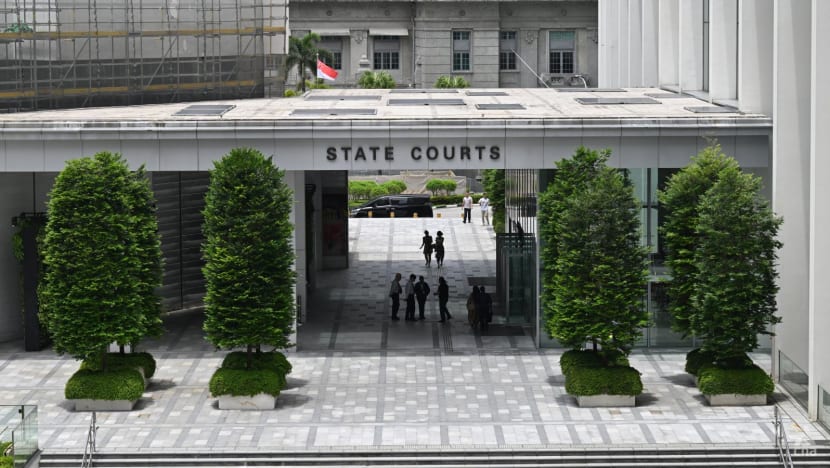
Mr Gan and Mr Ding will visit sites featuring initiatives driven through the CCI, and take part in commemorative activities marking the anniversary.

The CCI was launched in November 2015 as a key priority demonstration project for China’s Belt and Road Initiative (BRI), the western region development, and the Yangtze River Economic Belt Strategy.

It remains an important platform that positions Singapore and Chongqing as twin hubs driving deeper and broader region-to-region connectivity between Southeast Asia and western China.

Over the past decade, Singapore’s investments in Chongqing have more than doubled - increasing from US$5.7 billion in 2015 to US$12.7 billion in 2024.

Mr Gan will have a bilateral meeting with Mr Ding, and also meet Chongqing party secretary Yuan Jiajun.

At last year’s JCBC meeting in Singapore, 25 agreements were signed aimed at boosting cooperation in areas like trade, finance and maritime.

This year also marks the 35th anniversary of diplomatic relations between Singapore and China. Singapore’s Prime Minister Lawrence Wong visited China in June, while China’s Premier Li Qiang visited Singapore in October.

This is Mr Gan’s second visit to China this year. In September, he attended commemorative events marking the 80th anniversary of the end of WWII in Beijing, and also visited Guangzhou and Shenzhen.

Accompanying Mr Gan on this trip are Foreign Affairs Minister Vivian Balakrishnan, Digital Development and Information Minister Josephine Teo, Education Minister and Minister-in-charge of Social Services Integration Desmond Lee, Manpower Minister and Minister-in-charge of Energy and Science and Technology Tan See Leng, as well as senior ministers of state and officials from various ministries and agencies.

Source: CNA/kl(kb)

Sign up for our newsletters

Get our pick of top stories and thought-provoking articles in your inbox

Subscribe here
Inbox
Advertisement

Asia

Anutin, Trump set to speak as Thailand-Cambodia clashes continue for fifth day

US President Donald Trump is keen to intervene again to stop the fighting and salvage the truce he brokered in October.

Anutin, Trump set to speak as Thailand-Cambodia clashes continue for fifth day

Thailand's Prime Minister Anutin Charnvirakul looks on ahead of making offerings to monks, on the day he speaks to members of the media to announce the dissolution of parliament at Government House in Bangkok, on Dec 12, 2025. (Photo: Reuters/Chalinee Thirasupa)

Read a summary of this article on FAST.
FAST

BANGKOK/PHNOM PENH: Thai Prime Minister Anutin Charnvirakul said he would speak to US President Donald Trump on Friday (Dec 12) night about a fierce conflict with Cambodia, as heavy border clashes continued for a fifth day.

Thailand and Cambodia have been exchanging rockets and artillery at multiple locations along their disputed 817km frontier in some of the most intense clashes since a five-day battle in July, which Trump stopped with calls to both leaders to halt their worst conflict in recent history.

Anutin will provide "just an update" of the situation when he speaks with Trump at around 9.20pm Thai time (10.20pm, Singapore time), the Thai leader told reporters.

Trump is keen to intervene again to stop the fighting and salvage the truce he brokered, pledging for a third day to call the leaders of the Southeast Asian countries. He met Anutin and Cambodian Prime Minister Hun Manet in Malaysia in October, where they signed an expanded ceasefire agreement.

Trump, who has repeatedly said he deserves the Nobel Peace Prize, lauded himself on Thursday as a global peacemaker and expressed confidence he would get the truce "back on track".

At the Congressional Ball, he reiterated his claim to have "solved eight wars", adding, "I think we are going to have to make a couple of phone calls on Thailand and (Cambodia), but we'll get that one back on track."

CAMBODIA ACCUSES THAILAND OF "BRUTAL ARMED ACTS AND AGGRESSION"

This week's clashes have killed at least 20 people, with more than 260 wounded, according to tallies by both countries, which have blamed each other for reigniting the conflict.

Cambodia's defence ministry said on Friday that Thailand had targeted civilian areas the previous day in "brutal armed attacks and aggression". It said Thailand was shelling and firing machine guns on multiple sites early on Friday, including near ancient temples, and had sent armoured vehicles into what it called its territory.

"The heroic Cambodian forces will continue to stand strong, brave, and steadfast in their ongoing fight against the aggressors," the ministry said in a statement.

Thailand's military accused Cambodia of encroachment into its territory, saying in a statement it was "compelled to exercise its right to self-defence" with the objective of ending the threat and protecting lives and sovereignty.

It is unclear if Trump will be able to secure an immediate cessation of the hostilities this time.

Thailand's army has made clear it wants to cripple Cambodia's military capability and Anutin has given the army his backing to fully implement operations he said have been planned by the armed forces.

A top adviser to Hun Manet told Reuters this week that Phnom Penh was "ready at any time" for dialogue, while Thailand has rejected mediation and said Cambodia must show sincerity before any bilateral negotiations can happen.

Thailand said on Friday its top diplomat, Sihasak Phuangketkeow, had spoken with US counterpart Marco Rubio and relayed that Bangkok was committed to peace, but expressed concern about Cambodia's "repeated and escalating patterns of attacks".

Cambodian government spokesperson Pen Bona said he was not aware a call had been scheduled between Hun Manet and Trump. "But normally, our PM is always ready to talk," he said.

Hun Manet in August nominated Trump for the Nobel Peace Prize.

THAI PM SAYS HIS GOVERNMENT WILL DECIDE NEXT STEPS

Anutin has so far been less committal on a diplomatic solution. Earlier this week, when asked about Trump's plan to intervene, he said it "cannot be as simple as picking up the phone".

On Friday, he said Thailand's next steps in the conflict with Cambodia were the prerogative of his government and the military.

"I think it’s just an update. He would probably ask how things are now," Anutin said of the call with Trump.

"As for decisions and actions, those are matters for the Thai government, which has already given its support and delegated authority to the Thai armed forces to proceed."

Facing a possible no-confidence motion amid turmoil in parliament over a process to amend the constitution, Anutin dissolved the house on Friday for an election expected in February, adding to uncertainty in Thailand at a time of armed conflict and prolonged economic malaise.

Hundreds of thousands of people have been displaced by the border fighting on both sides. At a shelter in the Thai border province of Surin, evacuees who gathered around a campfire early on Friday said the news that Thailand had a caretaker government was just one of many problems they face.

"There's no certainty. The government has never cared about solving the border conflict anyway. I've always had to flee from the clashes a number of times," said 60-year-old Yod Lengtharmdee.

Source: Reuters/dy

Sign up for our newsletters

Get our pick of top stories and thought-provoking articles in your inbox

Subscribe here
Inbox
Advertisement

East Asia

Taiwan opens new cloud centre to bolster 'sovereign AI' effort

Taiwan opens new cloud centre to bolster 'sovereign AI' effort

Taiwan President Lai Ching-te delivers a speech after inspecting reservists operating a Taiwan-made Hummer 2 Drone during a training session at Loung Te Industrial Parks Service Center in Yilan, Taiwan on Dec 2, 2025. (File photo: Reuters/Ann Wang)

TAIPEI: Taiwan President Lai Ching-te opened a new cloud computing centre on Friday (Dec 12) equipped with a powerful supercomputer, part of the chip powerhouse island's "sovereign AI" effort.

The government wants the new cloud facility, in the southern city of Tainan, to become a key engine for artificial intelligence development and a base for innovation in high-performance computing, telecommunications, cloud services and digital content.

Lai, in comments broadcast live on Taiwanese television stations, said the centre symbolised Taiwan moving from being a major hardware manufacturer toward becoming an "AI island", developing "sovereign AI".

The 15-megawatt facility hosts the "Nano 4" supercomputer, the largest and latest supercomputer in Taiwan. It is equipped with 1,760 of Nvidia's H200 chips and 144 of its Blackwell chips, according to Taiwan's National Science and Technology Council.

US chip designer Nvidia's main chip supplier is Taiwan's TSMC, the world's largest contract chipmaker and the backbone of the island's economy.

"This proves to the world that Taiwan not only has advanced chip manufacturing, but also possesses world-class strength in system integration and high-performance computing," Lai said.

It is part of Taiwan's "Ten Major AI Infrastructure Projects" initiative unveiled in July aimed at boosting the island's role in strengthening its AI capabilities and helping to accelerate its push to build a "smart technology island".

Source: Reuters/dy

Sign up for our newsletters

Get our pick of top stories and thought-provoking articles in your inbox

Subscribe here
Advertisement

Asia

Malaysia drops appeal against acquittal of former PM Najib’s wife Rosmah over 17 money laundering, tax evasion charges

Rosmah Mansor was acquitted on Dec 19 last year of 12 money laundering charges involving RM7.09 million (US$1.73 million) and five charges of failing to declare her income to the Inland Revenue Board.
 

Malaysia drops appeal against acquittal of former PM Najib’s wife Rosmah over 17 money laundering, tax evasion charges

Former Malaysia prime minister Najib Razak’s wife Rosmah Mansor arrives at the Palace of Justice in Putrajaya ahead of his house arrest appeal on Jan 6, 2025. (File Photo: CNA/Fadza Ishak)

Read a summary of this article on FAST.
FAST

KUALA LUMPUR: Malaysia’s Attorney-General’s Chambers (AGC) on Thursday (Dec 11) dropped its appeal against the acquittal of Rosmah Mansor - who is the wife of former prime minister Najib Razak - over 17 money laundering and tax evasion charges. 

In its statement, the AGC said that the decision was reached as there was “no reasonable prospect of success” with key witnesses either deceased or untraceable, reported local news outlet the New Straits Times (NST). 

“Among the factors considered was that the prosecution would be unable to prove the case beyond reasonable doubt as key witnesses have died or can no longer be traced,” the statement read.

“In such circumstances, the predicate offence against the accused also cannot be proven.” 

Rosmah, 74, was charged in 2018 with 12 charges of money laundering involving RM7.09 million (US$1.73 million) and five charges of failing to declare her income to the Inland Revenue Board.

On Dec 19 last year, High Court Judge K Muniandy acquitted her of all 17 charges, ruling that the prosecution had failed to present the key elements of the offence of money laundering in the charges. 

The AGC said that it had initially filed the appeal on Dec 20 against the High Court’s decision. However, after reviewing the court’s written grounds of the judgement on Oct 30 this year, it decided not to proceed with the appeal. 

“All key aspects of the case, including issues of fact and law, were reviewed before the decision not to proceed with the appeal was made,” said the AGC, as quoted by NST.

The AGC said that it had filed a notice of discontinuance on Dec 9, which is the court document required for it to drop the appeal. 

According to a letter from the Deputy Registrar of the Court of Appeal, the case management set for Dec 22 has been vacated and the appeal is dismissed. 

Rosmah’s lawyer Amer Hamzah Arshad has also confirmed the matter and said that Judge Muniandy’s decision last year to acquit his client was appropriate and fair. 

“We are relieved that she has been completely freed from all the charges. This entire process has been a tough test for her and we are pleased to see that justice has finally been served and the case has been closed,” he said, as quoted by Bernama. 

Rosmah pleaded not guilty on Oct 4, 2018 at the Sessions Court to the 17 charges, purportedly committed between Dec 4, 2013 and Jun 8, 2017. The case was then transferred to the High Court. 

Her trial over the charges commenced on Aug 24, 2023 but came to a halt after she filed a striking-out application on Sep 6, 2023. 

Separately, Rosmah is still appealing her conviction in a corruption case related to the solar hybrid project for rural schools in Sarawak. She was sentenced to 10 years in jail and given a RM970 million fine by the Kuala Lumpur High Court in relation to three separate charges. 

On Sep 1, 2022, she was found guilty of soliciting RM187.5 million in bribes from contractor Saidi Abang Samsudin in 2016 and 2017 so that his company Jepak Holdings could secure a RM1.25 billion government project to supply solar energy to 369 rural schools in the Sarawak state.

She was also accused of receiving bribes totalling RM6.5 million from Saidi at the prime minister’s official residence and then later at her private residence in Kuala Lumpur between December 2016 and September 2017.

The date of the hearing at the Court of Appeal for the corruption case has yet to be fixed, according to local media.  

Rosmah is also pursuing her bid to recuse or disqualify the trial judge who had found her guilty in 2022 in the corruption case. 

Source: Agencies/ia(as)

Sign up for our newsletters

Get our pick of top stories and thought-provoking articles in your inbox

Subscribe here
Advertisement

Obsessions

Prada to launch US$930 sandals made in India after cultural appropriation backlash

The sandals will be handcrafted in Maharashtra and Karnataka under a limited-edition project with Indian state bodies. The move comes after backlash over the brand's appropriation of Kolhapuri designs.

Prada to launch US$930 sandals made in India after cultural appropriation backlash

A model presents a creation from Prada Spring-Summer 2026 menswear collection during the Milan Fashion Week in Milan, Italy, June 22, 2025. REUTERS/Alessandro Garofalo

Read a summary of this article on FAST.
FAST

Prada will make a limited-edition collection of sandals in India inspired by the country's traditional footwear, selling each pair at around 800 euros (US$930), Prada senior executive Lorenzo Bertelli told Reuters, turning a backlash over cultural appropriation into a collaboration with Indian artisans.

The Italian luxury group plans to make 2,000 pairs of the sandals in the regions of Maharashtra and Karnataka under a deal with two state-backed bodies, blending local Indian craftsmanship with Italian technology and know-how.  

Advertisement

"We'll mix the original manufacturer's standard capabilities with our manufacturing techniques", Bertelli, who is chief marketing officer and head of corporate social responsibility, told Reuters in an interview. 

The collection will go on sale in February 2026 across 40 Prada stores worldwide and online, the company said.

Prada faced criticism six months ago after showing sandals resembling 12th-century Indian footwear, known as Kolhapuri chappals, at a Milan show. Photos went viral, prompting outrage from Indian artisans and politicians. Prada later admitted its design drew from ancient Indian styles and began talks with artisan groups for collaboration.

File photo. A model presents a creation from Prada Spring-Summer 2026 menswear collection during the Milan Fashion Week in Milan, Italy, Jun 22, 2025. (Photo: Reuters/Alessandro Garofalo)

It has now signed an agreement with Sant Rohidas Leather Industries and Charmakar Development Corporation (LIDCOM) and Dr Babu Jagjivan Ram Leather Industries Development Corporation (LIDKAR), which promote India’s leather heritage.

"We want to be a multiplier of awareness for these chappals," said Bertelli, who is the eldest son of Prada founders Miuccia Prada and Patrizio Bertelli.

Advertisement

A three-year partnership, whose details are still being finalised, will be set up to train local artisans. The initiative will include training programmes in India and opportunities to spend short periods at Prada’s Academy in Italy.

'Kolhapuri' sandals, an Indian ethnic footwear, are on display at a store in New Delhi, India, July 1, 2025. REUTERS/Bhawika Chhabra

Chappals originated in Maharashtra and Karnataka and are handcrafted by people from marginalised communities. Artisans hope the collaboration will raise incomes, attract younger generations to the trade and preserve heritage threatened by cheap imitations and declining demand.

"Once Prada endorses this craft as a luxury product, definitely the domino effect will work and result in increasing demand for the craft," said Prerna Deshbhratar, LIDCOM managing director. 

Bertelli said the project and training programme would cost "several million euros", adding that artisans would be fairly remunerated.

A craftsman works on limited-edition Prada leather sandals inspired by India's traditional Kolhapuri footwear, inside a facility in Kolhapur, Maharashtra, India, December 8, 2025. Avani Rai/Prada Group/Handout via REUTERS

PRADA WON'T EXPAND IN INDIA IN THE SHORT TERM 

Bertelli said Prada, which opened its first beauty store in Delhi this year, has no plans for new retail clothing shops next year or factories in India. 

Advertisement

"We have not planned yet any store openings in India, but it's something that we are strongly taking into consideration," he said, adding that this could come in three to five years.

The luxury goods market in India was valued at around US$7 billion in 2024 and is expected to reach about US$30 billion by 2030, according to Deloitte, as economic growth accelerates to 7 per cent this year and disposable income among the middle and upper classes rises. The market, however, is dwarfed by China, which generated about 350 billion yuan (US$49.56 billion) in value in 2024, according to Bain.  

Most global brands have entered India through partnerships with large conglomerates like Mukesh Ambani's Reliance group and Kumar Mangalam Birla's Aditya Birla Group. 

Bertelli said that Prada would prefer to enter the country on its own, even if it took longer, describing India as "the real potential new market".

Source: Reuters/mm

Sign up for our newsletters

Get our pick of top stories and thought-provoking articles in your inbox

Subscribe here
Advertisement

Also worth reading

Advertisement