Advertisement
Advertisement

Singapore

Pritam Singh's failed appeal may cast WP chief in 'negative light' but analysts split on political fallout

One analyst described the decision as a "body blow" which raises concerns about Mr Singh's leadership and character but another said it would not be a defining moment for him.

Pritam Singh's failed appeal may cast WP chief in 'negative light' but analysts split on political fallout

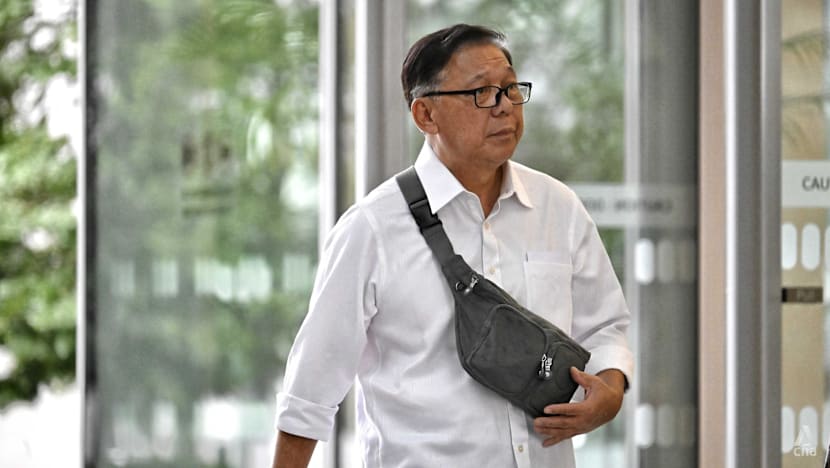
Leader of the Opposition Pritam Singh leaves the Supreme Court on Dec 4, 2025. (Photo: CNA/Wallace Woon)

Listen
7 min
New: You can now listen to articles.

This audio is generated by an AI tool.

Read a summary of this article on FAST.
FAST

SINGAPORE: The High Court’s dismissal of Workers' Party (WP) chief Pritam Singh’s appeal has cast him in a negative light, some analysts said, although they were divided about the extent of the political fallout.

On Thursday (Dec 4), Justice Steven Chong upheld Mr Singh's conviction on two charges of lying to a parliamentary committee about a false anecdote shared by former WP MP Raeesah Khan.

The ruling meant that Mr Singh’s sentence – a S$7,000 fine per charge – stood. He paid the fines after the conclusion of his appeal.

Justice Chong found that Mr Singh did not intend for Ms Khan to correct her falsehood for at least two months after learning of it, adding that the Leader of the Opposition’s approach was to “let sleeping dogs lie”.

Speaking to the media after the judgment, Mr Singh said he was “disappointed” but accepted the court’s decision. He acknowledged that he “took too long” to address Ms Khan’s untruth in parliament.

LEADERSHIP AND INTEGRITY

While analysts generally agreed that the episode had affected Mr Singh to some extent, they differed in their interpretations of what his handling of Ms Khan's lie revealed. 

Some raised concerns about his leadership and decision-making, while others questioned his integrity and accountability.

“Being untruthful does cast a negative light on Pritam Singh, if Singaporeans expect their political leaders to reflect integrity and trustworthiness,” said sociologist Dr Tan Ern Ser, adjunct principal research fellow at the Institute of Policy Studies

“I reckon leaders and public figures are judged by a higher standard.”

Associate Professor of Law Eugene Tan of the Singapore Management University (SMU) said the judgment also touched on Mr Singh’s ethics and judgment.

“The sting in the judgment really lies in the elaborate web of lies and obfuscation that Mr Singh conjured in order that the untruth is buried and would have no chance of resurrection,” he said.

Ms Nydia Ngiow, managing director of Global Trade and Economics at BowerGroupAsia, said that the court’s finding that Mr Singh had hoped not to address the untruth may “raise questions about decisiveness and crisis-management instincts”.

"At the same time, his public acknowledgement that he 'took too long' and accepts responsibility reflects a leadership style willing to own shortcomings," said Ms Ngiow.

For Dr Mustafa Izzuddin, a senior international affairs analyst with Solaris Strategies Singapore, Mr Singh’s remarks after the appeal verdict that he accepted the judgment "fully and without reservation" and respected the court's decision signalled that Singaporeans should continue to place their trust in the judicial system.

"And I think what he said in the aftermath of the outcome would have resonated well with many tuning in, with many in Singapore, and I think that's also a way by which he can now provide closure and focus on the tasks at hand," Dr Mustafa said.

IMPACT ON WP CHIEF, SUPPORTERS

Experts were split on how much the long-running saga would affect Mr Singh or the WP.

Dr Tan believed the case would have no "political cost" on Mr Singh’s credibility or the party’s standing, arguing that some may view it as an “error of judgment” or an "attempt to protect his party".

Ms Ngiow similarly felt the episode did not appear to have significantly damaged Mr Singh’s credibility. On the issue of supporters, Ms Ngiow said that WP's base "has historically been resilient and tends to differentiate individual missteps from the party’s broader performance". 

Dr Mustafa described the case as a "hiccup" for Mr Singh, but "certainly not a defining moment" of his party leadership. 

Assoc Prof Tan, however, called the court’s decision a “body blow” that the WP would rather not have.

"The decision would raise legitimate concerns to a fair-minded voter about Mr Singh's leadership and character," said the associate professor. 

Still, most analysts agreed that the impact on Mr Singh’s standing within the party would be limited, partly because there was no clear contender for the top post.

But Assoc Prof Tan cautioned that the conviction remains a liability.

“Mr Singh’s grip on his party is relatively secure, but this conviction would be his Achilles’ heel that could dog his entire political career and perhaps the WP so long as Mr Singh is the leader,” he said.

LONGER-TERM EFFECT

Experts also considered the WP’s position as Singapore’s leading opposition party.

In the 2025 General Election, the WP defended its 10 seats in Aljunied and Sengkang Group Representation Constituencies (GRCs) as well as Hougang Single Member Constituency, and also gained two Non-Constituency MP seats.

Mr Singh was part of the WP team re-elected in Aljunied GRC with 59.71 per cent of the vote.

IPS' Dr Tan said Mr Singh is likely credited for WP’s good electoral performance and is viewed as a capable leader.

Ms Ngiow noted that while the saga began in 2021, it did not appear to have hurt the party at the polls. She pointed out that in addition to defending its constituencies, WP improved its vote share in Sengkang GRC. 

“This suggests voters are judging the party on broader grounds, for example, its parliamentary performance and constituency work, rather than on this single incident,” she said.

“Singaporean voters tend to be pragmatic, and so long as WP continues to demonstrate competence in its wards, any long-term political damage remains containable.”

WP supporters would not have left because of the verdict, but Mr Singh now needs to work on gaining the support and confidence of voters in the middle ground who are reserving judgment on it, Dr Mustafa said. 

“I think what he may need to do going forward is to let his deeds, his actions, do the talking.”

SMU's Assoc Prof Tan said that WP occupies a “unique position” in Singapore's political landscape. It is the only opposition party in the 15th parliament, and "the only party which has a standing that comes close to the PAP (People’s Action Party)".

“So this setback will be cushioned somewhat,” he said. 

"The hard truth is that this final outcome is a severe reputational hit to him as a politician, a sitting Member of Parliament, the Leader of the Opposition, WP leader, and to the WP."

With the 15th parliament still in its early days, the WP and Mr Singh "will have time to put this matter behind them".

"But if he continues to cast doubt on his conviction or he or his party gets embroiled in another scandal in this parliamentary term, the special position of the WP could very quickly unravel," said Assoc Prof Tan.

Source: CNA/wt(mi)

Sign up for our newsletters

Get our pick of top stories and thought-provoking articles in your inbox

Subscribe here
Inbox
FAST
Advertisement

Singapore

Inside a Japanese-style host club in Singapore, where men offer a 'boyfriend' experience

The club says it is the first to openly promote itself on social media, abandoning the lower profile typically adopted by similar establishments.

Inside a Japanese-style host club in Singapore, where men offer a 'boyfriend' experience

The male hosts performing a song at the Gentleman Club, Singapore. (Photo: CNA/Raydza Rahman)

Listen
8 min
New: You can now listen to articles.

This audio is generated by an AI tool.

SINGAPORE: The nondescript building in Singapore’s central business district sits quietly after office hours. But up on the sixth floor, lift doors open up to a different world.

Sharply dressed men sing and strut across a stage, to cheers and whistles from the crowd, before joining the patrons – mostly women – for drinking games and karaoke. The atmosphere is playful and flirtatious; and the service provided by the men is strictly non-sexual.

This is the Gentleman Club, and it’s a full house every night.

It is known as a host club, a concept popularised in Japan, where all-male staff members serve a mostly female clientele who pay for drinks and companionship.

While Gentleman Club is not the only such establishment in Singapore, its owner, who only wanted to be known as Glenn, said it is the first to actively and openly promote itself on social media. Others typically adopt a lower profile and rely mainly on word of mouth.

Gentleman Club’s Instagram page has over 11,000 followers, with posts showcasing its hosts as well as facilities. It also works with influencers, both locally and from abroad, to produce content.

The 29-year-old Glenn sees social media as a way to reach a broader clientele, something he picked up in his prior career in the food and beverage industry.

Social media has helped draw customers from places like Thailand, Vietnam, Indonesia and China, he said. But some hosts decline to appear in his club’s publicity materials for fear of being recognised.

About 60 per cent of the hosts are Singaporeans, with the rest mainly from China.

Some also chose not to give their names when speaking to CNA about their experiences in the line.

PAYING FOR THE “BOYFRIEND-GIRLFRIEND EXPERIENCE”

The hosts perform two roles: Emcees, who facilitate and sometimes participate in performances onstage, or as singers in those performances.

Such segments typically feature about 25 hosts, running from 20 minutes to an hour and up to four times a night, said emcee Ignatius Lien.

Ignatius Lien, an emcee at Gentleman Club in Singapore. (Photo: CNA/Raydza Rahman)

The hosts typically work about five or six days a week, earning from a commission-based arrangement linked to alcohol sales – as well as tips from patrons.

Mr Lien, a Malaysian who has been working in Singapore for about 20 years, said he draws between S$10,000 (US$7,680) to S$20,000 a month.

On average, a host can earn at least S$200 to S$300 a night, he said.

Mr Lien used to work in the F&B and skincare industries. After the COVID-19 pandemic, he went into nightlife, starting a pub with some friends before becoming a host.

A 30-year-old host, who only wanted to be known as Jay, said he earns S$80,000 to S$100,000 monthly.

By day, the Singaporean works in real estate marketing, an industry he has been in for seven years. By night, he works a 10.30pm to 3am shift at Gentleman Club.

“We do have customers that want to continue drinking, but they will ‘buy’ you out to outside places to drink. So that's also considered my shift,” he said.

Mr Joachim Teoh, who has been a host for about four months, said they sometimes exchange contact details with customers, who then become regulars.

These regulars sometimes pay for a host even before the night commences, to take them to dinners, said the 21-year-old Singaporean.

Joachim Teoh, introducing himself on stage with other male hosts at the Gentleman Club, Singapore. (Photo: CNA/Raydza Rahman)

After National Service, Mr Teoh had been unsuccessful in applying to universities. He then chanced upon job openings at the Gentleman Club on social media.

“I like drinking a lot. I go out drinking with my friends often. And I was thinking, ‘how about I make this a job so I can have fun and enjoy, while still earning money?’,” said Mr Teoh.

He declined to reveal exactly how much he earns in a month, but said it was in the “mid-four digits”.

The hosts said they meet patrons of all ages, although most are in their late 20s to 30s. Most of the clientele is also female, but there are occasionally male customers.

“My oldest, most mature customer is actually a 65-year-old male,” said Jay. “Honestly, a lot of people at that age, they have their finances in check, career in check, almost everything in check. And like anybody else, they come out here because they feel lonely.”

Some of the patrons are also rich foreign students – typically of second or third-generation wealth and hailing from countries such as China.

Different customers seek different things, be it companionship or emotional satisfaction, and the host’s job is to fulfil these as best as he can.

For instance, there are women who are newly divorced or whose husbands cheated on them, so they just want to release some stress, said Jay.

Mr Teoh said: “Most of our customers that come here, we would like to give them the ‘boyfriend-girlfriend’ experience.”

DRAWING THE LINE

Despite the emotional intimacy shared with customers, the hosts said they strictly adhere to physical boundaries and keep all interactions non-sexual.

Mr Teoh recalled an instance when a tipsy female customer propositioned him after a night of drinking. She requested he send her home, and when they arrived at her place, wanted him to go up “to do funny things”.

“She just told me, ‘name a price’,” he said. Mr Teoh declined politely.

He added that when meeting customers outside of the club, he is also careful to avoid holding their hands – especially when some of them are in relationships.

“We don’t want to be, if I put it directly, prostitutes,” said Jay.

“Once you put a price tag on your body, every time they come and find you for that kind of body service, they will know that … ‘it’s S$2,000, S$3,000’. The amount is fixed.”

In contrast, if customers view a host as a permanent companion or someone they need when going through a hard time, then there are no limits on the amount of money they’re willing to spend, said Jay.

Jay, who is currently in a relationship, acknowledged it could be tough for hosts to find stable partners.

“If I were them, it would be hard for me to accept that my partner is in this line as well, because it's undeniable that we do have to have some intimate connection with our customer in terms of – not necessarily physical – but emotionally, every single day,” he said.

Then there is the social stigma, which the hosts CNA spoke to were strongly against.

“It's not dirty,” said Mr Lien, the emcee. “I accompany the customer, talk to them, make them happy, drink with them and sing songs with them.”

Yet many people still see it as a job that is not open and aboveboard, said Mr Teoh.

“Some are still very traditional, they think that this is not a good job to work in, you will accumulate bad karma working here, stuff like that,” he said.

When he told his parents about his job, they thought he was sleeping with customers and being a gigolo. Mr Teoh cleared the air with them, although they remain concerned about his drinking habits.

His friends also know about his employment, as they have seen him on the club’s social media posts.

“I just tell them, ‘Yeah, I work at a boys club. I'm earning money with my own hard work’,” he said. “I don't really think it's a very shameful thing, especially now, when everything is so open. I don't feel a need to hide it.”

Singapore Nightlife Business Association president Danny Loong told CNA that Singapore’s nightlife scene has always been “diverse and evolving”.

“As long as venues operate responsibly, transparently, and within the law, they contribute to the vibrancy of our nightlife ecosystem. What matters most is maintaining professionalism and creating safe, inclusive spaces for patrons,” he said, adding that perceptions can also evolve over time.

Sociologist Ma Xiangyu from the Nanyang Technological University said that if host club businesses are indeed thriving, then they are “clearly meeting some kind of market demand”.

The assistant professor noted the precedents for such clubs in East Asian countries, and that Singapore is already “used to nightclubs, KTVs and beer ladies in kopitiams”.

“To varying extents, we understand, tolerate and accept the appeal and implications of these businesses,” he said.

Source: CNA/fk(jo)

Sign up for our newsletters

Get our pick of top stories and thought-provoking articles in your inbox

Subscribe here
Inbox
FAST
Advertisement

Commentary

Commentary: Lions head coach Gavin Lee cannot revive Singapore football alone

If we want a stronger national team, the responsibility cannot rest solely on the shoulders of one coach or the football association, says former sports administrator Andy Loe.

Commentary: Lions head coach Gavin Lee cannot revive Singapore football alone

Singapore’s football interim national team head coach Gavin Lee greeting supporters at Singapore’s Changi Airport Terminal 2, on Nov 19, 2025, after returning from their historic win beating Hong Kong 2-1 to qualify for the Asian Cup. (Photo: CNA/Jeremy Long)

Listen
5 min
New: You can now listen to articles.

This audio is generated by an AI tool.

Read a summary of this article on FAST.
FAST

SINGAPORE: One thing has always struck me about Gavin Lee, the newly appointed head coach of the Singapore men’s national football team. In interviews, he rarely begins by talking about his own achievements. Instead, he starts by thanking others: the mentors who shaped him, the players who trusted him and the staff who worked quietly behind the scenes.

This is not just humility; it reflects an empathy-driven mindset. In a world where head coaches are often expected to be charismatic tacticians or prominent personalities, this grounding in gratitude and community feels refreshingly human.

While Lee’s appointment as national head coach has drawn many positive reactions, it has also arrived in a landscape where scepticism is second nature. Singapore fans have been here before – hopeful, yet wary. Some question whether a young, local coach can shift decades of performance plateaus. Others quietly fear that a new appointment might mean old challenges in a new form.

But maybe the bigger question is not what Gavin Lee can or cannot do. Perhaps the question is: What do we, as Singaporeans, expect of ourselves in this new chapter?

A FOOTBALL NATION IS BUILT BY COMMUNITIES

If there is one lesson that a football study trip to the United Kingdom taught me, it is that a football nation is not built by coaches alone. It is built by communities.

I met fans and academy players of a lower-league club who turned up week after week, even when their team was battling relegation. Pre-match family activities were bustling, from middle school students shadowing the media team like budding sports journalists, to academy players enjoying futsal with the neighbourhood children.

At kick-off, the stadium was packed. They cheered not because their team was winning, but because belonging mattered. 

Their support created an atmosphere of energy and belief. It reminded me that football culture is shaped by people at every level: the physical education (PE) teachers who teach fundamental movement skills, parents who volunteer, grassroots coaches out on the muddy fields, and fans who show up even when the results don't.

Lee often speaks about this ecosystem, and now he stands at its forefront. His appointment may not have been merely about qualifications. It may be a mirror held up to all of us who care about Singapore football.

That experience in the UK reminded me that the heartbeat of football does not start at the national team level. It begins with us. It starts with people who show up, not just when the team wins.

However, showing up has not always been our strong suit. I have seen people hesitate to watch a 7.30pm Lions match yet stay up past midnight for European football without a second thought. I have been in local stadiums where empty seats outnumbered the filled ones.

While it is understandable that Singapore football fans have grown cautious after years of mixed results, it also reveals the gap between who we are today and who we can become if we choose to show up for our own game.

CHANGE BEGINS WITH US

If we want a stronger national team, the responsibility cannot rest solely on the shoulders of one coach or the football association. It belongs to all of us – to the parents who encourage play, to the schools that nurture values, to the clubs that develop talent, and, yes, to the fans who choose belief over cynicism.

It lives in the pub owner who screens local football matches because he knows that atmosphere grows culture. It lives in schools that send students to cheer for the Lions the same way they do for National Day Parade previews and inter-school games.

And it lives in all of us, like you, rounding up your old secondary school friends, pulling on our red jerseys, and deciding that supporting Singapore football is something we do together. Change begins with us.

The next milestone on our football calendar is the 2025 Southeast Asian Games in Thailand, where the Under-22 squad will kick off their campaign against Timor-Leste on Saturday (Dec 6) before facing Thailand on Dec 11.

While this team are not the senior Lions, showing up for our young players matters just as much. These are the boys who will be carrying our flag in the years ahead, and some of them may well be the names we cheer for at the 2027 Asian Cup. Supporting them now is how we plant the seeds for the future we hope to see.

With the 2027 Asian Cup 13 months away, the matches leading up to it and the tournament itself are opportunities for us to be present, regardless of the results. The journey will not be easy, and supporting the Lions means recognising the effort of everyone involved. It means staying present even when the scoreboard is not in our favour.

As we welcome Gavin Lee into his new role, the real question is: Are we willing to play our part the way other football communities do? Not as critics watching from afar, but as active participants in shaping the football culture we want for Singapore.

The new chapter has begun. The question is whether we are willing to be part of writing it.

Andy Loe is a Singapore sports enthusiast with a background in coaching and student development.

Source: CNA/el

Sign up for our newsletters

Get our pick of top stories and thought-provoking articles in your inbox

Subscribe here
Inbox
FAST