Satirical Baroque portraiture style of Volker Hermes: Using internal auxiliary semiotics to overwrite narratives and showcase its potent effects. [Gemini Nano Banana Pro]
{Link (The Legend of Zelda)} illustrated in the satirical Baroque portraiture style of Volker Hermes: {
The photocollaged painting re-editorializes canonical works of European Old Master portraiture while preserving profound respect for the source material—maintaining the Old Masters' visual language and compositional logic, grounded in deep understanding of their original spirit and dignity—thereby exposing how curatorial and stylistic interventions construct and mediate identity and meaning. Drawing upon portraiture spanning from the Renaissance's rigid, austere framework (Titian, Jacometto) to the Baroque and eighteenth century's sumptuous, more flexible characterization (Goya, Rembrandt, Vigée Le Brun), the work leverages the genre's codified visual conventions and established identity elements to hijack a context-rich, norm-abiding narrative. This is careful repositioning of inherent elements—the opposite of anarchic defacement. Through ambiguous, out-of-character behavioral framing (subconsciously inspired by underground fetish culture) and subversive compositional elements—surrealistic displacements, comical over-exaggeration—the work obscures and contrasts with the original portrayal, redirecting attention toward an evocative, alluring rebellious intrigue that destabilizes established meanings and mutates the painting's core narrative while amplifying its elitist allure.
This symbolic alteration unfolds as dramatization: critical interpretive and analogical arguments deployed alongside wit, whimsy, humor, and wry commentary, as if the illustrator were engaged in real-time dialogue with the source story. The work employs pre-existing visual language to apply visceral, emotional storytelling techniques drawn from affective cinema—surrealism, uncanny and psychological horror, expressionism, melodrama, noir, magical realism, absurdist comedy, and body horror—reframing and overriding the classical painting's tonal and narrative messaging. Drawing from references that similarly inspire such cinema (mesmerizing biological structures and patterns, culturally and historically significant works), the piece reorders the painting's semiotics and articulates shifted semantics within current visual culture. These are intensified—at times to extreme degrees—through extrapolated structural patterns, reshaped contours and silhouettes, materialized or redirected visual flow, and amplified tactile-visual sensations, all while maintaining narrative and stylistic cohesion within the original compositional framework.
Fashion styling sensibilities further inform the work's demonstration of how contextual framing in classical portraiture—pose, costume, setting, lighting, symbolic objects—actively shapes perception and constructs narrative identity, signaling status, gender, and social role rather than revealing unmediated likeness. By manipulating these distilled visual cues while maintaining material congruency, the piece exposes the calculated, encoded editorialization embedded in each element, revealing identity as negotiated, staged, and historically contingent rather than simply recorded. Obscured visages and decorative interventions demonstrate the pivotal role of gaze, facial features, and expression in shaping focal visual flow and atmospheric energy—signaling mood, intention, and psychological presence. The result is a weird-but-rad, unexplored fashion idiom reminiscent of Alexander McQueen's spectacle theatre: immersive atmospheres with uncanny realism that invite fantastical imagination—exposing how seemingly dormant auxiliary visual elements shape overall perception and revealing the house-of-cards fragility of social expectations and portrayed status symbols.
}


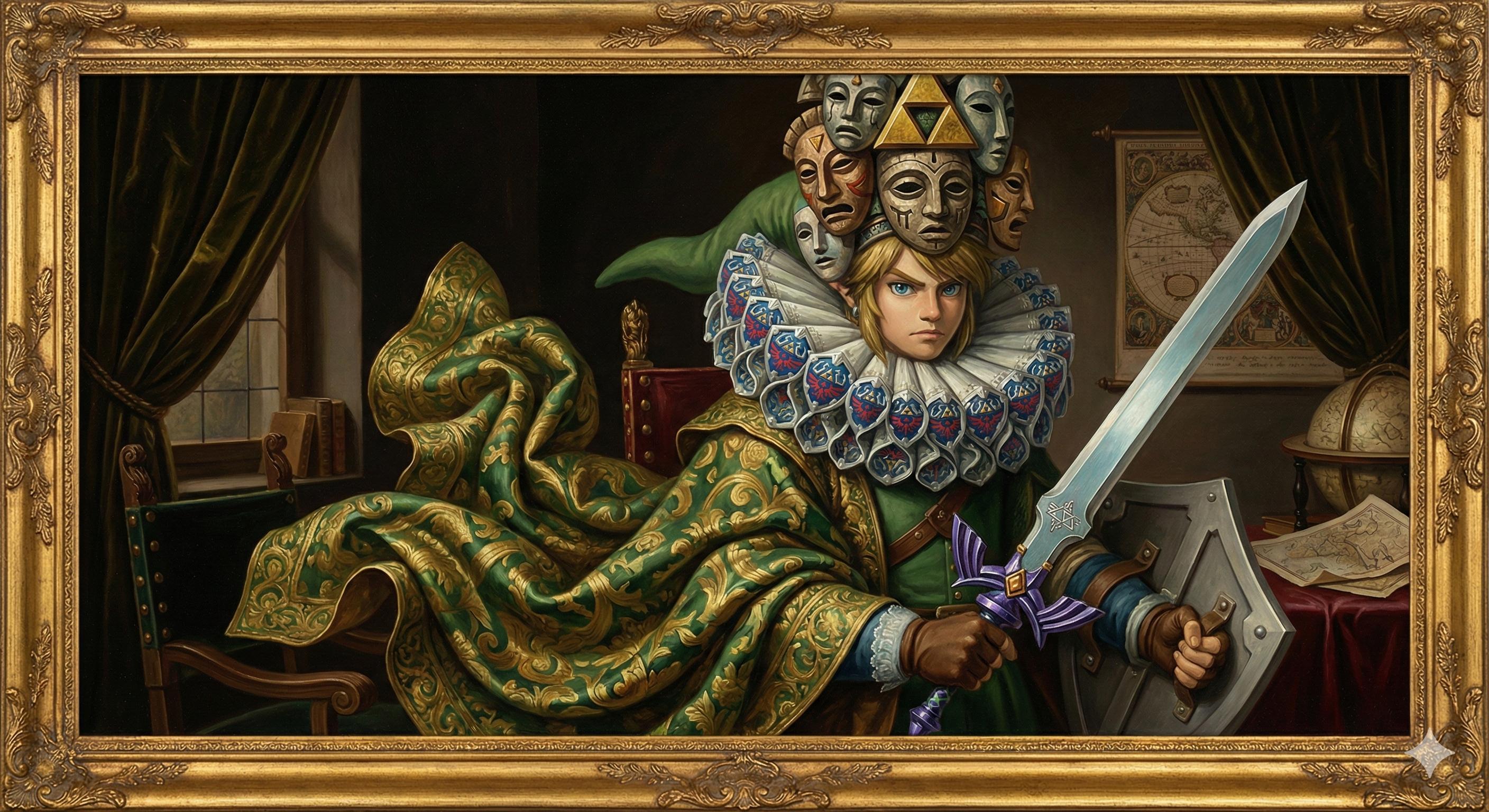
{Link (The Legend of Zelda)} illustrated in the satirical Baroque portraiture style of Volker Hermes: {
The photocollaged painting re-editorializes canonical works of European Old Master portraiture while preserving profound respect for the source material—maintaining the Old Masters' visual language and compositional logic, grounded in deep understanding of their original spirit and dignity—thereby exposing how curatorial and stylistic interventions construct and mediate identity and meaning. Drawing upon portraiture spanning from the Renaissance's rigid, austere framework (Titian, Jacometto) to the Baroque and eighteenth century's sumptuous, more flexible characterization (Goya, Rembrandt, Vigée Le Brun), the work leverages the genre's codified visual conventions and established identity elements to hijack a context-rich, norm-abiding narrative. This is careful repositioning of inherent elements—the opposite of anarchic defacement. Through ambiguous, out-of-character behavioral framing (subconsciously inspired by underground fetish culture) and subversive compositional elements—surrealistic displacements, comical over-exaggeration—the work obscures and contrasts with the original portrayal, redirecting attention toward an evocative, alluring rebellious intrigue that destabilizes established meanings and mutates the painting's core narrative while amplifying its elitist allure.
This symbolic alteration unfolds as dramatization: critical interpretive and analogical arguments deployed alongside wit, whimsy, humor, and wry commentary, as if the illustrator were engaged in real-time dialogue with the source story. The work employs pre-existing visual language to apply visceral, emotional storytelling techniques drawn from affective cinema—surrealism, uncanny and psychological horror, expressionism, melodrama, noir, magical realism, absurdist comedy, and body horror—reframing and overriding the classical painting's tonal and narrative messaging. Drawing from references that similarly inspire such cinema (mesmerizing biological structures and patterns, culturally and historically significant works), the piece reorders the painting's semiotics and articulates shifted semantics within current visual culture. These are intensified—at times to extreme degrees—through extrapolated structural patterns, reshaped contours and silhouettes, materialized or redirected visual flow, and amplified tactile-visual sensations, all while maintaining narrative and stylistic cohesion within the original compositional framework.
Fashion styling sensibilities further inform the work's demonstration of how contextual framing in classical portraiture—pose, costume, setting, lighting, symbolic objects—actively shapes perception and constructs narrative identity, signaling status, gender, and social role rather than revealing unmediated likeness. By manipulating these distilled visual cues while maintaining material congruency, the piece exposes the calculated, encoded editorialization embedded in each element, revealing identity as negotiated, staged, and historically contingent rather than simply recorded. Obscured visages and decorative interventions demonstrate the pivotal role of gaze, facial features, and expression in shaping focal visual flow and atmospheric energy—signaling mood, intention, and psychological presence. The result is a weird-but-rad, unexplored fashion idiom reminiscent of Alexander McQueen's spectacle theatre: immersive atmospheres with uncanny realism that invite fantastical imagination—exposing how seemingly dormant auxiliary visual elements shape overall perception and revealing the house-of-cards fragility of social expectations and portrayed status symbols. }