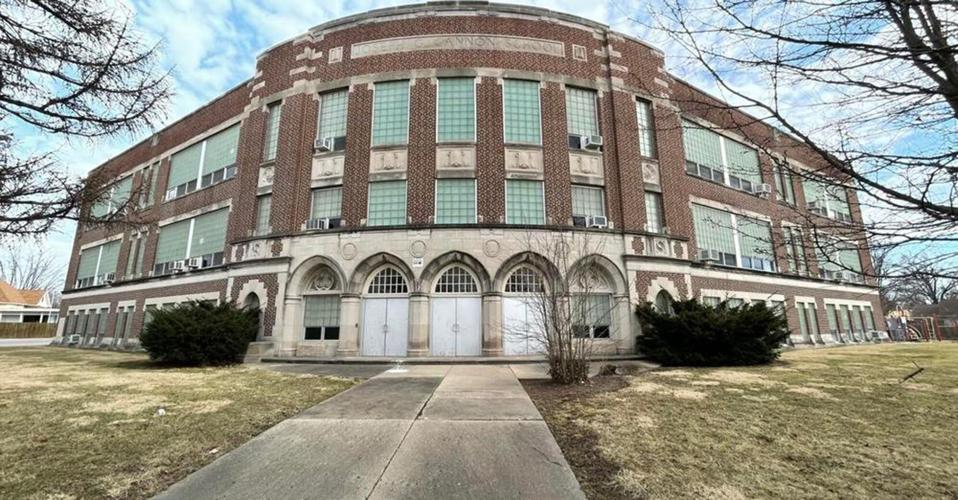
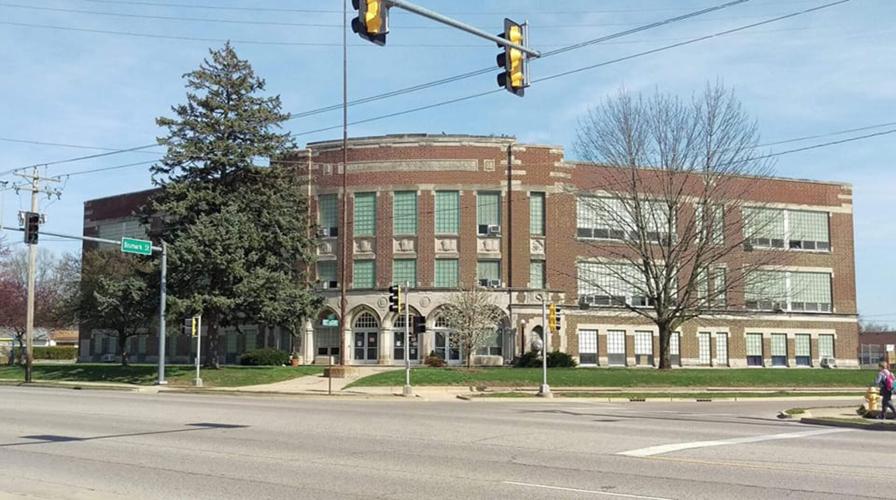
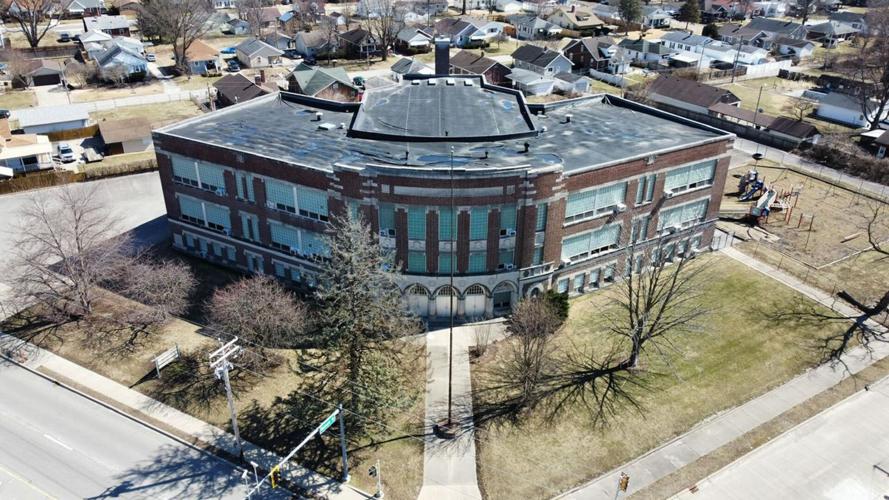


DANVILLE — The Danville school board has opted to deny a grassroots organization’s petition to give landmark status to a nearly 100-year-old school that is scheduled for demolition this summer.
Assistant Superintendent of Elementary Education John Hart confirmed that the board had denied the petition.
The board had voted in March to contract with Lee Farms Excavating of Paxton to demolish the school for $456,750.
However, a group calling itself Friends of Cannon School has objected to the demolition and wants it to be saved or to at least have the property on which it sits turned into a park.
Sandy Lucas, who spent her entire 35-year teaching career at Cannon, said she believes the school board never gave the school a chance to reopen after flooding was discovered there in late 2015.
“I feel they should have looked into how to save the building,” Lucas said. “They waited too long to look into that. I feel they just wrote it off.”
The school’s library, cafeteria and basement were flooded Dec. 27, 2015. It would not reopen despite attempts by custodians who worked during the district’s winter break to get it ready for students’ return.
Structural and environmental concerns from the flooding damage led the Vermilion County Regional Office of Education to decide not to reopen the building. During an environmental specialist’s report at the end of January 2016, it was announced that mold was present.
Friends of Cannon School petitioned the Danville Historic Preservation Commission for the school to receive landmark status under the city’s historical-preservation ordinance.
Logan Cronk, the city’s community development administrator, said a notice was sent to the school district indicating the group had filed the petition for the designation and asking it to consent or object. Because it objected, the matter is closed, and the demolition can proceed, he said.
Among the criteria the commission could consider to determine landmark status are historic significance, architectural significance, economic and functional potential.
Even if landmark status were granted, it wouldn’t have guaranteed demolition would not have proceeded. Cronk, however, said he would recommend that the district not proceed with demolition until the matter reaches the public-hearing process.
Lucas told the school board at its May meeting that if the school can’t be saved, she would like to see the area at least developed into a park.
“If they can’t save the building, then can we save the arches and some of the artwork and the place that says ‘Joseph G. Cannon School’ at the top and make it into a park?” Lucas said.
She would also like to see an exhibit with a photo about Cannon, who served as speaker of the U.S. House from 1903 to 1911 and after whom the Cannon House Office Building in Washington, D.C., is named. Lucas said she would also like to see the front sidewalk and flagpole saved as well as trees that have been planted on the school grounds in memory of school staff.
Hart said saving the limestone area that bears the school name is likely more feasible than saving the arch above the doorway, saying “it might be cost-prohibitive because it sits above a basement,” so it would have to be built up.
Hart said an earlier estimate placed the cost of refurbishing the school at $9.5 million.
“It would probably be $16 million today with labor and materials, and we would gain nine classrooms, which we don’t need,” he said. “And we would have to bring the building up to (Americans with Disabilities Act) compliance.”
Alice Pollock of the Friends of Cannon School said she feels the school board has been disingenuous in dealing with the group.
“They led us to believe they were going to be working with us to try and save it,” Pollock said. “They’ve not been forthcoming in what’s going on and have told two stories.”
She said there are a large number of people concerned about the fate of the building. Her group has a membership of 400 people “with another 100 waiting to get in.”
She said it’s been only recently that people have become aware of the possibility that the school will be demolished.
“A lot of people cared but didn’t realize the misinformation going around and believed some of the mistruths going around, thinking there was no hope,” Pollock said.