Advertisement
Advertisement

Singapore

Singapore electric buses from China's Yutong Group cannot be controlled remotely by manufacturer: LTA

Norway's public transport operator Ruter had raised cybersecurity concerns, saying a test on the Chinese-made electric buses showed that the manufacturer could remotely turn them off.

Singapore electric buses from China's Yutong Group cannot be controlled remotely by manufacturer: LTA

Chinese bus maker Yutong Group has confirmed that its electric buses in Singapore do not support over-the-air software updates or any remote-control function, said LTA. (Photo: Facebook/Go-Ahead Singapore)

Listen
3 min
New: You can now listen to articles.

This audio is generated by an AI tool.

Read a summary of this article on FAST.
FAST

SINGAPORE: Singapore has 20 electric public buses by Chinese manufacturer Yutong Group, and none of these vehicles support any remote-control functions, the Land Transport Authority said on Monday (Nov 17).

It was responding to CNA's questions after Norway's public transport operator Ruter found that Yutong had access to the buses' control systems for software updates and diagnostics.

This could allow the manufacturer to turn them off remotely. 

The discovery has also raised cybersecurity concerns, with Ruter saying earlier this month that it has introduced stricter security requirements and stepped up anti-hacking measures.

LTA said Singapore has 20 Yutong electric buses that have been operating smoothly on public bus services since 2020. 

"Yutong has confirmed that these 20 buses do not support over-the-air software updates or any remote-control function," it added.

"We note Yutong’s public clarification that its buses cannot be remotely controlled or deactivated and that the data collected is used solely for vehicle maintenance and performance optimisation.

"Where there are electric buses with over-the-air updates elsewhere, they are carried out only with the operator’s explicit approval and do not affect vehicle control systems."

Yutong had rejected Ruter's allegations, telling German newspaper Berliner Zeitung that remotely accessing the vehicles is “technically impossible”.

According to a report by electric mobility website electrive, Yutong said it stores all vehicle data for the European Union at an Amazon Web Services data centre in Frankfurt. This is used exclusively for maintenance and performance optimisation, and protected by encryption and restricted access protocols. 

LTA said the electric buses it procured are required to comply with the latest international United Nations Economic Commission for Europe Regulations.

The regulations require manufacturers to establish secure design, risk management, as well as software update management processes throughout the vehicle lifecycle.

"LTA also stipulates and expects all its contractors to take strict data protection measures," the agency said, adding that it has since met with Yutong and other electric bus manufacturers, BYD and Zhongtong.

"LTA will continue to work closely with all bus suppliers and follow up with the necessary checks to ensure that risks associated with external connectivity are properly mitigated," it said.

In response to CNA's queries, Yutong on Thursday reiterated LTA's statement that its 20 vehicles operating in Singapore cannot be controlled remotely.

"This fleet complies with and meets the relevant local regulations and technical standards in Singapore," it said, adding that it has obtained international cybersecurity certifications.

Source: CNA/fh(gs)

Sign up for our newsletters

Get our pick of top stories and thought-provoking articles in your inbox

Subscribe here
Inbox
FAST
Advertisement

Sport

10 SEA Games events moved to Bangkok after Songkhla flooding

Songkhla province has been hard hit by days of flooding, with the death toll now at 55.

10 SEA Games events moved to Bangkok after Songkhla flooding

This aerial photo taken on Nov 26, 2025 shows flood waters submerging vehicles in Hat Yai in Thailand's southern Songkhla province. (Photo: AFP/Arnun Chonmahatrakool/THAI NEWS PIX)

Listen
3 min
New: You can now listen to articles.

This audio is generated by an AI tool.

Read a summary of this article on FAST.
FAST

SINGAPORE: Some events at the upcoming 33rd SEA Games will be shifted to Bangkok after days of severe flooding in the southern Thai province of Songkhla.

The Games organising committee on Thursday (Nov 27) approved the venue changes due to the floods, which caused "damage and impacted readiness". Songkhla had been set to host the Dec 9 to Dec 20 biennial multi-sport event, along with Bangkok and Chonburi.

The competition venues for 10 sports that were originally scheduled to take place in Hat Yai and Mueang Songkhla districts, will now be held in Bangkok.

They are: Muay (boxing), the men's football qualification rounds, chess, kabaddi, wushu, pencak silat, judo, petanque, karate, billiards and snooker. Wrestling will also be moved to Chonburi.

"The committee emphasised that these adjustments were made to ensure safety for athletes, officials, and spectators, and to safeguard the international standards of the Games," a statement read on Facebook.

"The organising committee reaffirmed that despite the venue changes, Thailand remains fully committed to delivering an efficient, well-managed, and world-class 33rd SEA Games, reinforcing the confidence of all participating nations."

A government spokesperson said that flood-related deaths in Songkhla surged from six to 55 on Thursday, bringing the overall death toll across seven provinces to at least 82 people.

Devastating flooding has overwhelmed southern Thailand this week, particularly in Hat Yai, near the border with Malaysia, where large areas were submerged, pushing residents to seek shelter on rooftops.

Events with venue changes

  • Muay (boxing). New venue: Lumpinee Boxing Stadium, Bangkok
  • Men’s Football – Qualification Round. New venue: Rajamangala National Stadium, Bangkok
  • Chess. New venue: The Bazaar Hotel Bangkok
  • Kabaddi. New venue: Chalermphrakiat Sports Center, Rajamangala University of Technology Rattanakosin (Bangkok)
  • Wushu. New venue: Government Complex, Chaeng Watthana (Multi-purpose Hall, 2nd Floor, Ratthaprasasabhakit Building)
  • Pencak Silat. New venue: IMPACT Arena Muang Thong Thani, Hall 4 (Bangkok)
  • Judo. New venue: Rajamangala Auditorium, Rajamangala University of Technology Thanyaburi (Bangkok)
  • Petanque. New venue: Valaya Alongkorn Rajabhat University under the Royal Patronage (Bangkok)
  • Karate. New venue: Government Complex, Chaeng Watthana (Multi-purpose Hall, 2nd Floor, Ratthaprasasabhakit Building)
  • Wrestling. New venue: Pacific Park Sriracha, Chonburi Province
  • Billiards and Snooker. New venue: Thunder Dome, Muang Thong Thani (Bangkok)
Expand

Singapore National Olympic Council (SNOC) president Grace Fu said that the country's Olympic Council backed Thailand's decision to relocate the Songkhla events.

In a Facebook post on Friday, Ms Fu, who is also Singapore's Minister for Sustainability and the Environment, said the council recognises the challenges facing the Games organisers, and commended the “organisers and authorities for their efforts to find alternative solutions for our athletes and officials”.

"Our thoughts are with the residents of Hat Yai and the Songkhla province who have been affected by the floods.

"We are confident that, together, the SEA Games family will overcome this difficult period with resilience and unity."

She added that Team Singapore will continue to prepare and adapt as needed, and that SNOC will fully support the athletes and officials from the affected sports as they "adjust to the changes".

"We remain grateful to Thailand for their continued commitment to hosting the SEA Games under challenging circumstances."

Singapore is sending its largest contingent to the Games, with 930 athletes set to compete in 48 sports.

Source: CNA/fh(sn)

Sign up for our newsletters

Get our pick of top stories and thought-provoking articles in your inbox

Subscribe here
Inbox
FAST
Advertisement

Sport

Football: Gavin Lee confirmed as permanent Lions head coach

The 35-year-old was officially unveiled as the new Lions head coach at a press conference on Friday (Nov 28).

Football: Gavin Lee confirmed as permanent Lions head coach

Gavin Lee at a national team training session in India. (Photo: FAS)

Listen
2 min
New: You can now listen to articles.

This audio is generated by an AI tool.

SINGAPORE: Gavin Lee was on Friday (Nov 28) named as permanent head coach of the Singapore men's national football team.

The 35-year-old was officially unveiled at a press conference at the Jalan Besar Stadium. 

Earlier on Thursday, CNA reported that Lee had been offered the full-time role and was expected to put pen to paper.

This move comes hot on the heels of Lee leading the Singapore men’s national football team to a historic victory, which saw them qualify for the tournament on merit for the first time.

Singapore's only appearance came in 1984, when they took part automatically as hosts.

In a winner-takes-all clash earlier this month, the Lions came from behind to beat Hong Kong 2-1 to seal their berth in the tournament.

At 28, Lee became the youngest head coach in Singapore Premier League history when he took the helm of BG Tampines Rovers.

He joined the national team in March 2024 as part of then-Lions head coach Tsutomu Ogura’s backroom staff. Lee eventually became an assistant to the Japanese tactician.

When Ogura departed in June due to personal reasons, Lee was appointed interim head coach.

Prior to Lee's appointment, a number of candidates were linked to the post, including former Tottenham Hotspur assistant coach Nick Montgomery and Jesus Casas, the former head coach of the Iraq national team.

Source: CNA/mt(mi)

Sign up for our newsletters

Get our pick of top stories and thought-provoking articles in your inbox

Subscribe here
Inbox
FAST
Advertisement

Singapore

'Thoroughly unfit': Fugitive lawyer Charles Yeo struck off the rolls

The court noted that it is "uncommon" for a lawyer to be found guilty of breaching all his duties the way Charles Yeo did.

'Thoroughly unfit': Fugitive lawyer Charles Yeo struck off the rolls

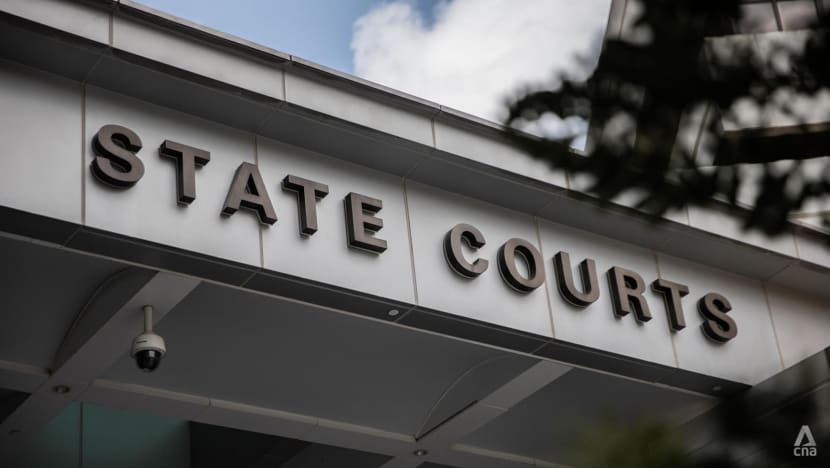
Charles Yeo arriving at the State Courts on Jan 19, 2022.

Listen
6 min
New: You can now listen to articles.

This audio is generated by an AI tool.

Read a summary of this article on FAST.
FAST

SINGAPORE: Fugitive lawyer Charles Yeo Yao Hui has been struck off the rolls, with the Court of Three Judges saying that he had shown himself "thoroughly unfit to wear the mantle of membership in this venerable profession of law".

In a judgment published on Friday (Nov 28), the court flagged Yeo's "disgraceful online conduct" and his "penchant for assaulting the integrity and impartiality of the justice system" in deciding that his offences warranted disbarring.

Yeo absconded from Singapore in 2022 while facing criminal charges and was last known to be in the United Kingdom.

The Law Society of Singapore (LawSoc) brought five applications against him for sanctions for conduct. They included the mismanagement of money and accounting records, failure to directly communicate with three migrant workers to verify their identity and instructions as he purported to act for them in workplace injury suits, abuse of court and publications on his Instagram account that impugned the integrity of the judiciary and the Attorney-General.

Arrangements were made to allow Yeo to log into the Zoom courtroom on the day of the hearing on Sep 11, but he did not show up.

Instead, he posted on Instagram saying, among other things, that he did not plan to engage with the "kangaroo courts of Singapore" and "spit" on them.

The Court of Three Judges, comprising Chief Justice Sundaresh Menon and Justices of Appeal Tay Yong Kwang and Steven Chong, found that all the charges were made out and there was no suitable sanction other than striking Yeo off the roll.

"MANIFESTLY UNFIT"

Delivering the judgment, Justice Chong said Yeo's failings "went far beyond one-off lapses".

"To the contrary, the gross extent of his breaches, both in terms of the quantity of offending incidents, reflecting their systemic and repeated nature, and the quality of his misconduct, which fell far short of the rudimentary level of integrity, probity, and trustworthiness which is expected of any member of an honourable profession, unequivocally signified his serious defects of character that rendered the respondent manifestly unfit to remain an officer of the court and an advocate and solicitor in Singapore," said Justice Chong.

The court noted that it is "uncommon" for a lawyer to be found guilty of breaching all his duties like those in Yeo's charges.

Justice Chong said Yeo's "unfitness" is evidenced by his "clear inability to fulfil the essential responsibilities of a legal practitioner".

The "cumulative effect of all his ethical transgressions" paints the picture of a legal practitioner who "held a cavalier disregard" for safeguards designed to protect clients, flouted an advocate's most central duty to the court and "so consistently conducted himself on a public platform with such an unbecoming comportment as to bring disrepute" to the profession, said Justice Chong.

Yeo was admitted to the roll of advocates and solicitors in August 2016. He did not have a valid practising certificate between April 2022 and June 2022.

Around February 2022, an accountancy practice was appointed by LawSoc to inspect the books of account of Whitefield Law, where Yeo was a director.

A subsequent report identified at least 185 breaches of the Legal Profession (Solicitors' Accounts) Rules (SAR). These were for instances such as where money was withdrawn from the client account without the court's permission, or when client monies were deposited in the office account instead of the client account.

For the social media charges against Yeo, the court noted four categories with "objectionable contents".

These were: Publications which scandalised the judiciary, publications which attacked the integrity, impartiality or independence of the Attorney-General, publications amounting to sub judice contempt of court and publications making "discourteous attacks against fellow members of the Singapore Bar".

The judgment listed long paragraphs from his offending posts, which CNA will not be reproducing.

The court found that Yeo "revealed numerous character defects" which rendered him "plainly unfit to remain as a legal practitioner in Singapore".

He had a "pattern of professional dereliction and a cavalier disregard for the serious responsibility of holding clients' monies and taking due care to safeguard clients' crucial interests in the proper protection of their funds", said Justice Chong.

Yeo "simply could not be bothered to ensure that Whitefield's financial records were in order", he added.

As for the migrant worker cases, the court found that Yeo's "sheer disregard" for their interests was "utterly appalling".

Yeo's conduct in court demonstrated a "particularly severe character defect - dishonesty", said Justice Chong.

"Lastly, the respondent’s allegations and aspersions, ventilated over the public platform of Instagram, were highly dishonourable, and for them to have been made by a member of the legal profession unquestionably tended to shame and bring discredit to an honourable profession."

"His attacks on legal institutions and individual lawyers were all filled with invective and gratuitously vituperative insults using vulgar language to humiliate and degrade the targets of his vitriol," noted Justice Chong.

"There is no question that the average right-thinking member of the public would perceive such conduct to be disgraceful both to the respondent as an individual and, more significantly, to the legal profession – indeed, the very same profession whose imprimatur of legitimacy he wielded to clothe his attacks with a patina of authenticity and to masquerade as a knowledgeable 'insider' unearthing hidden truths about the domestic legal system."

Justice Chong also referenced Yeo's "total absence of remorse and contrition for his misconduct", and how he has not offered any apology to date.

Yeo declined to participate in the disciplinary tribunal proceedings, boycotting them along with the hearing by the Court of Three Judges.

"His lack of any ethical insight into his own shortcomings to conduct even the most basic of checks to protect his clients' interests is apparently lost on him," said Justice Chong.

"In light of his attitude, there is little to no chance of the respondent being rehabilitated and rectifying any of the defects of character that we have identified."

Source: CNA/ll(sn)

Sign up for our newsletters

Get our pick of top stories and thought-provoking articles in your inbox

Subscribe here
Inbox
Advertisement

Singapore

Government to provide one-time property tax rebate of up to 15% for owner-occupied homes in 2026

Owner-occupiers living in three-room and larger HDB flats will see an average monthly property tax increase of S$2 to S$3, after the rebate, while one- and two-room HDB owner-occupiers will continue to pay no property tax.

Government to provide one-time property tax rebate of up to 15% for owner-occupied homes in 2026

Private residences and HDB blocks in Singapore. (File photo: CNA/Jeremy Long)

Listen
2 min
New: You can now listen to articles.

This audio is generated by an AI tool.

Read a summary of this article on FAST.
FAST

SINGAPORE: The government will provide a one-off property tax rebate of up to 15 per cent in 2026 for owner-occupied residential properties, the Ministry of Finance (MOF) and Inland Revenue Authority of Singapore (IRAS) said on Friday (Nov 28).

All owner-occupied Housing and Development Board (HDB) flats will receive a 15 per cent property tax rebate. Owner-occupied private residential properties will get a 10 per cent rebate, capped at S$500 (US$385).

"This will help to cushion (property tax) increases for Singaporeans, amidst a moderating residential rental market with modest increases in market rents," said MOF and IRAS in a joint media release.

Property tax rebates were also provided in 2025 - at 20 per cent for owner-occupied HDB flats and 15 per cent for owner-occupied private residential properties, capped at S$1,000.

For 2026, owner-occupiers living in three-room and larger HDB flats will see an average monthly property tax increase of S$2 to S$3, while one- and two-room HDB owner-occupiers will continue to pay no property tax.

Half of owner-occupiers of private properties will get a property tax increase of less than S$6 per month. The remainder will see higher property tax increases, which usually are for higher-value private properties.

All property owners will receive their 2026 property tax bills in December. The bills are sent out in batches, and some property owners may receive them earlier than others. 

Homeowners will receive SMS or email notifications from IRAS about the tax bill and payment due date. They can also log in to myTax Portal to check.

"Property owners are encouraged to apply for GIRO to enjoy up to 12-month interest-free instalments or opt for a one-time deduction," said the authorities.

Owners facing financial difficulties can approach IRAS for assistance to discuss a suitable payment plan before the payment due date

Source: CNA/dc

Sign up for our newsletters

Get our pick of top stories and thought-provoking articles in your inbox

Subscribe here
Inbox
Advertisement

Singapore

Workers' Party chief Pritam Singh's appeal verdict hearing fixed for Dec 4

Justice Steven Chong is set to deliver the appeal verdict on Dec 4.

Workers' Party chief Pritam Singh's appeal verdict hearing fixed for Dec 4

Pritam Singh arrives at the Supreme Court for his appeal hearing on Nov 4, 2025.

Listen
3 min
New: You can now listen to articles.

This audio is generated by an AI tool.

Read a summary of this article on FAST.
FAST

SINGAPORE: The verdict for Leader of the Opposition Pritam Singh's appeal against his conviction for lying to a parliamentary privileges committee has been fixed for Dec 4.

This is exactly a month after his appeal was heard by a High Court judge.

The hearing has been listed on the public hearing list before Justice Steven Chong, and Singh's defence team confirmed with CNA on Friday (Nov 28) that it was fixed for the appeal verdict.

Singh, 49, initially indicated he would be appealing against his sentence of a S$14,000 (US$10,700) fine, along with his conviction.

However, at the actual appeal, he dropped the appeal against the sentence and focused on the conviction, which stemmed from how he dealt with a lie told by former Workers' Party member Raeesah Khan.

Ms Khan had lied in parliament on Aug 3, 2021, about accompanying a rape victim to a police station, where the police allegedly made unsavoury remarks about the victim.

When questioned about it again in parliament by Law and Home Affairs Minister K Shanmugam, Ms Khan doubled down on her lie.

She later confessed that her anecdote was false in a statement in parliament on Nov 1, 2021, and Singh was later charged in relation to his testimonies before the committee of privileges on what happened.

Singh had contested the two charges but was convicted in February, receiving the maximum fine of S$7,000 for each of the charges over false testimonies he gave to a parliamentary privileges committee.

During the appeal on Nov 4, Justice Steven Chong questioned both the prosecution - led by Deputy Attorney-General Goh Yihan - and the lead defence lawyer, Mr Andre Jumabhoy, on their respective submissions.

In his written submissions, Mr Jumabhoy said the case had been "wrongly decided" by the trial judge, that the law was "misapplied" and the facts "misjudged".

He said the trial judge accepted "impossibilities" in Ms Khan's account as "proof" and "conjecture as fact", ignoring the "plain reality" that Singh "consistently acted with caution, integrity and empathy".

"He never told Ms Khan to lie. He never encouraged her to maintain the untruth. He gave her time, reminded her of the seriousness of speaking in parliament, and ultimately required her to come clean - in her own words and by her own hand," wrote Mr Jumabhoy.

The prosecution urged the court to dismiss the appeal, saying Singh was seeking a "retrial" instead and that the conviction was "legally and factually sound".

They also urged the court to uphold the trial judge's finding that Singh was not a credible witness, saying Singh was contesting the trial judge's conclusion that "his own testimony was unreliable and unworthy of belief".

The penalties for the charges of wilfully making false answers to questions material to the subject of inquiry before the Committee of Privileges, under the Parliament (Privileges, Immunities and Powers) Act, are a maximum jail term of three years, a fine of up to S$7,000, or both per charge.

Source: CNA/ll(mi)

Sign up for our newsletters

Get our pick of top stories and thought-provoking articles in your inbox

Subscribe here
Inbox
Advertisement

Singapore

Former DBS CEO Piyush Gupta appointed chairman of Temasek India

Mr Gupta will take on the role from Dec 1. 

Former DBS CEO Piyush Gupta appointed chairman of Temasek India

DBS CEO Piyush Gupta speaks during a Reuters Newsmaker event in Singapore on Sep 14, 2023. (File photo: Reuters/Mindy Tan)

Listen
2 min
New: You can now listen to articles.

This audio is generated by an AI tool.

Read a summary of this article on FAST.
FAST

SINGAPORE: Former DBS CEO Piyush Gupta has been appointed chairman of Temasek India.

Mr Gupta, who retired from his post at the bank in March, will take on the new role from Dec 1, said Temasek in a press release on Friday (Nov 28).

As chairman, Mr Gupta will work closely with Mr Ravi Lambah, head of the Temasek India team and head of strategic initiatives, on investment strategies.

He will support Temasek's portfolio companies as they identify opportunities in India, and also "take on an institutional focus for Temasek by engaging with the Indian government and business communities".

In January, Temasek said it was stepping up the pace to grow its US$40 billion India portfolio and would invest US$10 billion in the country over the next three years.

During his time as DBS CEO, Mr Gupta had led the bank's digital transformation and regional expansion for it to become one of the world’s best banks, said Temasek.

“Piyush brings extensive business insights and strong connections developed over decades in financial services,” said Temasek Holdings CEO and executive director Dilhan Pillay.

“Complementing Ravi’s leadership of our India market, he will provide strategic counsel and help strengthen our institutional networks in India and beyond, enhance our franchise value, and expand our portfolio access.”

Mr Gupta said he was honoured with the opportunity to work with the Temasek India team.

“Having been engaged with the Temasek ecosystem for many years, I look forward to collaborating with the team to deepen partnerships, pursue new opportunities, and contribute to Temasek’s continued growth in India,” he added.

Mr Gupta is currently the deputy chairman of Keppel, chairman of the board of trustees of Singapore Management University and chairman of Mandai Park Holdings board.

He holds various other appointments, including being a board member of the Ministry of Trade and Industry's The Future Economy Advisory Panel.

He was Citibank's CEO for South East Asia-Pacific before being appointed DBS CEO in 2009.

Source: CNA/rl(mi)

Sign up for our newsletters

Get our pick of top stories and thought-provoking articles in your inbox

Subscribe here
Inbox
Advertisement

Singapore

Permanent employment at record high; labour force participation rate falls for 4th straight year: MOM

There appears to be no sustained shift towards shorter-term roles among younger workers, said the Ministry of Manpower.

Permanent employment at record high; labour force participation rate falls for 4th straight year: MOM
File photo of people walking. (Photo: CNA/Ooi Boon Keong)
Listen
7 min
New: You can now listen to articles.

This audio is generated by an AI tool.

Read a summary of this article on FAST.
FAST

SINGAPORE: The share of Singapore workers in permanent jobs hit a record high in 2025, with more workers in stable positions across almost all ages, occupations and educational levels, the Ministry of Manpower (MOM) said on Friday (Nov 28).

The proportion of workers in permanent employment reached 90.8 per cent this year, while fixed-term contracted work and casual or on-call work declined, according to an advance release of MOM's labour force report. It was 90.1 per cent in 2024, having fallen from 90.5 per cent in 2023.

The rise in permanent employment was most pronounced among youths aged 15 to 24, going up almost 8 percentage points. Those aged 25 to 29 also saw a 1 percentage point rise.

This suggests there is no sustained shift towards shorter-term roles among younger workers, MOM said.

The share of permanent employment work increased across most industries, including growth sectors like professional services, health and social services, and information and communications.

However, the proportion of residents participating in the labour force fell for a fourth straight year to 67.9 per cent, down from 68.2 per cent in 2024.

Singapore's labour force participation rate was generally on the rise from 1998, and started declining in 2021 during the COVID-19 pandemic.

MOM said the contraction is due to Singapore's ageing population, noting that the trend reflects older workers retiring and ageing out of the labour force.

The labour force comprises citizens and permanent residents aged 15 and above who are either working or looking for a job.

The participation rate is expected to continue declining until population ageing stabilises, said Mr Ang Boon Heng, director of the manpower research and statistics department. 

MOM's data showed there were about 1.16 million people outside the labour force this year, 20,000 more than in 2024. 

The change is primarily due to retirement, with 30.1 per cent of those not working and not looking for a job citing it as a reason. 

This trend is also expected to continue as baby boomers continue to retire, the report said.

More people were also not working due to family responsibilities and housework, with 22 per cent and 15.8 per cent citing these reasons respectively.

SENIORS AND WOMEN IN LABOUR FORCE

Despite there being more retirees, the data showed that there are also more seniors aged 60 and above in the labour force, with their proportion rising from 12.3 per cent in 2015 to 19.3 per cent in 2025.

Over the same decade, the share of residents under 30 declined due to falling birth rates and because more pursued further studies, delaying their entry into the labour force.

Singapore's overall labour force participation rate still ranks highly compared with other high-income countries, the ministry said.

Demographic pressures have partly been eased by women's growing labour force participation over the past decade.

Female representation in the labour force improved significantly from 74.1 per cent in 2015 to 80.5 per cent in 2025.

This reflects the rising educational profile of women and collective efforts to support them to stay in or return to the labour force, according to MOM.

But Singapore still lags behind leading high-income countries because of women's low part-time employment rate – 5.9 per cent, compared to the average of 13.7 per cent among Organisation for Economic Co-operation and Development countries.

Mr Ang said besides higher education, other contributing factors to women's labour force participation include the change in social attitudes towards gender roles in childcare and the availability of childcare facilities.

Male labour force participation remained high at 91.8 per cent.

GROWTH IN REAL INCOMES

Real incomes at the bottom 20th percentile and the median 50th percentile both grew year-on-year, broadly in line with productivity growth over the longer term, said MOM.

Earners at the 20th-percentile saw their real incomes grow 3.8 per cent. Nominally, their earnings increased from S$3,026 in 2024 to S$3,164 this year.

Median earners gained 4.3 per cent in real incomes, with nominal earnings rising from S$5,500 in 2024 to S$5,775 this year.

The ministry said real income growth at the 20th percentile has outstripped growth at the median level over the past five-year and 10-year periods.

Over both durations, 20th-percentile earners enjoyed a 2.9 per cent increase per year in real incomes.

This was higher than the annual gain in median real incomes – 1.6 per cent per year from 2020 to 2025, and 2.1 per cent per year from 2015 to 2025.

MOM said the expansion of the Progressive Wage Model has continued to narrow the income gap between low-income and median wages.

The ratio between 20th-percentile income and median income rose to 0.55 this year, from 0.52 in 2020 and 0.51 in 2015.

Continued productivity and upgrading of skills will help to keep up support for more inclusive income growth, it added.
UNEMPLOYMENT AND DISCOURAGED WORKERS

Unemployment among both professionals, managers, executives and technicians (PMETs) and non-PMETs remained low and stable, said MOM.

The resident unemployment rate edged up from 2.7 per cent to 2.8 per cent for PMETs, and declined from 3.4 per cent to 2.8 per cent for non-PMETs.

Long-term unemployment rates eased for both groups, from 0.7 per cent to 0.6 per cent for PMETs, and from 0.6 per cent to 0.5 per cent for non-PMETs.

Separately, the proportion of discouraged workers, or those not looking for work because they feel their job search will not yield results, stayed low at 7,400 or 0.3 per cent this year.

They are mostly seniors aged 60 and over, followed by those in their 50s. MOM said this reflects "improvements in the education profile of seniors, and not because the extent of discouragement has increased among better-educated seniors".

For the first time, MOM also included data on overseas work experience by resident workers, which it will continue to collect in subsequent years.

This is part of efforts to strengthen the local workforce's readiness for corporate leadership, as multinationals commonly seek out leaders with international experience, according to the ministry.
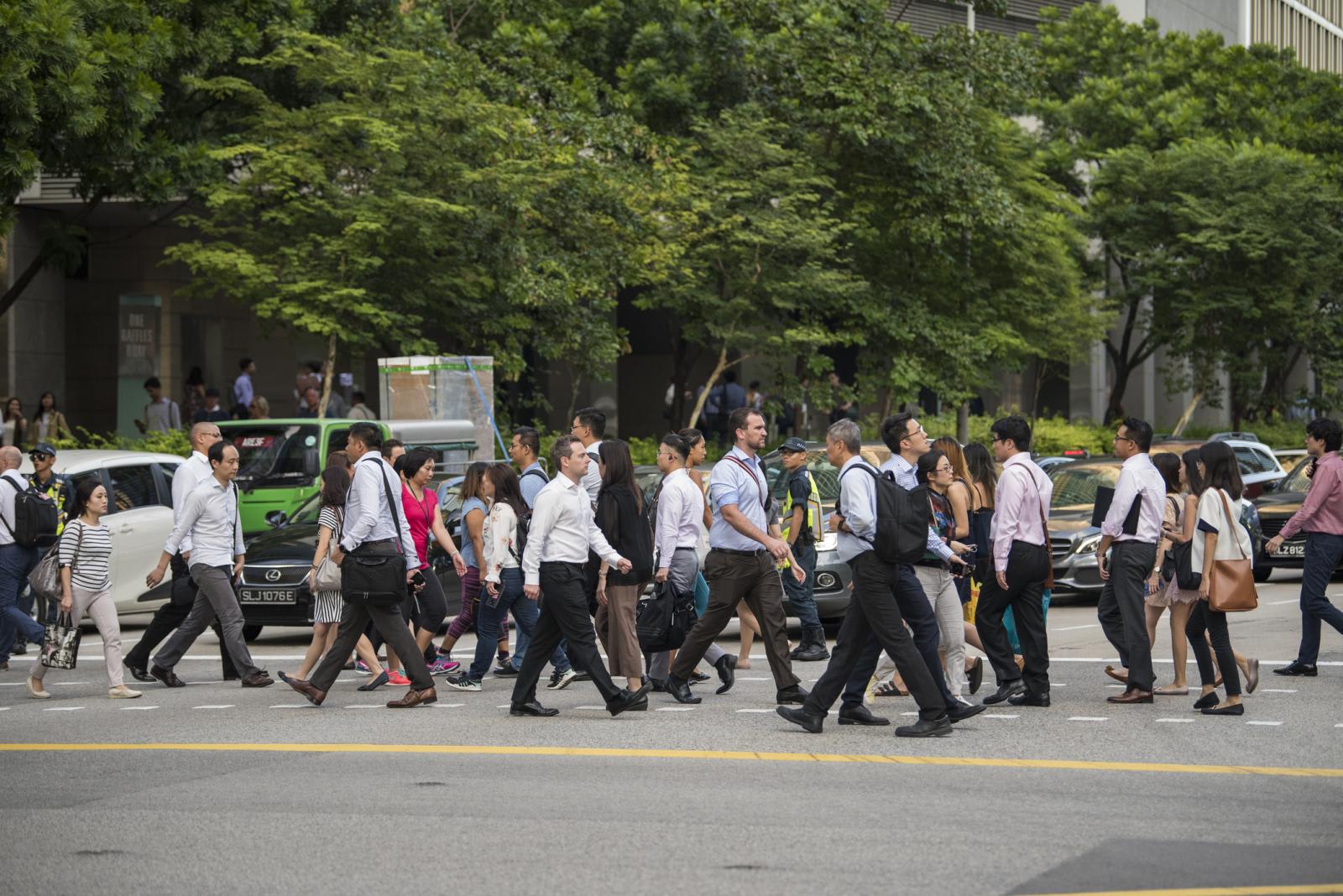
The survey found that 76,000 or 3.1 per cent of resident workers had experience working overseas full-time for at least six months.

MOM's Comprehensive Labour Force Survey collected data from 33,000 households, with an overall response rate of 86.8 per cent.

Source: CNA/dv

Sign up for our newsletters

Get our pick of top stories and thought-provoking articles in your inbox

Subscribe here
Inbox
Advertisement

Singapore

Less job switching, especially by those in their 20s, suggests growing caution among workers, says MOM

Workers aged 25 to 29 saw the biggest drop in job switching, although they remain the most likely to have changed roles in the past year.

Less job switching, especially by those in their 20s, suggests growing caution among workers, says MOM
File photo of people crossing the road. (Photo: CNA/Raj Nadarajan)
Listen
6 min
New: You can now listen to articles.

This audio is generated by an AI tool.

Read a summary of this article on FAST.
FAST

SINGAPORE: The share of resident workers who changed jobs in the past year fell to 6.2 per cent, down from 7.6 per cent in 2024, according to latest labour force data released on Friday (Nov 28).

This is the lowest since 2018, when the Ministry of Manpower (MOM) started measuring job mobility in one-year periods.

The decline may suggest workers are being more careful amid global uncertainties, even as it remains consistent with post-pandemic normalisation of the labour market, MOM said.

"This is part of the gradual downtrend over the recent three years, as job switching peaked in 2022 amid a tighter labour market following the post-COVID reopening of businesses.

"The decline in job switching may also reflect greater caution among workers amid external uncertainties this year," MOM said in an advance release of its labour force report.

The drop was seen across all age groups but was most pronounced among those aged 25 to 29, falling 2 percentage points to 11.7 per cent. This age group is still the most likely to have changed jobs.

MOM said these younger workers tend to switch jobs more frequently than older age groups as they explore career options.

"This suggests that while they are more opportunistic and mobile, they tend to be more sensitive to cyclical hiring. The more cautious stance from employers could contribute to the lower mobility among younger workers in 2025," said the ministry.

Lower job switching was accompanied by lower job-seeking activity, with the proportion of employed resident workers actively looking out for new jobs dropping to 6.2 per cent this year from 7.3 per cent in 2024.

Job switching eased in most sectors, particularly accommodation, administrative and support services and retail trade. This was likely due to better staff retention and less reliance on manpower, according to MOM.

Job switching also fell in the outward-oriented sectors of information and communications, financial and insurance services and professional services, which typically see high job mobility, said the ministry.

"While these sectors typically offer attractive compensation packages to attract and retain workers, job switching in these sectors may have eased in 2025 due to a few high-profile workforce restructurings and more cautious hiring sentiments amid economic uncertainty," the report said.

The ministry pointed out that for full-time employees who did change jobs, six in 10 enjoyed real income growth, suggesting opportunities for upward mobility remain.

Global economic uncertainty has persisted this year on the back of the United States' tariff actions and heightened geopolitical risks. Singapore has set up an economic resilience taskforce to deal with the impact of trade tensions.

The report also found that the share of Singapore workers in permanent jobs hit a record high in 2025, but the participation rate in the labour force among residents has continued to fall for the fourth year in a row.

SELF-EMPLOYED AND PLATFORM WORKERS

The proportion of self-employed workers, which includes platform workers, stayed low at 11.8 per cent in 2025. This figure has fallen in recent years as a post-pandemic hiring surge drew more workers into regular employee jobs, said MOM.

The number of residents who do self-employed work as their main job increased from 169,000 in 2024 to 179,200 this year.

The vast majority of them choose self-employment because they prefer it, with this share of workers rising to 95.5 per cent this year – the highest level since 2016.

Flexibility in working hours and location, freedom in choice of work and greater control over their careers are the most popular reasons for choosing self-employment.

In contrast, the number of workers who do self-employed work on the side of their main jobs fell from 32,100 in 2024 to 29,000 this year.

The number of platform workers rose to 71,600 this year, up from 67,200 in 2024. They make up 2.9 per cent of employed residents comparable to the proportions in 2023 and the pre-pandemic period, said MOM.

The increase was driven by private-hire car drivers, who make up just over half of platform workers, reflecting stronger demand for their services. Numbers of taxi drivers and delivery workers remained stable.

The share of self-employed workers who faced challenges in their work dropped from 66 per cent in 2016 to 18.2 per cent this year, although there were increases during the pandemic years.

This reflects continuing efforts by the government and tripartite partners to address key concerns about healthcare, retirement, payment-related disputes and loss of income due to work injury, including through the Platform Workers Act, said MOM.

Uncertainty of finding enough work remained the top challenge faced by 9 per cent of self-employed workers, followed by lack of sufficient work and healthcare- and retirement-related concerns.

MOM's Comprehensive Labour Force Survey collected data from 33,000 households, with an overall response rate of 86.8 per cent.

The ministry also surveyed 3,363 residents for its supplementary survey of self-employed workers, of whom 92.5 per cent responded.

Source: CNA/dv(nj)

Sign up for our newsletters

Get our pick of top stories and thought-provoking articles in your inbox

Subscribe here
Inbox