


Have you seen how bamboo clumps on fire splutter, split and explode? Well, you have seen the earliest forms of fireworks or crackers, as they are known in India. Baozhu in Chinese — which literally meant ‘exploding bamboo’ — was the predecessor of fireworks. According to Chinese legend, on New Year’s Eve, a monster would come to eat villagers and destroy villages. People burnt bamboo to produce an explosive sound to scare it away. Thus, fireworks became a tradition for New Year.
Around 800 C.E., Chinese alchemists mixed saltpetre, sulphur and charcoal to create a crude gunpowder, which was then packed it into bamboo shoots and thrown into a fire. The crackers had arrived with a blast. Later, paper tubes replaced bamboo stalks, and fuses made from tissue paper were added. By the 10th century, the Chinese were attaching fireworks to arrows that they shot at enemies. Within the next 200 years, rockets that could be fired at enemies without using an arrow were developed. This technology is still used to make the rocket fireworks.
Beyond weaponry
Around the 13th century, gunpowder reached Europe. While powerful weapons like cannons and muskets were developed, the humble fireworks became popular during celebrations and also travelled to the Americas with the Europeans. On July 4, 1777, the first anniversary of American independence, fireworks were launched in celebration, a practice that still continues.
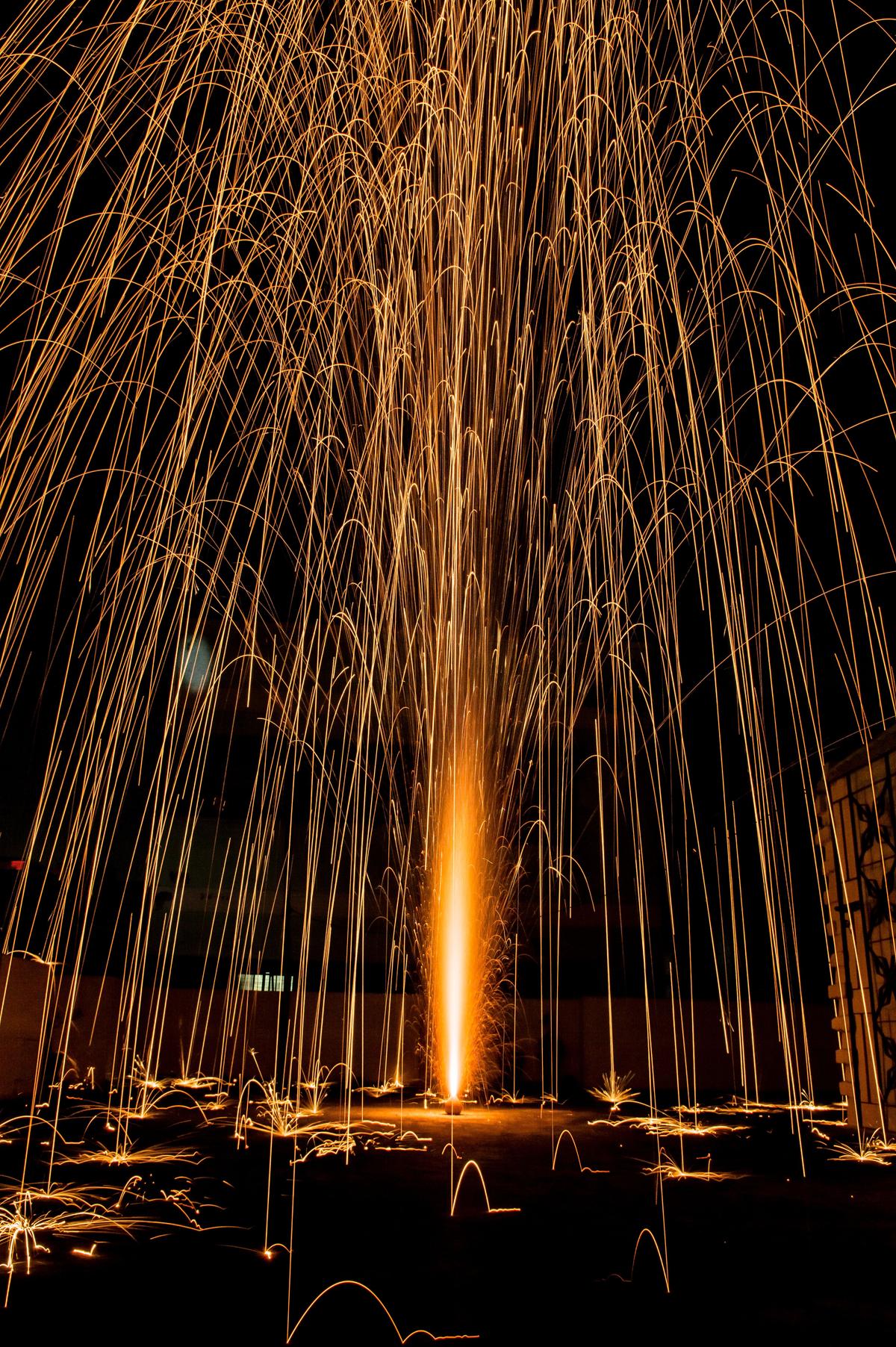
Till the 1830s, all fireworks gave off an orange glow. | Photo Credit: Wikimedia Commons
Till the 1830s, all fireworks gave off an orange glow. In this decade, creative Italians incorporated trace amounts of metals and other ingredients to enhance brightness, add colours and make shapes. Today, fireworks consist of five basic ingredients, colour-producing compounds made of salts and metals, gunpowder as fuel, oxidiser that provides oxygen for fuel combustion, chlorine donors for colours, and a binder that holds the mix together.
Arrival in India
There are different theories on the arrival of firecrackers in India. However, an account by Portuguese traveller Barbosa, of fireworks being used in a wedding in Gujarat in 1518, indicates the wide availability by that time. Fireworks, across the world, were commissioned exclusively by the rulers and the extremely rich.
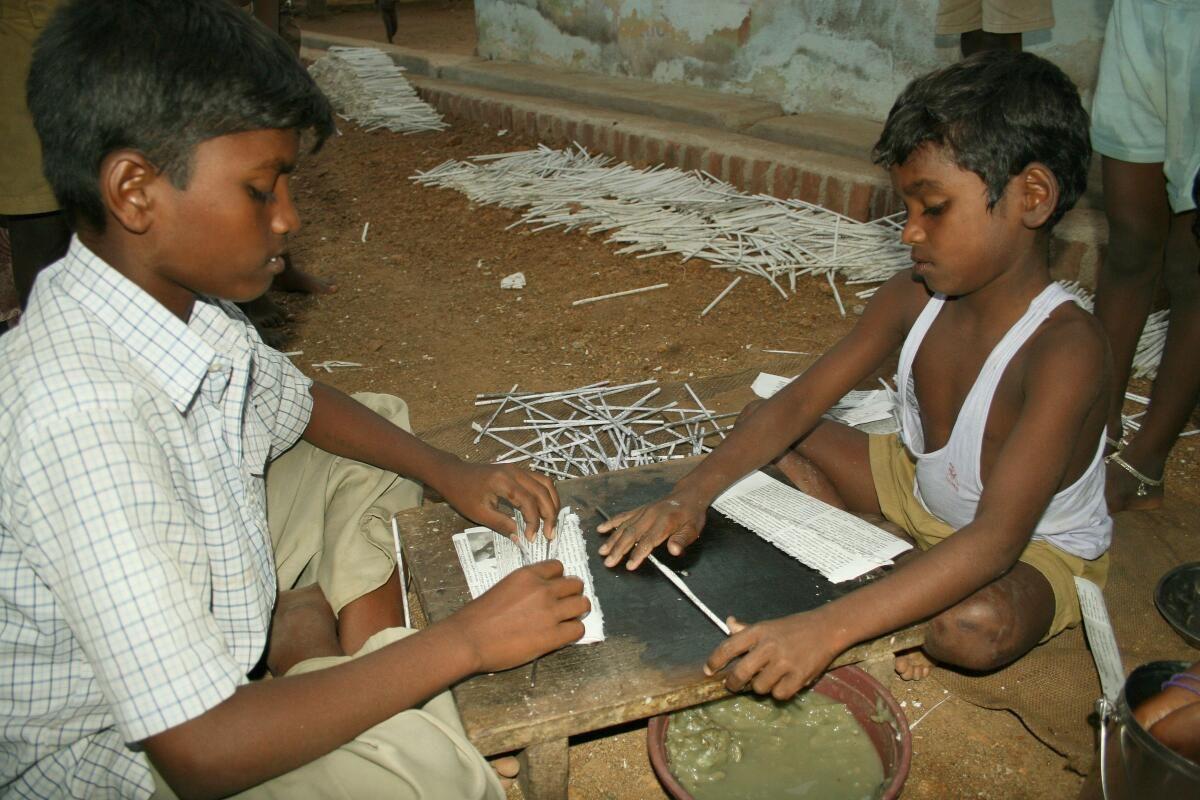
Not only do they work from home in even more exploitative long hours, but are also poorly paid, as payment depends on the number of pieces manufactured. | Photo Credit: K.Ganesan
However, after Independence, Sivakasi in Tamil Nadu emerged as India’s firecracker hub. Using child labour and highly exploitative practices, large quantities of cheap crackers were manufactured. Despite laws and landmark judgments, news reports indicate that the practice of using children below the age of 14 continues. Not only do they work from home in even more exploitative long hours, but are also poorly paid, as payment depends on the number of pieces manufactured.
Another problem with fireworks is the quantum leap in pollution — noise and air. that continues despite bans, fixed time slots, and other measures. The Council for Scientific and Industrial Research has also developed ‘green’ crackers, which it claims has 30% less pollutants. But, questions about how green and effective they are remain.
Fireworks are used to celebrate joyful occasions and during festivals. However, the issues of child labour and air and noise pollution tends to make it a contentious issue.

Published - November 19, 2023 05:03 pm IST


