Skip to content
Science

Echo chamber of outrage: Ars attends a climate skeptics’ summit

A political buffet offering everything but science.

Scott K. Johnson | 721
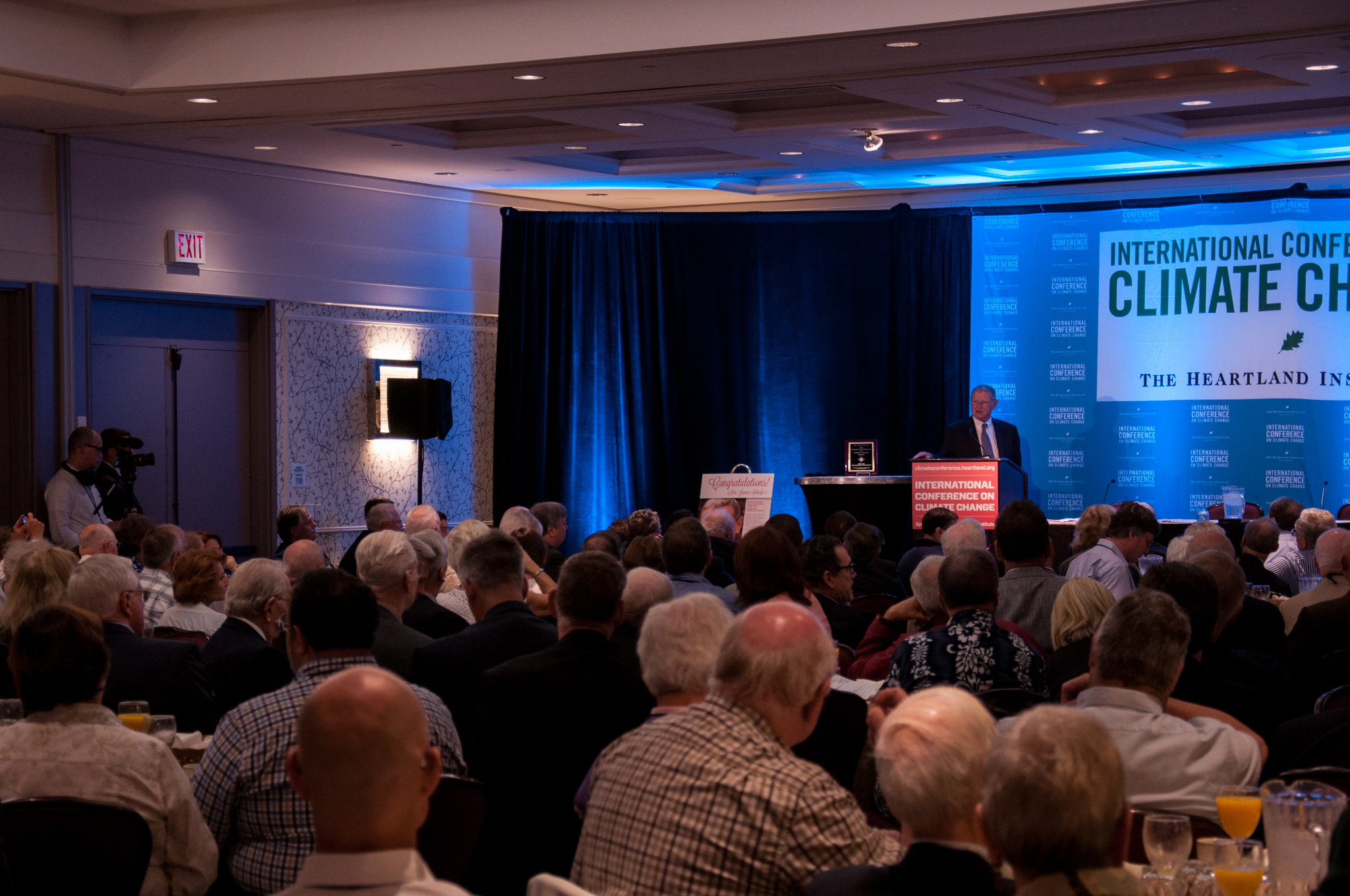
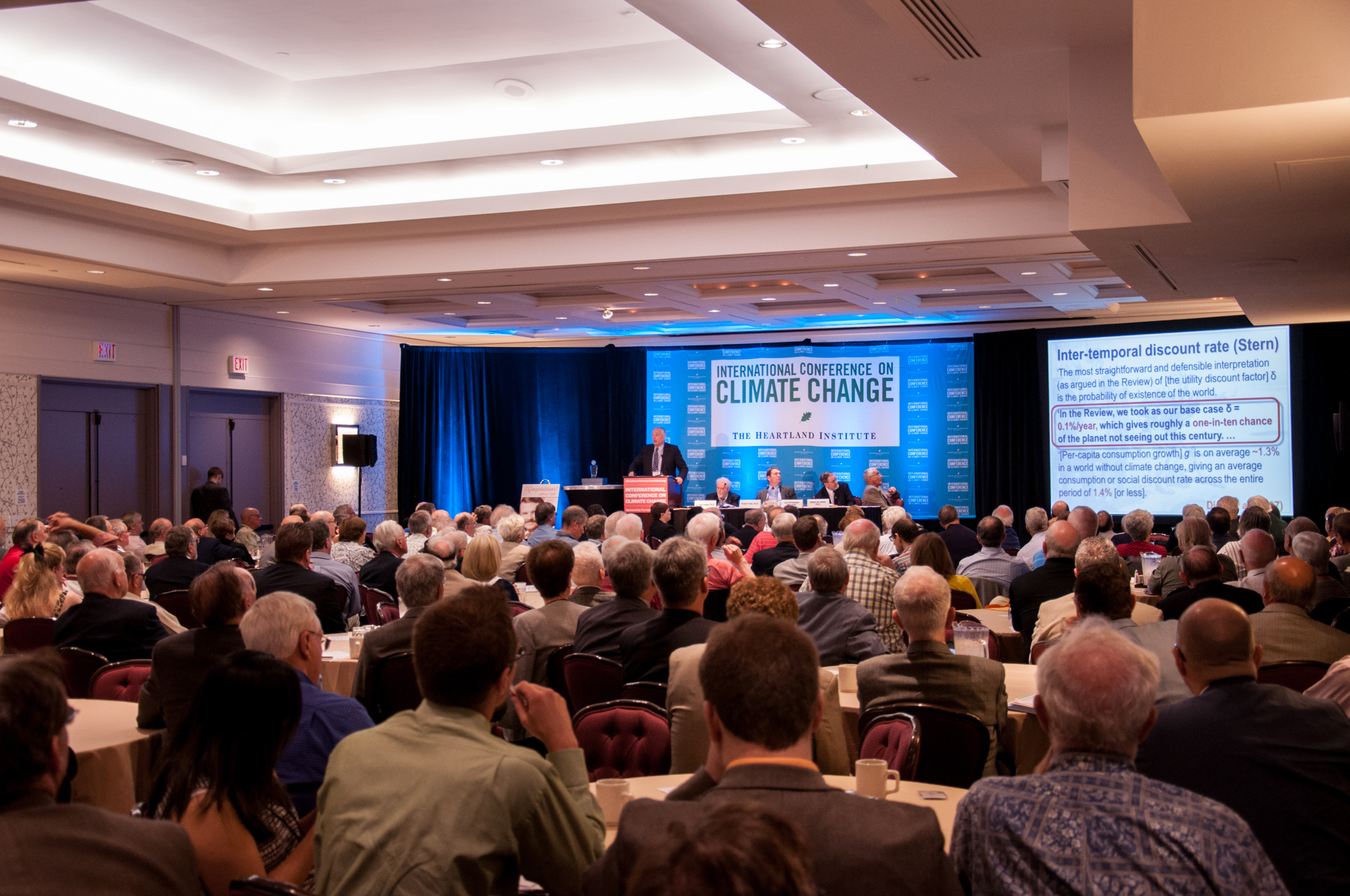
Let's get conferencing. Credit: Scott K. Johnson

“I accept that the planet has warmed,” said conservative columnist Mark Steyn from the podium. “And I rejoice that it is warm.”

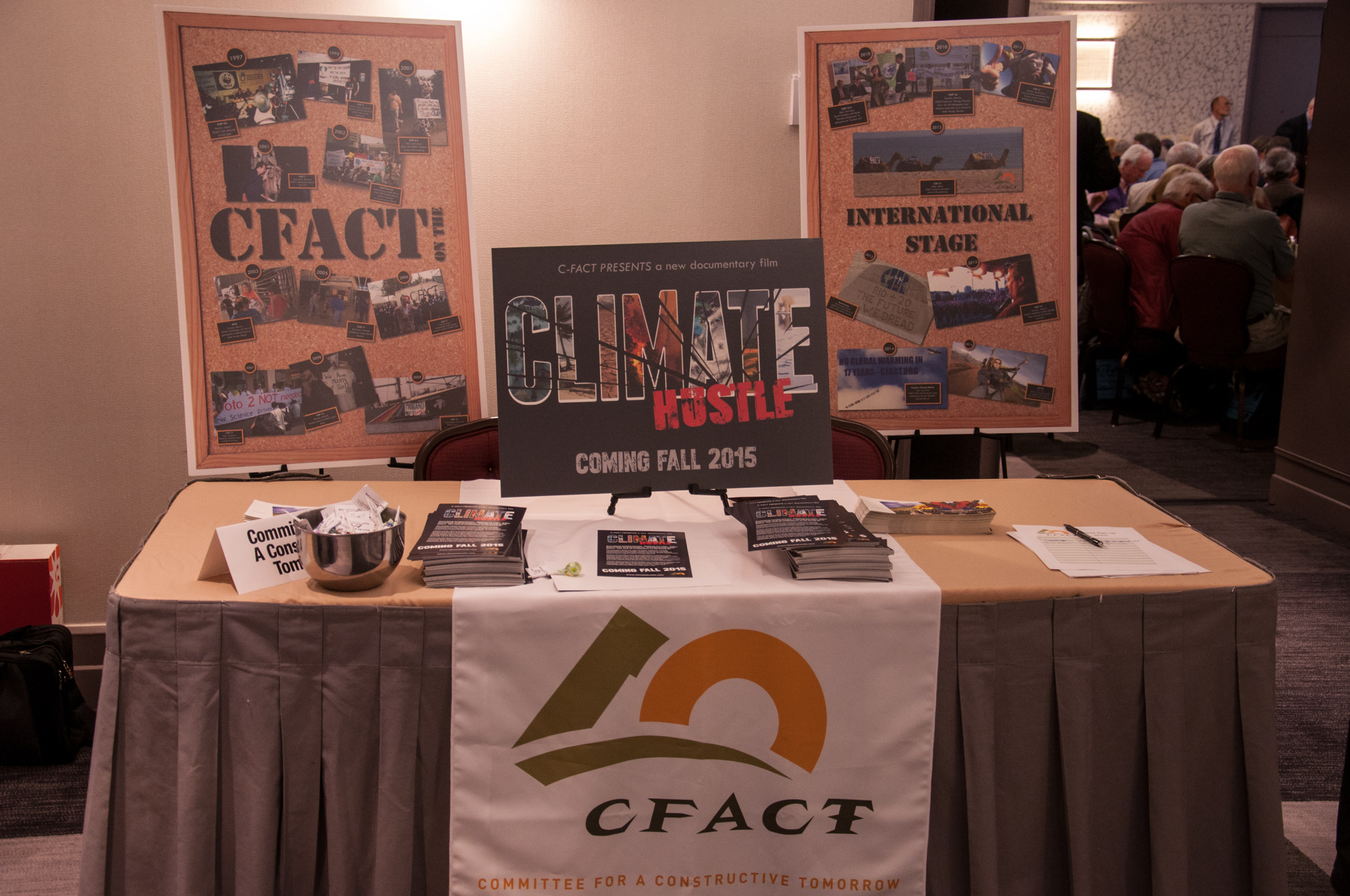
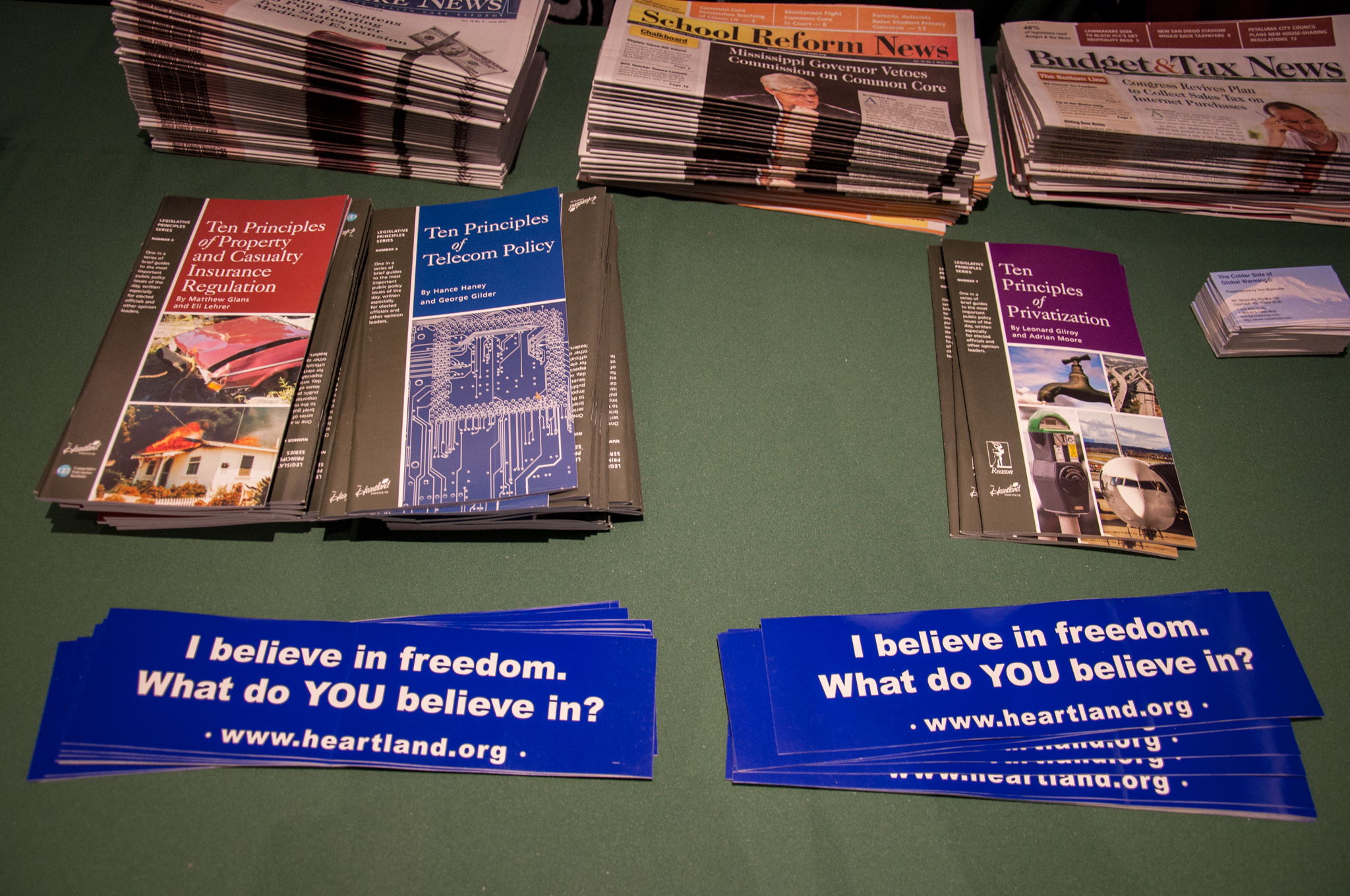
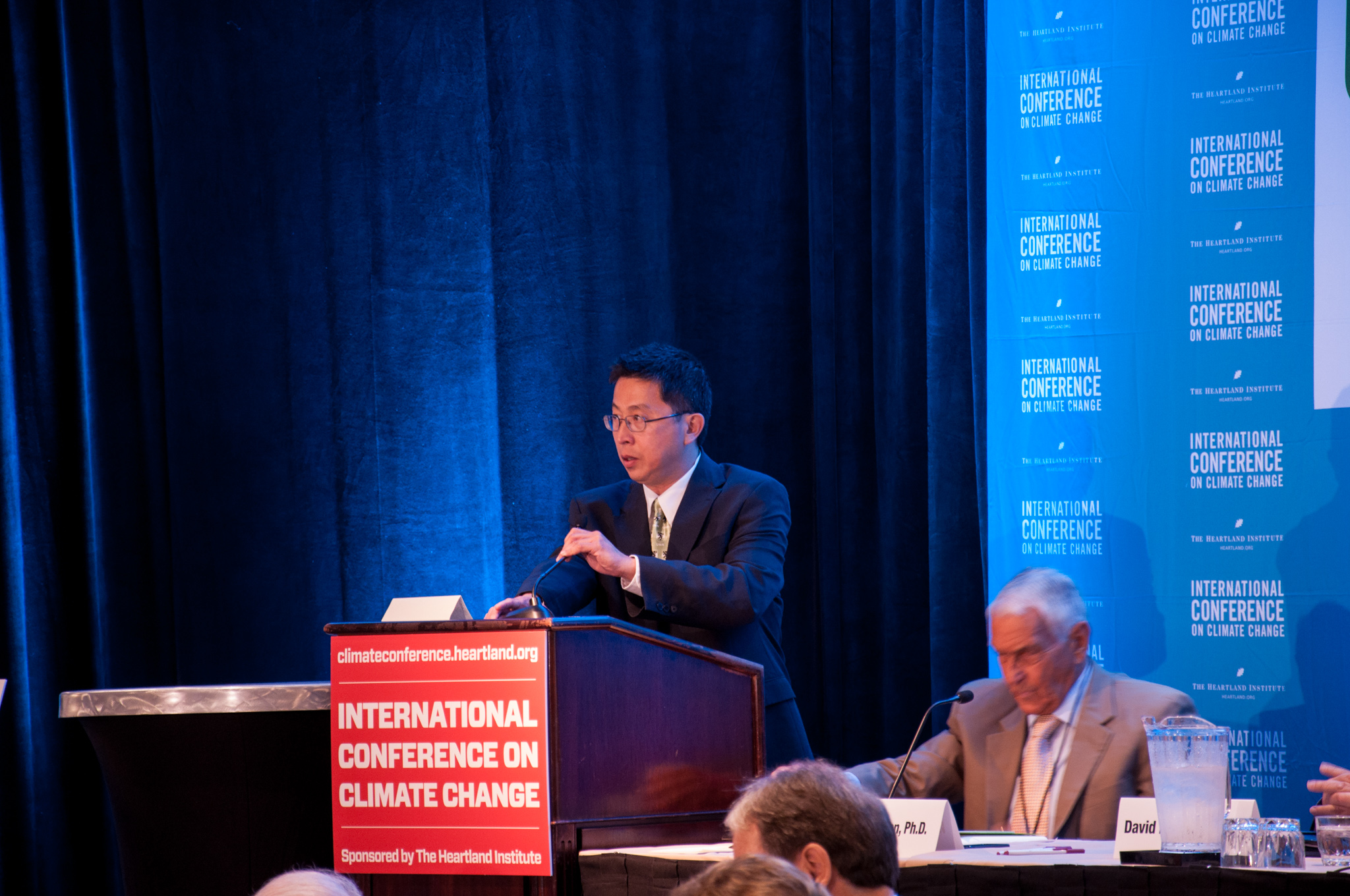
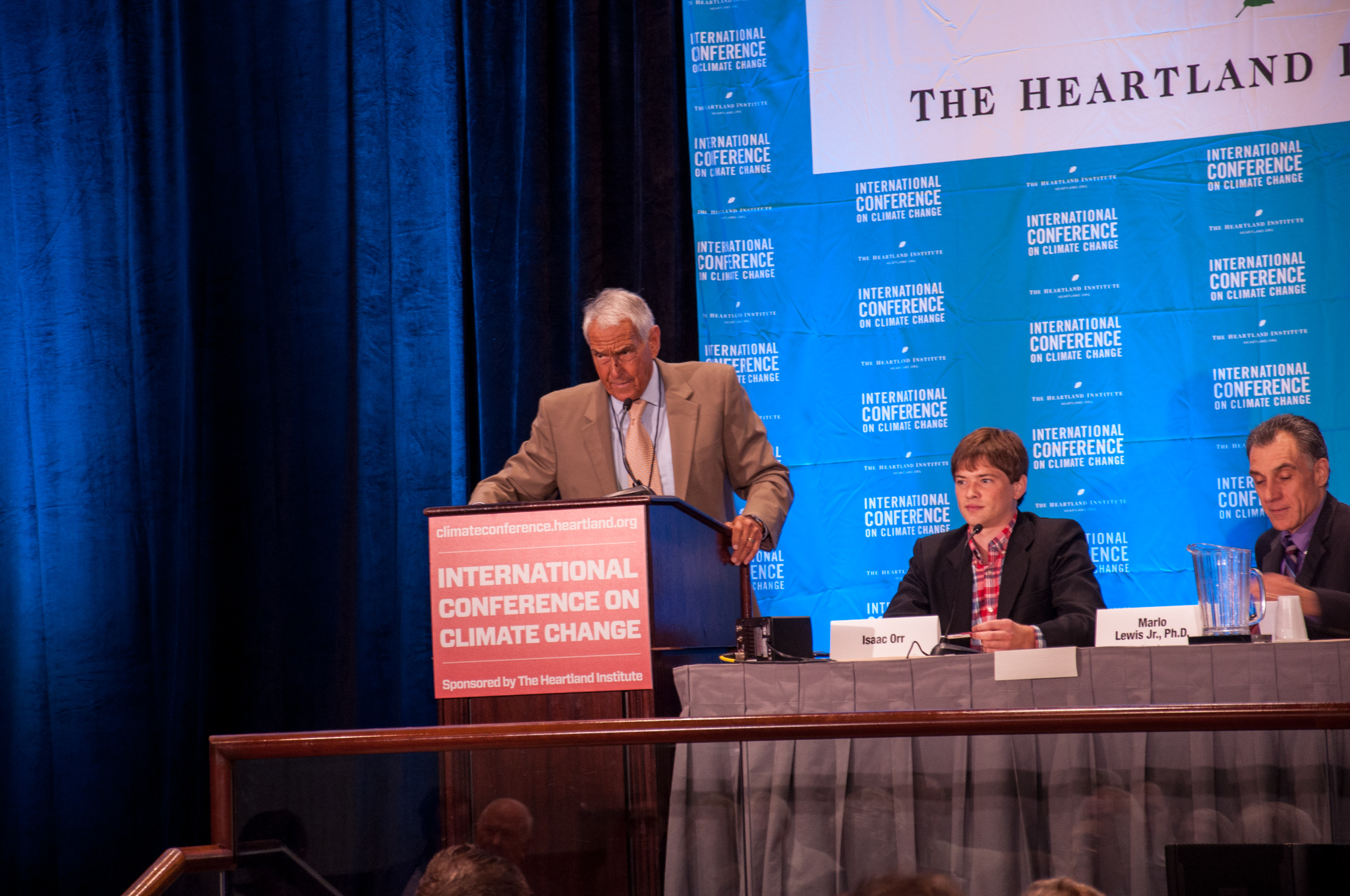
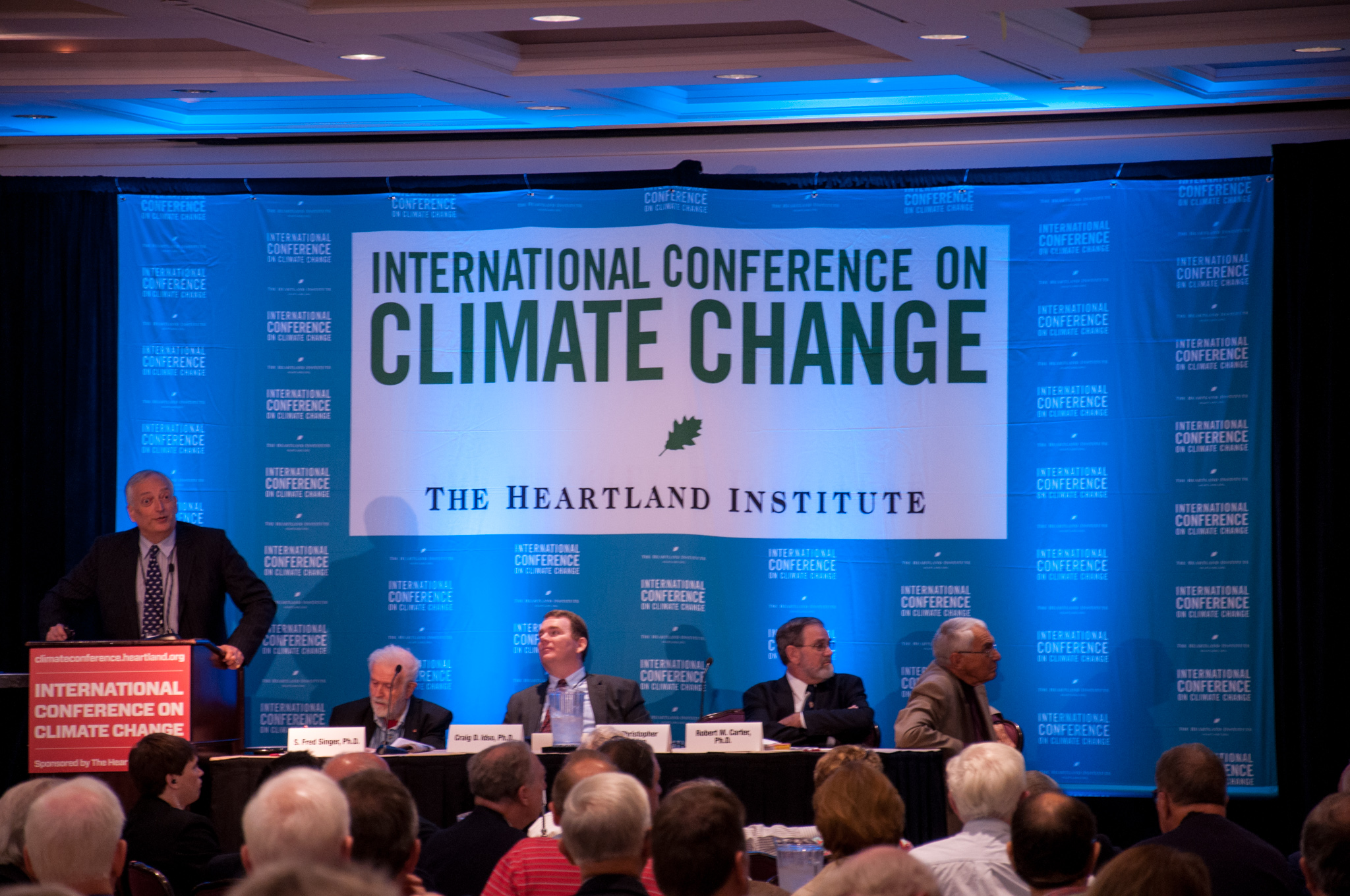
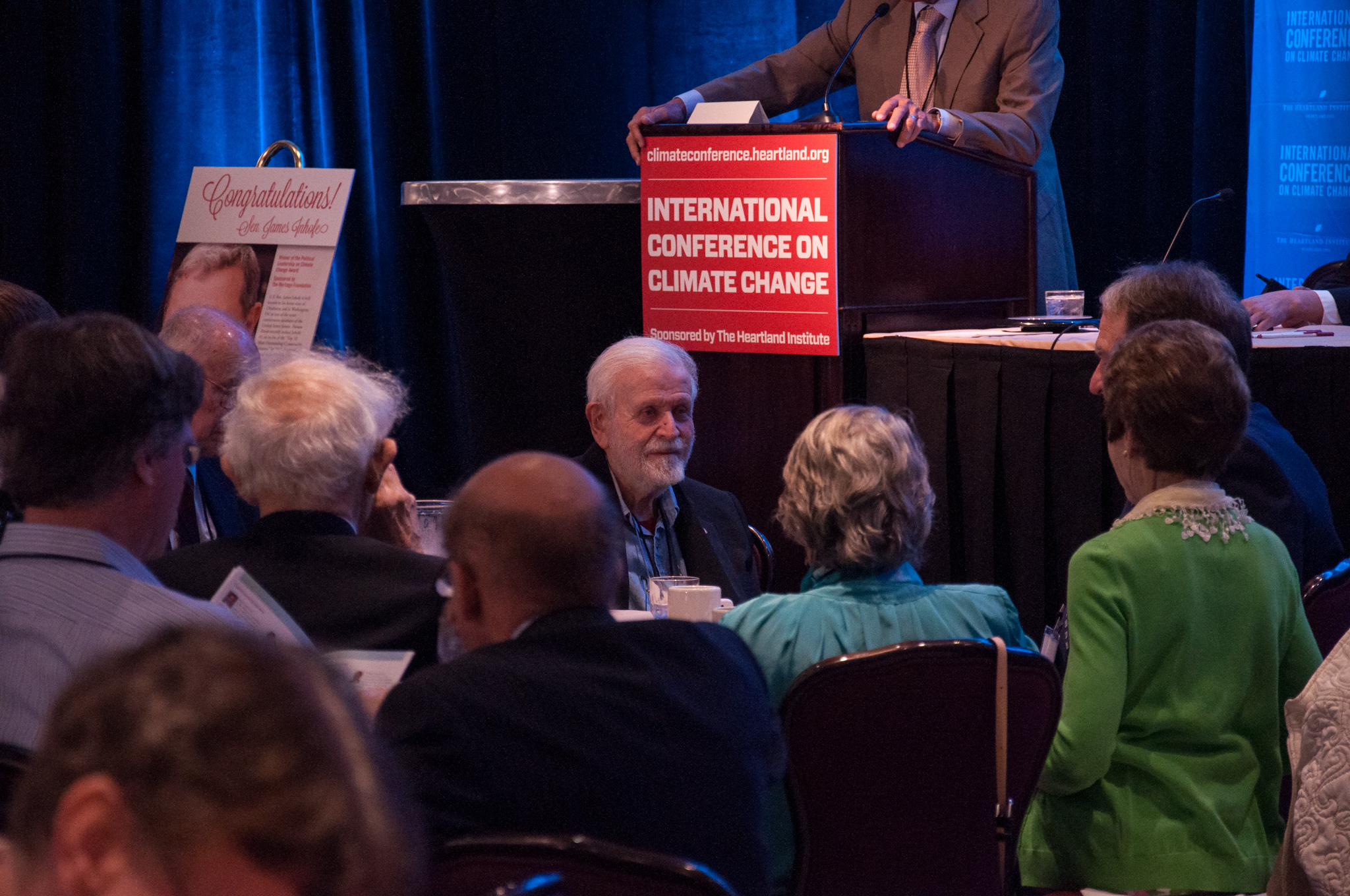
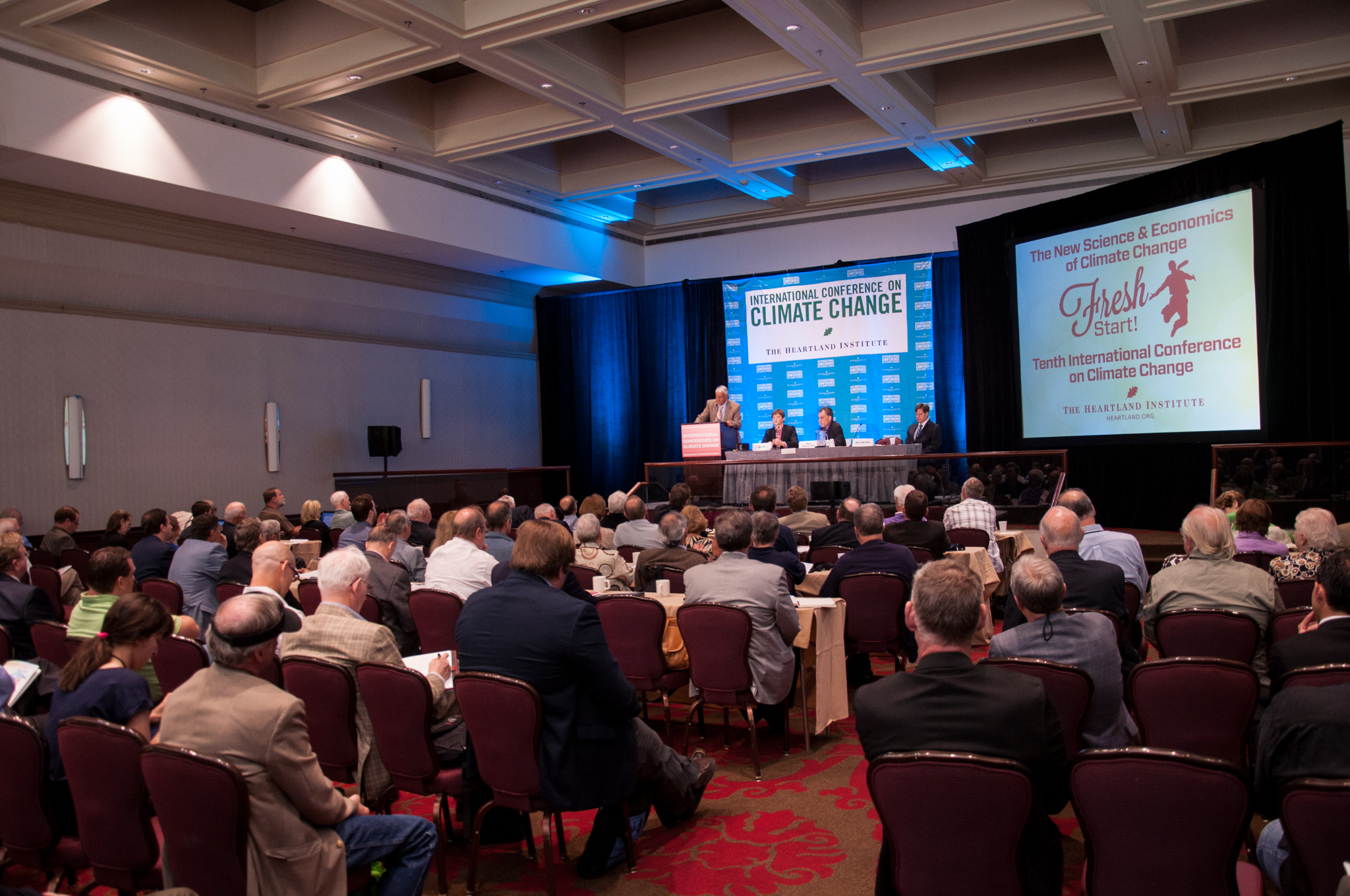
Steyn was one of many speakers at the libertarian Heartland Institute's 10th “International Conference on Climate Change,” a major event for climate science contrarians. The two-day conference, held in mid-June at the classy Washington Court Hotel just a few blocks from the US Capitol, had all the trappings of an academic conference, but you wouldn’t mistake it for a Geological Society of America meeting. Tables set up outside the hotel’s main ballroom hosted conservative advocacy groups and think tanks like CFACT, the Ayn Rand Institute, and the Heritage Foundation (which attracted visitors with a life-size cardboard cut-out of Ronald Reagan). The audience contained some meteorologists but seemed mostly composed of retired couples with an interest in politics, along with a handful of state legislators.

The goal was to gather speakers—who, organizers frequently reminded the audience, were some of the most famous and well-respected experts in the world—who could arm attendees with the information they needed to take the Good Fight back out to the streets. A small number of the talks presented research into climate science, but most were arguments against climate policy based on economic impacts. In other words, imagine the opinion pages of The Wall Street Journal plus a podium.

As for the speakers, they viewed themselves as voices of reason speaking truth to power—all of them trying desperately to keep the Western world from slipping over the precipice to certain economic ruin. And to hear them tell it, Heartland and its allies were winning the battle against the "climate alarmists." The public remains divided on the issue of climate change, with some recent polling placing it low on the priority list of concerns. Attempts to reduce greenhouse gas emissions through legislation have been stymied. International negotiations have been arduous.

I went to Heartland’s conference expecting a series of detailed critiques of climate studies, much like the sort of posts that populate contrarian blogs after a new paper makes headlines. What I experienced instead was significantly less wonky—a cathartic echo chamber of outrage.

Red meat

Serious scientific argument was thin on the ground. For instance, in a breakfast keynote on the second day, Mark Steyn simply made fun of well-known Penn State climate scientist Michael Mann for 30 minutes. (Steyn has written that Mann's research was fraudulent, resulting in a defamation lawsuit from Mann. Steyn is also the editor of a forthcoming book called A Disgrace to the Profession—you can guess who it’s about.)

Steyn wasn’t subtle, reiterating his accusation that Mann’s famous “hockey stick” tree ring temperature reconstruction was “fraudulent in every sense,” which resulted in hearty applause from the audience. Steyn also worked in references to the supposedly scandalous “Climategate” e-mails from 2007, describing University of East Anglia researchers corresponding with Michael Mann as “four schlubs who sound like Mann’s battered wives.”

During the audience Q&A that followed, Steyn found another target in former Intergovernmental Panel on Climate Change (IPCC) Chair Rajendra Pachauri, who resigned earlier this year after sexual harassment accusations. Steyn referred to Pachauri as “Rajendra Pants-downee,” commenting that the former railway engineer’s “choo-choo jumped the tracks.” The jokes got huge laughs.

This is, it probably goes without saying, not the kind of thing you hear at an academic conference. Nearly every presentation referenced both Obama and Al Gore so frequently that a drinking game would have resulted in serious liver damage. References to studies published in peer-reviewed journals, on the other hand, were almost completely absent. Clever insults ruled the day; belly laughs were far more common than the curious "hmms" that usually dot the audience of a research talk.

Snap a selfie with the Gipper?
When life-size just isn't big enough.

Back to the future

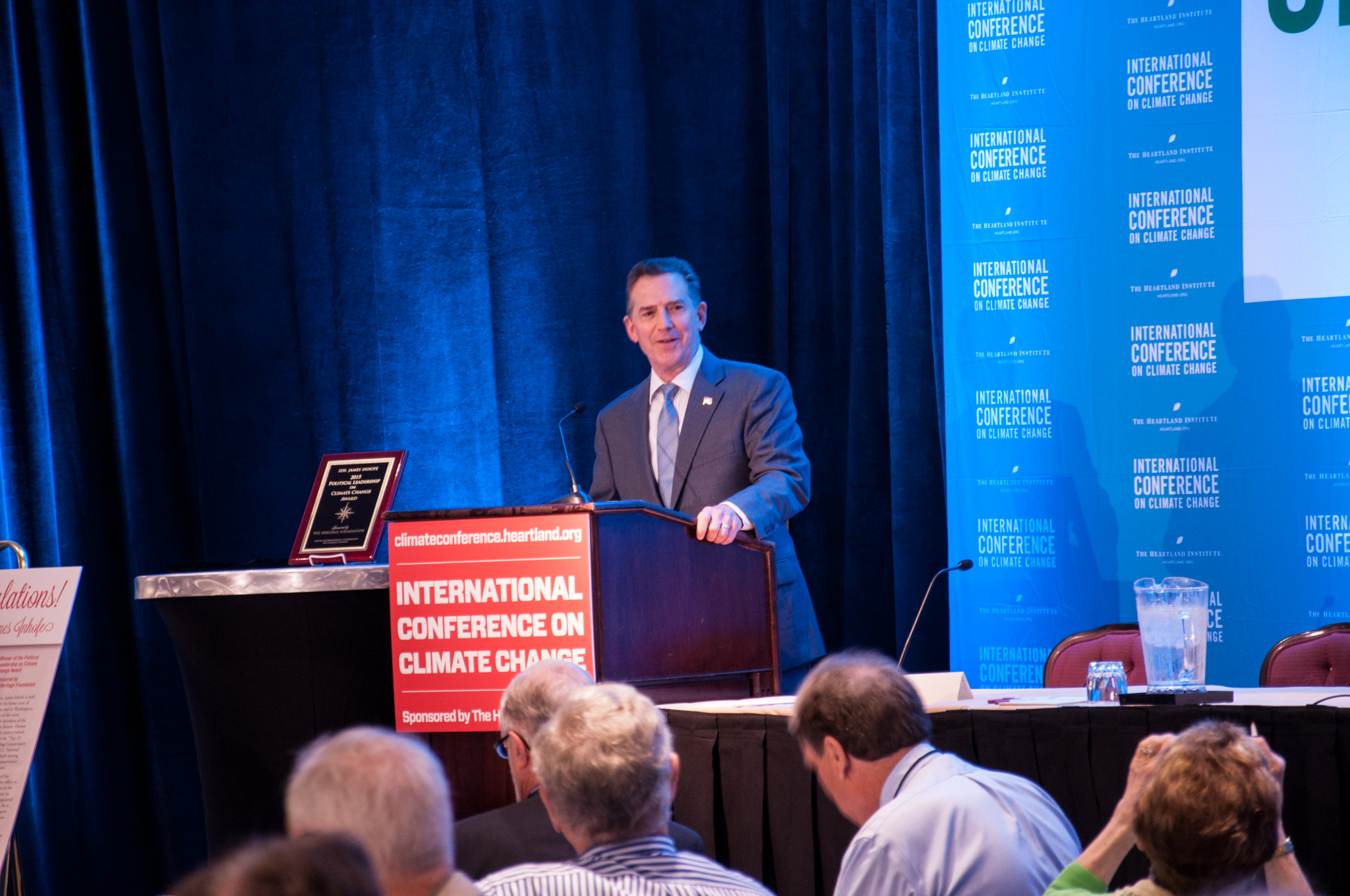
The conference speakers did refer to science in passing—usually through sardonic quips about “alarmist” or "falsified" science—but their references gave me the feeling of being stuck in a time warp. There was an obsession with Al Gore and his 2007 film, An Inconvenient Truth, particularly the imagery of desperate polar bears. (“There is a problem with polar bears right now,” said Oklahoma Senator James Inhofe while receiving an award for political leadership. “It’s overpopulation.”)

Michael Mann’s “hockey stick” temperature reconstruction, first published in 1998, also remained a common punch line. Attendees seemed blissfully unaware of the pile of subsequent studies that have yielded the same result. To them, the hockey stick remains the emblem of debunked, fraudulent climate science—their enemy’s shattered sword.

The bugbear of land temperature records distorted by the urban heat island effect, too, is still being slain. The idea here is that as cities grew up around weather stations, all that concrete heats up in the midday sun, pushing thermometer readings higher and artificially creating the appearance of a warming trend. This does happen, as does the opposite. Speakers claimed repeatedly that researchers ignore this effect.

Though this sounds good, it's not true. (And the fact that there are no urban heat islands on the ocean, which covers most of the Earth’s surface, appears to be under-appreciated.) For instance, the Berkeley Earth project, led by then-climate skeptic Richard Muller, was a privately funded effort purporting to address such warming biases in the temperature record. The project's record turned out to look just like all the others, and the team behind it concluded that the impact of the urban heat island effect was “indistinguishable from zero." That work was promptly discounted by groups like Heartland. When contrarian blogger Anthony Watts was asked during the conference about the Berkeley Earth project, he dismissed it by saying that the project hadn’t excluded “what I consider all of the bad data.”

Part of the crowd listening to Senator Inhofe.

The Barnum buffet

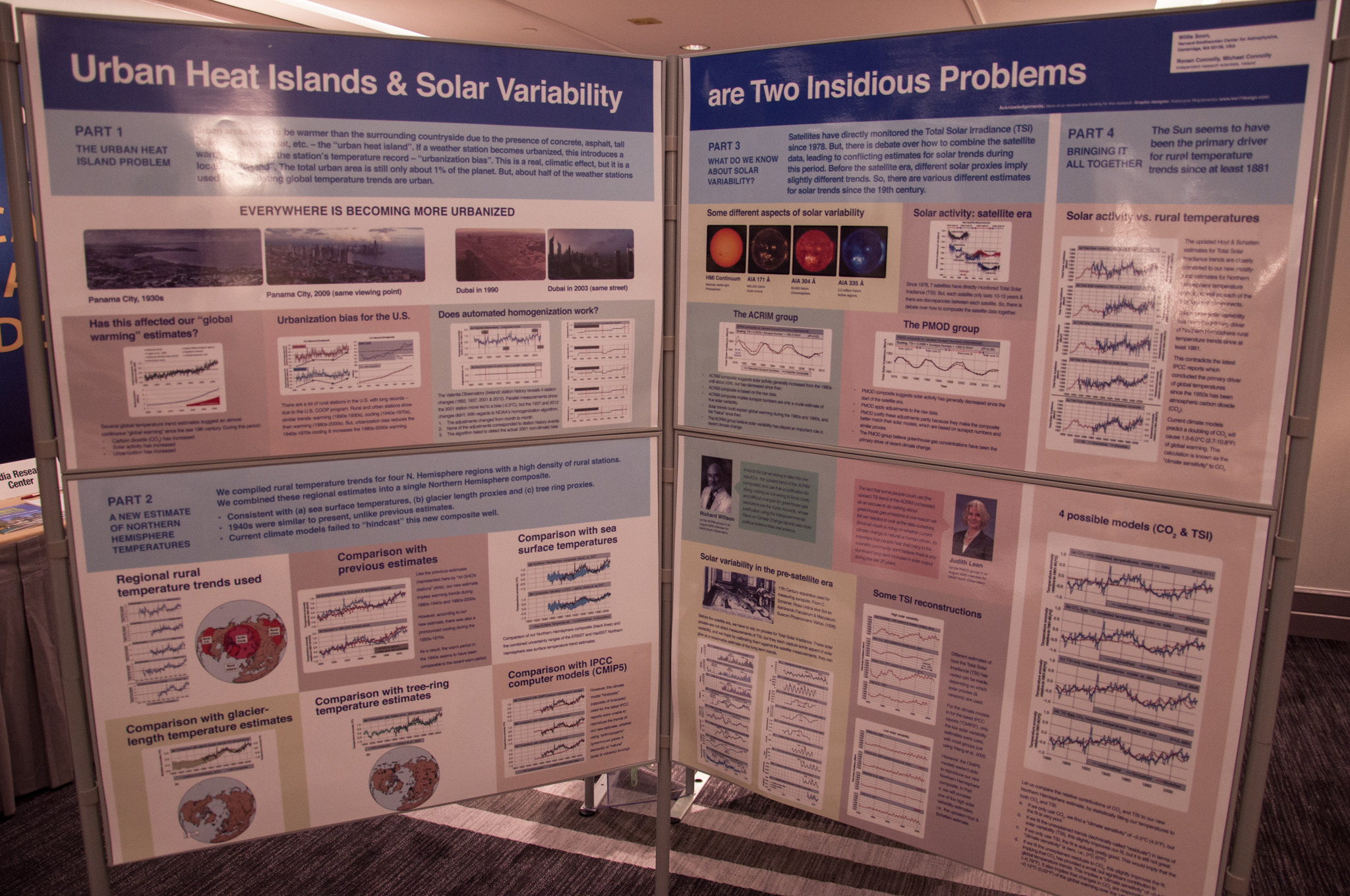
Solar physicist Willie Soon—who recently made news for apparently failing to properly disclose funding from fossil fuel concerns on some of his published papers—also invoked urban heat islands in his talk. It was another attempt at extending his past efforts to show that the sun, rather than greenhouse gas emissions, has driven recent warming. Soon’s arguments have revolved around finding correlations between a specific reconstruction of solar radiation (a problematic one, according to NASA climate scientist Gavin Schmidt) and various regional temperature records.

Because the correlation between solar radiation and existing global temperature records was poor, Soon set out to create a new temperature record. To avoid the dastardly urban heat island effect, Soon selected a collection of rural temperature stations from China, the United States, the Arctic, and Ireland—averaging these regions to produce a "Northern Hemisphere" record. Lo and behold, the 1940s now looked just as warm as the present, matching up nicely with Soon's preferred solar radiation curve. Soon assured the audience that he was not simply looking for a certain result, evidenced by the fact that this wonderful correlation “surprised” him.

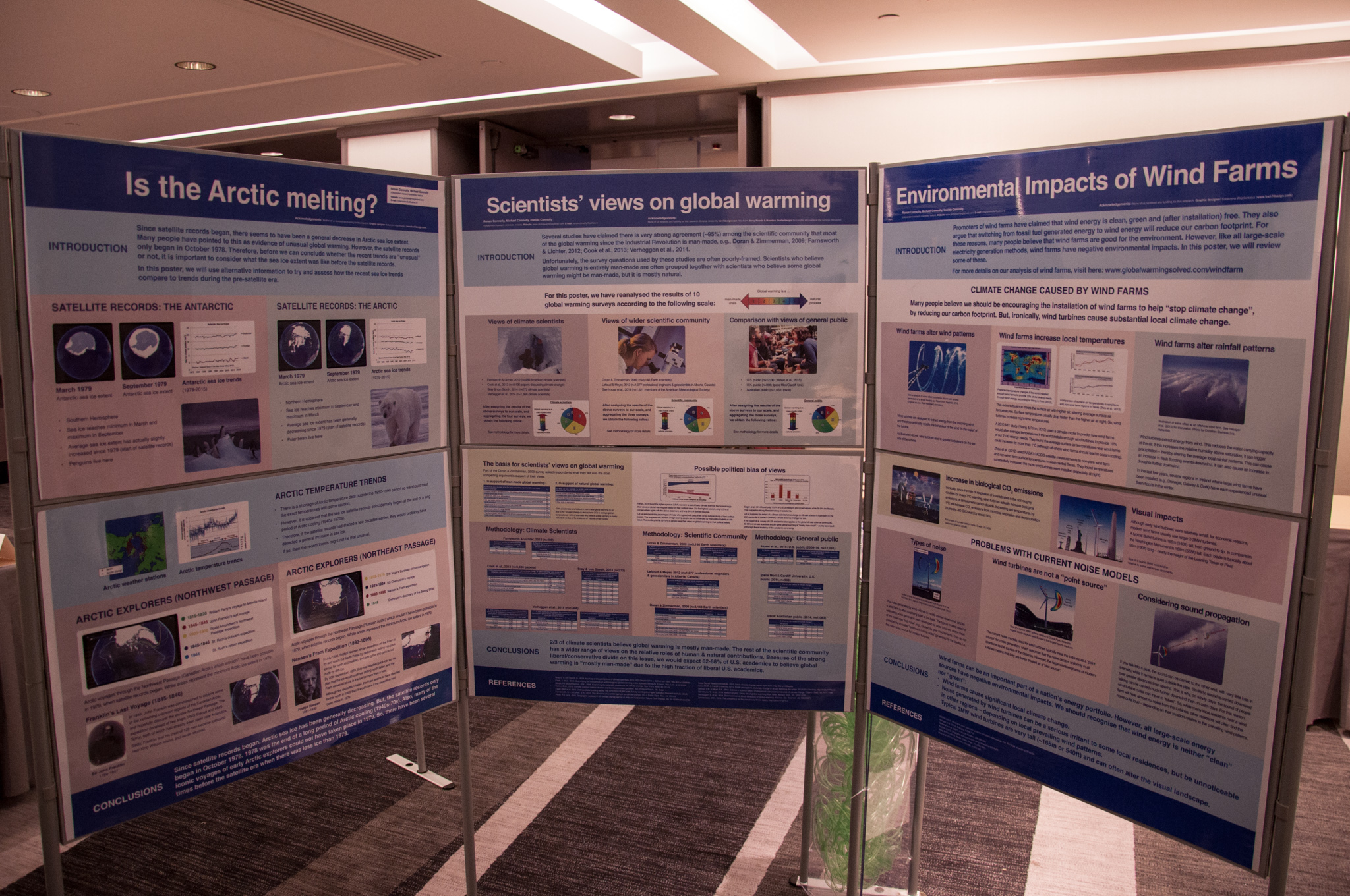
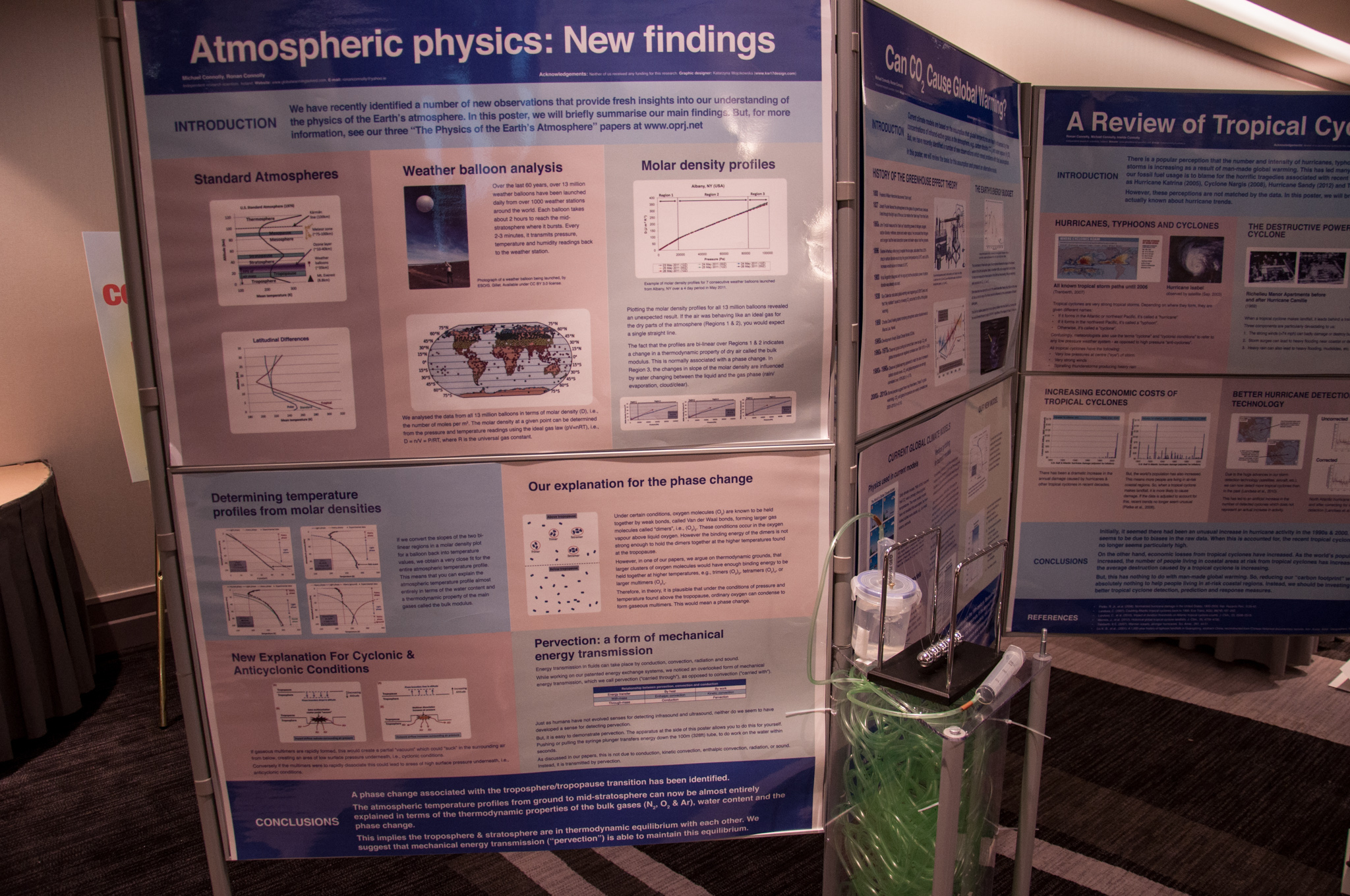
Soon had the help of two collaborators on that work—a father and son team of “independent climate researchers” from Ireland. The Connollys, including Michael, Imelda, and their son Ronan, had several research posters in the exhibition area—the only ones at the conference. These perfectly illustrated the fact that the conference truly had “something for everyone,” as PT Barnum liked to say about his famous circus.

Apart from their work with Willie Soon, the Connollys also presented research showing that the greenhouse effect doesn’t exist. Their new explanation for the temperature profile of the atmosphere also leads to new physics for driving cyclones and the jet stream.

Many climate “skeptics” have recently defended their movement by saying that of course they don’t deny the Earth is warming. They simply disagree with the degree to which humans have caused that warming. But at the Heartland conference, the only consistent thread was that the “alarmists” are wrong—and comically so. Thus, you had some speakers challenge the magnitude of anthropogenic warming, many others arguing that the observed warming is only an artifact of bad measurements, and others arguing that the greenhouse effect doesn’t exist at all. Without actual scientific research, it’s hard to converge on reality.

MC Conspiracy, feat. DJ Secret EPA

At least one claim enjoyed widespread and explicit agreement: climate scientists are not just wrong, they are frauds conspiring with the US EPA and the United Nations. Craig Idso (founder and chairman of the “Center for the Study of Carbon Dioxide and Global Change”) described the federal government’s studies on the economic costs of CO2 emissions as “scientifically fraudulent and borderline criminal," to applause. Competitive Enterprise Institute Fellow Marlo Lewis called those same studies “pseudoscience” that relied on “tricks” to justify “draconian” regulations. American Enterprise Institute Chair Benjamin Zycher called them “an exercise in crass dishonesty, shameless even by Beltway standards.” Heartland Science Director Jay Lehr called global warming a hoax, a fraud, and a scam.

One entire session was dedicated not to climate change but to the health impacts of the smallest class of particulate matter (PM2.5) emitted by common sources of air pollution. Three speakers gave talks claiming that this particulate matter has no health impacts whatsoever, counter to the published research. National Institute of Statistical Sciences Fellow Stanley Young said that the contribution of these fine particulates and low-level ozone pollution to early deaths is “imaginary”—something cooked up by the government to extend its control over our lives. The government maintains this ruse by keeping the data it uses secret so no one can challenge it.

Texas Congressman Lamar Smith, who heads the House Committee on Science, Space, and Technology, gave a keynote speech that focused on this “secret science.” He pumped his bill requiring the EPA to only use studies based on data that is publicly available and “reproducible” (problematically excluding some published research), which was popular with the conference attendees. Smith said that regulations were often supported by “spurious science and a liberal political agenda,” and he called the EPA’s proposed greenhouse gas emissions regulations “nothing more than a power grab” that “will give the government more control over Americans’ daily lives.”

After his speech, a member of the audience asked if Smith could do anything about the National Science Foundation funding for climate research, complaining that “it only goes to one side.” Winning applause, Smith told the crowd that his committee had just cut NASA’s Earth science budget by close to 40 percent and was pushing the National Science Foundation to stop funding research that he perceives as useless.

During a wandering talk extolling the virtues of fossil fuels and describing economical wind and solar energy as “impossible due to the laws of physics of the universe,” Heartland’s Jay Lehr also got applause when he described “one bright light on the horizon”— Republican Governor Scott Walker had apparently just adopted a Heartland plan to dissolve the EPA as part of his presidential election platform.

It’s not just the government that's believed to be persecuting the climate “realists,” of course. Many of them have had a hard time getting papers through peer-review and into scientific journals—which to them suggests that the peers doing the reviewing are corrupt. This makes it even harder for “skeptics” to garner legitimacy as they battle the scientific consensus. While receiving an award for his “Watts Up With That?” blog, Anthony Watts announced a new solution: he’s starting his own scientific journal—the Journal of the Open Atmospheric Society—that will undoubtedly draw from a different pool of peers.

The Connolly family takes on a variety of research topics...
The Connollys explain how cyclonic circulation really works.

Problems with "Il Papa"

The only sign of weakness I saw during the conference was elicited by an unlikely party—the Pope. With the release of the Pope’s encyclical on climate change just a week away at the time, most of the other reporters who made it to the conference wanted to ask the same question: “What do you think about the Pope’s position that action on climate change is a moral imperative?” The political operators that staff groups like Heartland generally have no problem spinning their way around scientific research by attacking the integrity of researchers, but attacking the Pope wouldn’t play quite as well with their fellow conservatives.

This pontifical rub was very clearly an awkward one, and a winning talking point hadn’t really solidified yet. When reporters asked Senator James Inhofe about the Pope’s position, he couldn’t muster much more than “I disagree with that.” Heartland’s James Taylor twice brought up the Pope—the first time avoiding actually referencing him—to argue that strengthening the economy was the real moral imperative. When he returned to the topic on the second day, he walked out onto a surprising limb.

“I couldn’t help but think of Galileo,” he said, producing some halting chuckles. Galileo was a Catholic, Taylor explained, and he "wasn’t defiant to the Church." Galileo merely understood that it would be better for the Catholic Church to be right about the scientific question of the nature of the Solar System. “Thank goodness for Albert Einstein. Thank goodness he was a denier,” Taylor said. “Thank goodness Sir Isaac Newton was a denier. Thank goodness that Galileo was a denier.”

In the spirit of helping the Pope see the “other side” of the global warming debate, Heartland actually sent a contingent of staff and speakers to Vatican City back in April. The work of these “Vatican missionaries” was highlighted during the conference with a short video enjoyed by the audience over dinner. The missionaries weren’t actually admitted to speak to the Pontifical Academy of Sciences, which was meeting on the subject, but they presented their argument elsewhere for the benefit of the cameras, at least.

In recorded remarks, popular contrarian Christopher Monckton warned the Pope, “If you proceed on the course which you have so far indicated you will proceed along, you will be kicking the poor in the teeth. Stand back. Listen to both sides. And do not take sides in politics, for you not only demean yourself, in so doing, but you demean the office that you hold, and you demean the Church whom it is your sworn duty to protect and defend.”

Anti-alarmist alarmism

For all their mockery of the “doom and gloom” from “climate alarmists,” speakers at the conference presented some pretty alarming outlooks themselves. Most of the talks were focused on economics, and they either attacked economic arguments for climate policy or warned of the economic collapse that would result from climate policy.

Committee for a Constructive Tomorrow Fellow Paul Driessen, for example, argued that the real danger isn’t climate change—it’s climate policy, regulations, and wealth redistribution. He painted an apocalyptic vision of a world gone environmentally mad. EPA regulations would close fossil fuel power plants and destroy communities. Brownouts and blackouts would become commonplace. With the economy in shambles, people would have to hold down several jobs, commute farther (for some reason) and sleep less, leading to more strokes and heart attacks. He described “EPA and IPCC policies” as corrupt, immoral, racist, and lethal—plus a few more adjectives I missed.

When a member of the audience asked what could be done to divert the federal government from this path, Driessen said that states should “refuse to knuckle under.”

“Maybe we’ll get someone as president who actually cares about the future of the United States,” he added.

When Tiffany Roberts, head of a group opposing state climate policy in California, described the state’s emissions cap and trade program (signed into law and supported by Republican Governor Arnold Schwarzenegger), the room deflated like a funeral had just broken out. Roberts said that the last carbon credit auction produced $1 billion for the state; heads shook in despair. “I did a panel in Burbank,” she continued, “and many of the people were almost gleeful at these numbers.” For a moment, I thought she might actually throw up.

While the potential impacts of “just” a few degrees Celsius of warming were downplayed, Fred Singer (also a famous “skeptic” of ozone-depletion, acid rain, and the health impacts of second-hand smoke) warned of the catastrophic danger of another “Little Ice Age” like the Earth saw between 1450 and 1850. Back then, global average temperatures dropped... less than half a degree Celsius. Singer argued we should be researching geoengineering techniques to warm the Earth (carbon dioxide wouldn’t work, obviously), because another cool period would kill millions.

Pro-poor, pro-environment

Some of the speakers harbored concerns that seemed like poor fits for their own politics. They complained of “wealth redistribution” resulting from climate policies—but on the rather surprising populist ground that these policies took from the poor and gave to “the one percent.” Climate “alarmists” don’t want cheap energy that helps the poor, Heartland’s Jay Lehr said.

“I call a spade a spade, and they are flat-out evil,” he added.

Christopher Monckton said that the “nastiest consequence of the global warming scam” was “not the further enrichment of the rich” but “the further impoverishment and oppression of the poor”—a mortal sin for Christians, he reminded the audience.

Then came the concern for the environment. Wind turbines were frequently maligned for “slaughtering” and “massacring” birds, and one speaker highlighted the supposed health impacts of living near wind turbines. Princeton physicist William Happer bemoaned a solar plant for ruining the beautiful land it was built on. Paul Driessen even worried about what might happen to Florida manatees that hang out in the warm effluent water of coastal coal plants should those plants be shut down.

Fossil fuels: good for the poor and good for the planet?

Cognitive dissonance

The human brain has a real knack for hypocrisy; politics draws it out as well as anything. We get so focused on a topic, or on the implications of a topic, that we are unable to notice our inconsistency on other topics. Sometimes this effect was subtle at the Heartland conference; sometimes it wasn’t.

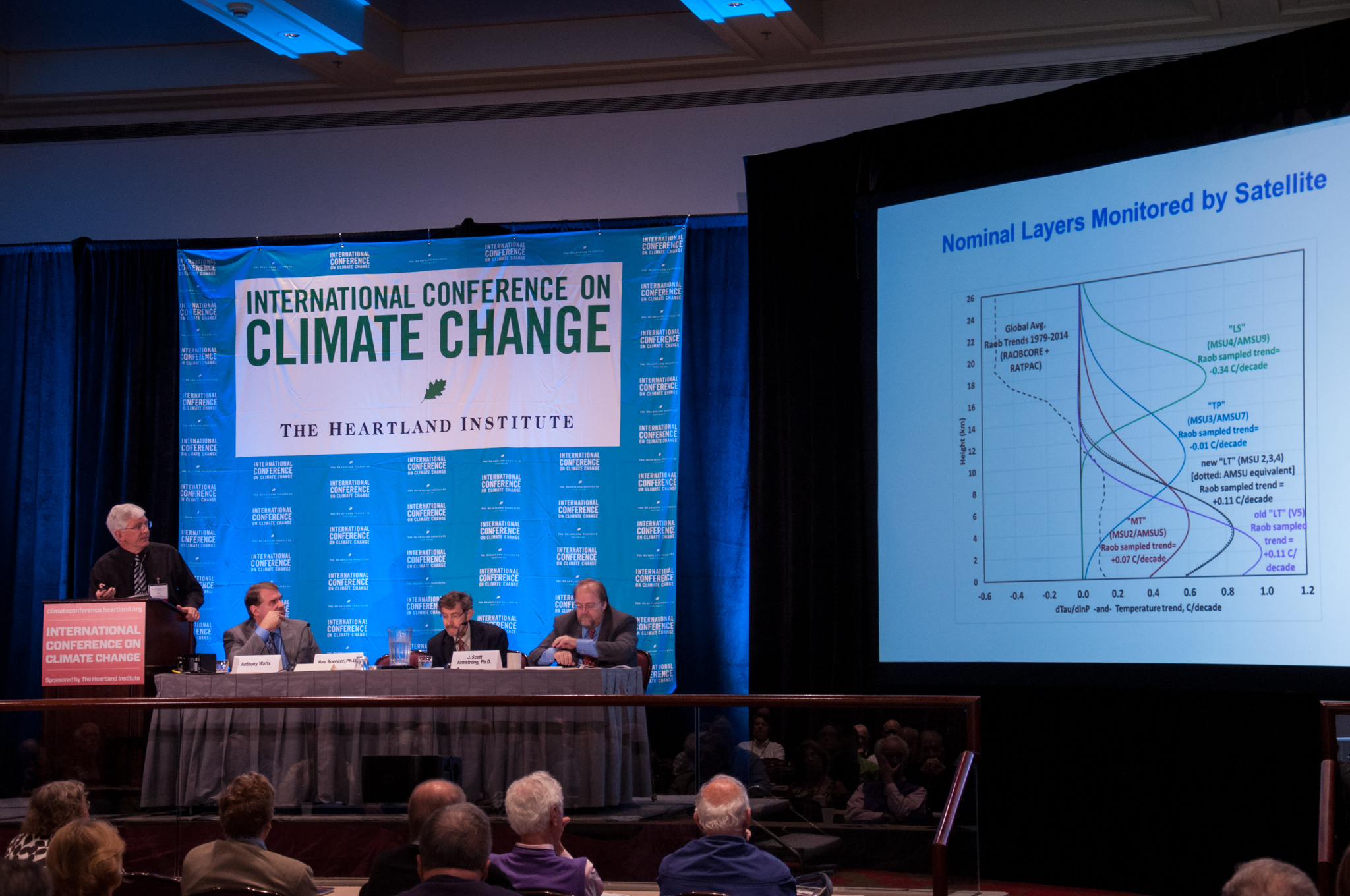
University of Alabama in Huntsville climate scientist Roy Spencer gave a tame, technical talk about the satellite temperature record he manages. (That satellite record, which spans a thicker portion of the atmosphere than surface records, is popular here because it shows a little less warming.) Spencer described some of the adjustments he and his colleagues must make to the raw data in order to account for things like a satellite’s decaying orbit or time-of-day differences between measurements of the same region. He even showed how a number of updates to the team's adjustment procedures over the years had increased the apparent warming trend in their record.

No one challenged the legitimacy of those adjustments. But when it came to surface temperature datasets from NASA, NOAA, or the UK Met Office, “adjustments to the raw data” were generally synonymous with “fudging the data to exaggerate global warming.” Only Spencer is, it appears, beyond suspicion.

While mocking Michael Mann’s “hockey stick” tree ring temperature reconstruction, Mark Steyn got a laugh when he said, “The hockey stick, as you all know, is a ‘proxy reconstruction,’ and there are only two problems with it— the proxies and the reconstruction.” But during Willie Soon’s presentation on how the Sun explains recent temperatures, Soon used proxy reconstructions (including one based on tree rings) to argue that his new temperature record was accurate. No one had a problem with proxy reconstructions then.

Then there was longtime TV weatherman John Coleman. After claiming that everyone he worked with in 61 years of television news was a Democrat who hated Republicans, he said, “You’ve got to understand the extreme power of money. It is more powerful than the voice. It’s more powerful than the idea. It is more powerful than the vote.” That’s a pretty tough complaint to swallow from someone surrounded by speakers from well-funded political think-tanks out to defend a wealthy industry from the world’s climate scientists.

Christopher Monckton delights the crowd.
Attendees listen intently as Christopher Monckton holds forth on economics.

So it goes

So Heartland’s “International Conference on Climate Change” wasn't an academic event—but that wasn't what attendees wanted. They wanted to hear satisfying digs at their opponents. They wanted to shake hands with the celebrities of the climate “skeptic” blogosphere. They wanted to walk away feeling that authoritative experts had affirmed their views on climate change—the hoax, the scam, the big government power grab. On those grounds, the conference delivered.

For a science writer, however, the event was fundamentally a tedious experience. On the first night of the conference, one of the presenters actually invaded my dreams. In the dream, I was in some sort of friendly geology group, gathering to discuss some interesting research. When this fellow announced his topic, I interrupted him. “Wait—is this more of that retired medical doctor’s weird theory about volcanoes that you talked about for two hours last time?” I asked. The presenter blinked, puzzled by my tone, and said, “Well, yeah. Of course.” The rest of the group shot me pained glances and sank down in their chairs.

That’s kind of what the conference was like.

On the second day, after retired geographer (and co-author of Slaying the Sky Dragon: Death of the Greenhouse Gas Theory) Tim Ball gave a conspiratorial talk badly muddling the IPCC reports, crowd favorite Christopher Monckton took the stage again. After some of his signature mockery, Monckton launched into the latest alleged climate scandal: a researcher studying the human health benefits of potential EPA greenhouse gas regulations (a study we covered) had previously received research grants from the EPA! (Monckton had already publicly asked Texas Congressman Lamar Smith to investigate this researcher. Noncommittally, Smith said his office would take a look at it.)

By this point, I had my fill. I stepped out of the ballroom of the Washington Court Hotel, leaving Monckton booming away within as I quietly closed the door behind me and made for the hotel exit. I’d heard it all before. I’ll hear it all again. I thought of the refrain that echoes throughout Kurt Vonnegut’s Slaughterhouse-Five: “So it goes.”

During an earlier break between conference sessions, I sat down and caught up on the last few days’ RSS feeds of the scientific journals I keep an eye on, flipping through tens of new climate studies. I thought about the fact that few attendees of this conference would ever know that any of them existed. That’s a shame, because reality is simply more interesting than the angry axe-grinding of the “climate realists.”

After Galileo, that patron saint of contrarians, was forced by the Church to recant his views on the heliocentric Solar System, he is—probably apocryphally—said to have muttered, “And yet it moves.” Had he been in Washington to hear his name invoked in support of the denial of anthropogenic climate change, he might rightly have grumbled, “And yet it warms.”

Listing image: Aurich Lawson / Thinkstock

Photo of Scott K. Johnson
Scott K. Johnson Associate Writer
Scott has written about geoscience and energy at Ars as a freelancer since 2011.
721 Comments