


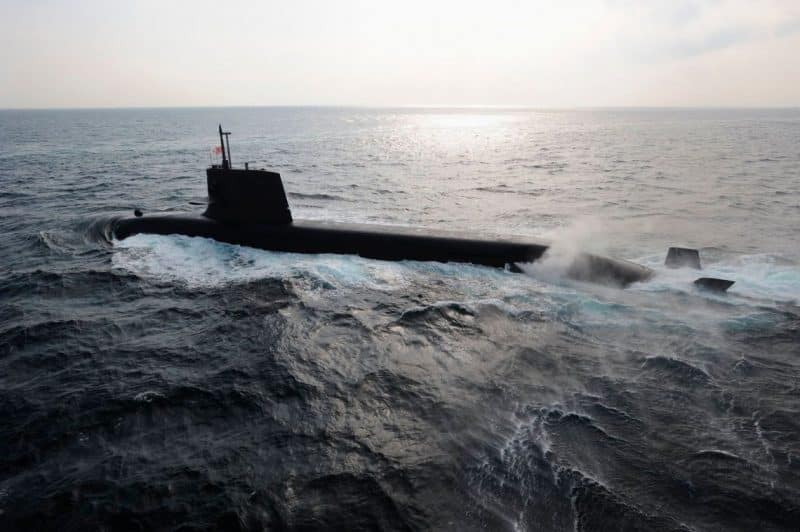
The report submitted to the Ministry of Defense on September 19, 2025, has reignited a central debate for the Japanese Navy. Experts recommend equipping future submarines with vertical silos for long-range missiles and working on so-called "next-generation" propulsion. These guidelines could transform a tool previously focused on coastal defense into a more comprehensive deterrent, while remaining within the framework of a non-offensive strategy.
The question, then, is not whether Tokyo wants to project power, but how these new capabilities can fit into its current posture: protecting vital sea lanes, strengthening the country's resilience, and reducing its dependence on American cover. To understand this, we must first examine the industrial and doctrinal foundations of the Japanese navy, and then the practical implications of these recommendations for national defense.
Summary
A Japanese defense doctrine that adapts to a riskier environment
Since the 2022 National Security Strategy (NSS), Japan has expanded its military room for maneuver without breaking its defensive posture. According to the NSS, the rapid evolution of regional threats requires "increasing capabilities based on reach." In the same spirit, the National Defense Strategy emphasizes integrated missile defense, logistical resilience, and the ramp-up of long-range munitions.
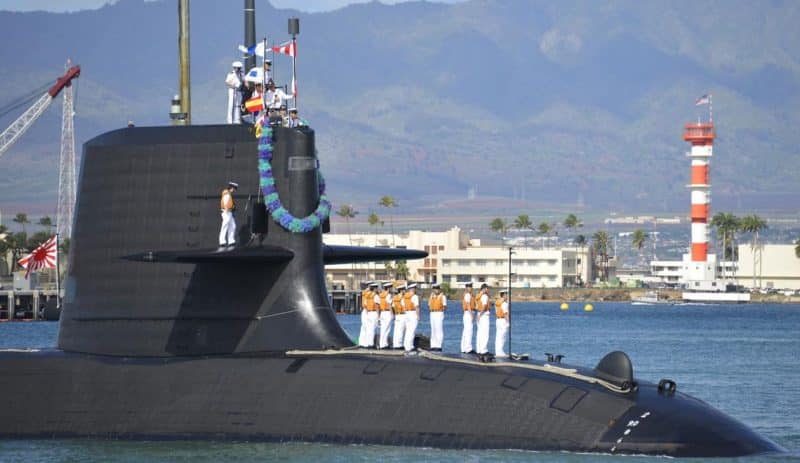
In this context, the underwater dimension naturally arises. As recalled The Diplomat, who are " The new submarines will have to be able to stay submerged for long periods and fire long-range missiles. " In other words, it is about ensuring the ability to strike from invisible positions, even in the event of a first enemy attack.
This choice also strengthens the credibility of Japanese deterrence, without breaking the logic of the alliance with the United States. The submarines would offer a form of redundancy with the Aegis destroyers carrying cruise missiles, making it more difficult for an adversary to neutralize Japanese capabilities in a single blow.
Finally, these ambitions require a rapid industrial effort. If design decisions are delayed, new long-range weapons risk lacking platforms capable of employing them effectively. This is why the September 19 report serves as a roadmap for the next decade.
Japanese Submarines: Rare Technological Know-How
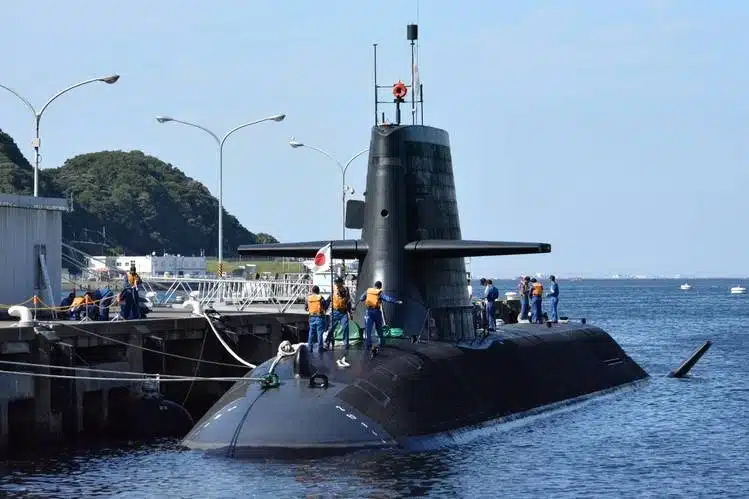
Japan has one of the most advanced industrial and technological bases in the world in this field. Mitsubishi Heavy Industries and Kawasaki Heavy Industries design and produce all of the submarines for the Maritime Self-Defense Force (JMSDF). These manufacturers pioneered the AIP anaerobic propulsion system with the Soryu class, twelve of which have entered service since 2009, which remains the largest class of AIP SSKs in service today.
Twelve years later, they took global leadership in this field by being the first to deliver a class of SSK equipped with lithium-ion batteries, the Taigei, to the Japanese Naval Self-Defense Forces for commissioning on March 9, 2022. According to Naval News, the fourth submarine of this class, the JS Raigei, was delivered in March 2025 with even more efficient detection and navigation systems.
The Japanese Navy has pioneered the widespread use of lithium-ion batteries. According to NTI, who are " JS Ōryū [penultimate ship of the Soryu class], which entered service in 2020, was the first submarine to adopt this technology, allowing increased speeds and autonomy without resorting to the AIP system " Its successor and last ship of the class, the Tōryū, which entered service in March 2021, was also equipped with these batteries. These batteries replace the old independent air system and offer longer endurance and faster recharging, although they require increased monitoring for thermal safety.
There are 75% of this article left to read, Subscribe to access it!

There’s plenty of Classic subscriptions provide access to
articles in their full version, and without advertising,
from €1,99. Subscriptions Premium also allow access to archives (articles over two years old)
SUBSCRIBERS: If you see this sign, despite your subscription, clear your browser cache to solve the problem.


Hello
Have you thought about a Barracuda with VLS?
Not that I know of. Barracudas are primarily hunter-killers capable of striking on land with horizontal launch. But they are not a marine SSN on the edge of SSGNs like the Virginia or the Type 093B.