
Welcome! We’re back with a new Thursday edition of the Animation Obsessive newsletter. And this one is about directing.
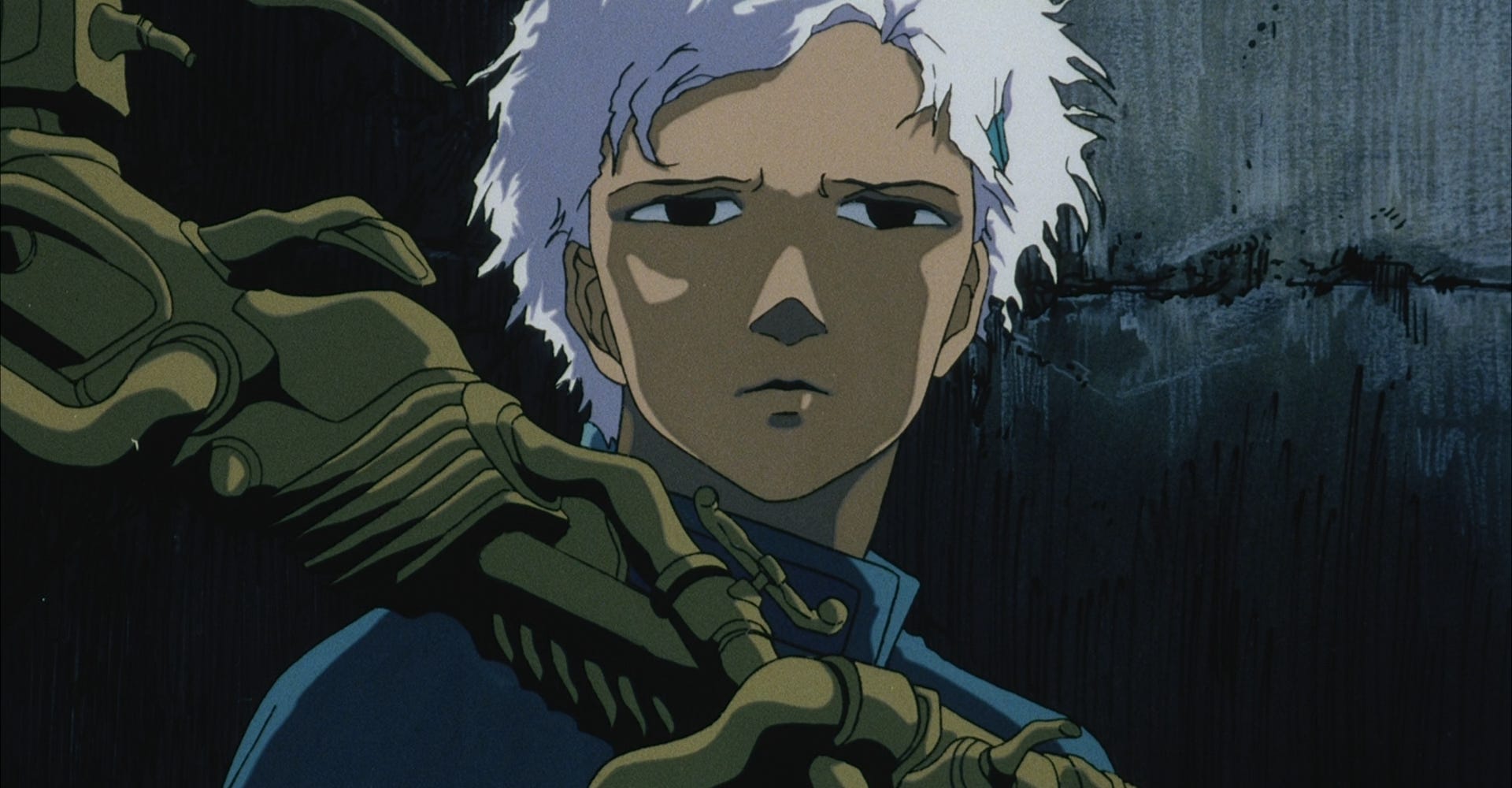
Mamoru Oshii hasn’t made a hit in a long, long time. His famous years were the ‘80s and ‘90s: Ghost in the Shell, Patlabor, Angel’s Egg. And, even then, his work was often a cult phenomenon. A lot of this stuff was strange and willfully abstruse. It’s not Ghibli.
But it impressed people. In Japan, hardcore animation fans took Oshii’s films seriously, and the magazine Animage featured him regularly. Industry veterans saw him as a peer, even when they had misgivings about his work. “Mamoru Oshii is a talented director,” wrote Hayao Miyazaki in the late ‘80s. He wanted to do a project with him. At the same time, he wished that Oshii’s films had more human connection in them.1
That never quite happened. With time, the work became ever more opaque and alienating — building up to indescribable movies like The Amazing Lives of the Fast Food Grifters (2006).
It was always tough, really, to tell where Oshii was coming from. He isn’t afraid to talk about his intentions: he gives long interviews — longer than most outlets are willing to publish.2 But even his own teams have struggled to follow. As he said in the 2000s:
I’ve known for a long time that, no matter how much I rattle on, they don’t understand at all. Even if I talk for an hour, they go, “I hardly remember any of it.” So these days I only consult with the unit director and don’t do that kind of thing anymore. But, apparently, the unit director actually called in the animators again for another thorough and detailed discussion during the animation meeting. The animators had apparently been requesting that since around Patlabor [1989]. “I don’t understand what the director is talking about,” they said. Maybe it’s because I keep going on tangents, or because I speak so fast it’s unclear and they can’t understand what I’m saying (laughs). Occasionally when I tell a joke and laugh, like, “Hahahaha,” they don’t even seem to realize I’m joking.3
Still, however confusing it may be, Oshii does have a method. The exact details seem to shift a little over time, or maybe from one day to the next — but he’s been using the broad ideas since the ‘80s. And you find them in all of his best-known films.
Keep reading with a 7-day free trial
Subscribe to Animation Obsessive to keep reading this post and get 7 days of free access to the full post archives.
