Nutty Putty Cave: Before and After the Tragic Death of John Jones

By: Dave Roos & Austin Henderson  | 
Nutty Putty Cave
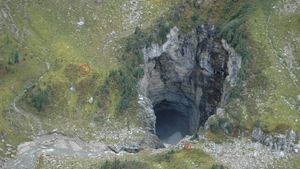
The entrance to Nutty Putty Cave has been sealed with concrete to keep out the curious. ADMIN/CATATANFIKSIID

Discovered in 1960 outside Salt Lake City, Utah, Nutty Putty Cave was a local favorite with Boy Scout troops and college students, attracting 5,000 visitors a year. Then came the tragic death of John Edward Jones in 2009 when the 26-year-old father and medical student became hopelessly trapped upside down inside a narrow fissure, where rescuers couldn't reach him.

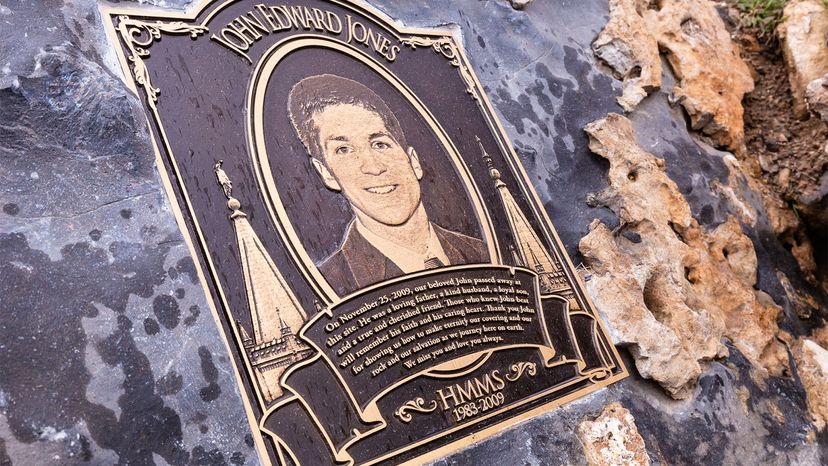
Nutty Putty Cave has been closed ever since, and because Jones' body couldn't be removed, the site is now considered a grave. Visitors to Nutty Putty today will only find a plaque dedicated to Jones and poured concrete sealing over the cave entrance.

Advertisement

More than a decade after the unfortunate accident, we look at what took place that day and get insights from a pair of experienced Utah cavers about what it was like to explore Nutty Putty Cave, the history and geology of the cave and how the 2009 incident impacted the local caving community.

A Wrong Turn

On Nov. 24, 2009, Jones, who lived in Virginia and was in Utah for Thanksgiving, his brother and a group of 10 others visited Nutty Putty. It had been years since Jones went caving. The group started exploring at about 8 p.m., making their way through the Big Slide. Jones, his brother and two friends then decided to look for the Birth Canal, one of the cave's narrowest spaces.

John went in head first into a waist-high hole and found no place to turn around, but he saw a fissure and thought he'd have enough space to make his way back. He likely sucked in his chest to get through the narrow space and found himself stuck upside down at a 70-degree angle.

Advertisement

His younger brother attempted to free him, but he quickly realized that his brother was in trouble. "Seeing his feet and seeing how swallowed he was by the rock, that’s when I knew it was serious.” the brother told the St. Lake Tribune. “It was really serious.”

It was time to call for help.

Advertisement

A Rescue Mission

Knowing that Jones was upside down, rescuers worked quickly. Susie Motola, a 5-foot-3-inch caver, was in the process of moving homes. She dropped everything to come to help Jones. She worked for two hours, trying anything and everything she could think of to free him or at least make him comfortable. When she took a break, another rescuer took her place.

After weighing their options, the rescuers worked on building a pulley system. When Ryan Shurtz made his way to Jones, he realized that asking him about his family helped him refocus. They even gave Jones a way to communicate with his wife, who asked him to keep fighting.

Advertisement

By the time, the system was ready, he had hung upside down for 19 hours. As they slowly pulled him up, the rope gave under Jones' weight and the force of the rescuers. A carabiner hit Ryan in the face, and he passed out. When he came to, Ryan said someone had to stay with Jones, so his father, Dave Shurtz, climbed in. Eventually, Jones stopped speaking.

Dave continued working to free him but got stuck himself. He had to push to get out of the cave. When he resurfaced, Dave told the Utah County sheriff, "He's dying right now. He has a heartbeat, but he's had difficulty breathing before I got there. You can't get someone down there before he dies."

Advertisement

Pronounced Dead

Brandon Kowallis was the last rescuer to make his way down to Jones. "I ended up being the last person to see him alive, though at the time I arrived, he was mostly unconscious," he wrote in a blog post recounting his experience.

Kowallis explained how he tried drilling and asked for lighter tools to help him get the job done, but nothing worked. And with Jones unconscious, it was impossible to free him.

Advertisement

"Even if we could get him into a horizontal position, he would then have to maneuver the most difficult sections of the passage he was trapped in," he wrote. "If he were conscious and had his full strength there was a minute chance he could possibly do it. But even if that was the case it looked grim. It was even difficult for me, weighing 125 pounds, to get myself out. At the bend where the restriction was I had to creatively contort my body to slip through. So to get a 210-pound, unconscious person out seemed pretty much impossible."

Kowallis and a paramedic eventually made their way down to check his vitals. The paramedic showed Kowallis how to use a stethoscope and thermometer in case he couldn't make his way to Jones. Kowallis went first and used the tools.

"I didn't hear a distinct heartbeat, only some ruffling, fluttering sounds that were probably a result of me shaking as I tried to steady myself in an awkward location," he wrote. "I then jammed my hand between the rock and pressed as far up his torso [as] I could go to feel for breathing. I didn't think I felt anything. His chest, where it was pressed up against the rock, felt warmer than the rest of his body and was sweaty, but everywhere else his body temperature was close to the temperature of the rock on the cave walls."

He told the paramedic what he learned and moved out of the way to let him get close to Jones. The paramedic pronounced Jones dead.

Advertisement

'A Crawly Little Cave'

Like countless Boy Scouts before him, Matt Paulson's very first caving experience was at Nutty Putty. He was just 12 years old and "grossly underprepared," but he nervously followed his troop down into the cave mouth and crawled on his belly through a narrow, muddy canal into a larger downward shaft called the Big Slide.

Today, Paulson is the Chair of the Timpanogos Grotto, the local branch of the National Speleological Society that once managed access to Nutty Putty, which was easily the "most popular cave" in the area, Paulson says.

Advertisement

Richard Downey, the Grotto's treasurer and historian, led some of those same Boy Scout trips into Nutty Putty for decades.

"It was a crawly little cave," Downey says. "There were also some larger passages. It was believed to be really easy and that's why all of your Boy Scouts and locals went in with flashlights and sandals and things. You had to work hard to get in trouble."

Advertisement

Formed From Below

Almost all caves form in limestone, which, over long periods of time, is slowly eaten away by slightly acidic groundwater. Nutty Putty is also a limestone cave, but instead of being dissolved by water dripping in from above, it was created from the bottom up by hydrothermal activity.

Paulson explains that Nutty Putty is a hypogenic cave, formed when superheated water is forced upward into a bed of limestone, and minerals in the water eat away at the rock above to create cave shafts.

Advertisement

"Traditionally, these types of caves are very complex and feature lots of domes and three-dimensional passages, which was true of Nutty Putty," Paulson says. "It had tight squeezes that opened up into a big room, then back to another tight squeeze. It was very characteristic of a hypogenic cave."

Perhaps because of its hydrothermal past, temperatures inside Nutty Putty stayed around 55 degrees Fahrenheit (12.7 degrees Celsius) year round. A survey conducted in 2003 was able to map 1,355 feet (413 meters) of the cave to a depth of 145 feet (44 meters) from the surface.

The most recognizable characteristic of the cave was the strangely viscous clay oozing from some of its walls, which the cave's first explorer, a man named Dale Green, compared to Nutty Putty, the original product name for Silly Putty. Like Silly Putty, the clay would change from a solid to an elastic fluid when lightly squeezed.

Downey says that the clay was "sound active," meaning if you yelled at it, it would ooze and move. Analyses done on the clay in the 1960s found that it was composed of tiny particles of silicon dioxide (the main component of sand) roughly 3 microns (less than 0.0001 inches) in diameter.

Advertisement

Hints of Trouble

Since Nutty Putty was such a popular cave, attracting thousands of visitors a year, it was perhaps inevitable that a few amateur cavers would get themselves into trouble.

"A lot of the people going to Nutty Putty were first-timers, or they were on a date with their girlfriend and wanted to show off or whatever," Downey says. "They put themselves in situations that they probably wouldn't have if they had just stopped and thought about it for a minute."

Advertisement

From 1999 to 2004, six different people became stuck in one of Nutty Putty's narrow passages. It's not for nothing that three of the cave's tightest squeezes are called "The Helmet Eater," "The Scout Eater" and "The Birth Canal."

All six of those trapped cavers made it out of Nutty Putty alive, but the Utah County Sheriff's Office and search and rescue crews grew tired of making regular trips out to pull tourists from the cave, and they worried that the next accident would be fatal.

Concern mounted in 2005 after the tragic drowning deaths of four young Utahns in a nearby cave on "Y" Mountain.

Nutty Putty Cave closed in 2006 citing safety concerns and only reopened in May 2009 after a cave management plan was signed with the Timpanogos Grotto. The Grotto set up an online reservation system that only allowed one group in the cave at a time, and the entrance to the cave was padlocked shut at night.

Advertisement

A Jones Family Outing Ends in Disaster

"As cavers, that's one of the things we're taught not to do, go head first into a tight squeeze going downward," Paulson says. "Had he been oriented the other way, it's my opinion he would have gotten out."

News cameras broadcast the 27-hour ordeal in which 137 volunteers attempted to save John, who began to lose consciousness as blood pooled in his head and put increasing stress on his heart. Downey remembers getting a phone call at 1 or 2 a.m.

Advertisement

Nutty Putty Cave
A memorial plaque at the site pays tribute to the life and bravery of John Edward Jones.
admin/catatanfiksiid

"I was the Grotto secretary and I had all of the contact information for the local caving community," Downey says. "They told me, 'I need to get contact information for really skinny cavers.'"

Despite the heroic effort to free John Jones, he died a few minutes before midnight on the day before Thanksgiving. He left behind his wife Emily, a young daughter and a baby boy on the way (he's named John).

Downey says that many of the volunteer rescuers were traumatized by the experience and some haven't entered a cave since. When it became clear that Jones' remains couldn't be extricated from the cave, Nutty Putty was permanently closed and sealed as Jones' final resting place.

Paulson mourns the death of Jones but insists that caving is a very safe activity, especially when it's done with the right equipment and with an experienced guide.

"That's why there are grottos of the National Speleological Society like ours all over the United States," says Paulson. "We're here to inform, teach and get people into caving safely."

Advertisement

Cave Safety

Nutty Putty and other incidents have highlighted the importance of caving safety.

Tham Luang Cave Rescue (2018)

One of the most famous cave accidents in recent history occurred in the Tham Luang cave in Thailand, where 12 young boys and their soccer coach became trapped for over two weeks due to sudden flooding. An international rescue mission involving expert divers and military personnel ultimately saved all 13 people. This event captivated global audiences and highlighted the dangers of cave exploration during monsoon seasons.

Advertisement

Mossdale Caverns Tragedy (1967)

The Mossdale Caverns in North Yorkshire, England, was the site of one of the worst cave disasters in the UK. In 1967, a group of six experienced cavers became trapped when heavy rain caused flash flooding. All six individuals died, and this incident led to changes in safety measures for cave explorations in the UK.

Floyd Collins Cave Accident (1925)

Floyd Collins became trapped while exploring Sand Cave in Kentucky, sparking one of the largest and most publicized rescue efforts of the time. Despite numerous attempts to save him, Collins ultimately perished, and his story became a major media event, bringing national attention to cave exploration risks.

This article was updated in conjunction with AI technology, then fact-checked and edited by a HowStuffWorks editor.

Advertisement

Advertisement

7 Secret Caves We'd Love to See Inside

By: Stephanie Parker

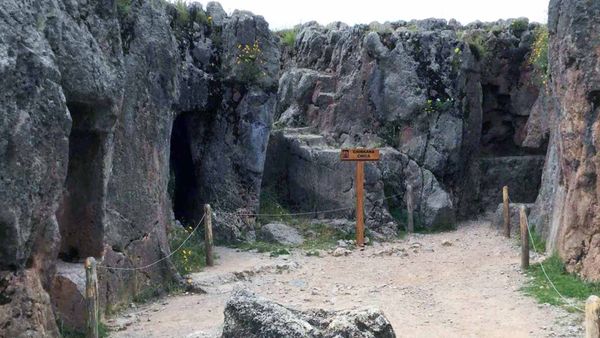
chinkanas
The "chinkanas" are a system of underground caves on the northern outskirts of the city of Cusco, Peru. The smallest of the caves, named chinkana chica, is accessible to the public. Andean Peruvean Treks

While many people adventure to the tops of mountains to see impressive landscapes and panoramic vistas, there is a lot to be found underground as well. There are secret and hidden caves — big and small — explored and unexplored all around the world.

Here, we've found seven secret caves we think are worth knowing about. And while you can explore some of them, a few are super technical and others are far off the trailhead. But if you're up for it, the results will be worth your efforts.

Advertisement

1. Chinkanas, Cusco, Peru

The Chinkanas aren't one cave but rather a series of underground passages and galleries. The name of these Incan caves comes from the Quechua word chinkana, which means "place where one is lost." They're located in Cusco, close to the Sacsayhuaman historical site. Nobody's sure whether these underground labyrinths were made by the Incas or a civilization that came before them. The smallest of the chinkanas, called chinkana chica, is accessible to the public and is located just shy of a mile (150 meters) from the taxiway in Cusco. However, many areas are closed to the public as people could get lost inside.

Advertisement

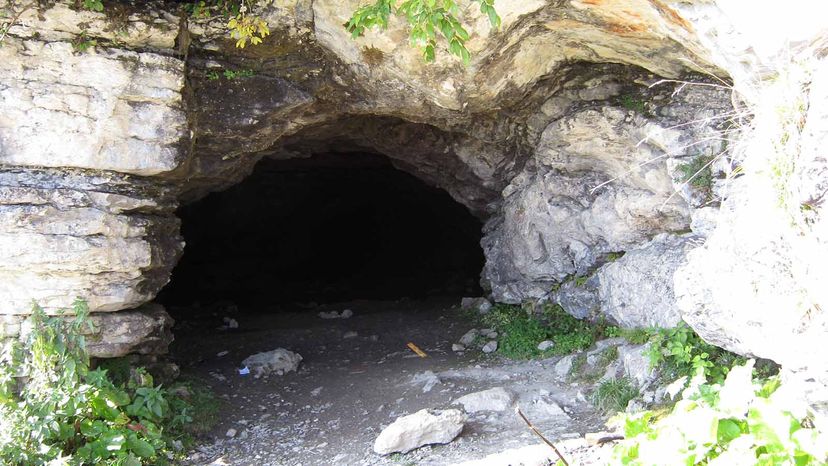
2. Hidden Cave at Grimes Point, Nevada

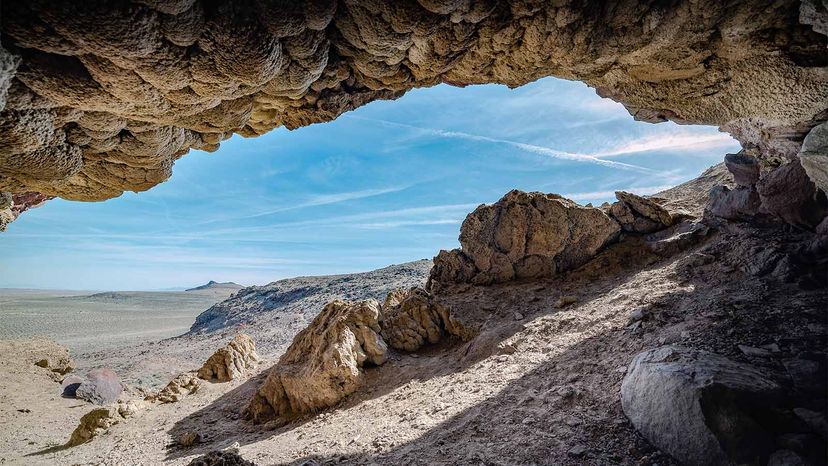
This aptly named hidden cave near Fallon, Nevada, formed about 21,000 years ago by the waves of rising Pleistocene Lake Lahontan. Native Americans used it to store tools, spears and fishing gear. The cave was discovered by four kids out looking for treasure in 1927. When they found the cave, they were the first humans in the 20th century to see it. Today, Hidden Cave is part of the Grimes Point Archaeological Area and the Bureau of Land Management offers free public tours.

Hidden Cave in Nevada
Hidden Cave in Nevada is an archaeological site that was listed on the National Register of Historic Places in 1972. The cave was formed around 21,000 years ago.
Dominic Gentilcore, Ph.D./Shutterstock

Advertisement

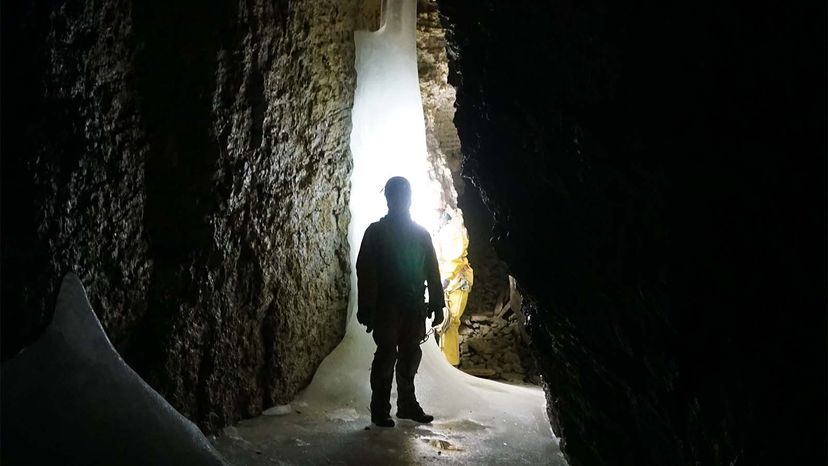
3. Ice Caves, North Dakota

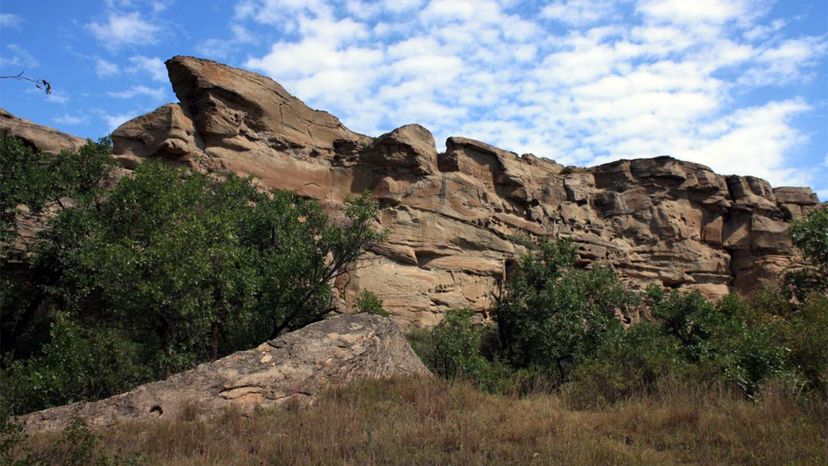
North Dakota does not have a lot of caves, but the Ice Caves can be found in the northwest part of the state, on the Maah Daah Hey Trail, between mile markers 108 and 109. From there, it's a 1.5-mile (2.4-kilometer) hike to the Ice Cave cliffs, and beneath them are the Ice Caves. These caves get their name from their cool interior temperatures; people have reported seeing ice and snow from the previous winter in the caves well into July. The caves' thick sandstone and restricted air flow provide insulation that helps keep ice from melting even after it's melted everywhere else.

Ice Caves North Dakota
The Ice Caves in North Dakota are located just off the Maah Daah Hey trail system in the Sentinel Butte Formation.
Maah Daah Hey Association

Advertisement

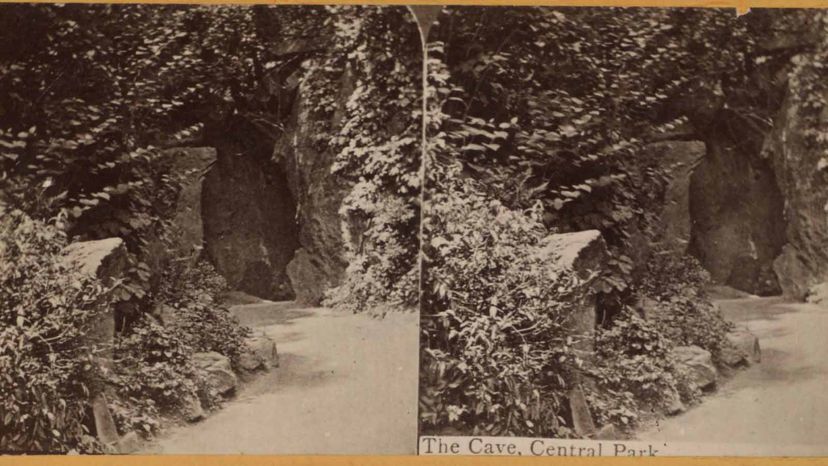
4. The Ramble Cave, New York

Secret caves aren't always in remote or hard-to-reach places. In fact, there's one right in the middle of America's biggest city — in New York's Central Park. While it wasn't initially part of designer Frederick Olmsted's plan for the park, it was discovered during excavation. The cave was a popular attraction for children in its early days but also an area for trouble. For example, in 1904 a man was found shot in the chest near the steps of the cave and men were arrested at the Ramble Cave, among other parts of the park, for harassing women. It's not possible to go inside today; it was sealed up sometime in the 1930s. But the steps are still there on the northwest of the lake.

Ramble Cave
Ramble Cave in Central Park was discovered by workers in the 1850s. Unfortunately, it was sealed up in 1934 because it became a site for crime.
New York Public Library

Advertisement

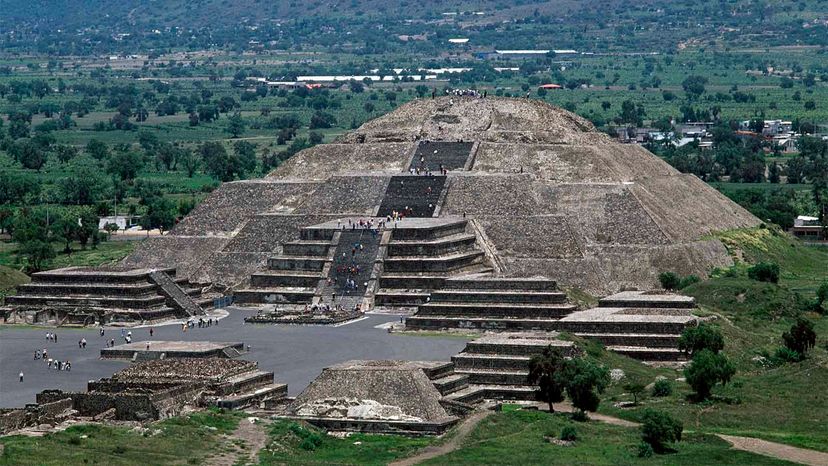
5. The Pyramid of the Moon, Teotihuacán, Mexico

This cave in Mexico is another one you can't actually visit. In fact, no one has actually seen it in person. It was discovered in 2018 by archaeologists who confirmed the existence of a hidden tunnel leading to a chamber 26 feet (7.9 meters) deep beneath the Pyramid of the Moon temple located in the ancient city of Teotihuacán. They found both using a technique called electrical resistivity tomography (ERT). Using ERT allowed the researchers to map the Earth below the pyramid without doing any digging. The archaeologists believe the cave was formed naturally and that it could offer clues about the design of the city of Teotihuacán.

Pyramid of the Moon
In 2018, researchers from the National Institute of Anthropology and History discovered a chamber located under the Pyramid of the Moon structure. It's never been explored.
DeAgostini/Getty Images

Advertisement

6. Tears of the Turtle, Montana

This cave is located in the heart of Montana's Bob Marshall Wilderness, a vast area of more than 1 million acres (404,685 hectares) with no roads. That means to reach this cave, you have to hike or ride a horse 21 miles (33.7 kilometers) into the wilderness area from the Meadow Creek trailhead. The cave is one of a few at Turtlehead Mountain, and it's definitely not for amateur spelunkers. It has a depth of 1,629 feet (496.5 meters) and stretches for more than a mile.

Tears of the Turtle Cave
Tears of the Turtle Cave is located in the Bob Marshall Wilderness in western Montana.
Wikimedia/(CC BY-SA 4.0)

Advertisement

7. Wildenmannlisloch, Alt Sankt Johan, Switzerland

The name of this cave translates to "wild man's hole" in English and it's an alpine limestone karst cave in the canton of St. Gallen Switzerland. As the name suggests, it's a small cave and was used by ancient man for thousands of years. In 1844, a feral child named Johannes Seluner was found living in the cave, and in 1906, researchers found bear bones and teeth in the cave, as well. Stone tools made of a green quartzite not local to the area have also been found in Wildenmannlisloch, suggesting ancient man must have brought it from far away. To reach the cave, you can ride the Holzkistenbahn cable car from Starkenbach to Strichbodenit and then it's a about a 15 minute hike to the cave. Or you can make the entire 3.7-mile (6-kilometer) hike on foot.

Wildenmannlisloch
Wildenmannlisloch, which means "wild man's cave," is an alpine limestone karst cave on the northern slope of the Churfirsten range in the canton of St. Gallen, Switzerland.
Wikimedia/(CC BY-SA 4.0)

Advertisement

Loading...