Singapore picks up first case of incel radicalised by mixing far-right, far-left and ISIS ideologies
The 14-year-old Secondary 3 student was influenced by a "salad bar" of extremist beliefs, starting from the middle of 2024.


This audio is generated by an AI tool.


SINGAPORE: A 14-year-old was issued a restriction order under the Internal Security Act (ISA) earlier in September, in Singapore’s first case of self-radicalisation by a mix of different extremist ideologies.
Influenced by what is known as a "salad bar" of extremist ideologies, the boy staunchly supported the Islamic State in Iraq and Syria (ISIS), subscribed to anti-Semitic beliefs espoused in far-right extremist ideologies, and also identified as an incel, the Internal Security Department said on Tuesday (Sep 9).
Incel is short for "involuntary celibate" and refers to a subculture of individuals – mostly men – who identify as unable to find a romantic or sexual partner despite desiring one.
The boy first came across far-right extremist content in the middle of 2024 and by April this year, he had pledged allegiance to ISIS online.
In the context of violent extremism, "salad bar" ideologies are belief systems where individuals pick and choose elements based on personal preference from various extremist ideologies, which can be conflicting or incompatible with each other.
The Secondary 3 student is the joint-youngest person to be picked up by ISD. In June last year, a 14-year-old boy was issued a restriction order after being self-radicalised due to the Israel-Hamas conflict.
Those on restriction orders cannot travel out of Singapore or change addresses without approval. They also cannot access the internet or social media, issue public statements, address public meetings or print, and distribute or contribute to any publication without approval.

FROM LOOKSMAXXING TO IDOLISING OSAMA
ISD said the youth first chanced upon foreign far-right extremist personalities through online algorithm recommendations, in the middle of last year.
He started conversing online with them to learn more about the far-right extremist and true crime content they posted. True crime refers to a media genre that focuses on real-life criminal cases, often involving violent or sensational offences such as murder, assault or serial killings.
He was then added to online chat groups sharing content supportive of far-right extremism, including links to the manifestos of far-right terrorists Brenton Tarrant and Anders Breivik.
He spent several hours a day consuming content on violent anti-Semitic beliefs, including developing a strong hatred for Jews and support for Nazi figures such as Adolf Hitler.
“However, being a Muslim, he rejected the anti-Muslim rhetoric of far-right extremism,” ISD said.
At the same time, he supported aspects of far-left extremism, which he viewed as anti-Zionist and “anti-imperialist”. In particular, he was supportive of socialism and communism, and rejected Western norms such as capitalism, which he saw as a Jewish ideology.
ISD called the youth's understanding of both extremist concepts “shallow”, noting that he supported seemingly conflicting aspects of both sides.
Then, in November last year, the teenager came across a video of ISIS engaging in armed combat on social media. Further searches led him to join pro-ISIS and jihadist communities online.
He soon became convinced of the ISIS cause of establishing an Islamic caliphate through violence. After taking a pledge of allegiance to the group in April, he saw himself as an ISIS member and that it was his duty to garner support for its cause.
Apart from ISIS, he supported other Islamist terrorist groups such as Al-Qaeda, and idolised its deceased leader Osama bin Laden, whom he saw as the “founding father of modern jihad”, ISD said.
The agency added that the teenager was also influenced by incel-related content he had come across online in late 2023, and he harboured hatred towards females, though he had no intention to enact violence against them.
The incel community often expresses frustration, anger and resentment towards society, women and those they perceive as more sexually successful, with some incel ideologies being linked to misogyny, violence and extremism.
The youth had come across incel content when he became more self-conscious about his appearance, and discovered social media content related to “looksmaxxing”, an incel subculture that provides solutions on how to enhance one's physical appearance.
His interest in the incel community grew last year and he often shared or posted incel content online.

“LACK OF CRITICAL THINKING SKILLS”
In terms of how far he was willing to go with his extremist views, the youth had no concrete plans and did not act on his ideas, ISD said.
He shared large amounts of ISIS-related materials on his social media accounts, including videos he created glorifying the group's violent actions.
"He also shared ISIS-related content with some of his schoolmates, but none were radicalised by the content," the agency said.
He also aspired to become a mujahid – a fighter – for ISIS in Syria when he was older, but had no timeline on when he would achieve this goal.
The boy was in online contact with several foreign extremists, including an alleged ISIS supporter in Iraq who offered to help him plan an attack in Singapore, even sending him bomb manuals.
The youth also harboured other violent ideations. These included killing Jews due to his strong hatred for them, as well as carrying out a school shooting because he believed that the attacks by school shooters such as Elliot Rodger were justified since they were "standing up against their oppressors", ISD said.
What the youth did, however, was to intentionally hide his extremist activities to evade detection, ISD added. This included deleting extremist content on his digital devices and using data obfuscation tools to mask his digital footprint when accessing radical websites.
His family was unaware of his radicalisation.
The youth will now work with a Religious Rehabilitation Group (RRG) counsellor to counter the ISIS ideology he has imbibed.
Psychological and social rehabilitation will help address his propensity for hatred and violence, his subscription to other extremist ideologies and beliefs, and factors that leave him "vulnerable to radicalisation, such as his lack of critical thinking skills", ISD said.
He will also be assigned a mentor from the community, given his young age.
"ISD officers will work closely with the youth's family and school to ensure that he has adequate support throughout his rehabilitation, and that his studies are not disrupted," the agency said.
It noted that the boy's case mirrors a global trend of radicalisation by "salad bar" ideologies, especially among the youth.
"Youths, as digital natives, are more susceptible to being exposed to, and engaging with, extremist materials online," ISD said.
"At the same time, their less developed cognitive skills may make them more susceptible to cherry-picking different elements of various extremist ideologies, even if those elements may seemingly contradict each other."
However, this does not diminish the severity of the "salad bar" threat when it motivates an individual to engage in violence, ISD added.

OVERSEAS ARMED CONFLICT ASPIRATIONS
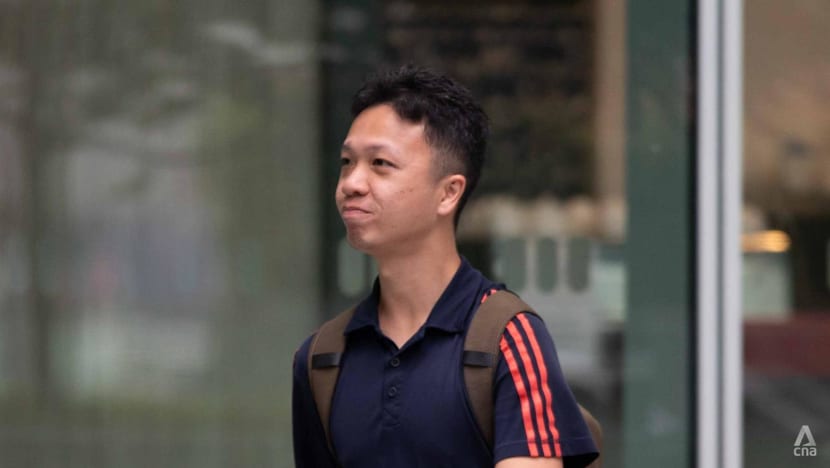
On Tuesday, ISD also announced it had issued a restriction order to 30-year-old Muhammad Jihadul Mustaqiim Mahmud in July this year.
The self-employed online business owner had harboured aspirations to engage in armed violence against former Syrian President Bashar al-Assad's regime in Syria, before its collapse last December.
"He also considered taking up arms against Greece in defence of Turkїye, in relation to the territorial disputes between the two countries," ISD said.
Jihadul first learnt of the Syrian conflict in 2011 through social media, and became vested as he empathised with the suffering of the Syrian civilians. He developed a hatred towards the Assad regime, which he viewed as oppressive.
In 2019, he became frustrated after Assad's regime recaptured rebel-held territory.
"As he was also facing setbacks in his personal life, he avidly consumed online content about the conflict to distract himself," ISD said.
Later that year, he wanted to fight alongside Syrian rebel groups to overthrow the Assad regime, as he wanted to escape his reality and die a "meaningful death".
Jihadul learnt in 2022 about Malhama Tactical, a group of private Syrian military contractors who were training rebels to fight against the Assad regime, and considered joining their training in the Syrian city of Idlib.
Even after the fall of the Assad regime, Jihadul remained interested in the situation in Syria. He had engaged in online discussions about the situation there with an alleged Syrian-based extremist since March this year.
He had hoped to travel to Syria at the end of this year to meet the latter, although he did not make specific travel preparations, ISD said.
Later, Jihadul re-directed his attention to the long-standing territorial disputes between Turkїye and Greece, which he had been following since 2022.
He immersed himself in consuming information online about the disputes and considered taking up arms to defend Turkїye, should the disputes escalate into armed conflict.
Jihadul's family members were unaware of his aspirations.
To prepare to fight overseas, Jihadul watched tactical movement videos to hone his skills and engaged in live-firing activities overseas.
He looked for firing ranges that offered specific models of assault rifles, which he had researched as prevalent among military groups in Syria and Turkїye.
"While he was unable to find any firing ranges for civilians to practise with such weapons, he visited a live-firing range in Phuket, Thailand, during his vacation in February 2025, where he operated three different conventional firearms," ISD said.
The agency said Jihadul's case highlights the impact that overseas conflicts can have on Singapore's domestic security.
"Several Singaporeans have been motivated to take up arms for a variety of foreign conflicts, ranging from the Syrian conflict, Israeli-Palestinian conflict, to other territorial disputes," it noted.
"The grievance-fuelled narratives surrounding such conflicts, often framed as part of a religious, political or ideological cause, serve as trigger points."
ISD also said on Tuesday that restriction orders against two Singaporeans have been allowed to lapse upon their expiry, as they had made good progress in their rehabilitation and no longer require close supervision.
Kuthubdeen Haja Najumudeen, 42, was detained in May 2019 for intending to travel to Syria to join ISIS. He was released from detention in May 2021 and his restriction order was allowed to lapse in May this year.
Separately, the restriction order for 59-year-old Muhammad Anwar Jailani, which was issued in June 2010, was allowed to lapse in July this year. The former unaccredited religious teacher had propagated pro-violence and segregationist views deemed detrimental to the cohesion of Singapore's multi-racial and multi-religious society.


Also worth reading