


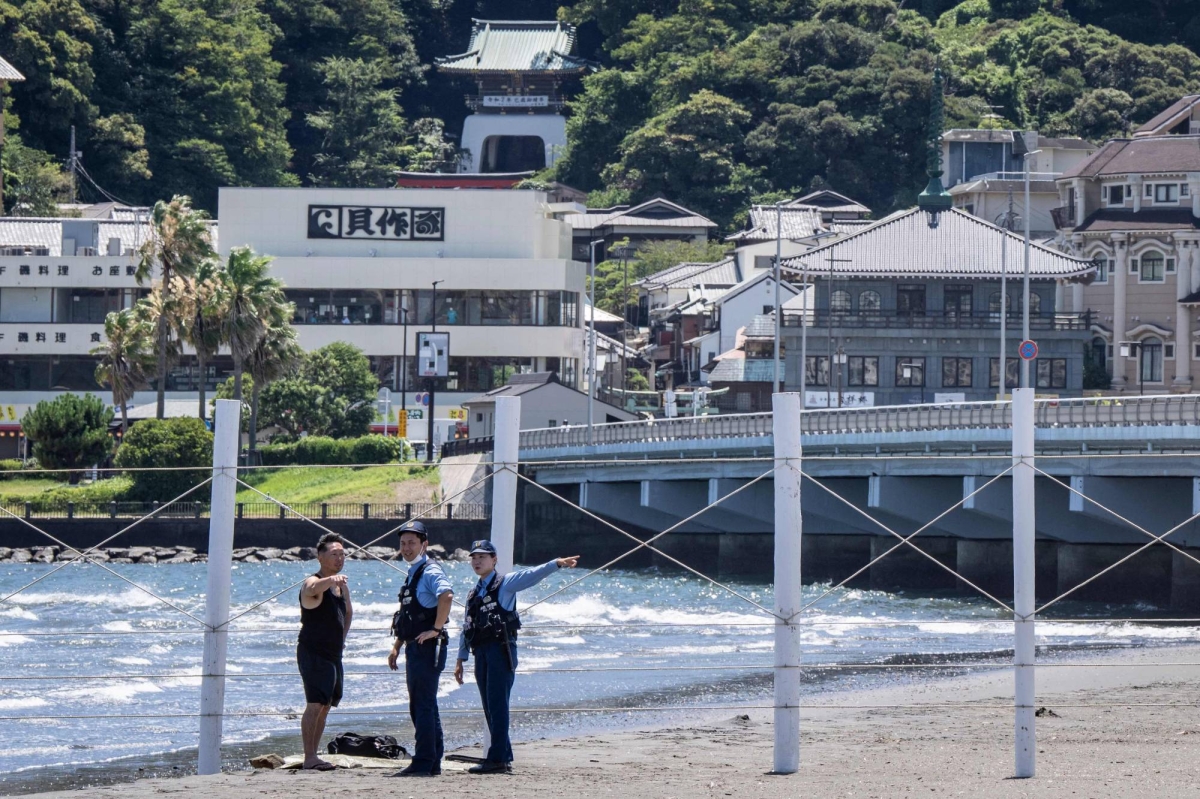

Tsunami waves measuring up to 60 centimeters were observed off the coast of Japan on Wednesday morning after a strong earthquake struck off Russia's Kamchatka Peninsula, with people strongly urged to move away from coastal areas and rivers for safety.
A tsunami warning that forecast waves up to 3 meters high had been issued for the Pacific coasts of Hokkaido and Honshu, as well as advisories projecting waves of up to 1 meter for Shikoku, Kyushu and Okinawa.
"Tsunamis can strike repeatedly over a long period of time. The waves that come after the first one may be larger, so it is important to continue evacuating until the tsunami warning or advisory is lifted," the Meteorological Agency said.
Each wave has a very long duration, which means it could take around an hour for a single wave cycle to pass, according to the agency, so tsunami activity can be observed over a prolonged period. The risk of high tsunami waves could continue for at least a day, though how long the warning will be in place is still under assessment.
Waves up to 60 cm high were observed in Hokkaido and Kuji in Iwate Prefecture a little past 1 p.m., more than two hours after the first round of waves arrived on Japanese shores. Waves 10 cm to 50 cm high were recorded along wide areas of the Pacific coast all the way from Hokkaido to Miyazaki.
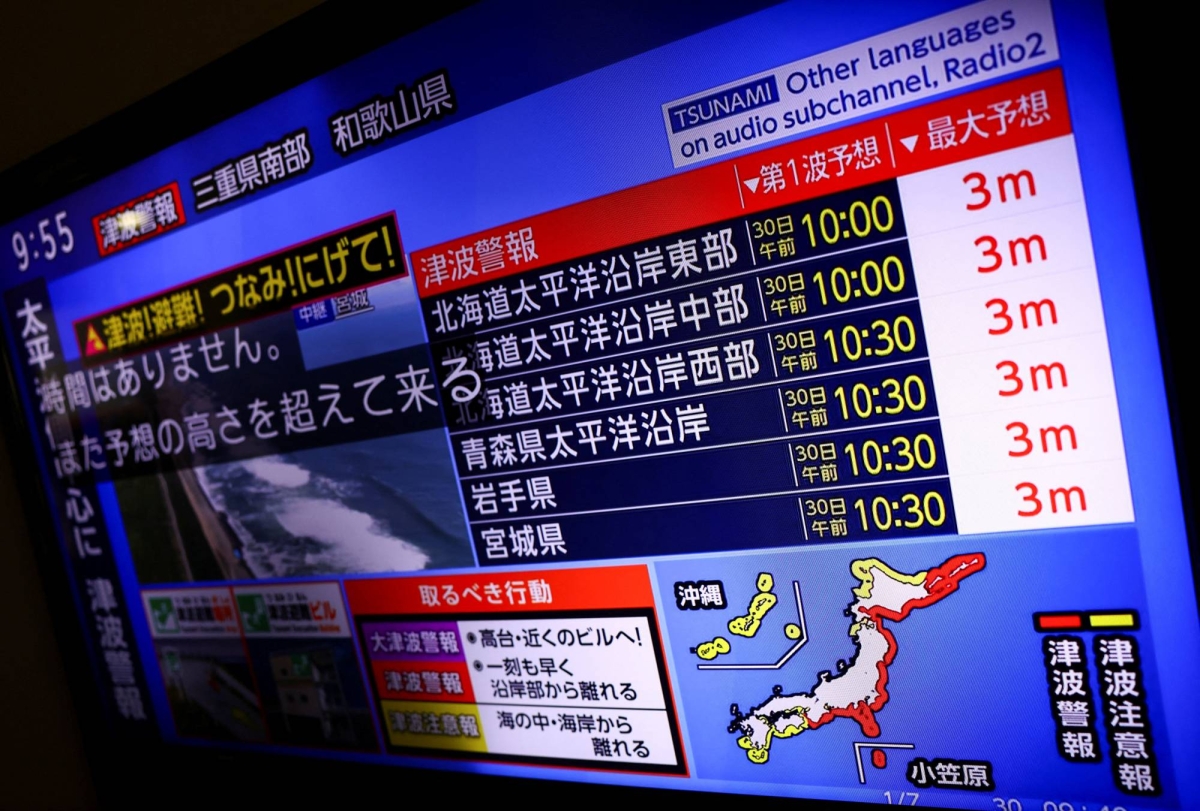
If tsunami waves coincide with high tide, the combined effect can cause sea levels to rise even further beyond the current tide level, the Meteorological Agency said, urging people in affected areas to exercise continued vigilance.
The JMA believes there is a possibility of tsunami waves reaching inner bays such as Tokyo Bay and Mikawa Bay.
The latest warning and advisory information can be found on the Meteorological Agency's website.
Prime Minister Shigeru Ishiba urged residents in the affected areas to evacuate to higher ground or other safe locations, and instructed authorities to provide accurate information to the public and implement necessary measures in coordination with local municipalities.
A task force was set up at the Prime Minister’s Office at 9:40 a.m.
Ibaraki Prefecture issued evacuation orders to residents in the coastal cities of Takahagi and Hitachinaka and the village of Tokai.
The city of Wakayama also ordered 175,000 people in 88,000 households in coastal areas to evacuate to higher ground, at 11 a.m.
Chief Cabinet Secretary Yoshimasa Hayashi told a news conference no damage had been reported on land or at sea. Three highways were blocked and the operations of 41 railway lines were temporarily halted, he added.
The runway of Sendai airport, in the Tohoku region, was temporarily closed.
Tokyo Electric Power Co. announced that it had ordered staff working at the Fukushima No. 1 nuclear plant to evacuate, and has confirmed that they have all evacuated to higher ground. It has also confirmed that the process used to treat radioactive water before it is released into the ocean has not been affected. The utility has manually halted operations in line with protocols.
The strength of Wednesday morning’s earthquake, which occurred at 8:25 a.m., was initially estimated by the JMA and authorities overseas to have been magnitude 8.0. The JMA initially issued a tsunami advisory, at 8:37 a.m., but later revised its assessment of the quake’s magnitude to 8.7 and upgraded its tsunami advisory to a warning at 9:40 a.m.
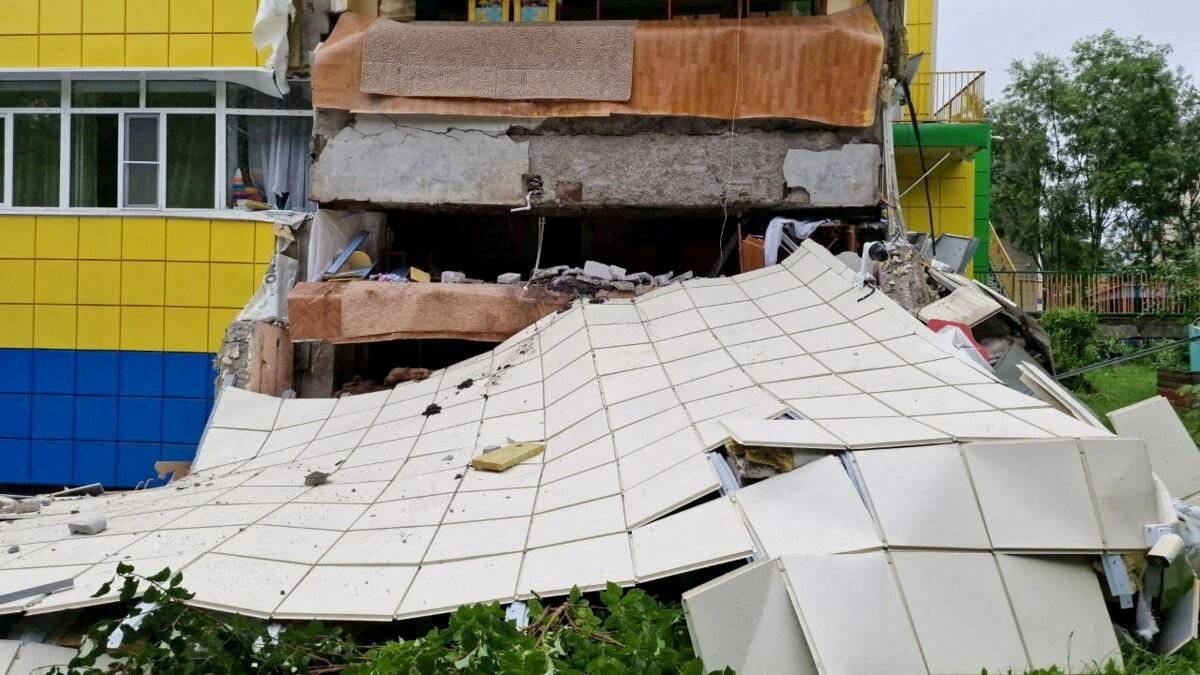
Such a significant revision of a quake’s magnitude is relatively rare, the JMA acknowledged.
The quake, the world’s strongest temblor since the Great East Japan Earthquake in 2011, was not felt strongly in Japan. The intensity registered a maximum of 2 on Japan’s seven-point shindo earthquake intensity scale in five cities and towns in Hokkaido, according to the weather agency.
This century, the only other earthquakes of similar or more powerful intensity have been the Great East Japan Earthquake, the magnitude 9.1 Indian Ocean earthquake in 2004, and the magnitude 8.8 off the coast of Chile in 2010, according to figures from the U.S. Geological Survey (USGS).
The U.S. National Oceanic and Atmospheric Administration issued a slew of warnings and advisories for U.S. territories in the Pacific and the west coast of the mainland following the earthquake. A tsunami advisory was put in place for much of the U.S. west coast from the Mexican border up through parts of Canada and Alaska. Hawaii and Guam were placed under warning status.
The USGS recorded the magnitude of Wednesday morning’s earthquake as 8.8, occurring at 8:24 a.m. at a depth of 20.7 km with its epicenter 119 kilometers east southeast of Petropavlovsk-Kamchatsky in Russia.
Two earlier earthquakes, registering magnitude 7.0 and 7.5, had occurred off the coast of Russia’s Kamchatka Peninsula on the afternoon of July 20, at around 3:28 p.m and 3:49 p.m., respectively.
Minori Yoshida, 31, who works at a bank in the coastal city of Kushiro in Hokkaido, was among those who evacuated to the city's disaster management building after the tsunami warning was issued.
“Around 9:40 a.m., we received an alert that a tsunami could arrive by 10 a.m.,” Yoshida said. “Following company instructions, I evacuated to the fifth floor of the disaster management building.”
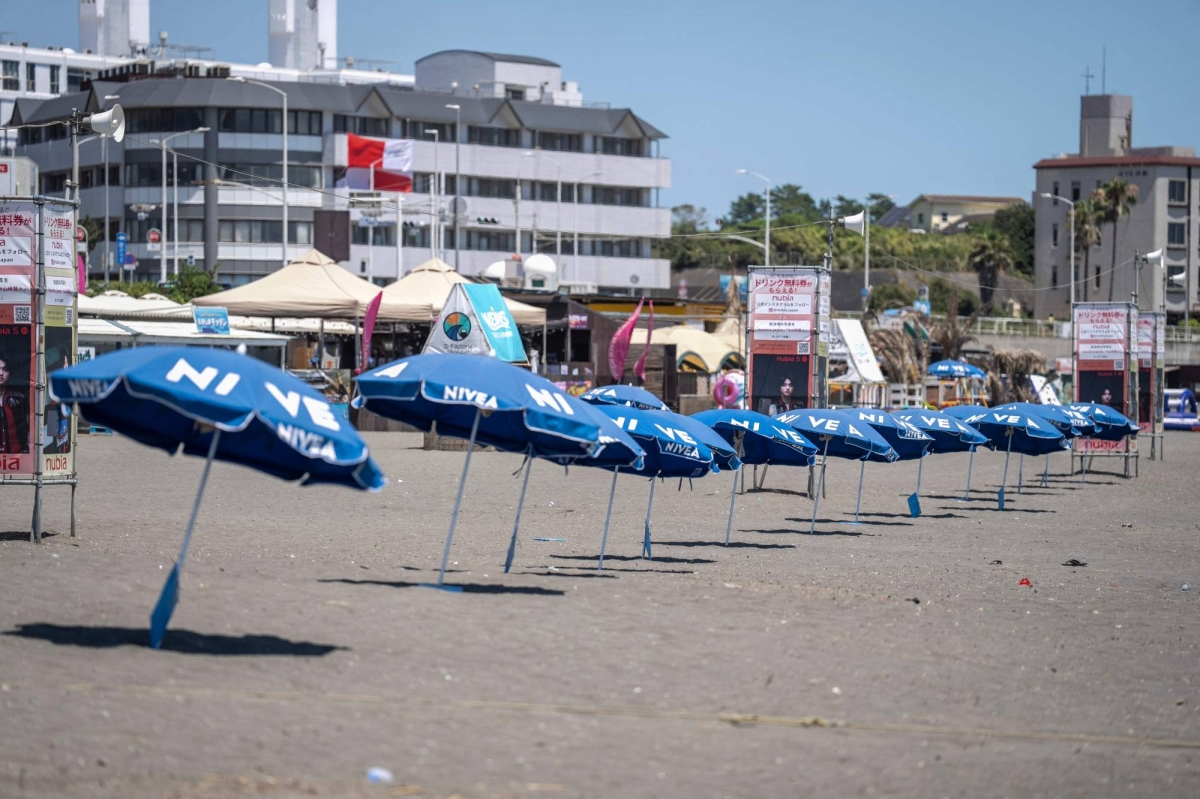
By around 10 a.m., roughly 50 people had gathered, she said, including local residents, nearby office workers and tourists. That number grew to about 100 by 10:30 a.m. A similar shelter was also set up on the fourth floor.
Yoshida added that her home is not located on high ground, so had she been there at the time, she would have needed to evacuate elsewhere. For now, her company has instructed employees to remain at the shelter until the warning is officially lifted. “I do worry that a stronger earthquake or tsunami could come,” she said, “but I’m grateful there’s a designated evacuation site close by.”
While the tsunami warning remained in effect and unease lingered, the atmosphere inside the shelter was relatively calm, Yoshida said. Bottled water was being distributed, restrooms were open and many evacuees passed the time chatting with acquaintances.
“There’s still some anxiety, especially with talk that a second wave could be larger than the first,” she said. “But at the moment, I’m not overly worried.”
Kuniyoshi Katsu, who runs an architectural firm in Ishinomaki, a coastal city in Miyagi Prefecture that was devastated by massive tsunamis on March 11, 2011, was sheltering on the third floor of his office in the heart of the city’s shopping district as of noon Wednesday.
“We’ve evacuated to the upper floors of our building,” Katsu said. “Other nearby shop owners have also moved to higher levels in their buildings.”
Disaster warning broadcasts were being issued regularly over the city’s loudspeaker system, providing updates on the situation, he said.
At around 10 a.m., police had restricted access to the bridge leading toward the port, but those traffic controls appear to have been lifted.
“All the shops are currently closed, waiting for the tsunami warning to be lifted,” he added.




With your current subscription plan you can comment on stories. However, before writing your first comment, please create a display name in the Profile section of your subscriber account page.