Search

Echidna penises: Why they’re so weird
By Angela Heathcote 24 May 2021
Reading Time: 3 Minutes Print this page
“Have you ever seen an echidna’s penis?” You’ve probably asked your friends this in jest, but scientists are working away at unlocking the mystery of the bizarre reproductive system.

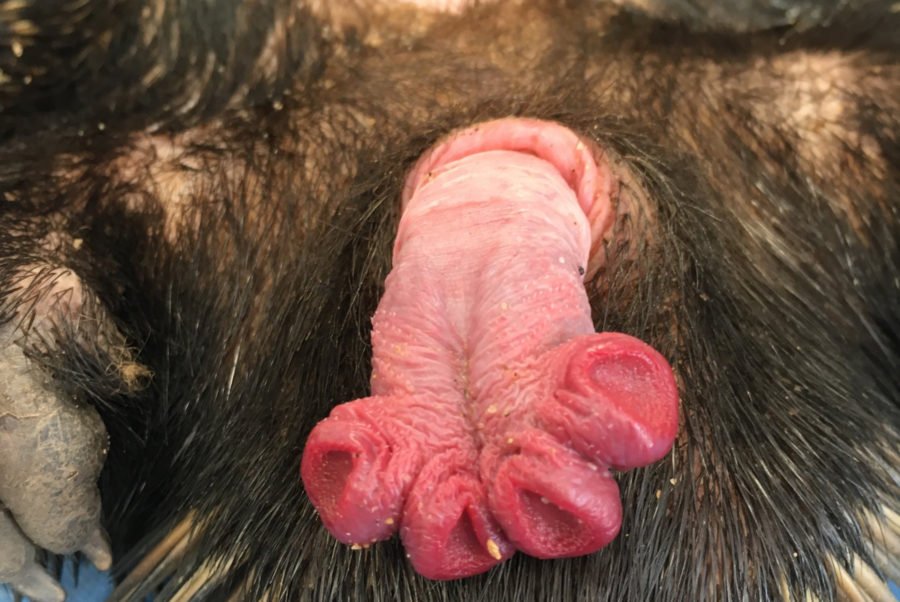
When people first hear about reproductive biologist Jane Fenelon’s research their first reaction is shock, but also, curiosity. “It’s amazing how many people have actually heard that there’s something weird about the echidna penis,” she says. “For those less informed, Jane then follows this up with an image of an echidna penis, and the feelings of shock roll back. 

In late April, Jane and her colleagues published an in-depth research paper on the echidna penis. Labelled one of the “weirdest penises of the animal kingdom” by Smithsonian Magazine, the echidna penis is bright red and has four heads. ​”We’re not really sure why it looks so weird but we do know that they only use their penis for mating, not urine,” Janes says. “Because they don’t need it for urine, they had the freedom to make it much more elaborate and this is something you see in other species that only use it for mating.”

And while you may think we know all there is to know about the echidna, you’d be wrong.

The difficulty in studying the echidna is well-documented. Peggy Rismller, who has been studying echidnas for more than 30 years, was the first to discover that echidnas were laying their eggs into a pseudo-pouch, rather than hatching their eggs in burrows like their fellow monotreme, the platypus. That discovery was only made in the early 1980s, and the reproductive lives of echidnas continues to be difficult to capture. 

Echidnas are a protected species, meaning scientists such as Jane can’t go around picking them up and prying at their reproductive systems. So, for this study Jane teamed up with Currumbin Wildlife Sanctuary on the Gold Coast, which operates a wildlife hospital. From it, Jane received echidnas, euthanised due to illness, to analyse. 
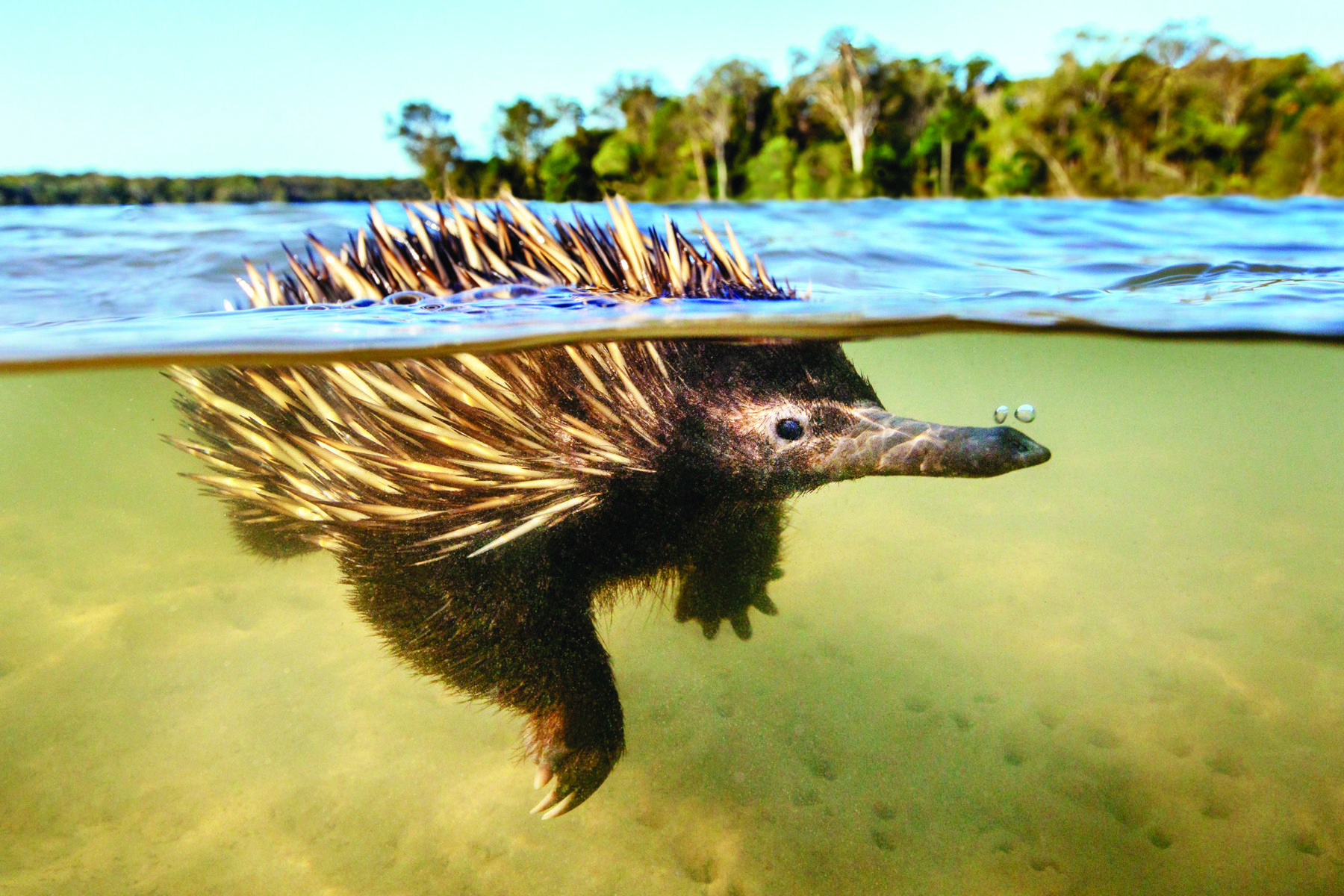
An echidna swimming in a lake.
(Image credit: Andrew Mayo)
Related: ‘How many assumptions have been made?’ There’s a lot we don’t know about echidnas

What do we know about the echidna penis?

Prior to this study, co-author of the paper, Steve Johnston, had previously published a scientific paper documenting how echidnas were only using two of the four heads at any one time when erect. According to Jane, this is very unusual in mammals but is seen in some reptiles. Therefore, this most recent paper wanted to understand how echidnas were doing this. 

The team of researchers believed that the echidna was using a valve mechanism to control which head it used. However, the paper revealed the two ‘corpora spongiosa’ (one of the main tissues that make up mammalian penises) remains entirely separate from the penis.

“Together with the split of the major blood vessel and urethra it gives the impression that the end of the echidna penis is acting like two separate glans penises, which explains how they ejaculate out of one side at a time,” Jane says.

So, what’s the point of knowing these things about an echidna’s junk? ​Well, echidnas are notoriously difficult to breed, and while Australia seemingly has echidnas in abundance, Jane says the main goal is to help with the conservation and breeding of the endangered long-beaked echidnas of Papua New Guinea. 

“While understanding how the penis functions isn’t directly related to their conservation, understanding as much as possible about their reproduction in general will help us with that goal,” she says.

The next step will be understanding how the unusual structure of an echidna’s penis developed. 

“We’d also like to look into how similar it is to crocodiles and turtles, which the adult form looks most like. There’s some evidence that the penis in all amniotes [reptiles, birds and mammals] has the same evolutionary origin and the monotremes are a missing piece of that puzzle.”

Watch Latest Web Stories

See More

The North Face Offtrail Hike Mid GORE-TEX® boots: Tested

By Aus Geo ADVENTURE 6 June 2025
Reading Time: 5 Minutes Print this page
Light in weight and promising plenty of comfort and support, we check out the trekking credentials of The North Face Offtrail Hike Mid GORE-TEX® boots.

Trekking, bushwalking, tramping, hiking. Whatever you call foot-borne adventure, one of the key (and obvious) essentials is a comfortable, supportive and robust pair of hiking boots. As you’d expect, there’s a shedload of options on the market, now joined by The North Face Offtrail Hike Mid GORE-TEX® boots, from the iconic US outdoor brand. We’ve spent a month exploring the outdoors wearing these boots to see if they stand out in the crowded hike/walk/trek boot market. 


Design

The first thing you notice with these boots is the burly – and wide – design. The upper uses Cordura ripstop fabric, which feels (and is) tough but without sacrificing flexibility when worn. Included in the boot is a PFAS-free GORE-TEX waterproof membrane, something that this particular tester can give or take (more on this later), while the reinforced heel cup includes a relatively large collar. According to The North Face, this is designed this way to ensure your foot is ‘locked in’ during long walks.

The outsole is SURFACE CTRL rubber, while the sole itself includes SKYCORE rock guard, aimed at providing additional protection to the forefoot when you’re tackling more technical (read: rugged) terrain. Finishing off the sole are some impressively beefy (5mm high) lugs that are designed to offer optimum traction – and they did so, very effectively, during testing.

So far, so good with these relativley light boots. Longer-term testing will potentially show up any shortcomings but, to date, the Offtrail Hike Mids have been comfortable and supportive.

The boot laces run through three metal eyelets and some loops for ease of adjusting tightness/fit for the wearer. Additional design features include a heavy-duty rubber toe cap (with TPU overlay) for even more durability and a handy loop at the heel section for ease of fitment/removal of the boot. In short, The North Face Offtrail Hike Mid GORE-TEX® boots look bulky and seriously over-engineered – although, as we found out, not to the detriment of fulfilling the design remit of a versatile, reliable boot.


In the field

The boots have been tested over a month to date. Impressively, and no doubt owing to the synthetic materials, there has been no ‘wearing-in’ period with them; since day one, any time in the field wearing the Offtrail Hike Mids has been simply a case of putting them on and getting out there. In short, they are very comfortable from the get-go.

A more surprising note is how light these boots feel on your feet, belying that bulky/over-built appearance by actually being considerably lighter than this tester’s usual pair of leather hiking boots. Equally impressive is the fact that, to date, even though these boots are notably lighter, they do not give up anything in regard to being up to the oft-rough treatment I serve up to my outdoor footwear.

The overly bulky-looking padding around the ankle section actuallly does an excellent job of securing your foot and adding plenty of support when balanced on uneven surfaces.

The shape of the sole is interesting in that it is relatively narrow and quite snug at the rear but ‘fans out’ to what is quite a wide toe-box. That “locked in” description of the heel box rings true, keeping my usually upward-shifting heel firmly in place – something I rarely find in hiking boots I have used over the decades. The lace system is excellent in regard to adjustability of both fit and, more importantly, comfort over longer hikes. 

The outsole lived up to its grip potential during testing; NSW copped torrents of rain over the last month and every walking track that was still open was a slippery challenge – especially over rocky surfaces – but those big lugs, and the wide sole, kept this tester glued to the terrain. The sole’s cushioning also does a pretty good job of being firm enough to absorb some impact of rugged surfaces, without removing that essential sense of ‘feel’ of where your feet are while traversing uneven terrain. The Cordura ripstop outer fabric has shrugged off the occasional drag and scrape through sharp vegetation and terrain, although it’s still way too early to say if it’s as durable as a leather outer.

The only slight negative – and this is more of a personal opinion, to be fair – is the boots’ GORE-TEX waterproof membrane. This tester is not a fan; the membrane is, to a point, ‘breathable’, but a GORE-TEX layer will always make your feet hotter/sweatier than if there was not one. Yes, it keeps rain out, but as all hikers know, once the water goes over the heel of your boot, your feet will be wet, regardless of how effective that membrane is at keeping rain out. It’s a small point to make, but…

We are very keen to keep the Offtrail Hike Mids through winter for further testing in colder conditions but, so far, these boots have simply (and effectively) done their job when in the field.


The not-so final word on The North Face Offtrail Hike Mid GORE-TEX® boots

For anyone looking for a new pair of hiking boots, this new offering from The North Face deserves plenty of consideration. The Offtrail Hike Mids are relatively light in weight, without sacrificing anything in overall performance. As we mentioned earlier when noting the short test period at this time, long-term durability is obviously still a question. However, from what we’ve experienced in testing to date (and drawing on decades of trekking experience), the Cordura upper and that big, wide and gnarly outsole do provide plenty of confidence you’ll be wearing the Offtrail Hike Mids for quite a few years. Look for our long-term update in September.

RRP: $320

See The North Face for more information.

Watch Latest Web Stories

See More
dm.AjaxEvent("pageview", null, 14825);