- Premium Content It takes our newsroom weeks - if not months - to investigate and produce stories for our premium content. You can’t find them anywhere else.
 Miguel Cordon · · 3 min read
Hitting reset: Omise chases profit after rebranding blitz
After going through several name changes, Thailand-based payment platform Omise spent the last two years “returning to fundamentals.”
In late 2024, the firm retook the name Omise after brief stints as Synqa and then Opn between 2020 and 2023.
Omise founder Jun Hasegawa / Photo credit: Omise
“The rebrand helped realign our teams, messaging, and roadmap with the core payment space where we have the strongest market presence,” Jun Hasegawa, founder of Omise, tells Tech in Asia.
According to the company’s audited financial statement, revenue grew 67% year on year in 2024. This reverses declines in 2021 and 2022 as well as improves upon Omise’s 22% revenue growth in 2023.
Hasegawa says that the company experienced a strong rebound in merchant activity following the Covid-19 pandemic, most notably in ecommerce, travel, digital services, and financial services. This contributed to an increase in transaction volumes in 2024.
Amid this rebound, Omise doubled down on partnerships and expansion.
Last year, it collaborated with Malaysian e-wallet firm BigPay for the latter’s expansion into Thailand. It also acquired MerchantE, a US-based payment processor, in 2022.
These initiatives diversified Omise’s revenue streams and expanded its global footprint, Hasegawa says.
Growth vs. profits
Founded in 2013, Omise provides online payment solutions for businesses in Southeast Asia. Its services include processing credit and debit card transactions, managing bank transfers, and enabling clients to accept payments via e-wallets.
It provides these services to the likes of McDonald’s, DHL, and 7-Eleven.
Some of Omise’s competitors in the space include Xendit in Malaysia and 2C2P in Thailand, which – like Omise – are benefiting from a rise in digital payment adoption across Southeast Asia.
See also: Ant Group’s 2C2P slashes 2023 losses by 93%
Despite the revenue growth, Omise continued to report net losses in 2024 as it “focused heavily” on strengthening its product and tech stack, Hasegawa shares. That said, its net losses narrowed by 44% year on year.
Explaining its persistent net losses, the firm calls the past few years “a period of deliberate investment.”
“We’ve focused heavily on strengthening our product, scaling our infrastructure, and expanding across both regional and global markets,” the founder says, adding that these moves came with upfront costs.
But he adds that Omise is seeing “clear signs of a turning point,” with healthy unit economics, improved margins, and operational efficiencies kicking in. Hasegawa shares that Omise is expecting to hit net profit within the next 18 to 24 months.
Betting on AI
Often, expansion doesn’t come cheap.
In 2024, Omise’s selling and administrative expenses widened by 12% compared to the year before. The company attributes the increase to new hires, go-to-market initiatives, as well as R&D – a bulk of which went into AI.
Omise director of engineering Sylvain Dormieu shared how they built Omise’s agentic AI at AWS Summit Bangkok 2025 / Photo credit: Omise
In an interview in July last year, Omise’s senior vice president of engineering Amborish Acharya said that AI plays a big role in the firm’s tech strategy.
One of its projects is adding agentic AI to the payments process through what Omise calls Agentic Commerce.
Through this solution, customers of Omise’s clients can make purchases by telling an AI bot what they want to buy. The AI then handles product discovery and selection, as well as offers a one-tap checkout.
Aside from its agentic AI efforts, the company is developing internal tools for fraud detection and transaction monitoring. It’s also building an AI-powered payment routing feature that accounts for the user’s payment method, geolocation, or risk profile.
But Hasegawa says these features are still in development or in limited release. As a result, their contribution to revenue in 2024 was minimal.
That said, Omise expects these AI investments to bear fruit in 2026.
This year, the company aims to scale its AI payment platform across Asia, expand its enterprise customer base, and make its operations more efficient.
“In 2025, we expect expense growth to slow as we focus on maximizing what we’ve built and improving operational efficiency, particularly in developer and internal tools,” Hasegawa says.
Stay ahead in Asia’s tech landscape
This is premium content. Subscribe to read the full story.
Is the Thailand-based payments startup at a turning point? The firm has been recording a net loss in the last five years, but it says profit is now on the horizon.
We know this is not ideal. ⌛ Sign up in 20 seconds. Cancel anytime.







- Premium Content It takes our newsroom weeks - if not months - to investigate and produce stories for our premium content. You can’t find them anywhere else.
 Aya Lin · · 1 min read
These funds have not invested in China in the past year
What if a fund has stopped investing in your market for quite some time?
This could mean a few things: The backer might be waiting for a better time to invest, shifting their focus away from the region, or still raising money for a new fund. It could also be because the market is no longer a priority for them.
Remember, timing your outreach to an investor is crucial.
This list includes funds that have backed at least one company in China in the past two years but have not joined any funding round for tech startups over the last 12 months.
As always, our database is a work in progress. So drop us a note at research@techinasia.com if you spot any inaccuracies or missing information.
For more of our automated data-driven pieces, head here. You can also access our complete database here.
Editing by Duc Tran
(And yes, we’re serious about ethics and transparency. More information here.)
- Premium Content It takes our newsroom weeks - if not months - to investigate and produce stories for our premium content. You can’t find them anywhere else.
 Peter Janssen · · 5 min read
Why Thai startups are chasing growth in Singapore
Thailand may be pumping billions of dollars into its digital infrastructure, but its startup ecosystem still hasn’t reached its potential.
In October 2026, the country will host the annual meetings of the World Bank and International Monetary Fund, with digital transformation high on the agenda.

Photo credit: tampatra / 123RF
Thailand has recently invested heavily in cloud computing and nationwide 5G coverage, with 7o data centers approved as of the first quarter of 2025.
The country even has a booming digital commerce sector, with ecommerce transactions reaching 6 trillion baht (US$185.3 billion) and e-payments hitting 8 trillion baht (US$247.1 billion) in 2024.
But where are the successful startups driving innovation? And why does their journey so often lead through Singapore?
No government push
The World Bank’s latest Thailand Economic Monitor report says the country lags behind its regional peers in critical areas such as information and communications technology manufacturing, digital services, and, most notably, VC funding for startups.
Part of the challenge lies in the lack of government policies to support the sector.
“A successful entrepreneurial ecosystem – startups and venture capital – always needs to be catalyzed by the government,” says Douglas Abrams, managing director of Expara, an early-stage VC firm based in Singapore that focuses on Southeast Asia.
See also: 25 rising startups in Thailand
Expara was an early-stage investor in payments platform 2C2P, which has grown into a regional player since launching in Thailand. Today, it powers transactions for major clients like Lazada, Singlife, Lenovo, AirAsia, Thai Airways, Changi Airport Group, and luxury hotel brand Capella.
The platform was founded by Myanmar national Aung Kyaw Moe, who created his own company, SinaptIQ, in 2003. The firm developed a payment software that provides one-time passwords for credit card transactions for Thai banks – something still in use today.
A year later, he co-founded Paysbuy – a Thai equivalent of PayPal – which was eventually sold to Thai telecom giant DTAC in 2007 for about 200 million baht (US$6.2 million).
After the sale, Aung joined the Sasin School of Management in Bangkok. It was where he met Abrams, who taught VC courses on top of running Expara.
Aung wanted to build a new company offering comprehensive payment solutions for banks and merchants. Acting on Abrams’ advice, he relocated 2C2P’s headquarters to Singapore in 2008, drawn by the government’s active push to promote its enterprise ecosystem program.
“Singapore is the only country [in Southeast Asia] where you can get serious venture capital investment,” Aung tells The Business Times.
Singapore appeal
One reason foreign VCs gravitate toward Singapore is its legal framework. It’s in English and based on British common law, providing clarity and giving investors confidence.
“The second thing is that in Singapore, you can issue different classes of shares at different prices,” Aung says. “In Thailand, if you want to increase your shares, you have to pay for those shares at par value.”
2C2P founder and former CEO Aung Kyaw Moe / Photo credit: 2C2P
Providing free stock options to employees is a key early compensation structure for many startups.
“You basically cannot provide incentive stock options for employees [in Thailand],” says Kasima Tharnpipitchai, head of AI strategy at investment firm SCB 10X. “It’s an ongoing problem that the government says they will look at, but haven’t addressed.”
Unlike Singapore, where digital entrepreneurship and VC are national priorities, Thailand’s government has historically focused its innovation agenda on manufacturing, export, and foreign investment, especially in sectors like automotive.
In recent years, this has meant an aggressive push to become Southeast Asia’s electric vehicle manufacturing hub, with sweeping tax incentives for EVs, plug-in hybrids, and even mild hybrids. This campaign has brought Chinese automakers like BYD, Neta, and Great Wall into the fold.
While these efforts have helped position Thailand as a regional EV production center, critics say the country’s heavy focus on multinational manufacturing leaves little space or support for homegrown, venture-backed innovation.
Scaling up
In 2022, Aung and his co-founders sold 2C2P to Ant Financial/Alibaba Group for US$590 million.
“If this was a Thai company, the exit would never have happened, because as a Thai company I would never have been able to grow the company to this size,” he explains. “Singapore is where the capital is, and the image too.”
See also: Thailand widens EV perks as Japan-China auto rivalry accelerates
Another dynamic Thai startup to watch is Meticuly. It was founded by Thai national Boonrat Lohwongwatana, a graduate of the California Institute of Technology.
After years of research on mineral science at US universities, Boonrat returned to Thailand and joined Chulalongkorn University’s engineering department. There, he developed a process for speeding up the manufacture of titanium body implants, including skulls, kneecaps, and hips.
Boonrat is currently in Boston, selling the tech to US hospitals. It’s already widely used in Thailand.
To support Meticuly’s growth ambitions, it also established its headquarters in Singapore in 2022.
While Thailand has struggled to attract independent VC firms, it does have several corporate VC arms operated by major banks and conglomerates. But Boonrat is wary of going down that route.
“When you don’t have enough financial VC [firms] leveraging your growth, then the country is in trouble,” he says. “[All] the bank-backed corporate VC [firms] want is to invest and take over. It’s not that they want you to grow and exit.”
One notable exception is Roojai, a Thailand-based digital insurance platform that’s quietly become one of the country’s most promising tech companies. Founded in 2016, it started as a managing general agent and has recently transformed into a full-stack insurer by acquiring FWD General Insurance’s local operations.

Roojai founder and CEO Nicolas Faquet / Photo credit: Roojai Group
Roojai’s transition has not been easy. Group CFO Nicolas Fauvarque previously told Tech in Asia that 2024 was the company’s “worst year” because of one-time acquisition costs and heavy flooding.
Yet Roojai is forecasting a 49% year-on-year growth in gross written premiums for its 2026 fiscal year, with its Thai business already profitable and its EV insurance emerging as a major growth area.
Conglomerates’ role
In the absence of a strong VC scene, large banks and conglomerates play an outsized role in Thailand’s startup ecosystem compared to its regional peers.
For example, most fintech firms in the country are either founded by the giants or backed by them, as shown by Tech in Asia data. This dynamic can make it hard for Thai startups in the sector to compete with established banks in the country.
Local conglomerates also tend to dominate the exit market for Thai startups via M&As, according to Kid Parchariyanon, founder and managing partner of VC fund SeaX Ventures. This can limit innovation and competition as startups often have to align with legacy players’ interests rather than disrupt them.
Currency converted from Thai baht to US dollar: US$1 = 32.38 Thai baht.
This story was republished with permission from The Business Times, which made the article available to its paying subscribers. It was moderately edited to reflect Tech in Asia’s editorial guidelines.
Stay ahead in Asia’s tech landscape
This is premium content. Subscribe to read the full story.
Thailand’s startup scene is stalling despite huge investment – find out what’s holding it back and which bold founders are breaking through anyway.
We know this is not ideal. ⌛ Sign up in 20 seconds. Cancel anytime.
Welcome to Tech in Asia’s daily newsletter, your essential dose of Asia’s tech and startup buzz. Not on the mailing list? Register here. Got a story tip? Send it to editors@techinasia.com.
In focus
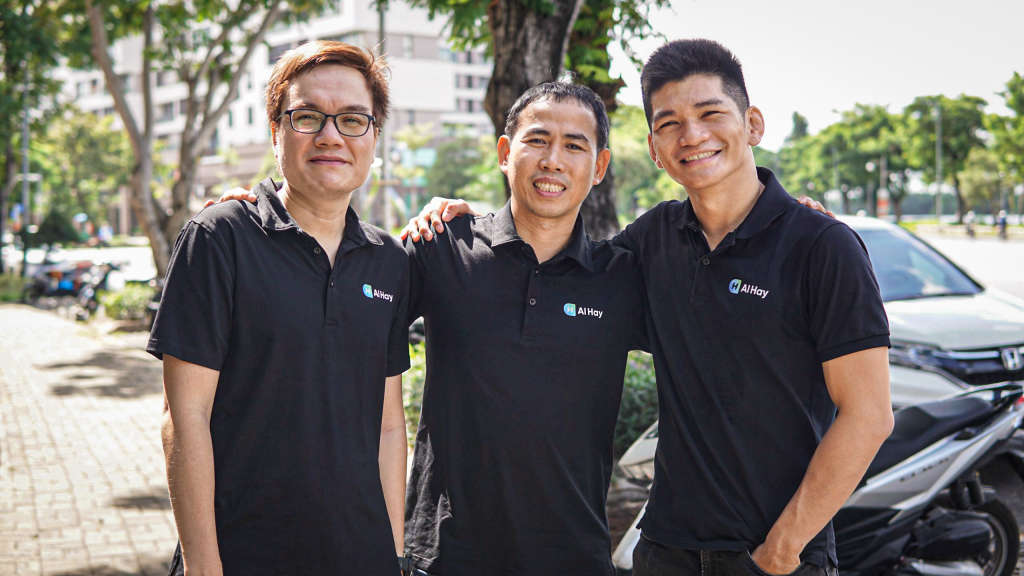
- Vietnam’s AI Hay has no revenue but managed to raise US$18 million. We break down why.
- Telio’s founder is back, with a twist: he’s swapped mom and pop stores for an AAA game.
- As always, send us tips or opinions at editors@techinasia.com
Hello reader,
Visitors to Vietnam love to romanticize the hustle: every alleyway is a market, every curb a pop-up pho shop. Everyone’s selling something.
But Vietnam doesn’t just need sellers. It needs more risk-takers, the kind who bet on tech, not traffic. That’s a different kind of hustle.
The two stories from Vietnam in this edition? They’re about the ones who dare.
First up: Duc Tran and his team at AI Hay, a Vietnamese AI-powered Q&A app. They’re going up against the likes of ChatGPT and Gemini, the ones with billions in funding. Duc and his co-founder quit their jobs at Zalo to build a product that can tackle local queries global models tend to fumble.
The odds? Brutal. The skeptics? Plenty. But you have to admire the audacity. David never looked smaller.
Then there’s Sy Phong Bui. His last startup, B2B firm Telio, crashed just last year after burning through millions in VC cash. Critics didn’t hold back.
But Sy Phong didn’t either. He sold his house to fund his next bet: building an AAA game from Vietnam. Some call it reckless. Others, relentless.
For an innovative culture to thrive, the ecosystem needs to embrace failure and push more people to think beyond the safe bets. It’s not just about chasing stability or quick bucks from real estate.
Build in tech. Build something new, with lasting impact. Leave a legacy.
Thu Huong Le, managing editor
Top Stories
1️⃣ Vietnam’s AI Hay pits local brains against ChatGPT’s brawn
Photo credit: AI Hay
AI Hay, a Vietnamese AI-powered Q&A app, has a mountain to climb.
First, it’s made zero revenue so far, so the fundraising treadmill isn’t stopping anytime soon. Second, it needs a B2B playbook rich enough to subsidize its consumer ambitions. Third, it needs to keep sharpening its tech, especially as Western models get better at low-resource languages like Vietnamese.
2️⃣ Telio’s founder respawns, now gunning for gamers
Ononpay co-founder Sỹ Phong Bùi / Photo credit: Tech in Asia
Sy Phong Bui, who once raised millions from top VCs for his B2B startup Telio, is back. This time, he’s building an AAA game for Vietnam, backed by a US$2.5 million co-development deal with tech giant VNG.
The pairing is an eyebrow-raiser: VNG had poured over US$20 million into Telio and lost it all. Betting on Bui again? That’s real trust.
Quickfire Q&A
Telio’s shutdown in late 2024 was a stark reminder of how brutal Vietnam’s B2B ecommerce market can be. Even so, one startup, Kamereo, is still standing – and growing.
The company has raised several sizable rounds and is steadily expanding to serve the demand for fresh produce from restaurants and other B2B clients in Vietnam.
I had a quick chat with Taku Tanaka, its CEO and co-founder.
What’s a recent win that gave you momentum?
Growing month over month in terms of revenue and margin. We also expanded to Hanoi in December 2024.
What’s the biggest lesson from your founder journey so far?
Playing the long game and having a clearly defined moat are critical to future success.
Who’s someone in SEA tech you admire?
Honestly? I’m still figuring it out. Stay tuned 🙂
What’s a tool you can’t live without?
Zalo. Because in Vietnam, if you’re not on Zalo, do you even exist?
What’s a bet you’re making that others aren’t?
We’re here to fix Vietnam’s food supply chain for good, not just grab quick wins and run.
AI’s coming. Asia’s not waiting.
This week’s 60/40 episode answers some of the biggest questions we have about AI.
Ronnie Chatterji has gone from Duke professor to White House wonk to OpenAI’s chief economist – a trajectory that most can only dream of. In this episode, we get into the biggest topics around AI: how the tech should be viewed as a productivity booster and not a job killer, how it fits into Southeast Asia’s moment to shine, and why robots might outshoot Steph Curry – but will never replace your kid’s math teacher.
This episode has it all, from policy rules to personal AI usage to what it’s like to have Sam Altman as your boss. Listen on YouTube | Spotify | Apple.
Got a tip for us?
If you come across something noteworthy – a sudden pivot, a discreet shutdown, or an unusual deal, for example – feel free to share it with us at editors@techinasia.com. We’ll look into it – we read every email.
Your tip, no matter how small, could be the start of something big. Let’s keep each other sharp.
Recommended reads
- Why Thai startups are chasing growth in Singapore
 Indosat bets big on AI. Is Indonesia ready?
 Asia layoff tracker: Hundreds let go by Virtuos, Maka Motors
 Weekly funding: Chinese AI firm leads with $250m round
 Vietnam’s AI Hay pits local brains against ChatGPT’s brawn
 Telio’s founder respawns, now gunning for gamers
 PH call centers fend off AI doomsday
 Forget paid ads – SEA brands chase affiliate gold
 AI reboots roll-ups, but can it fix the model?
 Anchanto aims to break even by Q4 ’25 as cash declines in FY24








Editing by Kyle Lorenzo Subido
(And yes, we’re serious about ethics and transparency. More information here.)
Share, tag us, and land on our Wall of ❤️!
