- Premium Content It takes our newsroom weeks - if not months - to investigate and produce stories for our premium content. You can’t find them anywhere else.
 Putra Muskita · · 5 min read
Grab’s AI leap began with a cold stop on engineering
In 2024, Grab did the unthinkable for a Southeast Asian tech giant: It told its entire engineering team to stop shipping – for nine weeks.
No new features, no growth targets. Instead, Grab engineers were instructed to just figure out how to apply generative AI across the business in a way that’s “transformational,” according to Grab president and COO Alex Hungate.
“Nine weeks in our world is a lot,” the executive said at last week’s Asia Economic Summit hosted by Tech in Asia in Jakarta. “It was kind of a crazy thing to do for a company of our scale, with so many [daily] issues to deal with.”

Grab president and COO Alex Hungate (left) onstage at the Asia Economic Summit / Photo credit: Tech in Asia
After first announcing a US$150 million budget for AI research in 2019, Grab launched an AI center of excellence in Singapore in May 2025 – a bid to deliver AI solutions across the region.
At that point, CTO Suthen Thomas said over 1,000 AI models powered the Grab platform. That meant one model per 11 employees.
But to be clear, the super app isn’t building foundational AI models from scratch. Instead, it partners with AI tech giants like OpenAI and Anthropic, launching AI tools for merchants and drivers with them.
Grab can’t afford to sit out the AI race. Innovation is its best shot at defending Southeast Asia, which remains its only stronghold.
AI as the C-suite for small Grab merchants
So far, much of Grab’s AI initiatives revolve around its core ecosystem.
For instance, it has a driver “copilot” that suggests where to head next, maximizing back-to-back jobs, reducing idle time, and boosting earnings. There’s also a system called “hyper-batching,” which lets drivers pick up and drop off multiple food delivery orders in sequence.
This isn’t just about squeezing out more efficiency.
See also: Grab COO breaks down ‘triple pivot’ strategy for profit
Grab’s platform, Hungate said, is built to be counter-cyclical. When the economy dips, the gig worker supply surges. AI keeps the flywheel spinning by matching the supply with enough demand.
These tools help keep prices low for customers without significantly cutting into driver earnings, he added.
Drivers as data collectors
Stay ahead in Asia’s tech landscape
This is premium content. Subscribe to read the full story.
Southeast Asia’s mom-and-pop shops don’t have CMOs or data teams. Grab thinks AI can fill that gap – and it’s opening its internal toolbox to prove it.
We know this is not ideal. ⌛ Sign up in 20 seconds. Cancel anytime.






- Premium Content It takes our newsroom weeks - if not months - to investigate and produce stories for our premium content. You can’t find them anywhere else.
 Elyssa Lopez · · 3 min read
Angkas cuts staff, turns to AI as rivals close in
Angkas, the largest motorcycle taxi app in the Philippines, underwent a round of layoffs in June, founder and co-CEO Angeline Tham confirmed to Tech in Asia.
In a statement, she said the company made “some difficult but necessary changes to [its] team structure” and that “these adjustments are part of a broader strategy” to support long-term sustainable growth.
Tham did not confirm how many employees were affected by the move. Data from LinkedIn shows the startup currently has over 600 employees.

Angkas drivers in Metro Manila / Photo credit: Angkas
This is the second time that Angkas cut jobs in the past two years, according to a source. However, Tech in Asia was unable to verify this claim with the company.
It’s unknown which departments were affected by the June layoffs. However, Tham noted in her statement that the startup is “accelerating the use of AI” to improve user experience. “These steps allow us to operate with greater agility and discipline, ensuring we stay ahead in a fast evolving landscape,” she added.
As of the end of 2024, Angkas had at least 27,000 riders.
In recent years, competition has been tough for the bike ride-hailing firm as local player Joyride and Grab-backed Move It entered the space. Both have less than 15,000 riders on their platform.
See also: Angkas shifts gears as Grab vies for PH motorcycle taxi crown
Founded by Tham in 2016, Angkas is considered the pioneer in the Philippines’ motorcycle taxi industry. Over the years, its app has been shut down thrice: twice for regulatory reasons and once due to the Covid-19 pandemic.
Ever since it began operations, Angkas has lobbied for a law that would legalize its operations. Under the country’s Land Transportation and Traffic Code, private motorcycles cannot be hired as a form of public transportation.
The 19th Congress passed a bill that would have legalized this mode of transportation, but it never got prioritized enough to be signed into law.
Still, Angkas lobbied for the passage of a provisional policy that allowed motorcycle taxis to ply the roads of Metro Manila and other major urban areas in the country. This measure is the sole reason why motorcycle taxis remain operational in the Philippines.
Angkas was still operating at a net loss by the end of 2023, even though revenue grew by 30% to 716.3 million pesos (US$12.7 million) from 501.9 million pesos (US$8.9 million) in 2022.

Stay ahead in Asia’s tech landscape
This is premium content. Subscribe to read the full story.
The layoffs come as Angkas faces intense competition from regional giant Grab and local player Joyride in the Philippines’ motorcycle taxi space.
We know this is not ideal. ⌛ Sign up in 20 seconds. Cancel anytime.
- Premium Content It takes our newsroom weeks - if not months - to investigate and produce stories for our premium content. You can’t find them anywhere else.
 Aya Lin · · 1 min read
25 rising startups in Thailand
Which are the startups that are on the path to becoming the next big thing? One way to tell would be when they’ve raised a new round. Using Tech in Asia’s data, we’ve generated this constantly updated list of startups in Thailand who’ve recently raised funding.
The list only includes companies up to the series E stage. Each item in the list includes key details about the funding round.
Seeking more? Search the most comprehensive database of tech companies in Asia or read our research methodology. For more auto-generated lists of rising startups, head here.

Editing by Duc Tran
(And yes, we’re serious about ethics and transparency. More information here.)
Welcome to Tech in Asia’s daily newsletter, your essential dose of Asia’s tech and startup buzz. Not on the mailing list? Register here. Got a story tip? Send it to editors@techinasia.com.
In focus
- StashAway building wealth in Singapore
- Flash Coffee spilling the beans on fresh strategy with new CEO
- Neuron and Beam merging, showing two wheels are better than four
Hello reader,
Singapore is the wealthiest country in Southeast Asia. So it may seem that a wealth advisory firm operating in the city-state would be more likely to deliver profit.
That’s not the case, however, as even more prominent companies like Endowus, Syfe, and StashAway were still unprofitable as of last year.
But they’re making headway. In today’s featured story, a report from our sister publication, The Business Times, breaks down StashAway’s financials and how it finally turned a profit in its home market in 2024.
The key to hitting this milestone was product diversification and turning cash management clients into long-term investors, according to the company’s co-founder and CEO, Michele Ferrario.
With Syfe also making a profit in Singapore in 2024, recent moves may signal a rebound in the robo-advisory space – an industry shaken by exits, including JPMorgan’s withdrawal in 2023.
This edition also features my interview with Flash Coffee’s new CEO, Bardon Matthew, who talked to me about the brand’s revamped store model and its bold plan to scale to 500 locations in Indonesia.
Miguel Cordon, journalist
Top Stories
1️⃣ StashAway hits profit milestone in SG as revenue jumps
StashAway’s Singapore unit is now EBITDA-positive, flipping a US$1.3 million loss in 2023 into a US$1 million profit in 2024. Revenue in its core market jumped nearly 45% year over year. CEO Michele Ferrario credits loyal users who kept investing.
The company, however, has yet to set a hard deadline for group profitability.
2️⃣ Yellow fades as Flash Coffee’s new CEO helps brew fresh strategy
Bardon Matthew, Flash Coffee’s new CEO / Photo credit: Flash Coffee
After its liquidation of Singapore operations, the tech-enabled coffee chain appears to be reinventing itself with a new store concept. And according to its new CEO, Bardon Matthew, the company is seeing early success.
From our archives
SG fintech firm Bambu shut down after missing profit targets, says founder
The company, which helped banks and insurers build their own robo-advisors, didn’t survive the wealthtech crunch. It ceased operations in 2024.
Robo-advisors closing shop was all too common back then. Singapore-based players like MoneyOwl and Smartly also folded around the same time.
Bambu stood out, though. Founder Ned Phillips said the company was nearing profitability when it shut down – a reminder that strong tech and good timing aren’t always enough without a clear path to sustainable revenue.
Navigate the current: Your path forward at TIA Conference 2025
Act now: First release savings of up to 60% off!
Eight out of 10 founders we’ve spoken with believe raising VC money will be harder in 2025 than in previous years. How are you preparing for this challenging landscape?
At Tech in Asia Conference 2025, you can meet the very people facing these hurdles head-on. Gain the strategies and connections needed to defy expectations and emerge stronger together.
This is your essential platform to recalibrate, find solutions, and move your business forward. Get tickets today!
P.S. Be part of our annual conference report! Share your thoughts on Asia’s tech and startup scene in our survey.
Trending news
1️⃣ SG’s Neuron Mobility, Beam to merge as APAC e-scooter leader
The combined entity has a broad global footprint, with Neuron’s presence in Canada complementing Beam’s operations in Turkey and the US.
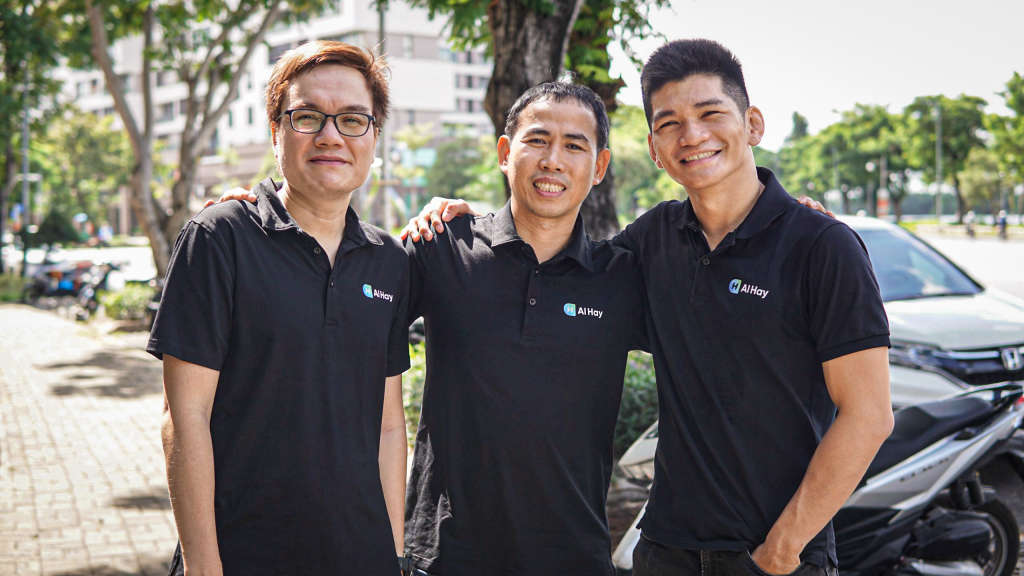
2️⃣ Square Peg joins $10m bet on Vietnamese startup AI Hay
Launched in May 2024, AI Hay blends generative AI with social networking to deliver context-rich answers in Vietnamese.
3️⃣ Bitcoin ETFs’ inflow streak hits 15 days, reaches $4.9b
The cryptocurrency’s bid to recover its highs from earlier this year continues.
4️⃣ Khosla Ventures backs $105m raise for AI robotics startup
Genesis AI is building a flexible model to automate robotic tasks, from housekeeping to lab work.
5️⃣ Malaysian chip design firm SkyeChip nears IPO
SkyeChip designs chips that complement offerings from major firms like Nvidia, serving an entirely US-based customer base.
Recommended reads
 Asia layoff tracker: Hundreds let go by Virtuos, Maka Motors
 Weekly funding: Chinese AI firm leads with $250m round
 Vietnam’s AI Hay pits local brains against ChatGPT’s brawn
 Telio’s founder respawns, now gunning for gamers
 PH call centers fend off AI doomsday
 Forget paid ads – SEA brands chase affiliate gold
 Anchanto aims to break even by Q4 ’25 as cash declines in FY24
 Call center apocalypse fails as flesh beats AI economics
 Breaking into Japan? Start with Facebook, not LinkedIn
 Japan’s low-key bid for Southeast Asia’s tech exits








Editing by Mina Deocareza and Thu Huong Le
(And yes, we’re serious about ethics and transparency. More information here.)
Share, tag us, and land on our Wall of ❤️!
