
Claudette Colbert
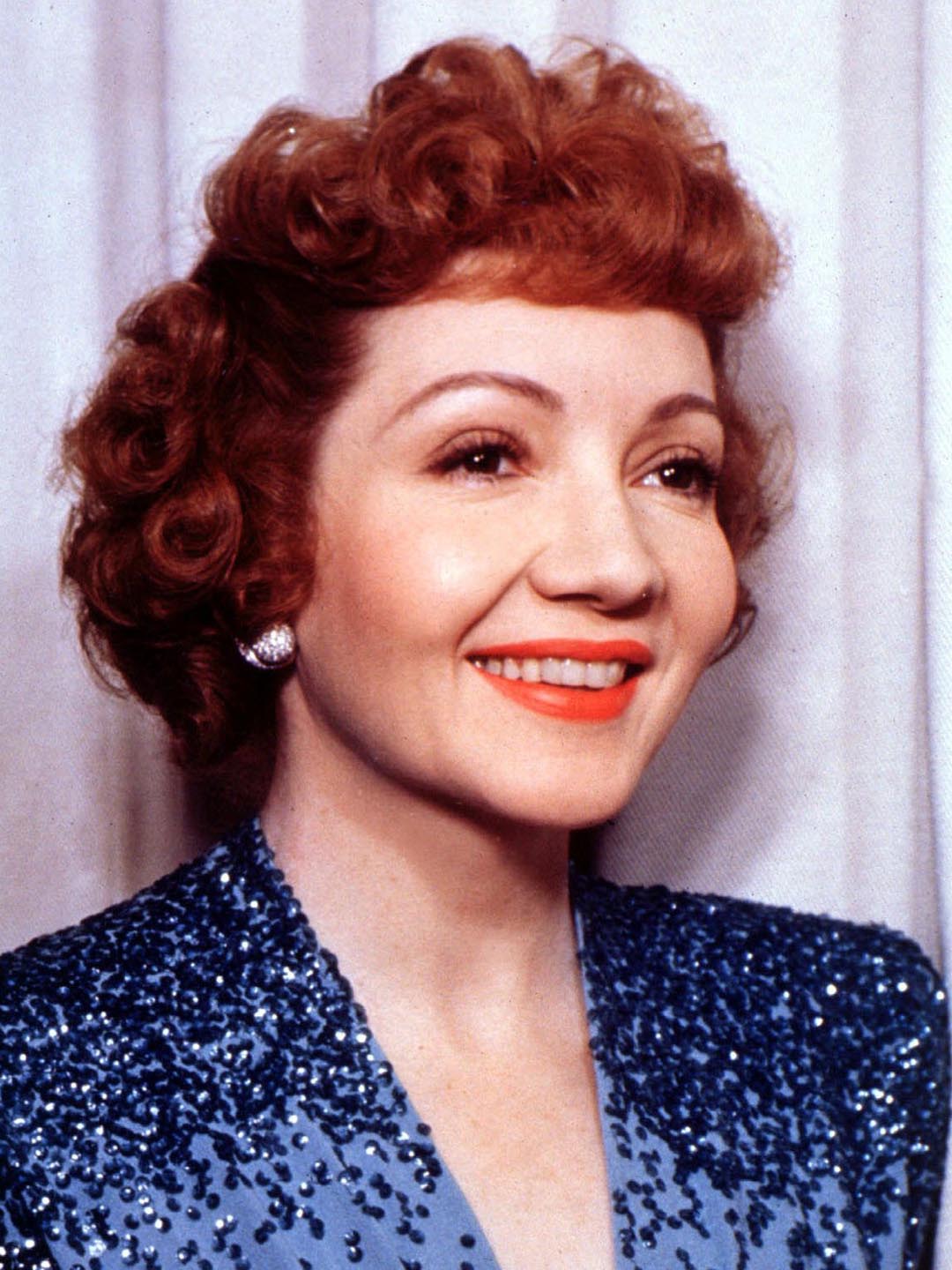
Actress
Birth Date: September 13, 1903
Death Date: July 30, 1996 — 92 years old
Birth Place: Saint-Mandé, Val-de-Marne, France
Spouses: Norman Foster

Inimitably charming, witty and sophisticated star of American films from the start of talkies till the mid-1950s, and later a most welcome presence on the stage and in occasional TV. Born in Paris, Claudette Colbert moved to New York when her banker father encountered financial setbacks. Initially intending to become a commercial artist, she studied with speech teacher Alice Rossetter to overcome a slight lisp. Rossetter encouraged Colbert to audition for a play she had just written, "The Widow's Veil" (1919), and so one of the most durable careers in show business began with an appearance as an Irish bride (complete with red wig and brogue).
Colbert made her Broadway debut four years later in "The Wild Westcotts" and managed to keep busy in a series of mostly unrewarding stage roles. In 1925 playwright Frederick Lonsdale insisted that Colbert be replaced in the lead role of his "The Fake." Forced to either leave the show or accept the role of understudy (she chose the latter) the disheartened ingenue could not have foreseen that sixty years later she would be starring on Broadway at age 82 in a revival of Lonsdale's "Aren't We All?" (1985).
Colbert's break came in 1927 when she essayed a role that would later seem like classic miscasting: the sluttish Lou in "The Barker." Her seductive use of her trim figure led Walter Winchell to dub her "Legs" Colbert (an apt nickname given the means by which Colbert's character in "It Happened One Night" practiced the fine art of hitchhiking). Playing the object of Lou's seductive wiles was boyish Norman Foster, who would soon become Colbert's first husband.
The success of "The Barker" led to Colbert's screen debut (and her only silent feature), "For the Love of Mike," directed by Frank Capra. After the film was panned critically and failed financially, its leading lady vowed, "I shall never make another film." Two years later, however, unable to follow up the success of "The Barker," Colbert took another stab at the movies, signing with Paramount and working at the old Astoria studios so that she could continue her New York stage work.
Her carefully modulated alto voice and brisk sincerity quickly gained critical approval in a series of modest soaps and melodramas. Moving to Hollywood, her career rose with such notable features as "The Smiling Lieutenant" (1931, directed by Ernst Lubitsch), Cecil B. DeMille's "The Sign of the Cross" (1932), in which Colbert's Empress Poppaea took a famous bath in asses' milk, and James Cruze's "I Cover the Waterfront" (1933), where she touchingly portayed a child of the wharves who must choose between a transgressive father and a crusading reporter.
It was, however, with "It Happened One Night" (1934, also directed by Capra), that Colbert, on loan-out to struggling Columbia Pictures, really achieved top stardom. Cast as the silk purse which held Clark Gable's rough diamond, Colbert's chic elegance and supple wisecracking were matched by a low-key warmth and humanity that audiences fell for. Convinced that a comedy performance could not cop her the Best Actress Oscar for the year, Colbert was on board a train for New York when she was stopped and whisked to the Academy ceremonies to collect her prize.
She had reached her peak and continued in a series of roles that epitomized the tongue-in-cheek Colbert persona: secretaries and struggling actresses who captivate the horsey set ("The Gilded Lily," "She Married Her Boss," both 1935), aristocrats who work as maids or working women who masquerade as aristocrats ("Tovarich" 1937; the superb "Midnight" 1939, one of her best), and young society matrons who indulge in screwball antics ("Bluebeard's Eighth Wife" 1938, unfortunately her only other film with Lubitsch; Preston Sturges's zany classic, "The Palm Beach Story" 1942).
With her round apple-face, prominent cheekbones, trademark curled bangs, puissant playfulness and glistening timing, Colbert is usually associated with romantic comedy. She also distinguished herself, though, in dramas ranging from the pioneering psychological study, "Private Worlds" (1935) to the gentle slice of schoolteacher Americana, "Remember the Day" (1941).
Free-lancing more as the 1940s progressed, she did not eschew mother roles in such films as the moving if overly idealized "Mrs. Miniver in America" saga, "Since You Went Away" (1944). Several of her late 40s films (especially the modest "The Egg and I" 1947, which launched the highly popular Ma and Pa Kettle characters in supporting roles) did well enough at the boxoffice to sustain her career, but apart from the restrained, sensible study of women in Japanese concentration camps, "Three Came Home" (1950), Colbert's film career gradually declined in quality, activity and scope.
"Let's Make It Legal" (1951) was a belated farewell to the type of comedy she had made her own, while "Texas Lady" (1955) was a watchable but routine Western which only utilized Colbert's zest. TV took up much of the slack in the mid-50s; Colbert also returned to the stage opposite fellow sophisticates Noel Coward (in "Island Fling") and Charles Boyer (in "The Marriage Go-Round").
Apart from a notable period of inactivity in the late 60s after the death of her second husband, Colbert's later career was marked by several very successful comebacks on both stage ("The Kingfisher" 1978) and TV ("The Two Mrs. Grenvilles" 1987) where she displayed the same stylishness and intelligence which made her such a wonderful archetype of the modern working woman.
Expand Bio▼Credits

The Two Mrs. Grenvilles


Zane Grey Theater

Climax!Stream

Let's Make It LegalStream


Three Came HomeStream

The Egg and IStream

Without Reservations

Tomorrow Is ForeverStream

Since You Went Away

So Proudly We Hail

Boom TownStream

MidnightStream

It Happened One NightStream


 Watchlist Easy access to only the shows you care about — all in one simple place
 Alerts Only important notifications — when a show is returning, when it becomes available to stream, and more.
 Special Offers Exclusive products we release related to your favorite shows and streaming services


