Skip to content
NOWCAST WYFF News 4 at 11
Live Now
Advertisement

Pickens County Schools names new superintendent

Dr. Danny Merck offered four-year contract

Dr. Danny Merck
Dr. Danny Merck
WYFF 4 logo
Updated: 11:23 PM EDT Apr 10, 2014
Editorial Standards
Advertisement
Pickens County Schools names new superintendent
Dr. Danny Merck offered four-year contract
WYFF 4 logo
Updated: 11:23 PM EDT Apr 10, 2014
Editorial Standards
There's new leadership Thursday at Pickens County Schools.The school board has offered Dr. Danny Merck a four-year contract as superintendent.Merck is a graduate of Pickens County Schools and has more than 23 years of school experience.Merck would replace Dr. Kelly Pew, who took a job in Rock Hill.

There's new leadership Thursday at Pickens County Schools.

The school board has offered Dr. Danny Merck a four-year contract as superintendent.

Advertisement

Merck is a graduate of Pickens County Schools and has more than 23 years of school experience.

Merck would replace Dr. Kelly Pew, who took a job in Rock Hill.

Advertisement

Global nuclear stockpile is rising, says report. Here are the countries that possess them

Amid the ongoing missile attacks between Israel and Iran, we get the facts on the number of nuclear warheads in the world.

Next Story

Global nuclear stockpile is rising, says report. Here are the countries that possess them

Amid the ongoing missile attacks between Israel and Iran, we get the facts on the number of nuclear warheads in the world.

Video Player is loading.
Current Time 0:00
Duration 1:03
Loaded: 10.22%
Stream Type LIVE
Remaining Time 1:03
 
1x
    • Chapters
    • descriptions off, selected
    • default, selected
    In terms of *** timeline over this, we heard from Press Secretary Caroline Levitt, who gave us *** direct quote from the president yesterday. Based on the fact that there's *** substantial chance of negotiations that may or may not take place with Iran in the near future, I will make my decision whether or not to go within the next two weeks. The violence in the Middle East intensify. after Iran launched missiles hitting *** major hospital in southern Israel while Israeli warplanes struck *** water reactor critical to Iran's nuclear program, President Trump weighing *** US attack on Iran by striking one of its uranium enrichment sites buried deep underneath *** mountain that only an American quote unquote bunker buster bomb can reach. Press for the president to take action is growing. Israel threatened to eliminate Iran's Supreme Leader, *** move that President Trump previously vetoed, worried it would only further escalate tensions. And back at home, President Trump is also facing pressure from those within his own party split over whether the US should get directly involved in the Middle East. In Washington, I'm Amy Lou.
    WYFF 4 logo
    Updated: 3:37 PM EDT Jun 20, 2025
    Editorial Standards
    Advertisement
    Global nuclear stockpile is rising, says report. Here are the countries that possess them

    Amid the ongoing missile attacks between Israel and Iran, we get the facts on the number of nuclear warheads in the world.

    WYFF 4 logo
    Updated: 3:37 PM EDT Jun 20, 2025
    Editorial Standards
    The share of nuclear weapons in the world has continued to grow since a number of countries continued intensive nuclear modernization programs in 2024, according to a report by the Stockholm International Peace Research Institute. The Stockholm International Peace Research Institute, an independent international institute dedicated to researching conflict, armaments, arms control and disarmament, released its key findings for 2025. Amid the ongoing missile attacks between Israel and Iran, the Hearst Television Data Team examined the report and has the facts on the number of nuclear warheads in the world. An estimated 12,241 nuclear warheads were recorded in January 2025 from nine countries, namely the United States, Russia, the United Kingdom, France, China, India, Pakistan, North Korea and Israel.A third of those warheads were deployed with missiles and aircraft. Nearly half of these warheads are kept in reserve, while the rest have been retired from the military stockpile but have not yet been dismantled.Nearly all of these warheads belonged to Russia or the U.S., but the SIPRI report says China may now keep some warheads on missiles during peacetime.The report does not mention Iran being in possession of any nuclear warheads, but the report does warn about the risks of a new nuclear arms race that may involve other technologies.The report cites the following technologies as examples: fields of artificial intelligence, cyber capabilities, space assets, missile defense and quantum, which the report says are radically redefining nuclear capabilities, deterrence and defense."The signs are that a new arms race is gearing up that carries much more risk and uncertainty than the last one," said SIPRI Director Dan Smith.PHNjcmlwdCB0eXBlPSJ0ZXh0L2phdmFzY3JpcHQiPiFmdW5jdGlvbigpeyJ1c2Ugc3RyaWN0Ijt3aW5kb3cuYWRkRXZlbnRMaXN0ZW5lcigibWVzc2FnZSIsKGZ1bmN0aW9uKGUpe2lmKHZvaWQgMCE9PWUuZGF0YVsiZGF0YXdyYXBwZXItaGVpZ2h0Il0pe3ZhciB0PWRvY3VtZW50LnF1ZXJ5U2VsZWN0b3JBbGwoImlmcmFtZSIpO2Zvcih2YXIgYSBpbiBlLmRhdGFbImRhdGF3cmFwcGVyLWhlaWdodCJdKWZvcih2YXIgcj0wO3I8dC5sZW5ndGg7cisrKXtpZih0W3JdLmNvbnRlbnRXaW5kb3c9PT1lLnNvdXJjZSl0W3JdLnN0eWxlLmhlaWdodD1lLmRhdGFbImRhdGF3cmFwcGVyLWhlaWdodCJdW2FdKyJweCJ9fX0pKX0oKTs8L3NjcmlwdD4K

    The share of nuclear weapons in the world has continued to grow since a number of countries continued intensive nuclear modernization programs in 2024, according to a report by the Stockholm International Peace Research Institute.

    The Stockholm International Peace Research Institute, an independent international institute dedicated to researching conflict, armaments, arms control and disarmament, released its key findings for 2025.

    Advertisement

    Amid the ongoing missile attacks between Israel and Iran, the Hearst Television Data Team examined the report and has the facts on the number of nuclear warheads in the world.

    An estimated 12,241 nuclear warheads were recorded in January 2025 from nine countries, namely the United States, Russia, the United Kingdom, France, China, India, Pakistan, North Korea and Israel.

    A third of those warheads were deployed with missiles and aircraft. Nearly half of these warheads are kept in reserve, while the rest have been retired from the military stockpile but have not yet been dismantled.

    Nearly all of these warheads belonged to Russia or the U.S., but the SIPRI report says China may now keep some warheads on missiles during peacetime.

    The report does not mention Iran being in possession of any nuclear warheads, but the report does warn about the risks of a new nuclear arms race that may involve other technologies.

    The report cites the following technologies as examples: fields of artificial intelligence, cyber capabilities, space assets, missile defense and quantum, which the report says are radically redefining nuclear capabilities, deterrence and defense.

    "The signs are that a new arms race is gearing up that carries much more risk and uncertainty than the last one," said SIPRI Director Dan Smith.

    Advertisement

    What to know about Iran's nuclear sites

    Next Story

    What to know about Iran's nuclear sites
    Video Player is loading.
    Current Time 0:00
    Duration 1:52
    Loaded: 5.32%
    Stream Type LIVE
    Remaining Time 1:52
     
    1x
      • Chapters
      • descriptions off, selected
      • captions off, selected
      • default, selected
      AP logo
      Updated: 9:09 PM EDT Jun 21, 2025
      Editorial Standards
      Advertisement
      What to know about Iran's nuclear sites
      AP logo
      Updated: 9:09 PM EDT Jun 21, 2025
      Editorial Standards
      President Donald Trump said Saturday that the U.S. military struck three sites in Iran, directly joining Israel ’s effort to decapitate the country's nuclear program in a risky gambit to weaken a longtime foe amid Tehran’s threat of reprisals that could spark a wider regional conflict.There was no immediate acknowledgment from Iran of any strikes being carried out. The decision to directly involve the U.S. in the war comes after more than a week of strikes by Israel on Iran that aimed to systematically eradicate the country’s air defenses and offensive missile capabilities, while damaging its nuclear enrichment facilities. But U.S. and Israeli officials have said that American stealth bombers and the 30,000-pound (13,500-kilogram) bunker buster bomb they alone can carry offered the best chance of destroying heavily fortified sites connected to the Iranian nuclear program buried deep underground.Here’s a look at some major Iranian sites and their importance in Tehran’s program.Natanz enrichment facilityIran’s nuclear facility at Natanz, located some 135 miles southeast of Tehran, is the country’s main enrichment site.Part of the facility on Iran’s Central Plateau is underground to defend against potential airstrikes. It operates multiple cascades, or groups of centrifuges working together to more quickly enrich uranium.Iran also is burrowing into the Kūh-e Kolang Gaz Lā, or Pickax Mountain, which is just beyond Natanz’s southern fencing. Natanz has been targeted by the Stuxnet virus, believed to be an Israeli and American creation, which destroyed Iranian centrifuges. Two separate sabotage attacks, attributed to Israel, also have struck the facility. Fordow enrichment facilityIran’s nuclear facility at Fordow is located some 60 miles southwest of Tehran. It also hosts centrifuge cascades, but isn’t as big a facility as Natanz.Buried under a mountain and protected by anti-aircraft batteries, Fordo appears designed to withstand airstrikes.Its construction began at least in 2007, according to the International Atomic Energy Agency, although Iran only informed the U.N. nuclear watchdog about the facility in 2009 after the U.S. and allied Western intelligence agencies became aware of its existence. Bushehr nuclear power plantIran’s only commercial nuclear power plant is in Bushehr on the Persian Gulf, some 465 miles south of Tehran. Construction on the plant began under Iran’s Shah Mohammad Reza Pahlavi in the mid-1970s. After the 1979 Islamic Revolution, the plant was repeatedly targeted in the Iran-Iraq war. Russia later completed construction of the facility.Iran is building two other reactors like it at the site. Bushehr is fueled by uranium produced in Russia, not Iran, and is monitored by the United Nations’ International Atomic Energy Agency.Arak heavy water reactorThe Arak heavy water reactor is 155 miles southwest of Tehran. Heavy water helps cool nuclear reactors, but it produces plutonium as a byproduct that can potentially be used in nuclear weapons. That would provide Iran another path to the bomb beyond enriched uranium, should it choose to pursue the weapon. Iran had agreed under its 2015 nuclear deal with world powers to redesign the facility to relieve proliferation concerns. Isfahan Nuclear Technology CenterThe facility in Isfahan, some 215 miles southeast of Tehran, employs thousands of nuclear scientists. It also is home to three Chinese research reactors and laboratories associated with the country’s atomic program.Tehran Research ReactorThe Tehran Research Reactor is at the headquarters of the Atomic Energy Organization of Iran, the civilian body overseeing the country’s atomic program. The U.S. actually provided Iran the reactor in 1967 as part of America’s “Atoms for Peace” program during the Cold War. It initially required highly enriched uranium but was later retrofitted to use low-enriched uranium over proliferation concerns.

      President Donald Trump said Saturday that the U.S. military struck three sites in Iran, directly joining Israel ’s effort to decapitate the country's nuclear program in a risky gambit to weaken a longtime foe amid Tehran’s threat of reprisals that could spark a wider regional conflict.

      There was no immediate acknowledgment from Iran of any strikes being carried out.

      Advertisement

      The decision to directly involve the U.S. in the war comes after more than a week of strikes by Israel on Iran that aimed to systematically eradicate the country’s air defenses and offensive missile capabilities, while damaging its nuclear enrichment facilities. But U.S. and Israeli officials have said that American stealth bombers and the 30,000-pound (13,500-kilogram) bunker buster bomb they alone can carry offered the best chance of destroying heavily fortified sites connected to the Iranian nuclear program buried deep underground.

      Here’s a look at some major Iranian sites and their importance in Tehran’s program.

      Natanz enrichment facility

      Iran’s nuclear facility at Natanz, located some 135 miles southeast of Tehran, is the country’s main enrichment site.

      Part of the facility on Iran’s Central Plateau is underground to defend against potential airstrikes. It operates multiple cascades, or groups of centrifuges working together to more quickly enrich uranium.

      Iran also is burrowing into the Kūh-e Kolang Gaz Lā, or Pickax Mountain, which is just beyond Natanz’s southern fencing. Natanz has been targeted by the Stuxnet virus, believed to be an Israeli and American creation, which destroyed Iranian centrifuges. Two separate sabotage attacks, attributed to Israel, also have struck the facility.

      Fordow enrichment facility

      Iran’s nuclear facility at Fordow is located some 60 miles southwest of Tehran. It also hosts centrifuge cascades, but isn’t as big a facility as Natanz.

      Buried under a mountain and protected by anti-aircraft batteries, Fordo appears designed to withstand airstrikes.

      Its construction began at least in 2007, according to the International Atomic Energy Agency, although Iran only informed the U.N. nuclear watchdog about the facility in 2009 after the U.S. and allied Western intelligence agencies became aware of its existence.

      Bushehr nuclear power plant

      Iran’s only commercial nuclear power plant is in Bushehr on the Persian Gulf, some 465 miles south of Tehran. Construction on the plant began under Iran’s Shah Mohammad Reza Pahlavi in the mid-1970s. After the 1979 Islamic Revolution, the plant was repeatedly targeted in the Iran-Iraq war. Russia later completed construction of the facility.

      Iran is building two other reactors like it at the site. Bushehr is fueled by uranium produced in Russia, not Iran, and is monitored by the United Nations’ International Atomic Energy Agency.

      Arak heavy water reactor

      The Arak heavy water reactor is 155 miles southwest of Tehran. Heavy water helps cool nuclear reactors, but it produces plutonium as a byproduct that can potentially be used in nuclear weapons. That would provide Iran another path to the bomb beyond enriched uranium, should it choose to pursue the weapon. Iran had agreed under its 2015 nuclear deal with world powers to redesign the facility to relieve proliferation concerns.

      Isfahan Nuclear Technology Center

      The facility in Isfahan, some 215 miles southeast of Tehran, employs thousands of nuclear scientists. It also is home to three Chinese research reactors and laboratories associated with the country’s atomic program.

      Tehran Research Reactor

      The Tehran Research Reactor is at the headquarters of the Atomic Energy Organization of Iran, the civilian body overseeing the country’s atomic program. The U.S. actually provided Iran the reactor in 1967 as part of America’s “Atoms for Peace” program during the Cold War. It initially required highly enriched uranium but was later retrofitted to use low-enriched uranium over proliferation concerns.

      Advertisement

      Road closed due to gas leak, officials say

      Next Story

      road closed
      WYFF
      road closed
      SOURCE: WYFF
      WYFF 4 logo
      Updated: 7:41 PM EDT Jun 21, 2025
      Editorial Standards
      Advertisement
      Road closed due to gas leak, officials say
      WYFF 4 logo
      Updated: 7:41 PM EDT Jun 21, 2025
      Editorial Standards
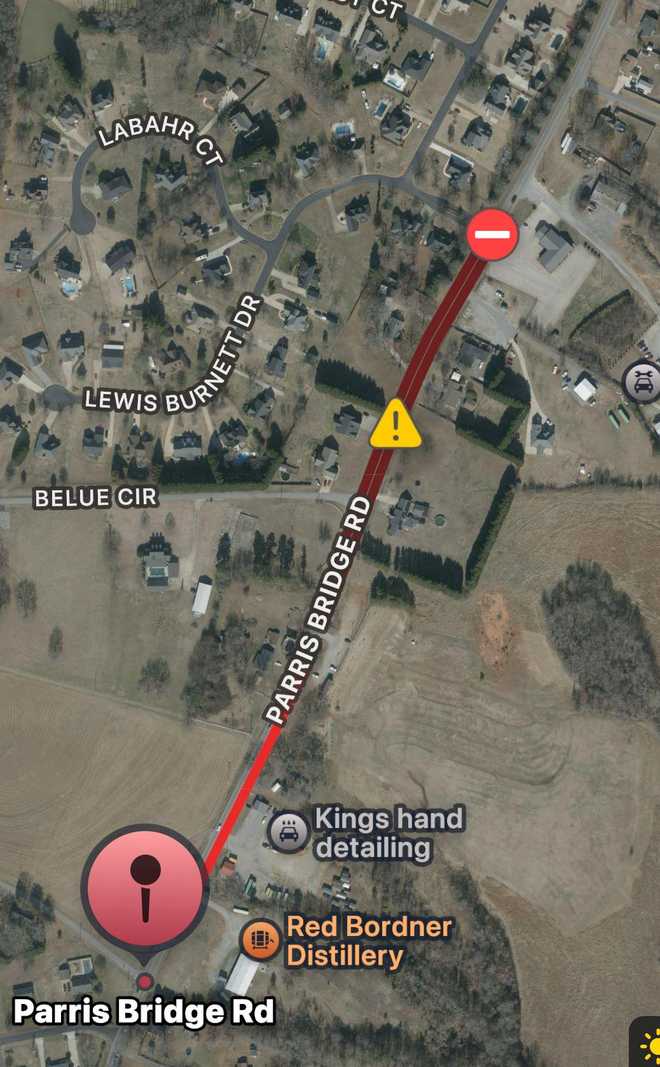
      The Boiling Springs Fire Department said a road is closed due to a natural gas leak. Fire officials say Parris Bridge Road is closed from the Carlisle Place neighborhood to the driving range. They told drivers to expect delays and take alternative routes. They have given no word on when the road could be reopened.

      The Boiling Springs Fire Department said a road is closed due to a natural gas leak.

      Fire officials say Parris Bridge Road is closed from the Carlisle Place neighborhood to the driving range.

      Advertisement
      gas leak road closure
      Boiling Springs Fire Department

      They told drivers to expect delays and take alternative routes. They have given no word on when the road could be reopened.

      Advertisement

      Would you ride a cardboard boat? Check out this wet and wild regatta from 1993

      Not many of the boats were seaworthy, but they sure were entertaining!

      Next Story

      Would you ride a cardboard boat? Check out this wet and wild regatta from 1993

      Not many of the boats were seaworthy, but they sure were entertaining!

      Video Player is loading.
      Current Time 0:00
      Duration 1:11
      Loaded: 7.90%
      Stream Type LIVE
      Remaining Time 1:11
       
      1x
        • Chapters
        • descriptions off, selected
        • default, selected
        You guys did *** great job. It's *** race of 21 boats engineered by almost the best designers. This boat is made out of cardboard, duct tape, and shellac. Think about it, varnish, polyurethane. The 6th annual Cardboard regatti is all about the thrill of victory. In the agony of defeat. I was paddling. I was just swooshing the water right into my canoe. And I started slowly sinking, then I gave up. The rules here are simple. The boat must be made of cardboard. It can use like tape, epoxy glue, and paint to hold them together, but no staples, nails, tacks, or anything. The commander and his paper prim caught *** lot of. and so did *** few others that didn't do so well. And if you look at the names, the bull ship, thirsty whale, well, it's no wonder they didn't do so well in this year's Regatti Cup of Champions. Merv Seymour, Channel 12 News, Milwaukee.
        WYFF 4 logo
        Updated: 9:25 AM EDT May 23, 2025
        Editorial Standards
        Advertisement
        Would you ride a cardboard boat? Check out this wet and wild regatta from 1993

        Not many of the boats were seaworthy, but they sure were entertaining!

        WYFF 4 logo
        Updated: 9:25 AM EDT May 23, 2025
        Editorial Standards
        If you’re heading out on the lake anytime soon, might I recommend not taking one of these boats? The sixth annual Cardboard Regatta in 1993 turned heads with 21 uniquely engineered boats battling for victory. "The Bullship" and "Thirsty Whale" were among the creatively named vessels that captured attention, but not all floated to success. One participant reflected, "I was paddling, I was just swishing the water right into my canoe. And I started slowly sinking. Then I gave up." WATCH the full story in the video above. If you liked this video, here are a few more blasts from the past:

        If you’re heading out on the lake anytime soon, might I recommend not taking one of these boats?

        The sixth annual Cardboard Regatta in 1993 turned heads with 21 uniquely engineered boats battling for victory.

        Advertisement

        "The Bullship" and "Thirsty Whale" were among the creatively named vessels that captured attention, but not all floated to success. One participant reflected, "I was paddling, I was just swishing the water right into my canoe. And I started slowly sinking. Then I gave up."

        WATCH the full story in the video above.

        If you liked this video, here are a few more blasts from the past: