


What whale and dolphin research takes place in Japan?

My visit to Okinawa showed me a side of Japan that’s often overlooked. While the country is associated with whaling, I found myself surrounded by people working to restore local humpback whale populations. It was a powerful reminder that Japan is home to many inspiring individuals deeply committed to celebrating and protecting whales and dolphins.
I met with dolphin researcher Leanne Rosser …
All across Japan, local schoolchildren, researchers and coastal communities are falling in love with their wild whale and dolphin neighbours. Hope is surfacing. But change needs fuel.
Donate now to help spark even more connections and inspire change from within Japan
Leanne, originally from the north-west of England, has spent almost a decade studying dolphins in Japan. Her current focus is on Pacific white-sided dolphins in Mutsu Bay. As part of her PhD at Mie University, Leanne travels to northern Japan every spring to observe these charismatic dolphins and gather data on the health and behaviour of this little known species.
We talked about her work and the current state of whale and dolphin research in Japan.


Here I am with Leanne.
What kind of research are you doing in Japan?
My PhD focuses on the population health of the Pacific white-sided dolphins who visit Mutsu Bay between April and June on their annual migration. I’m part of the Mutsu Bay Dolphin Research team, who has been collecting photo data since 2016. Using distinguishing notches and marks on their dorsal fins, I’ve created a photo-ID catalogue of all 800 individuals. This helps us monitor who returns to the bay each year, how long they stay and any social bonds they form.
I’m also investigating the impact of injuries caused by human activity and using environmental DNA (eDNA) methods to determine which populations the dolphins belong to. Two populations have already been identified (Suzuki et al, 2023), and knowing which population the Mutsu Bay dolphins belong to is key to protecting them.


With every sighting, Leanne brings us closer to understanding these incredible dolphins. ©konnichiwadolphin ©mutsubaydolphin
Is there a difference between how dolphin research is conducted in the UK compared to Japan?
In the UK, NGOs and whale watching companies support long-term studies of whales and dolphins. And citizen science projects provide invaluable data. These long-term datasets are less common in Japan, though citizen science programmes are starting to take hold in a few places, particularly those focused on finless porpoises.
Getting more of the Japanese public invested in watching whales and dolphins for research would be amazing, and there’s an appetite for it. My work in Northern Japan has shown how eager communities can be - a local primary school near Mutsu Bay has been documenting dolphin sightings for many years, and their enthusiasm and pride in their local dolphin visitors is infectious. If similar approaches were promoted in coastal communities nationwide, there is real potential for citizen engagement.

What kind of whale and dolphin research is conducted in Japan?
There’s a lot of cool work being done! One of the most researched populations are the bottlenose dolphins around Mikura Island. Researchers there investigate social and feeding behaviours, maternal care, and even genetics – using fecal samples, they can determine age, diet and family relationships. A particularly moving discovery involved a rare case of adoption - an unrelated female, who had never been a mum before, nursed and adopted a calf whose mother had died in a fishing net.
Elsewhere, the Ogasawara Whale Watching Association has been collecting long-term data on humpbacks, sperm whales, bottlenose and spinner dolphins. In Okinawa, there have been some really interesting findings about humpback whale song complexity and evolution. And off the coast of Hokkaido, research groups have been studying orcas.

You mentioned that most whale and dolphin research is conducted on captive individuals. Why is that?
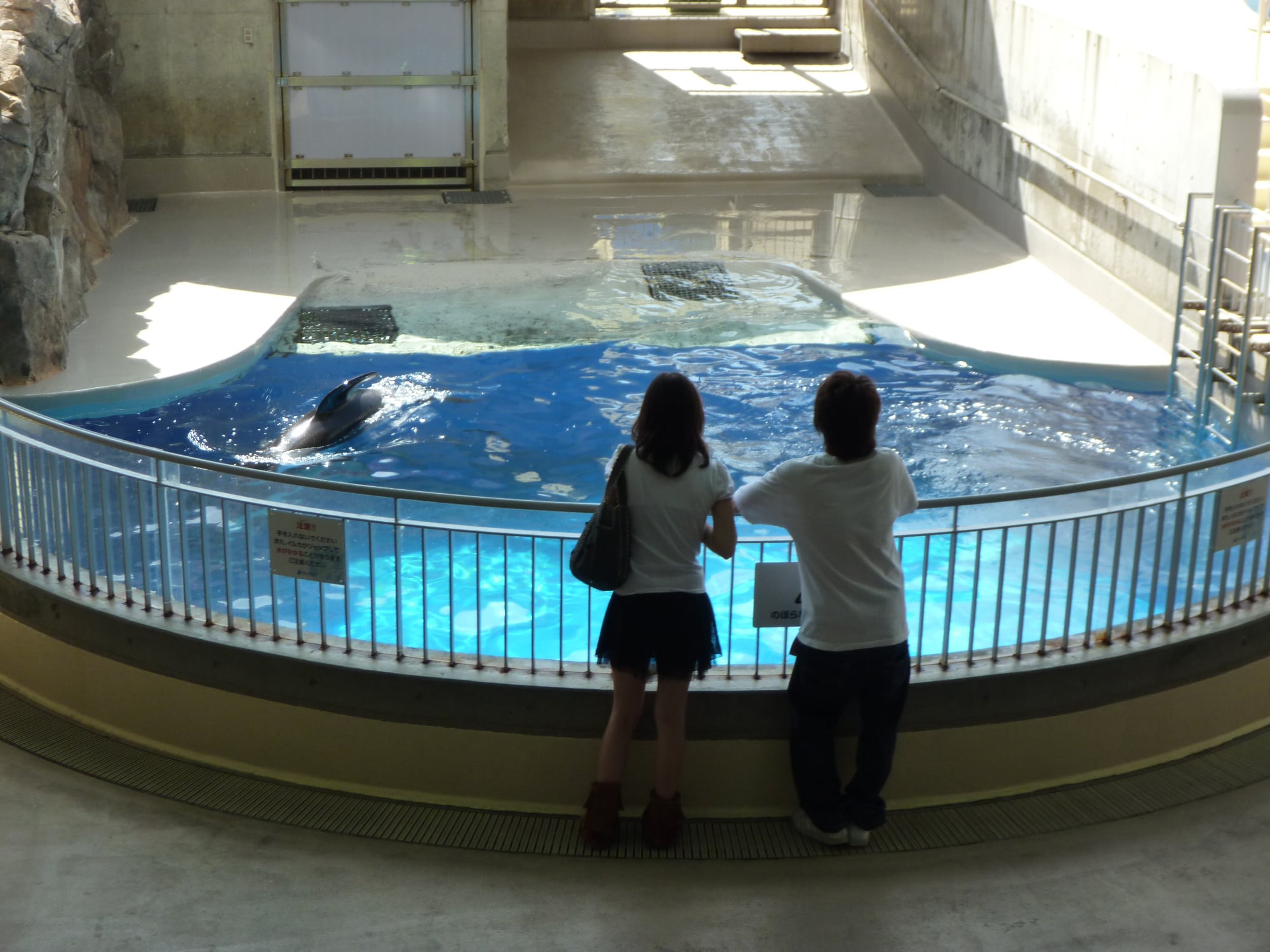
Captive facilities are plentiful and popular in Japan. Whilst I disagree with captive research, it does provide researchers with easier access to whales and dolphins than heading out to sea. Many students wish to study wild individuals, but field studies are often remote, and research at sea is usually more expensive.
Whale and dolphin watching has grown in Japan, but there’s room for it to expand. More operators around the country could give researchers better access to data from wild populations and opportunities to start long-term projects.
Greater awareness would help too. Whale watching gets far less attention than aquariums, and many Japanese people are unaware that these experiences exist. That said, awareness is growing – sightings of white orcas in Hokkaido made quite the stir in the Japanese news, although whale watching in that area is already well-known.

Would more research on whales and dolphins in their natural habitat be valuable for Japan?
There are so many knowledge gaps in our understanding of various species around Japan. Studying them would encourage better protection, and as whales and dolphins are top predators, it would greatly benefit Japan’s ocean ecosystem.

Some smaller studies are only published in Japanese scientific journals and don’t get international visibility. Collaboration with scientists from other countries could help spotlight Japan’s findings.
What’s needed to expand dolphin research in Japan?
Funding is a big barrier. To encourage investment in long-term research projects, it’s important to promote the awesome species who live in Japan’s diverse waters. Our team gives lectures at local universities, schools and community centres to encourage intrigue, especially in the younger generations. With the beginnings of citizen science programmes in Japan, I hope lots more research can be done.


Leanne is inspiring the next generation of dolphin researchers!
My conversation with Leanne inspired and excited me. It proved that the passion I encountered in Okinawa isn’t isolated – people across Japan are dedicated to whale and dolphin research and conservation. And despite Japan’s longstanding association with whaling, there’s a growing community of scientists, students and citizens working to protect these incredible beings.

The more people learn about whales and dolphins, the greater the compassion - and the stronger the protection.
I returned home feeling grateful for the new connections I made and all that I learned. Leanne helped me understand the potential and ongoing challenges in marine conservation in Japan. But more than that, she gave me hope. With continued collaboration, we will nurture the passion of the incredible individuals working to protect whales and dolphins and build a future where they can thrive — and where whaling is finally a thing of the past.