


Former Chinese Officer Acquitted in U.S. Trial Despite Allegedly Working Clandestinely for Ministry of Public Security to Target Democracy Activists
Court records show the defendant kept a Ministry of Public Security plaque and photos of himself in uniform as prosecutors alleged he reported on U.S. dissidents for Beijing.

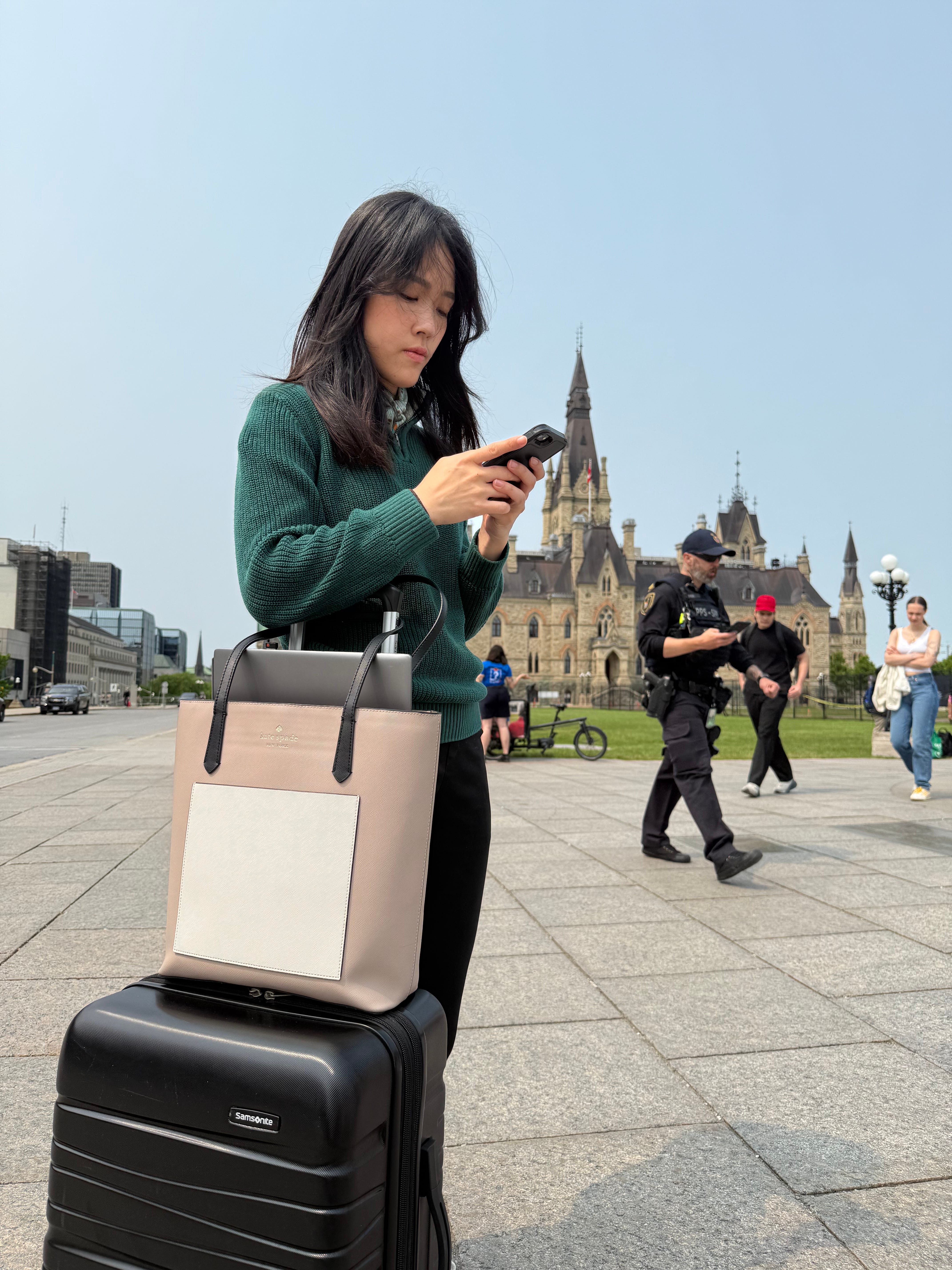
BOSTON and OTTAWA – Frances Hui, a student and democracy activist exiled in Boston under a Hong Kong national security bounty, while her relatives in Hong Kong remain under police harassment, was stunned when a U.S. jury acquitted a Chinese immigrant of covertly acting as an agent for Beijing in a stalking and intimidation campaign targeting Hui and other critics of China’s repression.
Prosecutors alleged that the defendant, 65-year-old Litang Liang, secretly worked on behalf of Beijing’s Ministry of Public Security—even recruiting young Chinese American citizens for the agency, China’s domestic security service, which is believed to covertly mobilize proxies across the West to suppress free speech in diaspora communities and shield the Chinese Communist Party from U.S. prosecutions.
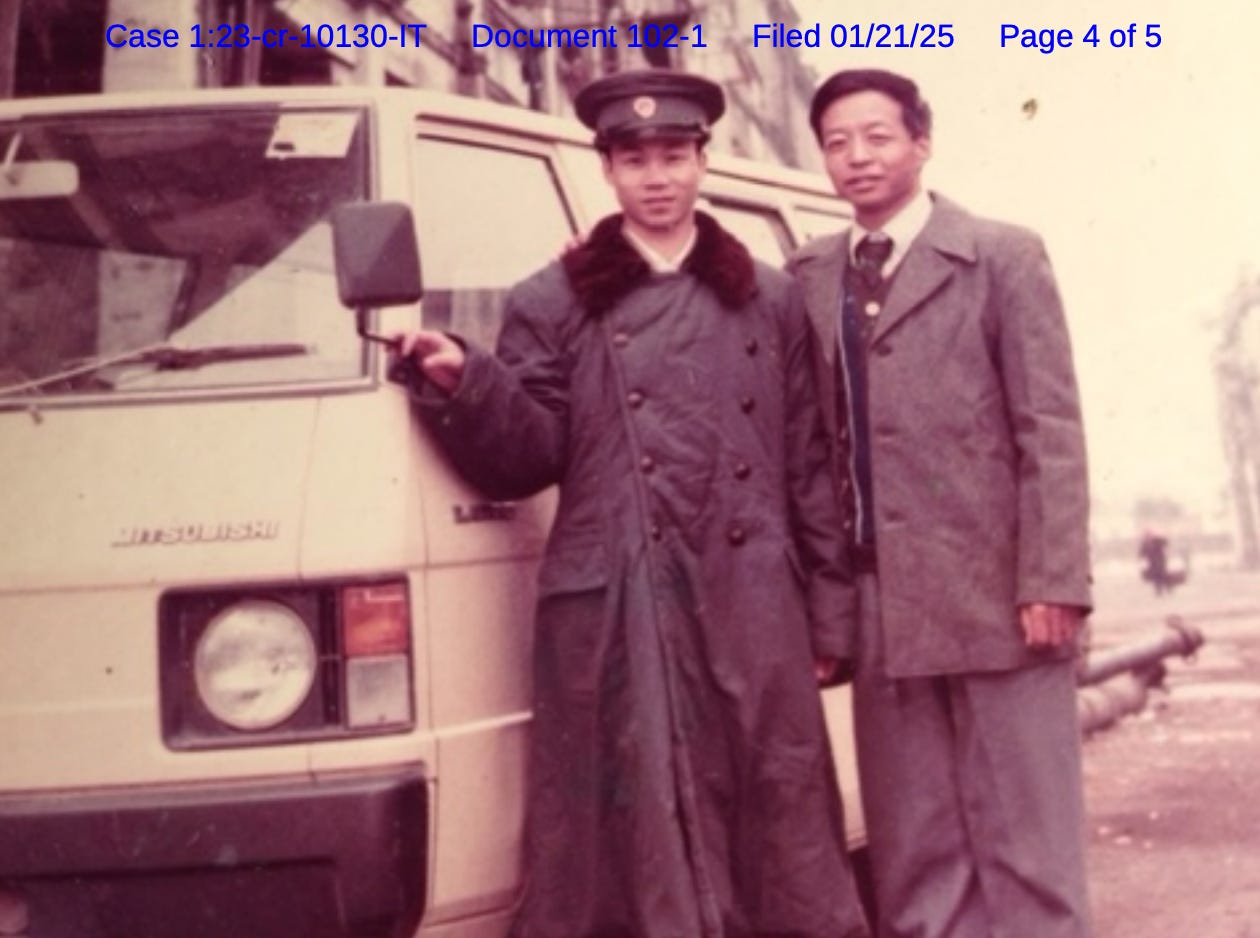
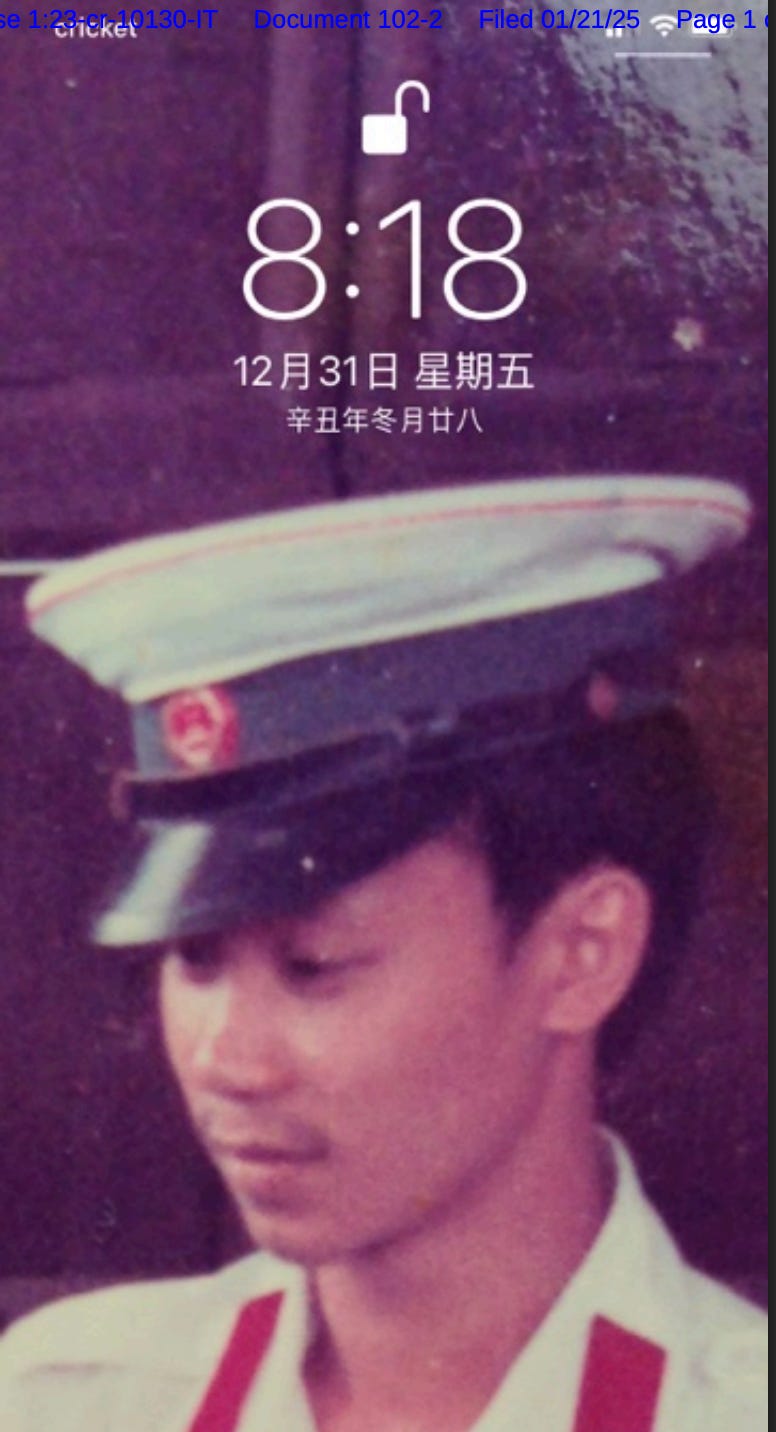
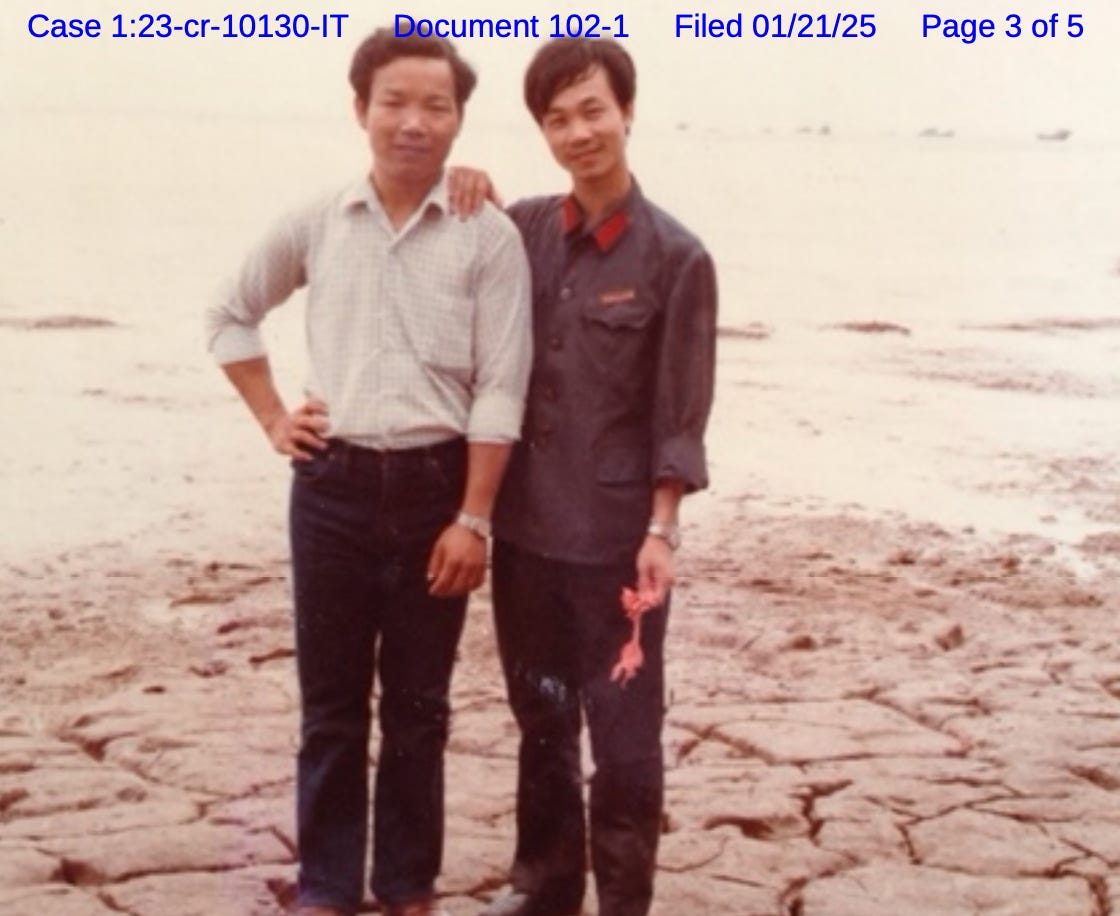
While the case received modest coverage in American media, one striking fact appears to have gone unnoticed: Liang had once served as an officer in China’s Ministry of Public Security. Despite efforts by his attorney to cast FBI findings as irrelevant and misleading, Liang incredibly kept a photo of his younger self in a Chinese police uniform as the lock screen on his phone, court filings show.
In February, a jury acquitted Liang on two counts: acting as an unregistered agent of a foreign government and conspiracy to do the same. Speaking through a translator, Liang reportedly called the verdict a win for U.S.–China relations. His lawyer told reporters: “This case would have meant nothing if it did not involve China—it had the purpose of scaring people, and it achieved that purpose.”
The brutal irony, Hui fears, is exactly the opposite. The defense, framing the case as a test between constitutional rights and anti-China sentiment within the U.S. government, successfully cast 65-year-old Liang as a victim of free speech suppression, handing an implicit victory to the Chinese Communist Party in its global campaign to chill dissent.
To Hui and others in the community, the case was devastating. The evidence, after all, against Liang—who frequently traveled to China to attend United Front meetings, had a “Hong Kong Wanted List” in his home along with business cards of elite CCP officials and a Ministry of Public Security plaque—was quite blatant, Hui believed.
“I remember there was a belt found in his home with the logo of the Public Security Ministry of the People’s Republic,” Hui said. “I don’t think any ordinary person would just have a belt from China’s public security forces at home. That suggested to me a direct connection to the Chinese Communist Party—and possibly that he’s a higher-level agent taking direction from the government.”
“There were also screenshots of him reporting updates to officials in Beijing,” Hui added. “So I felt very confident at the start that the evidence clearly pointed to him taking instructions from the PRC and spying on their behalf in the U.S. But the verdict was shocking. I couldn’t understand it. I wondered if the jury just wasn’t very attuned to the concept of transnational repression.”
Hui’s own terrifying account as a witness focused on allegations that Liang organized a counter-rally of hundreds against Hui’s pro-democracy rally in summer 2019, in scenes eerily mirrored in cities across the West—from Vancouver and Toronto to Melbourne.
Some of the counter-protesters organized under Liang “openly discussed bringing weapons to attack the participants and even firearms to ‘shoot her in the face,’” according to Hui’s testimony before Canada’s Parliament in late 2024.
“When this case came up, many of us felt confident it would lead to a conviction. Some members of our community even bravely testified as witnesses. But now, after all that, this person just walks free following the trial in Massachusetts,” Hui recalled in an interview with The Bureau, while visiting Ottawa in June to consult with Canada’s government on transnational repression. “So maybe he’ll lay low for a while, but his connections remain—and others will continue this work. It’s a real shock to the Boston community. After three years of investigation, this is the result?”
Indeed, the trial record substantiated Hui’s concerns about the deep historical and continuing links between the Chinese Communist Party, the Ministry of Public Security, the United Front Work Department, and Litang Liang.
Liang was shown to have communicated repeatedly with PRC government officials—both consular officers and Ministry of Public Security representatives. Prosecutors alleged he provided Beijing with intelligence on Boston’s Chinese community, created a blacklist of local dissidents, and reported instances of anti-PRC expression to Chinese officials.
In October and November 2018, Liang traveled to Beijing at the request of PRC officials to attend conferences hosted by the United Front Work Department and the Taiwan Affairs Office. These organs are charged with advancing PRC influence abroad and countering Taiwan sovereignty efforts. That December, Liang met with PRC consular officials in New York and went on to establish an organ believed to be advancing the Taiwan takeover agenda for Beijing, the New England Alliance for the Peaceful Unification of China (NEAPUC).
According to court filings, Liang won attention from Chinese consular officials in 2018, after he reported that a five-star flag raised at Boston’s Chinatown gate had been damaged. Within weeks, the Chinese Consulate in New York introduced him to a high-ranking official from the United Front Work Department, identified in court documents as “C.” Liang soon received an invitation to attend a political summit hosted by the All-China Federation of Returned Overseas Chinese.
He traveled to China twice in quick succession—first from October 23 to 27, 2018, and again from November 4 to 15. While in China, court records state, an official from the Federation—a key United Front entity—identified as “D” asked Liang to submit information about Chinese and Taiwanese organizations in Boston. Liang relayed the request, and another individual sent the information directly to official D.
In August 2019, acting on alleged instructions from PRC authorities, Liang organized a counter-protest in Boston targeting Hong Kong freedom activists. He was in active contact with PRC officials that day, took surveillance photographs of protesters, and later sent the images back to Beijing. In a work report filed in November 2019, Liang claimed that NEAPUC had organized the counter-demonstration and praised its “success.”
Canadian Testimony
The evidence filed in court documents doesn’t seem to capture the visceral fear and impacts that Hui says she suffered, according to her November 2024 testimony in Canadian parliamentary hearings—a case that foreshadowed with chilling precision the Beijing-directed campaign targeting Conservative candidate Joe Tay during Canada’s 2025 federal election.
In that case, Canadian authorities warned Conservative candidate Joe Tay—who, like Hui, had been placed under a 1-million-Hong Kong-dollar bounty by the Hong Kong national security police—to reduce public appearances during the campaign, citing credible threats linked to a foreign influence operation targeting Tay in the Don Valley North riding.
Liberal MP Paul Chiang, who had echoed Beijing’s criticism of Tay and reportedly suggested to Toronto reporters that they could claim the bounty by turning Tay over to the local Chinese consulate, was nevertheless supported by Prime Minister Mark Carney. But as international scrutiny mounted, Chiang stepped down.
Tay’s relatives in Hong Kong were questioned and followed by security police shortly after his electoral defeat—an intimidation tactic strikingly similar to those Hui described.
The Bureau has also reviewed photographic evidence suggesting that a member of Tay’s campaign team may have been stalked by a Chinese individual. However, the underlying allegations—reportedly the subject of a complaint—have not been confirmed by Canadian police.
“Last year, the Hong Kong authorities issued an arrest warrant and placed a bounty of a million Hong Kong dollars on my head under the national security law,” Frances Hui testified in late 2024, just weeks before Beijing’s aggressive campaign against Joe Tay would start. “This illustrates how the Chinese Communist Party deploys transnational repression to silence dissent, targeting not only activists like me but also Uyghurs, Tibetans, Taiwanese, and Chinese dissidents globally.”
Hui testified that Freedom House identifies the CCP's campaign of transnational repression as the world's most comprehensive, with tactics including spyware, intimidation, disinformation, surveillance, and threats against dissidents' family members back home in Hong Kong or China—all designed to suppress dissent far beyond its borders.
A key player in this strategy is the CCP's United Front Work Department, Hui told Canadian MPs, which controls and mobilizes organizations and individuals on the party's behalf. “In 2019 and 2020, a U.S. citizen in Boston was tasked by Beijing to spy on my activities. He had attended my events, taken photos and videos, and shared them directly with PRC officials.”
“This man was not just spying on me. Between 2018 and 2022, he provided intelligence about members and leaders of Chinese family associations and community organizations and anti-CCP dissidents to PRC officials, including those at the United Front.”
“In one instance, he mobilized hundreds of pro-Beijing individuals to counter-protest our march in August 2019. Some vandalized our belongings and physically intimidated us. These people had openly discussed bringing weapons to attack the participants and even firearms to ‘shoot her in the face.’ After the rally, I was followed home and had to call the police twice for assistance.”
Ministry of Public Security Proxy Evidence
Further evidence showed Liang returned to China again for the People’s Republic of China’s 70th anniversary celebrations in late 2019, attending another Chinese Council for the Promotion of Peaceful National Reunification event and reporting back that the conference had "clarified the direction of work."
Then, in 2022, Liang allegedly received instructions from an MPS officer based at the PRC Embassy in Washington, D.C., in an indication of tasking with connectivity to Beijing’s priority intelligence infiltration network on American soil. Liang allegedly identified two young Chinese Americans as “ideal recruits” to a Ministry of Public Security officer at the Chinese Embassy, then personally escorted them to a meeting. A photograph from that day showed Liang holding a “Police” plaque alongside the MPS officer.
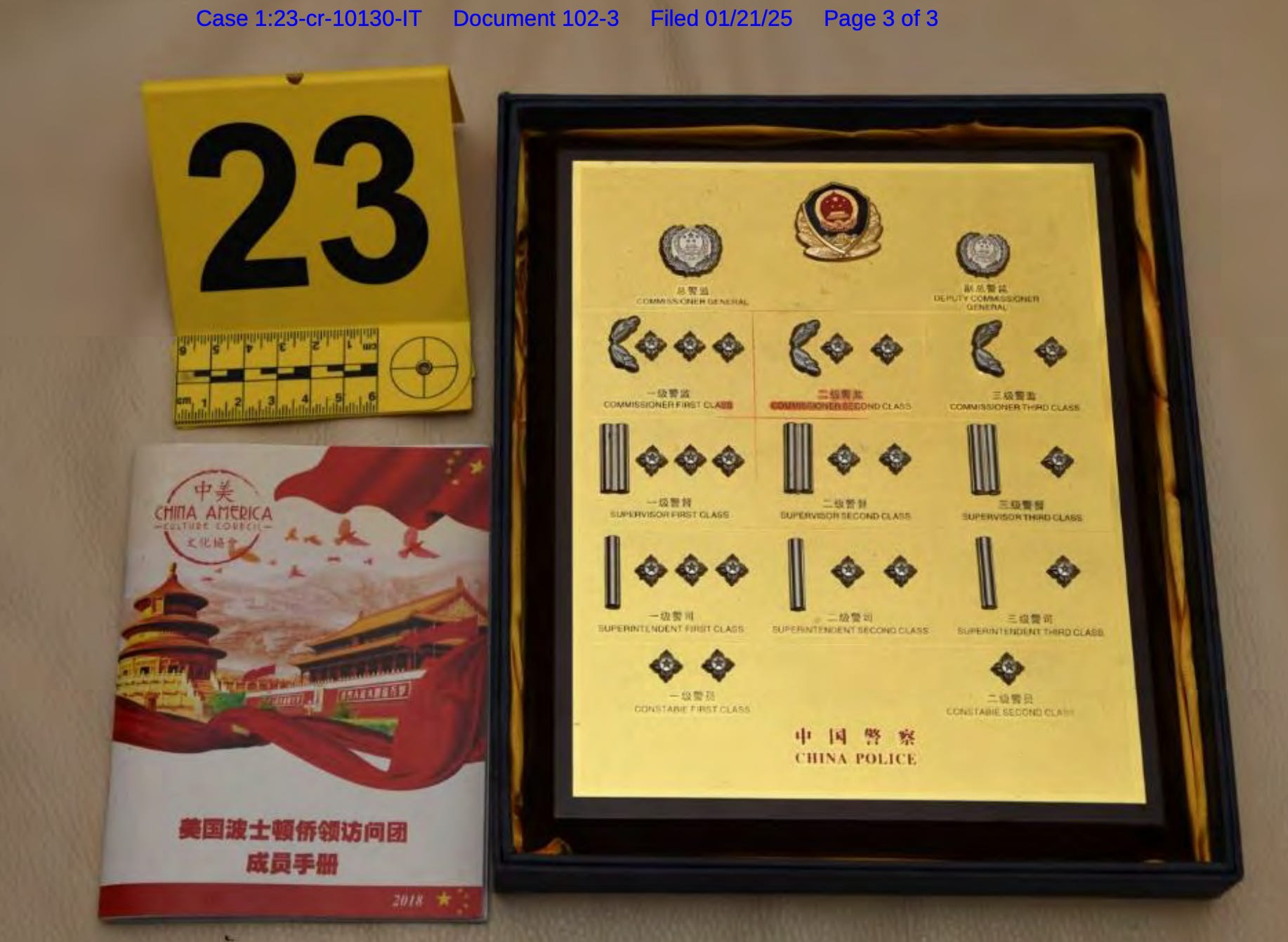
The Bureau’s review of court evidence found an extensive cache of documents from Chinese entities in Liang’s home. Among them: the MPS belt buckle Frances Hui found so damning; Evidence Item 23, labeled “China Police Display”; a lanyard marked “Overseas Chinese Affairs Office of State”; a Ministry of Public Security box; photographs of Liang in MPS uniform. Another apparent linchpin of the case: Liang’s “NEAPUC Work Report,” cited by prosecutors as proof that Liang was formally reporting political organizing activities back to PRC officials.
But Liang’s defense counsel attempted to have these and other items excluded, with some success, suggesting the jury never got a full understanding of the secret police structure looming behind Liang’s alleged actions in Boston, and his own history with the MPS in China.
In a pretrial motion, Liang’s lawyers argued that the MPS plaque and photographs were unfairly prejudicial.
Weeks before the February 2025 trial started in Boston, the government responded: “Contrary to the Defendant’s arguments, these exhibits are highly relevant to the charges in this case because these photographs and the chart go directly to the Defendant’s relationship with and knowledge of the People’s Republic of China’s Ministry of Public Security—within which the Defendant previously served as an officer.”
And Liang’s counsel’s “characterization of the evidence is inaccurate and incomplete,” prosecutors argued. “For example, what the Defendant described as ‘a structural chart that seems to show various levels of Chinese government and entities’ – appears to in fact be a reference to a plaque found in the Defendant’s home bearing the MPS seal and the title ‘China Police.’ The plaque shows, with insignia, various ranks within MPS. The fact that the Defendant kept a plaque in his home that relates to the organizational structure of the MPS is directly relevant to proving that the Defendant knew that the MPS is an arm of the PRC government. In addition, what the Defendant described as ‘pictures of the Defendant taken when he was a young man and working as a civilian road traffic control personnel,’ are in fact the Defendant wearing the uniform of MPS as a young man. This information was not before the Court at the time that it made its decision.”
Also at the heart of the legal battle was a previous motion to dismiss filed by the defense on May 7, 2024, which argued that Liang’s alleged activities were constitutionally protected speech and that the foreign agent statute under which he was charged was unconstitutionally vague when applied to his case. But prosecutors countered that the indictment did not target Liang’s political views, but his clandestine conduct—specifically, his alleged covert relationship with officials from the Ministry of Public Security and the Taiwan Affairs Office.
In response, the government argued:
“The Indictment also details facts about both the agreement and the Defendant’s acts to effect the object of the conspiracy. For example, the Indictment alleges that in October and November 2018, the Defendant met or communicated with several PRC government officials responsible for PRC policies involving Taiwan; that he then met with PRC government officials responsible for the same policies in Boston in December 2018; and that he informed one of those government officials shortly afterwards that he had identified the ‘core team’ for a Taiwan reunification organization, and that the organization would soon be ready to operate. In other words, the Indictment alleges that the Defendant conspired with PRC government officials to act in the United States at their direction or control by setting up the reunification organization. The Indictment then alleges that the Defendant took an overt act to effect that conspiracy by actually setting up the organization, and by undertaking numerous acts on behalf of that organization, many of which he reported back to the PRC government.”
Prosecutors further emphasized the covert nature of Liang’s alleged activities.
“The facts outlined in the Indictment make clear that the Defendant and his co-conspirators agreed that the Defendant’s actions on behalf of the PRC government would be covert,” the government wrote. “For example, among the manner and means alleged by which the Defendant carried out the conspiracy is that he ‘established NEAPUC in order to appear to be acting as a member of a local community organization unconnected to the PRC government, when in fact he was acting at the direction or control of the PRC government.’”
The filing also quoted Liang allegedly cautioning others: “By doing this type of job, you must be super careful about what to do and what to say in public, especially on those sensitive topics.”
Did the Jury and Court Understand FBI Intelligence and CCP Actions
Despite what Hui and other diaspora community members believed was a mountain of concrete evidence against Liang—including his frequent meetings and communications with Chinese Communist Party officials in China, New York, Boston, and Washington, and his reported United Front group activity in Massachusetts—his lawyer argued that Liang was merely a dynamic participant in American democracy, exercising his rights to hold opinions and be a political actor.
Strikingly, the Chinese Communist Party itself appeared to anticipate the defense’s framing of the case. After Liang’s arrest in May 2023, Global Times—a party-run propaganda outlet—published a September article headlined, “Manipulating ‘evidence’ to make innocent Chinese people suffer unfair treatment.” The piece accused the U.S. government of politicizing law enforcement and suggested that Liang’s case was an effort to “suppress” overseas Chinese.
The trial, however, was shaped by sensitive legal restrictions, particularly under the Classified Information Procedures Act (CIPA). According to a November 2023 court filing reviewed by The Bureau, the government sought a protective order under CIPA Rule 4 to limit the disclosure of national security-sensitive materials during trial proceedings. While redacted, court filings suggest the government was acting to protect confidential intelligence sources.
In a judgment redacted for national security reasons, Judge Indira Talwani ruled in June 2023 to grant the prosecution’s motion to withhold key classified information. The ruling authorized the U.S. government to seal classified filings and exhibits, barring disclosure even to the defense.
The implication: prosecutors may have determined that releasing certain intelligence to secure a conviction posed a greater threat to national security than allowing the jury to deliberate without it.
The government also attempted to introduce expert testimony to contextualize the PRC’s domestic surveillance apparatus and its use of transnational repression. However, the judge allowed only partial expert evidence, citing the need to avoid undue prejudice. Some of Dr. Glenn Tiffert’s proffered testimony was permitted, while other portions were excluded, with the court cautioning against the risk of inflaming “anti-China sentiment.”
Ultimately, following a six-day trial, the jury in Boston found Liang not guilty. And Hui worries the community is now worse off than before.
“It seems like the bar for holding people like this accountable through the legal system is very high—even though there was already quite a lot of physical evidence. I’m worried about the broader community,” she said.
Hui continues to feel unsettled by the central irony in the case: if the allegations are true, Beijing’s arms of transnational repression are using America’s constitutional protections of free speech to crush free speech.
“[Liang’s] attorney brought up the First Amendment again and the judge was furious,” Hui recalled. “She already said that this is not a First Amendment case, but the attorney continued to try to sway this narrative to influence the jury. So the jury could have been influenced by what he said. Boston is a very liberal city, so I don't know.”
Hui believes the jury was likely never given the tools to fully grasp the geopolitical and legal complexity of what had unfolded in her case.
“If there were broader public understanding of how transnational repression works, people might’ve seen the red flags,” she said. “But the way the evidence was presented in court—it just came off like a personal drama, something confined within the Chinese or Chinatown community.”
In a stark irony, the case laid bare a legal and geopolitical dilemma now familiar to national security experts: authoritarian agents exploiting American civil liberties not to expand speech, but to suppress it on behalf of a foreign government. This tactic—cloaking repression in the language of rights enshrined by Canadian and American governments—represents a growing vulnerability in democratic legal systems ill-equipped to confront covert foreign influence operating under the cover of legal process, and enabled by lawyers and judges who appear willing to legitimize Chinese Communist Party talking points.
Frances Hui is Policy and Advocacy Coordinator for The Committee for Freedom in Hong Kong Foundation


“authoritarian agents exploiting “American civil liberties not to expand speech, but to suppress it on behalf of a foreign government”. Beijing thrives on this bulls***!! Democratic legal systems are being politically sabotaged to prevent confrontation of covert foreign influence. Financial enhancement and/or political threats enable or coerce lawyers and judges to legitimize Chinese Communist Party talking points.
Both Canada and the US have some “slow-learners” when courts and the legal system are involved! They also have many pocket-lining treasonous politicians!!