Get Breaking news alerts in real-time.

Notifications can be turned off anytime from browser settings.

ADVERTISEMENTREMOVE AD
Members Only
lock close icon

Not Just a Gimmick: The Cultural Shift Behind India’s 10-Minute Deliveries

For many urban Indians, quick commerce is about aligning their lifestyle with a world where speed equals status.

Published: 
story-hero-img
i
Aa
Aa
Small
Aa
Medium
Aa
Large

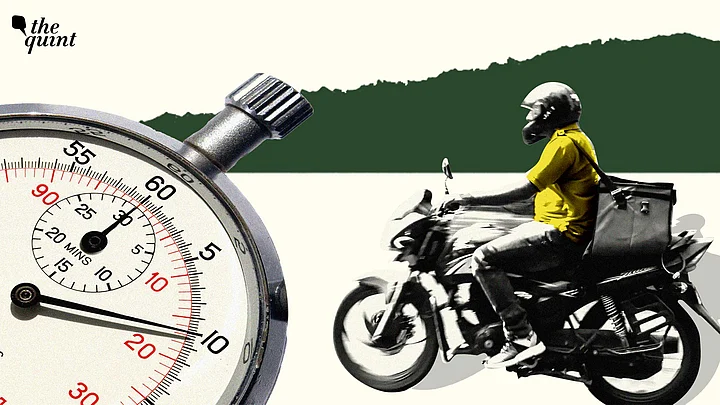
One evening in Mumbai, a young man tapped his phone at 10:32 pm and ordered a bottle of shampoo.

He didn’t need it. He hadn’t run out. He just… could.

Nine minutes later, it arrived.

He didn’t blink. Didn’t celebrate. Didn’t tell anyone. The order was forgettable. The speed, expected.

Now pause here.

That single transaction, small and uneventful, is part of a phenomenon reshaping one of the largest consumer markets in the world. It’s not just about groceries or logistics. It’s about a psychological shift—quiet, profound, and fast.
Become a Member to unlock
  • Access to all paywalled content on site
  • Ad-free experience across The Quint
  • Listen to paywalled content
  • Early previews of our Special Projects
Continue
Members Only
×
×
ADVERTISEMENTREMOVE AD
Members Only
lock close icon

The Inconsistencies in Justice Bela Trivedi’s Court

Justice Bela Trivedi did make room in her court for the ideals of liberty. Only, selectively.

Published: 
story-hero-img
i
Aa
Aa
Small
Aa
Medium
Aa
Large

Ordinarily, Justice Bela Trivedi would have retired today, 9 June.

But Justice Trivedi was no ordinary judge. One of the only eleven women to have ever been a judge at the Supreme Court of India, Bela Trivedi made both, history and headlines. A lot of it, however, was controversial.

Let’s start at the beginning. According to SCC Online, Justice Trivedi was the first woman judge of the Gujarat High Court to be elevated to the Supreme Court. She is also among a handful of judges who have risen steadily through the ranks — from subordinate judiciary to the top-most court of the country.

Become a Member to unlock
  • Access to all paywalled content on site
  • Ad-free experience across The Quint
  • Listen to paywalled content
  • Early previews of our Special Projects
Continue
Members Only
×
×
ADVERTISEMENTREMOVE AD
Members Only
lock close icon

Pakistan on UN Terror Committees: A Test of Global Diplomacy

India consistently promotes international consensus against terror with no animus against the people of Pakistan.

Published: 
story-hero-img
i
Aa
Aa
Small
Aa
Medium
Aa
Large

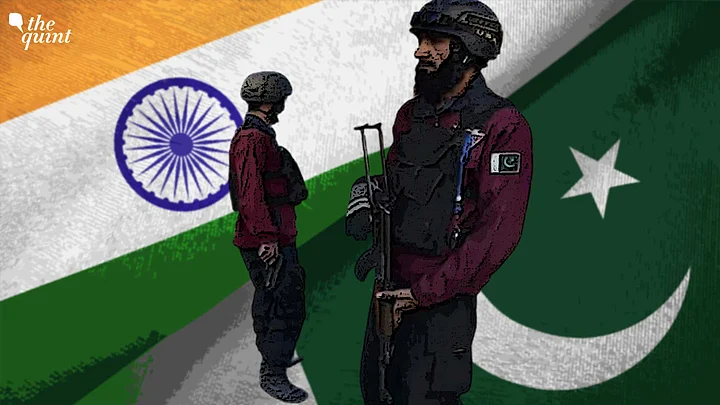
With Islamabad being appointed to key counter-terror committees at the United Nations Security Council, India is not proud to rank 14th out of 163 countries on the Global Terrorism Index 2024 with a score of 6.4.

The Australia-based Institute for Economics and Peace, publishes this index annually since 2007. The score for each country is a weighted average of fatalities, terror incidents, injuries suffered, and hostages taken. Higher scores and rank imply higher terror impact.

Pakistan ranks second with a score of 8.4 out of 10, after Burkina Faso which tops the list as the worst affected. Australia ranks 46th and China 49th with an enviable score of 1.9.

Three United Nations Security Council conventions for the Suppression of Terrorist Bombings (1997), Suppression of the Financing of Terrorism (1999) and Suppression of Acts of Nuclear Terrorism (2005) are the only available global guideposts. In 1996, India proposed to the UN Security Council a universal legal framework to counter terrorism. Sadly, it remains bogged down by disagreements over definitions: Should violent movements for national liberation be included? Should State-sponsored terrorist activities be included?

Become a Member to unlock
  • Access to all paywalled content on site
  • Ad-free experience across The Quint
  • Listen to paywalled content
  • Early previews of our Special Projects
Continue
×
×