
Deadly 'Spiderweb': How Ukraine destroyed 40 Russian jets in historic behind-the-lines op
 Photo: The Security Service of Ukraine under Vasyl Malyuk carried out a unique attack on Russian airfields (Getty Images)
The Security Service of Ukraine (SBU) is intensively targeting Russian strategic aviation deep inside enemy territory. As a result, four airfields were hit, and dozens of aircraft were destroyed.
RBC-Ukraine has compiled everything known about the large-scale and complex special operation codenamed "Spiderweb."
Takeaways:
-
What is the operation "Spiderweb," and what happened on June 1?
-
Which Russian airfields were hit?
-
How many strategic aircraft were destroyed?
-
Who organized the large operation?
-
How did Ukraine achieve such significant results?
Operation "Spiderweb": What happened
Sources in Ukrainian intelligence told RBC-Ukraine that on June 1, the SBU struck four Russian military airfields simultaneously. These airfields are located deep behind enemy lines, several hundred kilometers from the Ukrainian border.
Specifically, the following airfields were targeted:
- Belaya, Irkutsk region;
- Olenya, Murmansk region
- Dyagilevo, Ryazan, Ryazan region
- Ivanovo, Ivanovo region
"Thanks to Malyuk (SBU Head Vasyl Malyuk -ed.), Russia now understands the true meaning of the word 'demilitarization'," a source said.
The unique special operation is called "Spiderweb." At least 41 aircraft of types Tu-95, Tu-22M3, and A-50 were reportedly damaged. It is still difficult to assess total losses, as the operation appears to be ongoing. Preliminary estimates indicate that damage to the enemy's long-range aviation exceeds $2 billion.
The SBU had not released official information as of 5 PM Kyiv time. However, Andriy Kovalenko, Head of the Center for Countering Disinformation at the National Security and Defense Council, reacted.
"These are exactly the airfields from which the Russians were preparing another attack on Ukraine. And something happened there — it happens. God sees everything," he wrote on Telegram.
The current attack follows a record-massive enemy strike on the night of June 1. It involved nearly 500 drones and several missiles. Air defense forces shot down 210 drones and missiles and suppressed 172 UAVs.
Updated at 7:50 PM Kyiv time
In the evening, the Security Service of Ukraine released an official statement. It said today's FPV drone attack struck 34% of all strategic aircraft owned by Russia.
Estimated damage could reach $7 billion.
What is known about the first attack on Belaya airfield in Siberia
Initial footage showed smoke near the Belaya airfield in the Irkutsk region. It is located more than 2,500 miles from Ukraine.

Photo: The Belaya airbase is located far from Ukraine's borders (google.com/maps)
RBC-Ukraine received video from sources showing several strategic aircraft burning on the airfield. The voice of SBU Head Vasyl Malyuk commenting on the explosions is audible in the footage.

Russia's Irkutsk Region Governor Igor Kobzev confirmed a drone attack on a military unit in the settlement of Sredny and on a building in Novomaltinsk in the Usolsky District. He urged Russians not to spread disinformation.
However, videos of the attack on Belaya airbase had already appeared on Russian social media.

This airfield is home to Tu-22M3 bombers used in missile strikes against Ukraine. The incidents at the Belaya airbase marked the first time since the start of the full-scale war that drones targeted sites deep in Siberia.
What drones could have targeted Olenya airfield
Olenya airfield in the Murmansk region lies nearly 1,200 miles from Ukraine. It has been attacked before. Strategic bombers, including the Tu-22M3 and Tu-95MS, are based there.

Photo: Olenya airbase is located nearly 2,000 km from Ukraine (google.com/maps)
According to unconfirmed reports, about 100 aircraft were targeted. All four Tu-95MS planes at the airfield were reportedly destroyed. Some were allegedly loaded with Kh-101 missiles for future strikes on Ukraine. Russian media reports that civilians were banned from leaving Olenegorsk, Murmansk region. Authorities reportedly inspect all trucks, lorries, and buses.

Governor Andrey Chibis confirmed only drone raids and the work of Russian air defense. He also demanded that videos and photos of the strikes not be posted online.
How strikes hit Dyagilevo and Ivanovo airfields
Dyagilevo airfield in Ryazan is located 310 miles from the Ukrainian border. It also hosts Tu-22M3 and Tu-95MS strategic aircraft.

Photo: Dyagilevo airfield is located closer to Ukraine than Belaya and Olenya (google.com/maps)
Dyagilevo is a key site for Russian strategic aviation. Ryazan Region Governor Pavel Malkov confirmed a so-called "terrorist attack" on the region and reported roof damage to a residential building. He said there were no casualties.
Photos of strikes near the airfield appeared on Telegram channels.
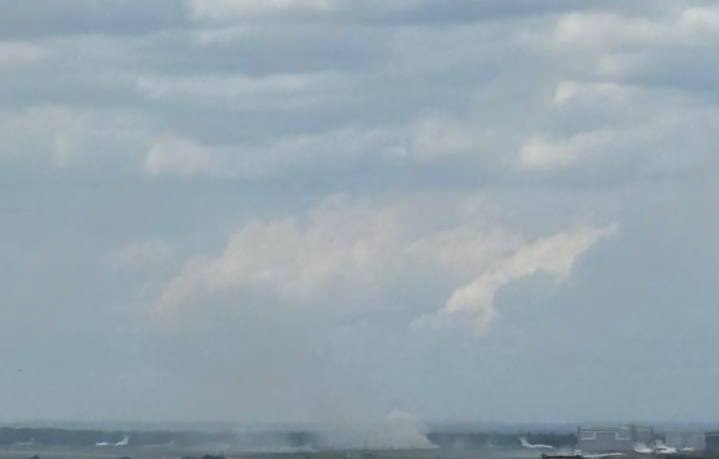
Photo: Drone attack on Dyagilevo airbase (t.me/nexta_live)
Ivanovo Severny airfield is 435 miles from Ukraine's border. It hosts the Centre for Combat Employment and Retraining of Personnel VVS of the Russian Aerospace Forces and the Il-76 regiment.
In May 2023, the airfield was reportedly targeted in a drone attack using explosive-laden UAVs. The intended targets were A-50 airborne early warning and control aircraft. It's likely that such aircraft were still stationed there during the most recent strike.

Photo: Ivanovo airfield is located about 700 km from Ukraine (google.com/maps)
No Russian comments on the attack at Ivanovo have appeared so far. Russian official reports do not mention the airfield yet.
How Ukraine pulled off the historic operation "Spiderweb"
The unique feature of the operation "Spiderweb" is that drones attacked strategic airfields launched not from Ukrainian but from Russian territory. From the start, social media posted videos showing drones launched from trucks parked near the targets.

The quick strikes and absence of alarms near the airfields confirm this. The enemy had no chance to prepare for the attacks or save valuable aircraft.
RBC-Ukraine sources in intelligence say operation "Spiderweb" was planned for over a year and a half. President Volodymyr Zelenskyy personally supervised its progress. Vasyl Malyuk and the SBU team implemented the plan.

The operation was logistically complex. First, Ukraine's Security Service (SBU) smuggled FPV drones into Russia. Later, they sent over mobile wooden cabins. Once inside enemy territory, the drones were hidden under the roofs of the cabins, which had been loaded onto trucks. At the right moment, the cabins were remotely opened, and the drones were launched to target strategic aviation.
It is also emphasized that the individuals involved in the historic special operation have long since returned to Ukraine.

Meanwhile, reports on social media point to a strike on a fifth airfield — this time in Voskresensk, Moscow region. It remains unclear whether the incident is linked to Ukraine's “Spiderweb” operation.

Amid Ukraine's drone assault, reports emerged of an emergency meeting allegedly taking place in the Kremlin. Russian outlets began floating threats that Moscow could authorize the use of a medium-range ballistic missile known as Oreshnik. Officially, however, the only confirmed development is that Russian President Vladimir Putin is expected to convene his Security Council next week.
As for possible political consequences, it remains difficult to predict how Moscow might respond. At this stage, one clear sign of continuity is that the June 2 meeting between delegations in Istanbul is still on track. Reports indicate that the Russian side has already departed for the talks, and Ukrainian President Volodymyr Zelenskyy confirmed that Defense Minister Rustem Umerov will lead Ukraine's delegation once again.
Sources: information from RBC-Ukraine's intelligence sources, photos and videos from Russian public channels, and reports from Russian media.
As a reminder, a blast was also reported today in the Russian city of Severomorsk, home to a base for the country's nuclear submarine fleet.


