Collaboration and cooperation are far more common today than consolidation among Midwest school districts.

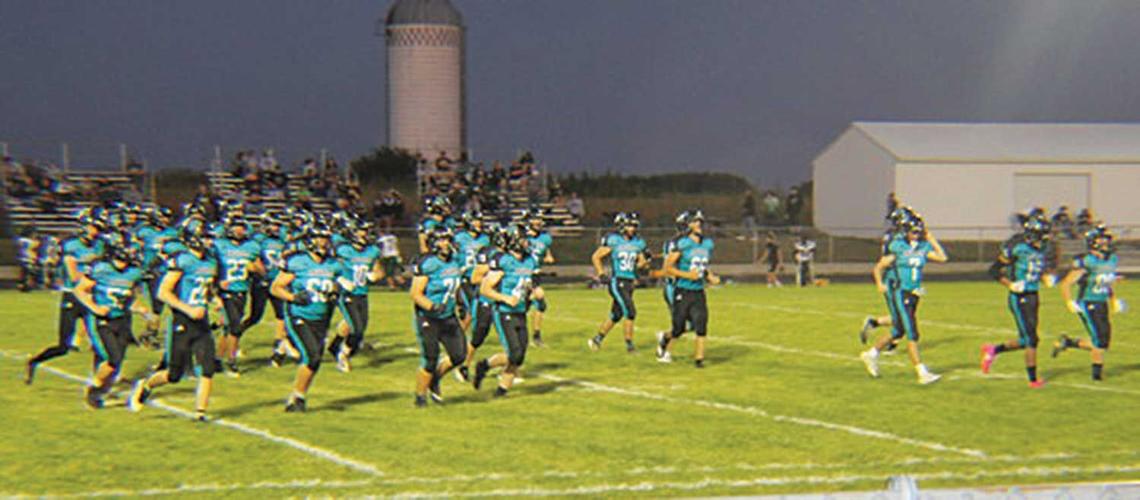
As a result of a merger between two former school districts, the next graduating class of Southeast Valley High School in Iowa will belong to a new school district with a name mirroring its high school's name.
However, sometimes the first two do lead to the third. One example of this is the new Southeast Valley Community School District in central Iowa, which becomes official July 1.
The Southeast-Webster-Grand and Prairie Valley school districts in central Iowa have been working together for a more than decade. This eventually led voters to overwhelmingly approve a plan to consolidate into one district, says Lisa Willardson, the new district’s school business officer and board secretary.
Consolidations are fewer in the Midwest than in the past. In the Show Me State, there haven’t been many since the 1950s.
“In Missouri, we have 518 public school districts. Every small community in Missouri has a school,” says Jon Turner, associate professor in the College of Education at Missouri State University.
Consolidation is a word you use if you want to start a revolution, Turner says.
“Missouri still has 100 kindergarten to Grade 8 schools that have less than 100 students,” the professor and researcher says.
In Illinois, likewise, school consolidations have been infrequent for several years. Today the Prairie State has 852 school districts. None have consolidated in the last three school years, according to the Illinois State Board of Education.
Talk about consolidations in Illinois follows a cycle depending on which party is in power, says Dave Ardrey, executive director of the Illinois Association of Rural and Small Schools.
The last governor talked a lot about reducing units of government, including school boards.
“This governor (JB Pritzker) says no to that,” Ardrey says.
If the only reason districts are considering consolidating is money, it’s not going to work, says Audrey, citing research that shows that many school districts saw lower costs for 12 to 18 months then they rebounded again.
Similarly, in Iowa, whole grade sharing is a more popular option than consolidation, says Margaret Buckton, professional advocate for the Rural School Advocates of Iowa. Students from two districts, in certain grades, attend the same school in one district, she says.
In the 1950s, the Hawkeye State started with 4,500 school districts and ended the decade with many fewer. When the state required all districts to have a high school, the number plunged again. In 2000, Iowa had 427 school districts, which fell to 325 as of this year, Buckton says.
“It’s never 40 at a time now (consolidating), it’s a slow trickle,” she says.
The majority of people voted in favor of the two former Iowa school districts combining into Southeast Valley Community School District for several reasons, including a gradual merging process, “buy-in” from students, good communications and no schools closed, Willardson says.
Like many consolidations of rural school districts, this one was prompted in part by declining enrollment. Within the last decade, Southeast-Webster- Grand’s enrollment dipped by 70 students, and Prairie Valley dropped by 106. That means less funding.
As for timing, the state’s financial incentives for school districts to reorganize are set to expire in 2024, says Willardson.
The new school district of 1,110 students covers the southern half of Webster County and dips into Calhoun, Greene and Boone counties. It spreads over 550 square miles, making it the second or third largest physical school district in the state, Willardson says.
Brian Johnson, the superintendent for both districts, compared the getting-to-know-you years of grade sharing to “dating” and the consolidation to “marriage.”
In some areas, voters were 90% in favor. In all, the average was 78% in favor of the merger.
“One of the highest in Iowa history,” Willardson said.
Running up to the vote, she often heard people say, “We thought we were already one district.”
That feeling started in 2014 when the two school boards approved a whole grade-sharing contract for grades 5-12. All middle schoolers started attending school in Burnside and all high schoolers in Gowrie, both under the names of Southeast Valley. Each district kept its elementary schools located in Dayton and Farnhamville.
The names and locations established in 2015 all remain in place under the new consolidation.
“We did not do any layoff or cuts,” Willardson says.
In sports, before the districts started sharing students, Southeast-Webster-Grand had only eight football players, not enough for a team. Two years ago, the combined football team won the state championship.
The transition went well with the students.
“It’s always harder for adults,” she said.
Because Iowa has had open enrollment since the 1980s, parents can choose to send their children to another district, Buckton says.
“Navigating that can be a challenge,” she says, because people can change for a football coach, or if they don’t like a decision their school board members make.
Rural Missouri educators don’t want to see open enrollment come to their state.
“It is a huge concern,” says Kevin Sandlin, executive director of the Missouri Association of Rural Education. “We don’t want to compete with districts for kids.”
Schools that lose students to wealthier schools may suffer, as will the students remaining in them, Sandlin says.
Any decisions made need to be made according to what’s best for students, Ardrey says.
“My whole focus in this work is ‘How do we make it better for kids?’ If we keep that in the forefront we will have positive results,” he says.