- Insights This article was written by a TIA community member. Insights pieces undergo the same rigorous editorial process that newsroom-produced articles have.
 Kid Parchariyanon · · 6 min read
Can one upcoming IPO transform Thailand’s tech ecosystem?
After years of steady progress but few exits, Thailand’s startup ecosystem may finally have its breakout moment.
Earlier this year, Thai edtech company SkillLane filed for an IPO – a watershed moment for the country’s nascent tech startup scene.

In 2023, the firm reported revenue of 236.58 million baht (US$7.1 million), alongside 30.7 million baht (US$922,000) in net profit.
SkillLane has yet to disclose its IPO offering price, but it plans to offer 15 million shares – representing 15% of total post-IPO shares – each with a par value of 0.5 baht. The final price will be set after the Securities and Exchange Commission‘s review and book-building process.
This development comes as Southeast Asia’s startup funding landscape shows signs of recovery.
Tech startups in the region raised approximately US$909 million in the first quarter of 2025, according to a Tracxn report. This number marked a 30% increase from the previous quarter, although it was still 9% lower than the same period in 2024.
SkillLane’s landmark IPO could put Thailand’s tech ecosystem on the regional map. It could offer local startups a viable exit path beyond conglomerate acquisitions while unlocking crucial late-stage funding for the country’s next wave of entrepreneurs.
A startup scene on the verge
Thailand’s startup journey has mostly played out in the shadows of its regional peers, which produce far more ventures, as per Tech in Asia data.
Homegrown startups have been historically concentrated in sectors like fintech, ecommerce, and ride-hailing – industries with fast adoption curves but limited staying power without regional expansion.
Many emerging enterprises in the country have struggled with late-stage capital gaps. In 2024, Tech in Asia data showed that of the 17 funding rounds that Thai startups closed, only two were series B or later.
See also: Big banks, conglomerates rule over Thailand’s fintech map
Market size is another constraint. While Thailand is Southeast Asia’s second-largest economy by gross domestic product, its startup market is dwarfed by those of its regional peers.
Among them are Indonesia, where a large population offers greater opportunities to scale, and Singapore, which benefits from deep capital pools, a high concentration of regional headquarters, and strong international connectivity.
Why the SkillLane IPO matters
What comes next?
Thailand’s opportunity






- Premium Content It takes our newsroom weeks - if not months - to investigate and produce stories for our premium content. You can’t find them anywhere else.
 Aya Lin · · 1 min read
These funds have not invested in SEA in the past year
What if a fund has stopped investing in your market for quite some time?
This could mean a few things: The backer might be waiting for a better time to invest, shifting their focus away from the region, or still raising money for a new fund. It could also be because the market is no longer a priority for them.
Remember, timing your outreach to an investor is crucial.
This list includes funds that have backed at least one company in Southeast Asia in the past two years but have not joined any funding round for tech startups over the last 12 months.
As always, our database is a work in progress. So drop us a note at research@techinasia.com if you spot any inaccuracies or missing information.
For more of our automated data-driven pieces, head here. You can also access our complete database here.
Editing by Terence Lee and Mina Deocareza
(And yes, we’re serious about ethics and transparency. More information here.)
 Jonathan Chew · · 3 min read
We’re searching for Southeast Asia’s first CTO of the Year

The entertainment scene has the Oscars, science and other intellectual fields have the Nobel Prize, literature and journalism have the Booker and Pulitzer prizes, respectively.

Photo credit: Robert Couse-Baker.
Regardless of industry, outstanding individuals have been – and should be – celebrated for their contributions toward humanity’s progress. Beyond that, awards like these showcase not just the best but also what’s possible, encouraging others to pursue their ambitions.
To inspire positive change and impact in our part of the world, Amazon Web Services (AWS) is partnering with Tech in Asia to launch the first-ever CTO of the Year awards. The goal is to recognize up-and-coming startup tech leaders in Southeast Asia and offer accomplished chief technology officers exciting prizes, networking opportunities, and more.
The mechanics
How will the CTO of the Year be chosen? Here’s the criteria:
- Your startup is in the pre-series A to series B stage
- Your firm is based in Southeast Asia – Indonesia, Malaysia, Singapore, Thailand, Vietnam or the Philippines
- You lead a product or engineering team of 10 or more
You can either nominate yourself or someone who you think truly deserves the title. If you’re a founder who also manages your startup’s tech team but doesn’t officially hold the CTO title, you can still apply as long as you meet the other criteria.
Tech in Asia and AWS will shortlist the top three CTOs per country in the region, who will then take part in a semifinal round.
Shortlisted candidates have to prepare and submit a one-minute video to share an initiative or project that they’ve led. The video pitches will be assessed by our panel of experts and shared on Tech in Asia’s social channels for online voting.

Photo credit: 123RF
Semifinalists will be evaluated by our judges and the public based on:
- Visionary leadership: How effectively you lead and inspire your team, shaping the culture and direction of your company
- Innovation and product mastery: Your ability to drive innovation through cutting-edge tech and impactful product development
- Technical excellence: The depth of your technical knowledge and how you apply it to solve complex challenges and to scale your business
- Strategic business impact: Demonstrable effects on your company’s growth, sustainability, and long-term vision through tech
Those who make the cut will move on to the final round, which will happen at the Tech in Asia Conference on October 22. Finalists will make their last pitch on stage before the conference audience and respond to questions from our panel of senior judges.
Think you’ve got what it takes to win it all? Send your application here by July 31.
This content was produced by Tech in Asia Studios, which connects brands with Asia’s tech community. Learn more about partnering with Tech in Asia Studios.
Recommended reads
 SEA tech: scaling up or cutting back?
 A $150m giant you’ve never heard of
 60/40 Podcast: Amrish Rau on steering Pine Labs to its IPO
 60/40 Podcast: The challenges of building a startup in Japan
 60/40 Podcast: Startups and VCs in the age of AI
 60/40 Podcast: Trump’s tariffs in Asia, TSMC in the US, and more
 New and returning investors betting on SEA
 Unexpected yet practical insights for community building
 Quick bites, big stakes for Swish
 Korean wave is sweeping into Japan’s startup ecosystem







Editing by Winston Zhang and Eileen C. Ang
(And yes, we’re serious about ethics and transparency. More information here.)
Share, tag us, and land on our Wall of ❤️!
Welcome to Tech in Asia’s Daily newsletter, your essential dose of Asia’s tech and startup buzz. Not on the mailing list? Register here. Got a story tip? Send it to editors@techinasia.com.
In focus
For this edition, we cover:
- Indonesia’s EV battery dreams looking grim
- Sea’s raking it in. Let these charts show you how.
- Google’s ‘I’m Feeling Lucky’ faces an AI makeover
Hello reader,
There’s a word Indonesians love to throw around when talking about foreign investments: premanisme. It refers to the strong-arm tactics used by certain groups – sometimes masked as “civilian organizations” and often tied to political or local power – to extract something from incoming investors.
It’s the kind of thing you hear in passing: “Yeah, they asked for ‘security fees’,” or “They wanted their people hired as guards or cleaners.” Sometimes it’s shrugged off as the cost of doing business. Other times, it scares the money away.
When these stories do come up, the reaction is almost always the same: “That’s why X went to Vietnam,” or “That’s why Z chose Malaysia over us.” It’s a long-standing issue, but one that’s increasingly getting the spotlight it deserves.
Most recently, it resurfaced when BYD and VinFast – two automakers investing hundreds of millions into electric vehicle manufacturing plants in Indonesia – reportedly faced pressure from civilian organizations demanding fees or jobs. Officials from both companies have since played these incidents down. But behind the scenes, it’s a symptom of a bigger credibility gap.
It’s also just one of several challenges holding Indonesia back from becoming a serious player in the global EV supply chain, as detailed in today’s Big Story.
In this edition, we also spotlight Sea’s return to profitability. The company has just reported US$411 million in profit for the first quarter of 2025. Things haven’t looked this good for Shopee’s parent company, Sea, in three years.
Foreign capital may come and go. But execution? That’s what turns big promises – whether in batteries or balance sheets – into staying power.
Glenn Kaonang, journalist
The Big Story
Indonesia’s EV battery bet falters amid global, local pressure
Former Indonesian president Joko Widodo during a visit to Hyundai’s EV battery plant in 2023 / Photo credit: Presidential Press Bureau
A series of high-profile investment withdrawals and scale-backs have raised questions about whether Indonesia can still deliver on its ambitious nickel downstreaming goals.
The country has long touted its vast nickel reserves as the foundation of its EV battery strategy, but global market trends aren’t playing along.
Demand for nickel-based EV batteries is weakening, as buyers increasingly favor cars with lithium iron phosphate batteries, a cheaper and more stable alternative that now powers 40% of EVs sold globally.
And while this shift doesn’t spell doom just yet, Indonesia’s own policy consistencies and ground-level frictions are making the uphill climb even steeper.
Spotlight
Sea Group’s financial health in 7 charts
Image credit: Timmy Loen
Sea reported a strong Q1 2025, with Shopee leading the rebound through improved buyer monetization and platform efficiency.
Shopee recently piloted a paid VIP program in Indonesia, which has already drawn over a million users, according to its earnings call. The company said these VIP members purchase more than 3x as often and spend over 4x more than regular buyers – early proof that Shopee is finding ways to extract more value from its most loyal customers.
Meanwhile, Shopee’s growing content ecosystem – which includes partnerships with YouTube as well as live shopping integrations – now drives around 20% of order volume. While TikTok Shop leans into viral, impulse-driven sales, Sea is positioning Shopee as a more deliberate, intent-led marketplace – one it believes can weather economic swings more effectively.
How smart founders turn AI into real growth
Learn to leverage AI for breakthrough results at AMPED 2025 Malaysia
Are you a founder ready to integrate AI into the core of your startup?
Agrim Singh and Sherry Jiang, co-founders of Code with AI, will show you how in an exclusive master class at AMPED 2025 Malaysia. Join us on June 11 for this hands-on session, where Singh and Jiang will guide you through the AI tools shaping today’s fastest-growing companies, the coding fundamentals that give founders a competitive edge, and the frameworks you need to build smarter, leaner, and faster in today’s AI-driven landscape.
Whether you’re bootstrapping or scaling, you’ll learn how to build with smarter strategies and technology that deliver real growth.
Secure your spot today and supercharge your startup at AMPED 2025!
Quick Bytes
1️⃣ Google tests ‘AI mode’ on Search homepage
2️⃣ JD Logistics confident in achieving double-digit growth for 2025
3️⃣ Apple slashes iPhone prices by up to a third in China’s price war
Recommended reads
 Sea Group’s financial health in 7 charts
 Turing’s wild pivot: from job boards to GPT lords
 This startup builds robot brains with open-source grit
 Hidden giant? Lending startup hits $150m revenue without fanfare
 Weekly funding: China’s SAIC leads with $180m raise
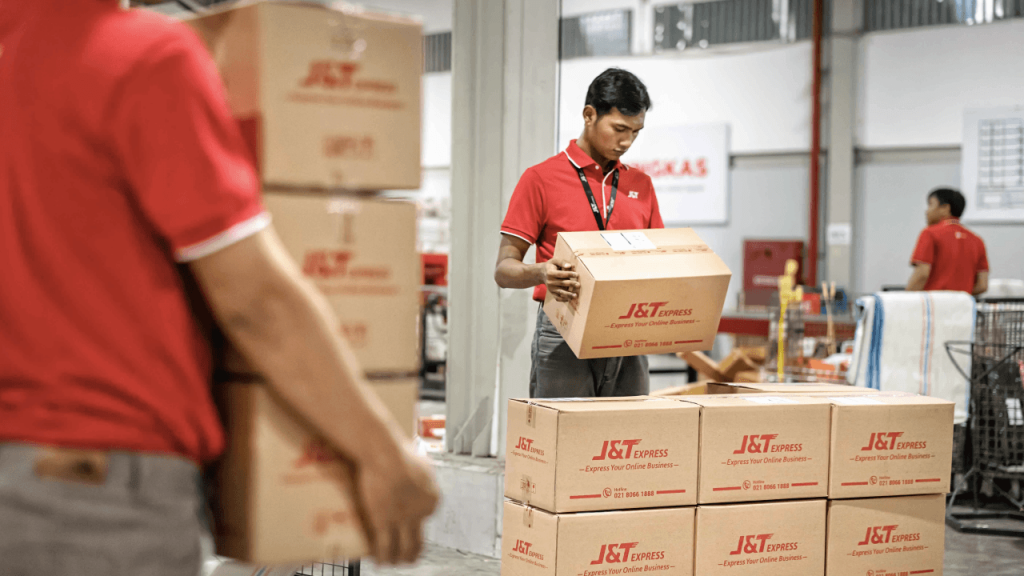
 J&T’s race to the bottom in SEA logistics sparks backlash
 SEA’s tech giants revel in lending boom, but major test looms
 VNG’s financial health in 5 charts
 Man behind the models: OpenAI’s research chief on the road to AGI






Edited by Kyle Lorenzo Subido
(And yes, we’re serious about ethics and transparency. More information here.)
Share, tag us, and land on our Wall of ❤️!
