




It is an open secret that the BJP-led Central government has weaponised investigations into excise policies in opposition-ruled States. In what has now become a familiar pattern, it deploys the Enforcement Directorate (ED), which in recent times has acquired a reputation for high-handedness, along with the Prevention of Money Laundering Act (PMLA), to carry out these investigations and secure a few high-profile arrests—just enough to sow doubt in the public mind and set the narrative in motion.
The liquor trade in Delhi, Chhattisgarh, Jharkhand, Tamil Nadu, and Telangana—regions currently or until recently governed by opposition parties—has been on the ED’s radar for some time now, while those ruled by the BJP or its National Democratic Alliance (NDA) partners get a free pass.
Between 2022 and 2025, these five States witnessed raids in over 70 locations, with the largest chunk of the raids (more than 40) related to Delhi when the Aam Aadmi Party was in power. And just before the Lok Sabha election in 2024, the then Jharkhand Chief Minister, Hemant Soren, and his Delhi counterpart Arvind Kejriwal were arrested.
Also Read | Booze bumps: Time to turn around TASMAC from its terrible mess
It is now the turn of the Dravida Munnetra Kazhagam (DMK) in Tamil Nadu and the Congress leadership in Chhattisgarh to face the raids and consequences.
Meanwhile, despite grave irregularities in States ruled by the BJP or its allies, the ED has not deemed it necessary to launch investigations in any of them. According to Union Minister of State for Finance Pankaj Chaudhary, as many as 193 cases were filed by the ED against politicians in the past decade on a wide spectrum of allegations. There have been two convictions so far but no one has been acquitted.
Targeting Tamil Nadu
In Tamil Nadu, search operations against the government-owned Tamil Nadu State Marketing Corporation (TASMAC), which controls liquor sales across the State, and its associated entities began on March 6. The State BJP and the All India Anna Dravida Munnetra Kazhagam (AIADMK) have alleged that a Rs.1,000 crore scam involving bogus transactions has taken place in TASMAC.
The ED based its raids on multiple FIRs filed by the Directorate of Vigilance and Anti-Corruption (DVAC), a wing of the State Police, between 2001 and 2006 and then 2011 and 2021. These cases were registered during the DMK and the AIADMK regimes.
A source in the ED said that around 40 FIRs had been sourced from various district units of the DVAC. These FIRs are in three broad categories: collecting excess amount over the maximum retail price, collecting kickbacks from distillers for supply and favouring a few of them, and malpractices in transfers and postings of TASMAC staff.
The ED has claimed large-scale financial fraud, involving distilleries, in bottling entities. It has also claimed that illicit payments, unaccounted cash generation, bogus purchases and so on have taken place. It said that Rs.1,000 crore had been siphoned off as “unaccounted cash” and added that further investigation was in progress.
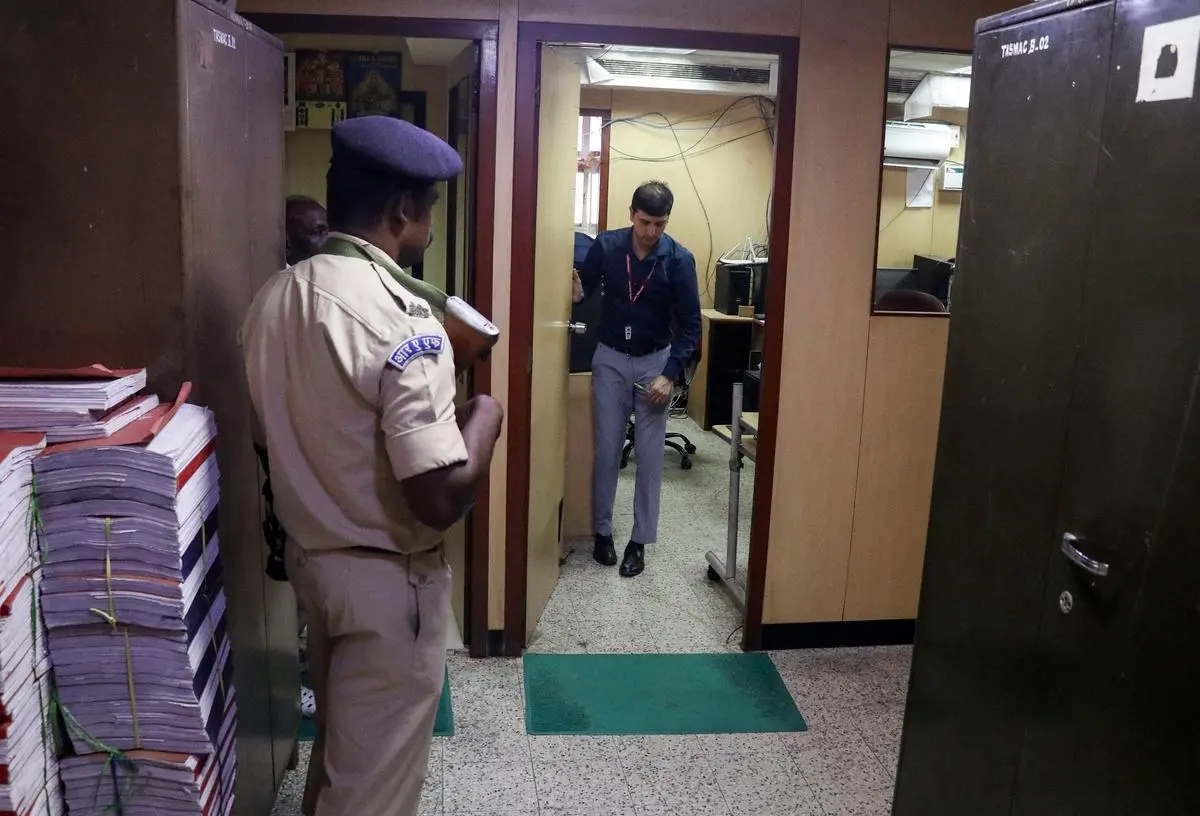
During the ED raid at the TASMAC headquarters in Chennai, on March 6, 2025. | Photo Credit: ANI
The DMK termed the raid as “political vendetta”. Law Minister S. Regupathy said that the DMK could not be browbeaten by such “blackmail tactics”.
A party spokesperson said: “How could the [BJP State president K.] Annamalai know the liquor scam was worth Rs.1,000 crore even before the ED released its press brief? The issues linked to the Delhi and Chhattisgarh liquor policies are different from that of Tamil Nadu. But how could the ED arrive at a decision so fast that the scam amounts to Rs.1,000 crore?”
Peeved with the raids, TASMAC approached the Madras High Court with the prayer that the search and seizure operations by the ED be declared illegal. While orally asking Additional Solicitor General AR. L. Sundaresan to ensure no coercive action was taken against TASMAC officials before the court could hear the matter again, a Division Bench of Justices M.S. Ramesh and N. Senthilkumar granted the ED time until March 24 to file a counter-affidavit.
The saga in Chhattisgarh
In Chhattisgarh, on March 10, the ED raided the Bhilai residence of former Chief Minister and Congress leader Bhupesh Baghel as part of its probe into a money laundering case linked to an alleged Rs.2,100 crore liquor scam. His son’s residence was also searched. Speaking to reporters, Baghel said: “The agency is being used to defame people. They have been doing this repeatedly.... This is a BJP conspiracy to tarnish a politician’s image.” The Congress won the State in 2018, after 15 years of BJP rule.
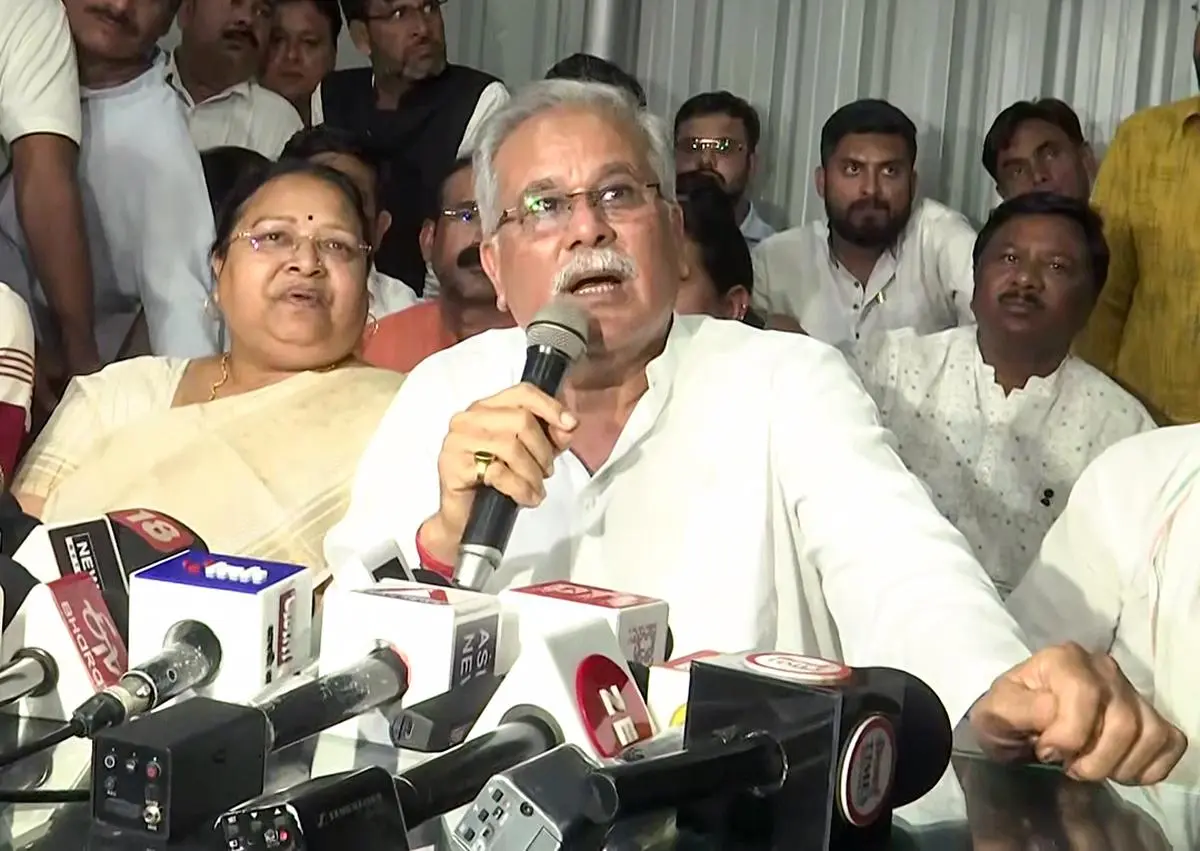
Bhupesh Baghel, former Chhattisgarh Chief Minister, speaking to mediapersons after the ED searches at his residence, in Durg, on March 10, 2025. He accused the BJP of misusing the ED to tarnish political leaders. | Photo Credit: ANI
In January, Baghel condemned the ED over the arrest of Kawasi Lakhma, former State Excise Minister and six-time Congress MLA from Konta, along with his son Harish Kawasi. Both were taken into custody under the PMLA for their alleged involvement in the liquor scam during Lakhma’s tenure as Excise Minister in the previous Congress-led government. After a three-year probe, the ED told the court that Lakhma had amassed Rs.72 crore through an excise scam and used part of the funds to build the Congress Bhavan and a house in Sukma. The ED has alleged widespread corruption in the State’s liquor system, involving bribes from distillers to Chhattisgarh State Marketing Corporation Ltd and unaccounted sales of country liquor, with profits siphoned off by a syndicate of officials and politicians.
Attack on AAP in Delhi
The “probe as a weapon” story began in March 2021, when the AAP government in Delhi announced a new excise policy. The changes included closing all government-run liquor shops and allowing only private players to operate liquor outlets. Just a year later, the new excise policy was withdrawn and the government reverted to the old excise policy amid swirling allegations of a scam in the framing and implementation of the reforms. The CBI launched an investigation.
The ED began a probe into alleged laundering of the purported proceeds of corruption that, it was claimed, were used by the AAP while contesting Assembly elections in Goa and Punjab.
Top leaders of the AAP were jailed for several months; they included Arvind Kejriwal, former Delhi Deputy Chief Minister Manish Sisodia, and the party’s Rajya Sabha MP Sanjay Singh. The AAP too was named as accused in the case by the ED, a first for a political party in the country.
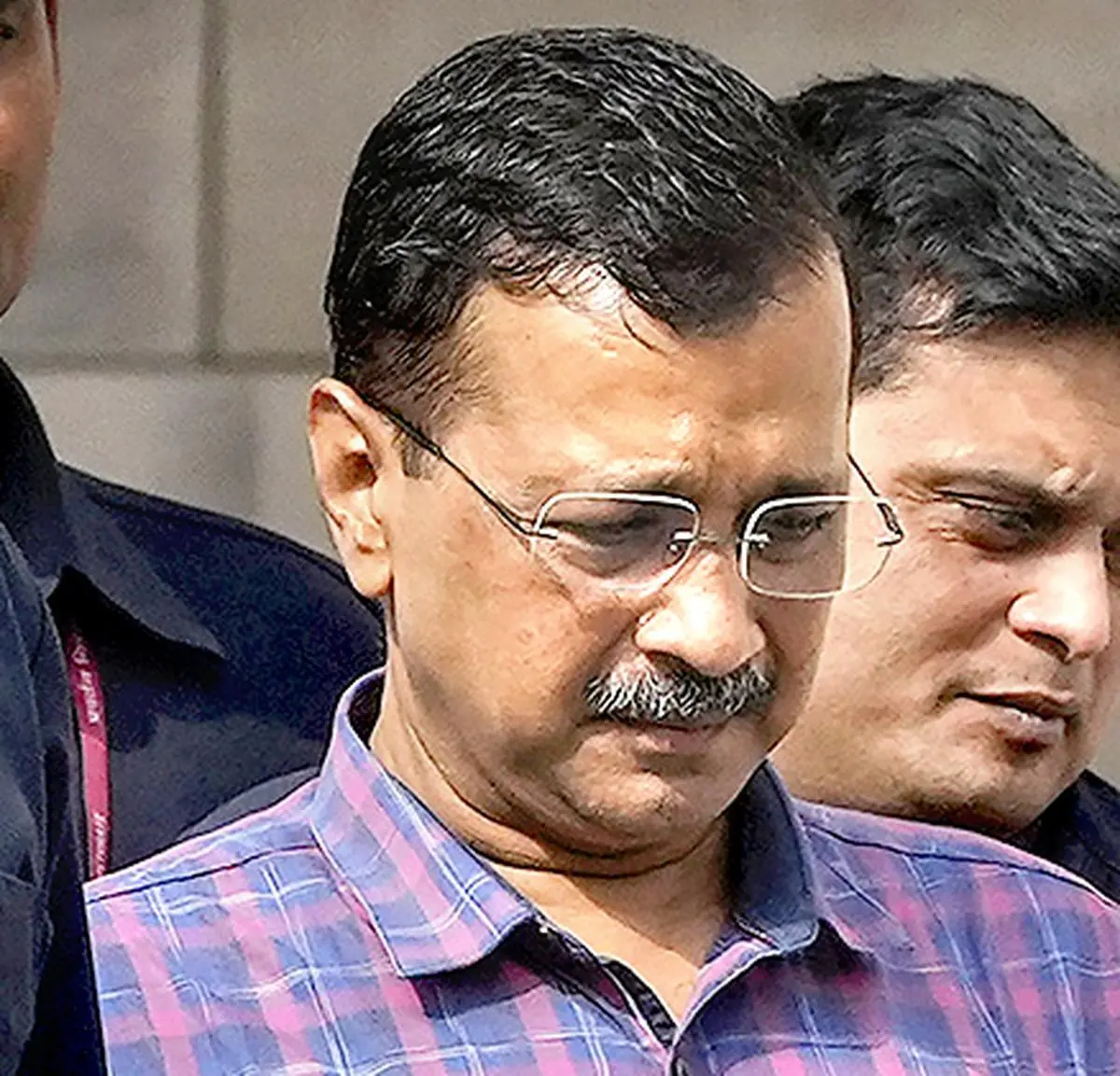
Former Delhi Chief Minister Arvind Kejriwal leaving a court in the excise policy-linked money laundering case, in New Delhi on March 28, 2024. His was one of the most prominent arrests by the ED in liquor cases. | Photo Credit: ATUL YADAV/PTI
According to the report of the Comptroller and Auditor General (CAG) tabled in the Delhi Assembly in late February, the Delhi government incurred a loss of Rs.2,002 crore as a result of flawed conception and implementation of the new excise policy.
The AAP, however, said that the CAG report validated its long-standing claims of large-scale corruption under the old excise policy. Shortly after the CAG report was tabled, Atishi, Leader of Opposition in the Delhi Assembly, told mediapersons: “The CAG report... [in] the first seven chapters focusses on the audit of the old excise policy that was in place from 2017 to 2021. These chapters highlight the flaws in the policy, expose the corrupt practices within it, and provide details of the malpractices that took place. The eighth chapter is dedicated to the new excise policy.”
Travails of KCR in Telangana
In Telangana, trouble began for the Telangana Rashtra Samithi, which later became the Bharat Rashtra Samithi (BRS), after the ED named Kalvakuntla Kavitha, former Chief Minister K. Chandrashekar Rao’s daughter, as an accused in the Delhi liquor case in November 2022.
A day before the announcement of the Lok Sabha election schedule in 2024, the ED raided her residence and later arrested her on March 15, 2024. Kavitha remained in jail for over five months until the Supreme Court finally granted bail on August 27, 2024.
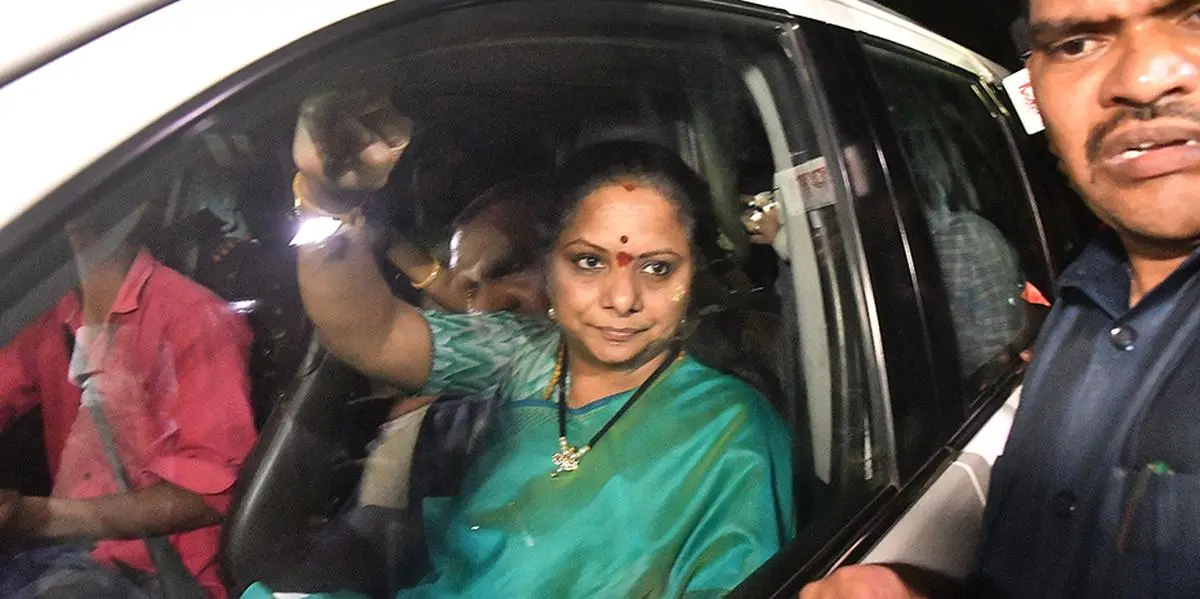
Kalvakuntla Kavitha, former Chief Minister K. Chandrashekar Rao’s daughter, being taken into custody by the ED in Hyderabad on March 15, 2024, in connection with the Delhi liquor case. After her arrest, the BRS toned down its criticism of the BJP. | Photo Credit: NAGARA GOPAL
Meanwhile, during the same period in Andhra Pradesh, Magunta Srinivasulu Reddy, a Lok Sabha member from the ruling Yuvajana Sramika Rythu Congress Party (YSRCP), and his son Magunta Raghava were both named in the Delhi liquor case. Raghava was taken into custody in February 2023 and released in October 2023 upon becoming an approver. On March 16, 2024, both Srinivasulu Reddy and Raghava left the YSRCP (after being denied the ticket) and joined the Telugu Desam Party (TDP), a BJP ally. The timing coincided with Kavitha’s arrest. Srinivasulu Reddy then went on to contest the Lok Sabha election from Ongole on the TDP ticket and won.
Speaking to Frontline, Harathi Vageeshan, a political science professor at Hyderabad’s NALSAR University of Law, said: “The BJP has been using the ED astutely. They cornered the BRS systematically. In Andhra Pradesh, former Chief Minister Y.S. Jagan Mohan Reddy, too, had ED cases [money laundering, not liquor] hanging over his head.”
The BRS went soft in its criticisms against the BJP and actively tried to scuttle opposition unity ahead of the 2024 Lok Sabha election.
Gunning for Congress in Karnataka
In Karnataka, B. Nagendra, former Minister of Scheduled Tribes Welfare, Youth Empowerment, and Sports, resigned from the Council of Ministers in May 2024 after the suicide of an accounts superintendent named P. Chandrasekharan. In his suicide note, Chandrasekharan had alleged that a total of Rs.94.73 crore had been illegally transferred from Valmiki Corporation to Hyderabad-based companies. The ED stated that Nagendra was the prime accused in this scam under the PMLA as Rs.89.62 crore was rerouted to 18 fake accounts in Andhra Pradesh and Telangana, where it was used to purchase liquor during the Lok Sabha election.
Even as a State investigation was under way, the ED filed an Enforcement Case Information Report against Nagendra and arrested him on July 12, 2024. While the ED accused Nagendra of being the kingpin of the scam, the parallel Special Investigation Team investigation did not even name him in its charge sheet. This was a point noted by the Special Court for Trial against Legislators while granting him bail in October last year.
Soon after his release, Nagendra stated that while in custody, ED officials pressured him to name Chief Minister Siddaramaiah and Deputy Chief Minister D.K. Shivakumar. He added that he did not have any role in the diversion of funds but the BJP was using the ED to “destabilise Congress governments wherever they are in power”.
West Bengal and Kerala have evaded the ED. In Bengal, the ruling Trinamool Congress has kept the market open to all participants. The ED source said: “In Bengal, all the different brands—Indian-made and foreign liquor—are given equal opportunity in the market to showcase their products.” A highly placed source in the industry told Frontline: “In Tamil Nadu, they are saying that people are being given undue favour, etc., as is reported, whereas in Bengal all brands are available.... This exposes structural issues in the [Tamil Nadu] system.”
No probe in BJP-ruled States
The story in BJP-ruled States is a stark reminder of how the ED refuses to take cognisance of a variety of excesses. In a CAG report tabled in the Goa Assembly in 2020, it was said that the Excise Department had incurred a loss of Rs.7.59 crore. (The ED, however, questioned Amit Palekar, the AAP’s Goa unit chief, in the Delhi liquor case.)
In the officially dry state of Gujarat, as per police data, 8.2 million bottles of alcohol worth Rs.144 crore were seized in 2024. There is no known ED action after these seizures although in 2017, the ED arrested a liquor mafia don named Ramesh Patel alias Michael from Daman. His brother Suresh, who was also chief of the Daman Zila Panchayat in the past, was arrested in 2023.
In NDA-ruled Bihar, the illicit liquor trade has thrived ever since the hasty 2016 decision of the Nitish Kumar government to impose complete prohibition.
Bihar and prohibition
In an order in October 2024, the Patna High Court came down heavily on the State government saying that government officials were making money by enabling the rampant illicit liquor trade. Earlier, in October 2020, the ED had filed a charge sheet against liquor mafia members in Bhojpur district in a case related to a hooch tragedy that killed 21 persons.
In 2021, the then Chief Justice of India N.V. Ramana dubbed the Bihar liquor law an example of “lack of oversight”. He added: “There are three lakh cases pending in the courts... the applications pertaining to bails in liquor prohibition are admitted in large numbers in the High Court.” There has been no known ED intervention in Bihar.
Also Read | Bihar’s liquor ban: A cautionary tale
In September 2024, Prashant Kishor, head of the newly floated Jan Suraaj Party, made the bold promise of doing away with prohibition if his party won the 2025 Assembly election. Others are scrambling to figure out a narrative.
It is well known that distillery licences are granted only to those favoured by a ruling party. Also, a distiller’s liquor production is purchased by a State undertaking only if the distiller is in the ruling party’s good books.
Politicians from the AAP, the BRS, the DMK, and the Congress assert that economic crimes must be investigated nationwide, not selectively in opposition-ruled States—an argument that carries significant merit.
(With inputs from Ilangovan Rajasekaran, Anand Mishra, Suhrid Sankar Chattopadhyay, Vikhar Ahmed Sayeed, Soni Mishra, Ashutosh Sharma, Amey Tirodkar, and Ayesha Minhaz.)


COMMents 0
SHARE
READ LATER