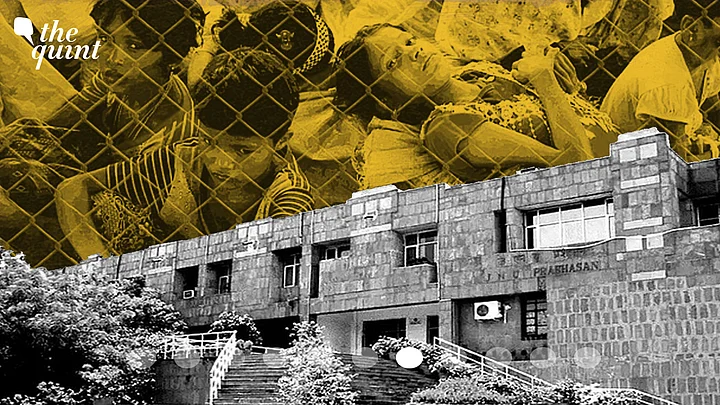
A few days before the recent Delhi Assembly elections, a report titled 'Illegal Immigrants to Delhi: Analysing Socio-Economic and Political Consequences' was put out in the name of Jawaharlal Nehru University (JNU).
An accompanying press release also found its way into the hands of journalists. The release made its own set of claims – including those that could not be derived from the report – on the impact of illegal migrants from Bangladesh on Delhi’s demographic composition.
Notable, however, is the fact that there has been no official circulation of the press release or the report, of what is supposed to be JNU’s own study, and neither of these documents can be found on the official website of the university.
The JNU report was cited by the Bharatiya Janata Party (BJP) leaders during election campaigning, to claim that illegal migration from Bangladesh and Myanmar had significantly increased the Muslim population in Delhi. Just a few months ago in November, ahead of Maharashtra elections, a report almost identical to the JNU report had emerged, from the Tata Institute of Social Sciences (TISS), and echoed its conclusions.
The circumstances surrounding the emergence of both the reports should raise significant questions about them as academic exercises arising from a genuine spirit of inquiry.