
The reports produced by the Intergovernmental Panel on Climate Change (IPCC) are massive undertakings, requiring years of effort and hundreds of scientists who volunteer as authors. The sixth assessment report cycle saw its first documents released in 2018, and five more followed through 2022. Today puts a coda on that cycle, as the condensed Synthesis Report is out.
The first three reports were focused on narrow topics: the 1.5°C warming milestone, land use and climate change, and the world’s oceans and ice. The next three followed the traditional structure of previous assessment reports: the physical science of climate change, the impacts of climate change, and solutions.
Each of these reports is meant to represent the state of scientific knowledge on a topic so decision-makers and other interested readers don’t have to take on the many thousands of published studies that form their foundation. The role of the Synthesis Report is to further distill the most important information into the simplest reference that the scientists can bear to put their stamp of approval on. The 18 key conclusions in this report provide an impressively comprehensive yet succinct description of our situation—the ultimate TL;DR of Earth’s climate.
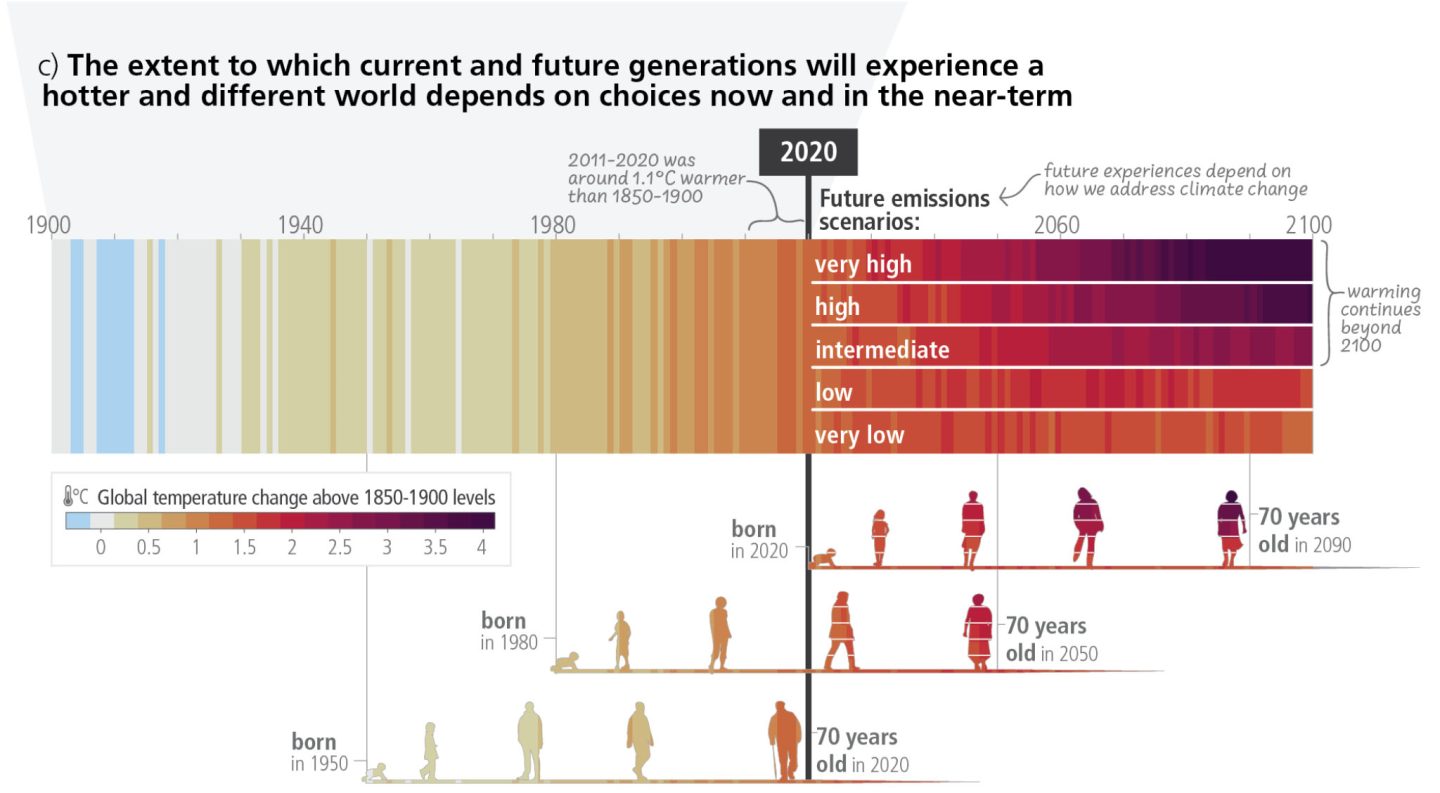
There are no surprises here for those who have read the individual reports in this cycle. Instead, it underlines the fundamentals. For example, “Human activities, principally through emissions of greenhouse gases, have unequivocally caused global warming, with global surface temperature reaching 1.1° C above 1850–1900 in 2011–2020,” the report says.
That warming will continue as long as we keep increasing the concentration of greenhouse gases in Earth’s atmosphere, and the consequences worsen as the temperature rises. There is no shortage of actions we can take immediately to limit warming and reduce those consequences.
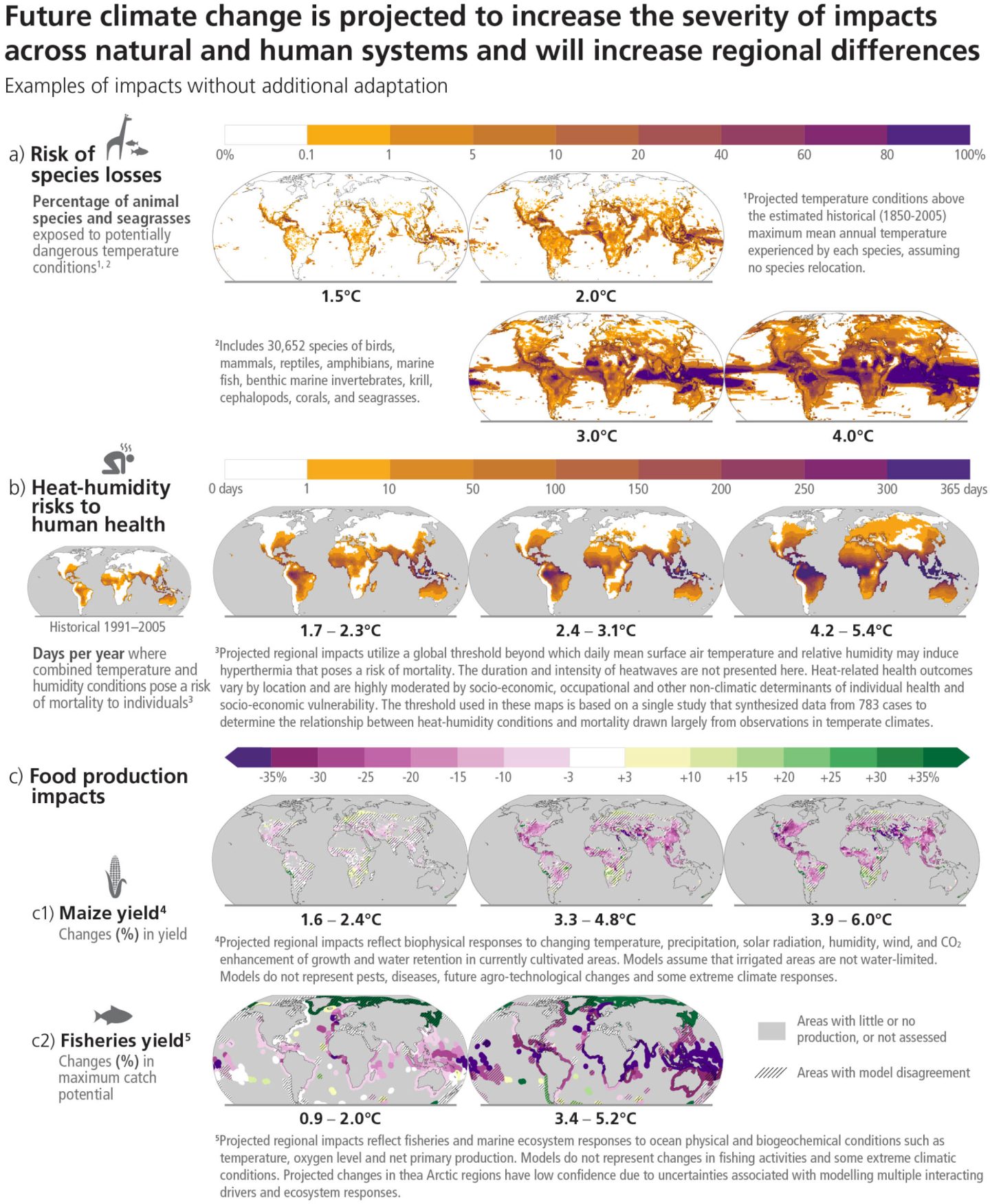

Report version 6.0
There are interesting ways our knowledge has improved since the previous assessment report was released in 2013–2014. Projected sea level rise has become a bit clearer, for example, while trends in current weather extremes have been identified with certainty. But the new report’s most important update is that progress on climate change remains insufficient to limit warming to 1.5°C or 2°C despite the fact that significant progress has occurred.

 Loading comments...

