Edition
delhi19°C
TOI logo
Fill 1
Tap to unmute
00:08
SHARE
Quality
Auto
144p
240p
360p
480p
720p
Speed
0.5 X
0.75 X
1 X
1.25 X
1.5 X
2 X
Advertisement
Now Playing
Indian Short Film 'Anuja' Earns Oscars 2025 Spot, Mindy Kaling & Guneet Monga Celebrate
This story is from August 3, 2017

Stinking Dhapa dump to turn tourist destination by 2020

Stinking Dhapa dump to turn tourist destination by 2020
KOLKATA: In what is pipped as the largest scientific closure of a dump site in India, engineers are engaged in a mammoth operation to first wrap a 11-storey-high garbage mound at Dhapa with plastic sheets and then cover it with enough soil to lay 18 football pitches.
A Rs 60-crore phytocapping is currently underway at the Dhapa dump site that became operational in 1987 and continued to function till it was overflowing with nearly 3 crore tonne of municipal solid waste collected from around 30 lakh homes and offices for 22 years.
1x1 polls
Poll
'Maharashtra will get a third deputy CM soon from Shinde Sena,' claims Sanjay Raut.

Two other dump sites — Swabhumi and PC Chandra Garden — that had earlier been closed unscientifically continue to be an environmental hazard, releasing toxic chemicals in the form of leachate into the soil, particularly during adverse weather conditions in summer and monsoon.
“When sites were earlier closed, we did not have the understating, knowhow and wherewithal to manage garbage scientifically. Even at Dhapa, dumping has been unscientific with no segregation of waste to weed out hazardous metals and materials or recyclables. This makes scientific capping of the waste all the more crucial to prevent leachate-containing soluble or suspended solids from contaminating ground water, emitting stench and adversely impacting public health,” said Kalyan Rudra, chairman of the West Bengal Pollution Control Board that is the implementing agency of the World Bank-financed project.
Initially slated to commence in 2010, the project was delayed as the first two tenders did not elicit any response. It was only after the third tender was floated that Saurashtra Environment Engineers Pvt Ltd (SEEPL) bid for it and was awarded the job in June 2016. Denmark-based international consultancy group COWI is assessing the project.
Work on the project commenced in November 2016. Since dumping had been random, the mound was first stabilised by dressing the slopes to create a stable gradient. The waste was then profiled and the surface layer compacted.

Following the slop compaction, drainage lines have been laid to carry the leachate to the treatment plant. A system has also been put in place to collect and discharge methane gas after passing it through a compost filter. The mound is now being covered by thick plastic sheets to prevent rain water from penetrating it. “Insulating the garbage dump from weather activity will minimize leachate generation,” explained Rudra.
A 9-10 ft wide road is simultaneously being constructed around the mound for vehicles to travel to the 6,000 sq metre plateau on top. Soil, more than 1 metre in thickness, will next be laid on the plastic sheet to act as a vegetative layer. While grass and shrubs will be grown along the slopes, flower and fruit-bearing trees will be planted on the plateau. An irrigation system will be installed to water the plants.
Part of the project is a leachate treatment plant that is being constructed simultaneously. A pre-project study found considerable contamination in surface water that flowed through storm water canal and sullied the farmland where vegetables are grown. Levels of biological oxygen demand and metals were found to be way above the permissible standard.
“We believe the garden will become a tourist spot with a view of the wetlands to the east and the city to the west. Look at what Swabhumi or PC Chandra Garden is today. Only, this will be much better as it will be scientifically managed,” the PCB chairman added.
author
About the Author
Subhro Niyogi

Subhro Niyogi is a Senior Assistant Editor at The Times of India, and his job responsibilities include reporting, editing and coordination of news and news features. His hobbies include photography, driving and reading.

End of Article
FOLLOW US ON SOCIAL MEDIA
GoogleFacebookTwitterInstagramKOO APPYOUTUBE
Up Next
This story is from September 30, 2024

Unveiling Milan's hidden art and cultural treasures: When Indian influencer meets Italian insider with Lufthansa

Unveiling Milan's hidden art and cultural treasures: When Indian influencer meets Italian insider with Lufthansa

Milan—famed for its fashion runways and gourmet cuisine—also hides a treasure trove of art and culture that most tourists miss. But thanks to Lufthansa’s Milan Insider series, we’re taking you deep into the heart of this historical city, where travel influencer Tanya Khanijow joins forces with Milanese art expert Elisabetta Roncati to reveal the city’s artistic evolution. Get ready to go beyond the brochure and discover the real Milan, from its ancient roots to modern-day masterpieces.
From ancient marvels to modern masterpieces
Day 1 of the series kicks off with Tanya landing in Milan, greeted by the city’s vibrant culture and artistic flair. But this isn’t your typical tourist route. Armed with insider knowledge from Elisabetta, Tanya embarks on a journey that explores Milan’s transformation through time—starting from its Celtic and Roman roots, through the grandeur of the Middle Ages, and into the bold strokes of its modern-day identity.

The Duomo di Milano: A living canvas of art history
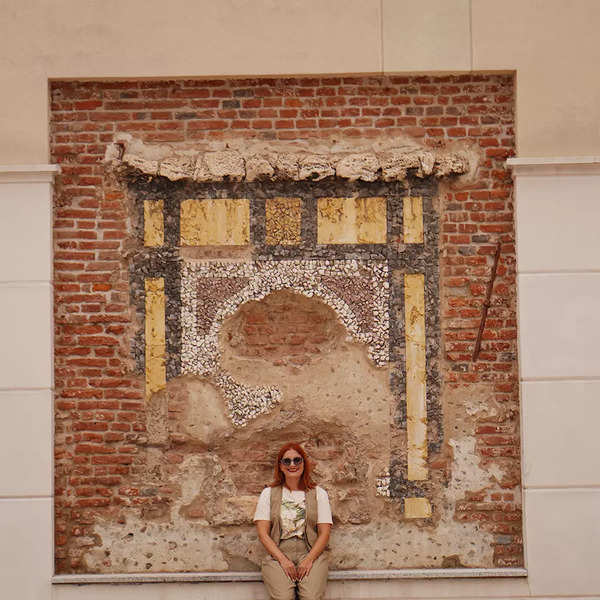
The iconic Duomo di Milano is the perfect starting point for this journey. With over 3,400 statues adorning its façade, the cathedral is more than just a landmark—it’s a towering testament to centuries of artistic mastery. As Tanya gazes up at the intricate sculptures, Elisabetta reveals fascinating details that most visitors overlook. “It’s not just a building—it’s a story, with each statue representing different moments in history,” she explains. Tanya is left in awe, realizing the cathedral is essentially an outdoor museum that spans centuries. Talk about history in 3D!
Sforza Castle: Where Milan's art and power converge
Next, they explore Sforza Castle, a fortress that once housed Milan’s rulers and is now home to some of the world’s greatest artistic treasures. Elisabetta takes Tanya through the corridors, explaining how this grand castle served as a political and artistic hub. And here’s a fun fact—Leonardo da Vinci himself worked on projects within these very walls, further cementing Milan’s place in art history.
1000x1000_AAA05356

Navigli Canals: Designed by Da Vinci, flowing with culture
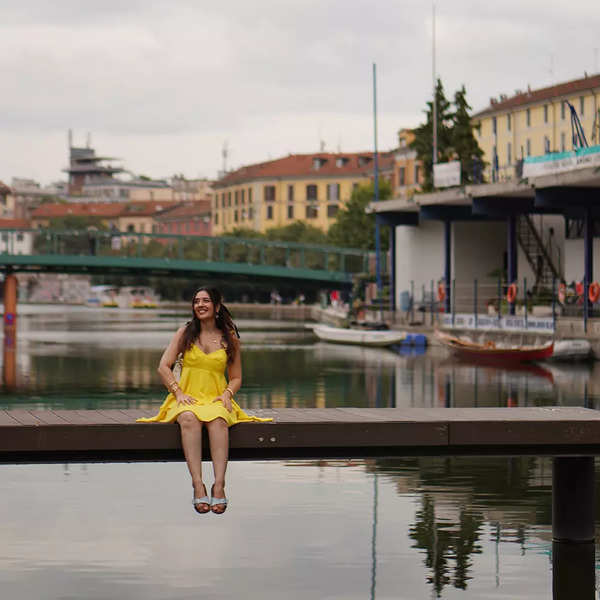
The journey wouldn’t be complete without a stop at the Navigli canals—a network designed in part by da Vinci to boost the city's trade routes. But today, these canals are not just an engineering marvel—they’re the heartbeat of Milan’s social and cultural life, lined with galleries, cafes, and studios. Elisabetta shares the fascinating story of how these canals evolved over centuries, while Tanya captures the picturesque waterways, bringing viewers a fresh perspective on this vibrant part of the city.
The insider’s edge: Travel like a local
Exploring Milan like an insider means skipping the tourist clichés and embracing local life. Elisabetta shares essential tips on navigating the city—like a true Milanese. Whether it’s mastering the efficient public transport system or understanding the unspoken cultural etiquette, Tanya learns what it really takes to move through Milan with ease and confidence. No taxis needed here—just a metro card and some insider know-how!
1000x1000_AAA05418

The soul of Milan: Where art, history, and life collide
Through Elisabetta’s expert narration, viewers are treated to an intimate look at how Milan’s past shapes its present. From the ancient ruins hidden beneath the city streets to the Renaissance masterpieces in its museums, each corner of Milan tells a story that connects art, culture, and everyday life. Tanya marvels at how seamlessly the city blends the old with the new, making every street feel like an open-air gallery.
1000x1000_AAA05379-(1)

What’s next? Stay tuned for fashion, food, and more
Day 1 is just the beginning of this insider journey through Milan. Over the next few days, Tanya will dive even deeper into the city, exploring its fashion-forward streets, indulging in its rich culinary delights, and unearthing hidden gems that only locals know. If you think Milan’s art scene is impressive, just wait until you see what comes next!
Visual storytelling: Bringing milan to life
Through visually stunning Instagram reels and YouTube videos, the energy of Milan’s art and culture leaps off the screen. From Tanya and Elisabetta standing before the Duomo to their canal-side chats along Navigli, viewers get to experience Milan as if they’re right there, soaking in the city’s rich artistic heritage. So, grab your virtual passport, because this is one Milanese adventure you won’t want to miss.
Disclaimer: This article has been produced on behalf of Lufthansa by Times Internet's Spotlight team.
End of Article
FOLLOW US ON SOCIAL MEDIA
Up Next
This story is from August 3, 2017

Sauna effect due to humidity

Sauna effect due to humidity
Kolkata: With heavy showers skipping Kolkata for a week, the city is back to being a cauldron. Even though it has been extremely stifling since Monday, the average humidity level hasn’t jumped. It has, in fact, slid after the heavy rain stopped. But lack of rain has pushed up the mercury by 3-4 degrees, making the humidity unbearable, said weathermen.
“When it rains, humidity shoots up. But temperature drops and so we don’t feel the stifling moisture. When the showers disappeared this week, the mercury jumped from around 28-30 degrees Celsius to 34 degrees now. This is pushing up the discomfort index even though the humidity now stands at 95%,” said G K Das, director of Regional Meteorological Centre (RMC).
This July has been very humid, with the average clocking above 70% and touching 100% during showers. But since it rained heavily last month, the choking humidity wasn’t felt. “Now that the temperature has climbed up, the humidity is being felt more. This will continue till we have heavy showers which is unlikely now,” said Das.
With the monsoon trough having shifted towards north and no significant system in sight, south Bengal will have only light and sporadic showers over the next 48 hours. A north-south trough now cutting across the state from north Bengal to Bay of Bengal is the only trigger. “We will have isolated rain but not heavy spells of shower till we have another significantly large system. There is none at the moment,” added Das.
Start a Conversation
Post comment
End of Article
FOLLOW US ON SOCIAL MEDIA
GoogleFacebookTwitterInstagramKOO APPYOUTUBE
Up Next
This story is from August 3, 2017

Dengue drive finds health dept HQ is a cradle for mosquito larvae

Kolkata: Does the state health department practice what it preaches? It seems not when it comes to taking up vector control exercises, given the fact the Swasthya Bhawan compund at Salt Lake has become a breeding ground for mosquitoes. A number of mosquito larvae, including that of Aedes Aegypti (the one that carries dengue virus) were found on the campus on Wednesday.
The mosquito-breeding grounds were stumbled upon by health workers of Bidhannagar Municipal Corporation (BMC) during a vector-control drive in the satellite township. From time to time, the health department has been taking up awareness programmes through posters, seminars and conference with civic representatives. Was the health department so busy preaching to others that it forgot to mind its own courtyard?
“During our inspection on Wednesday, we found larvae of Aedes Aegypti on the premises of Swasthya Bhawan. Water accumulated in plastic waste had become a breeding ground for mosquitoes. We informed officials in Swasthya Bhawan about it,” said Pranay Roy, MMiC (health), BMC.
Aedes Aegypti breeds in stagnant water that is clean and does not need a huge volume of it. The Swasthya Bhawan compound is littered with plastic cups, thermoocol containers and other material in which water had accumulated. Health department officials promised to clean up the campus in 48 hours.
“The health department itself should have taken up a drive to clean the premises on its own so that water accumulation did not take place before civic bodies found larvae. It is absolute irony that we have not been following what we try to teach others,” said a senior Swasthya Bhawan official.
Apart from Aedes Aegypti larvae, the civic body team also found larvae of other mosquito breeds. These will be sent to the laboratory. Last year, Salt Lake had seen at least nine dengue deaths in BMC area. Learning a lesson, the civic body took up mosquito control measures on a regular basis, inspecting government offices, educational institutes and parks and gardens. Wednesday’s exercise was part of this drive.

Besides Swasthya Bhawan, civic officials led by Roy went to other addresses including Bharatiya Vidya Bhawan near tank number 13, where two primary section students had died of dengue last year. Following the deaths, classes had to be suspended for a few weeks as the guardians protested. This time no larva was found there.
Mosquito larvae were also found in the Bidhannagar (south) police station compound in water accumulated in tyres dumped on its premises.
“There are scrap materials on the premises where water is accumulating,” Roy said.
Start a Conversation
Post comment
End of Article
FOLLOW US ON SOCIAL MEDIA
GoogleFacebookTwitterInstagramKOO APPYOUTUBE