
NIKKEI Film: The sound of engines vanishing in Thailand
Japanese autos under threat by a wave of Chinese EVs

The "Detroit of Asia" and the Japanese automakers largely responsible for helping Thailand gain that nickname are at a major turning point now that BYD and 19 other Chinese brands have shown up with electric vehicles, eroding the Japanese pioneers' share of the auto market and poaching their salespeople and factory workers.

Chinese auto companies like BYD are making major inroads in Thailand. (Photo by Ken Kobayashi)
Chinese auto companies like BYD are making major inroads in Thailand. (Photo by Ken Kobayashi)
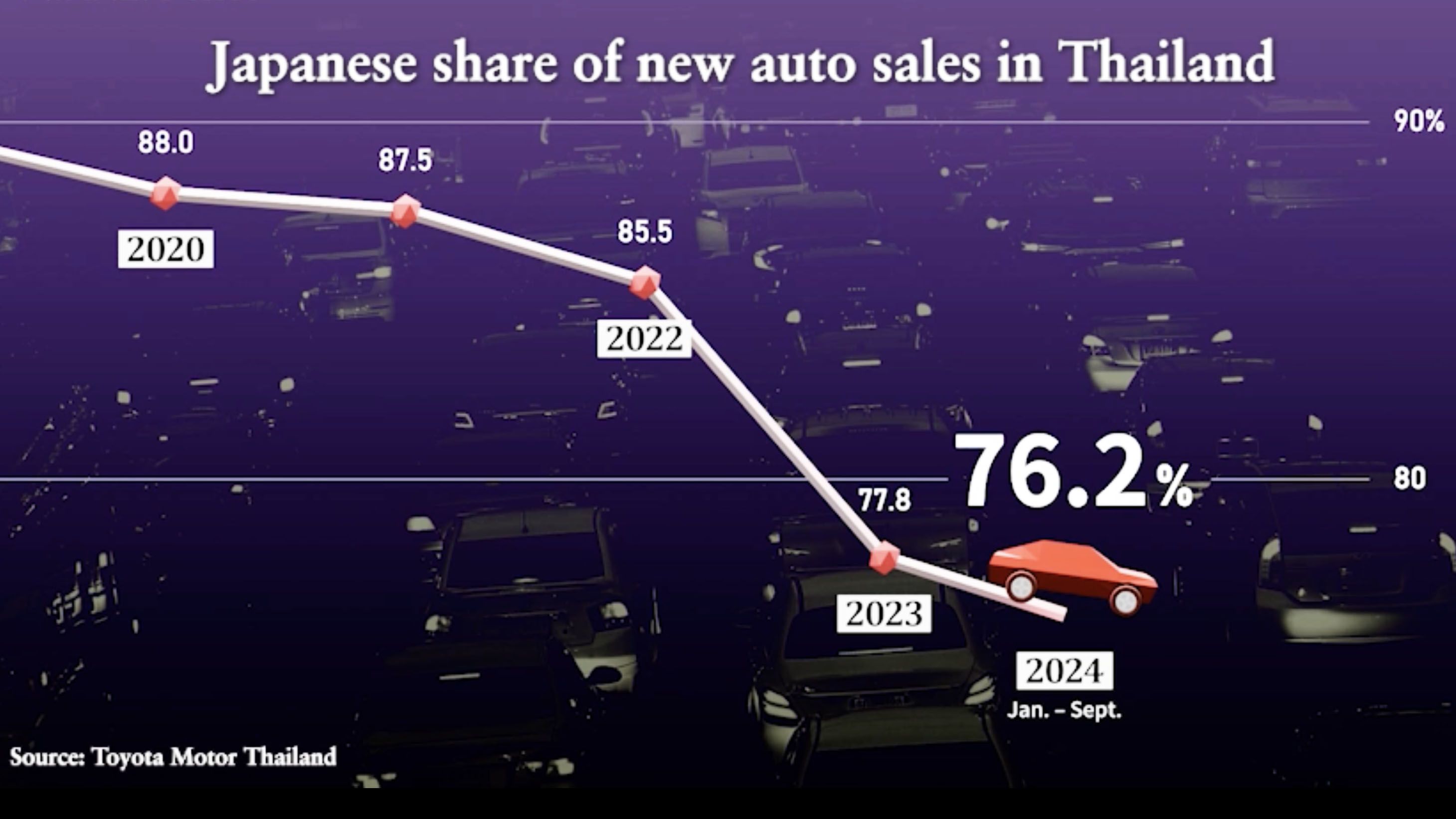
Japanese automakers controlled nearly 90% of the Thai market for half a century. In 2023, however, Chinese companies like BYD began full-scale sales in the country, taking big bites out of the Japanese makers' fat slice of the market. According to data from Toyota Motor Thailand, Japanese brands accounted for 76% of the market in the January-September period of 2024.

Chinese producers' electric vehicles are driving the trend. In 2023, 76,000 EVs were sold in Thailand, more than seven times the previous year's figure and a total that is expected to hold steady in 2024. Sra Chongbanyatcharoen, a partner at LiB Consulting Thailand, notes that "the Thai government's introduction of subsidies and tax exemptions has enabled EVs to sell at competitive prices [compared to gasoline-powered vehicles]."
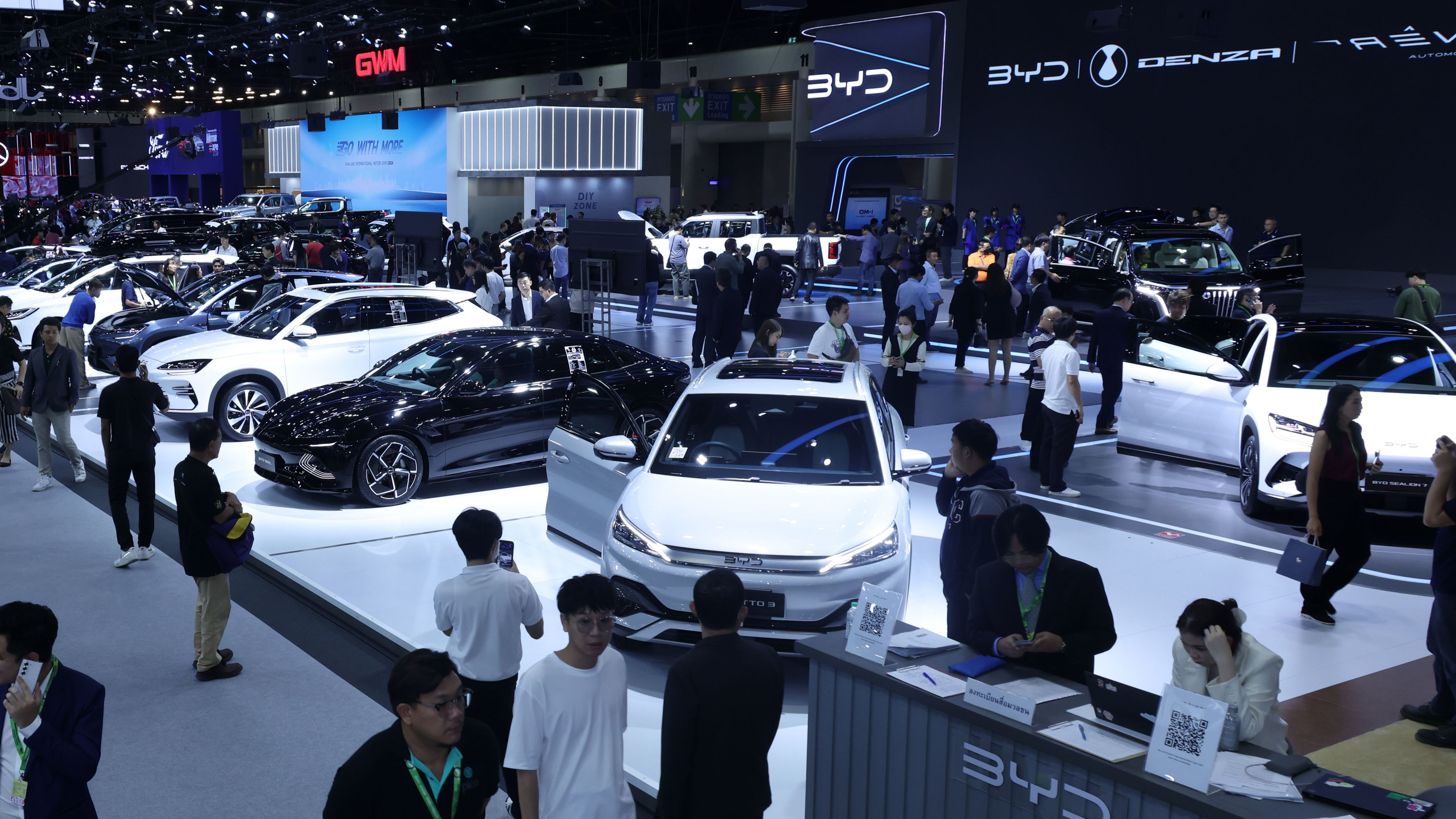
BYD's booth at the Thailand International Motor Expo 2024, in Bangkok, on Nov. 28. (Photo by Yuki Kohara)
BYD's booth at the Thailand International Motor Expo 2024, in Bangkok, on Nov. 28. (Photo by Yuki Kohara)
In Bangkok, more and more advertisements are popping up touting BYD, Great Wall Motor and other Chinese marques. Influencers called the "EV Girls," popular with young people, have carved out a social media niche.
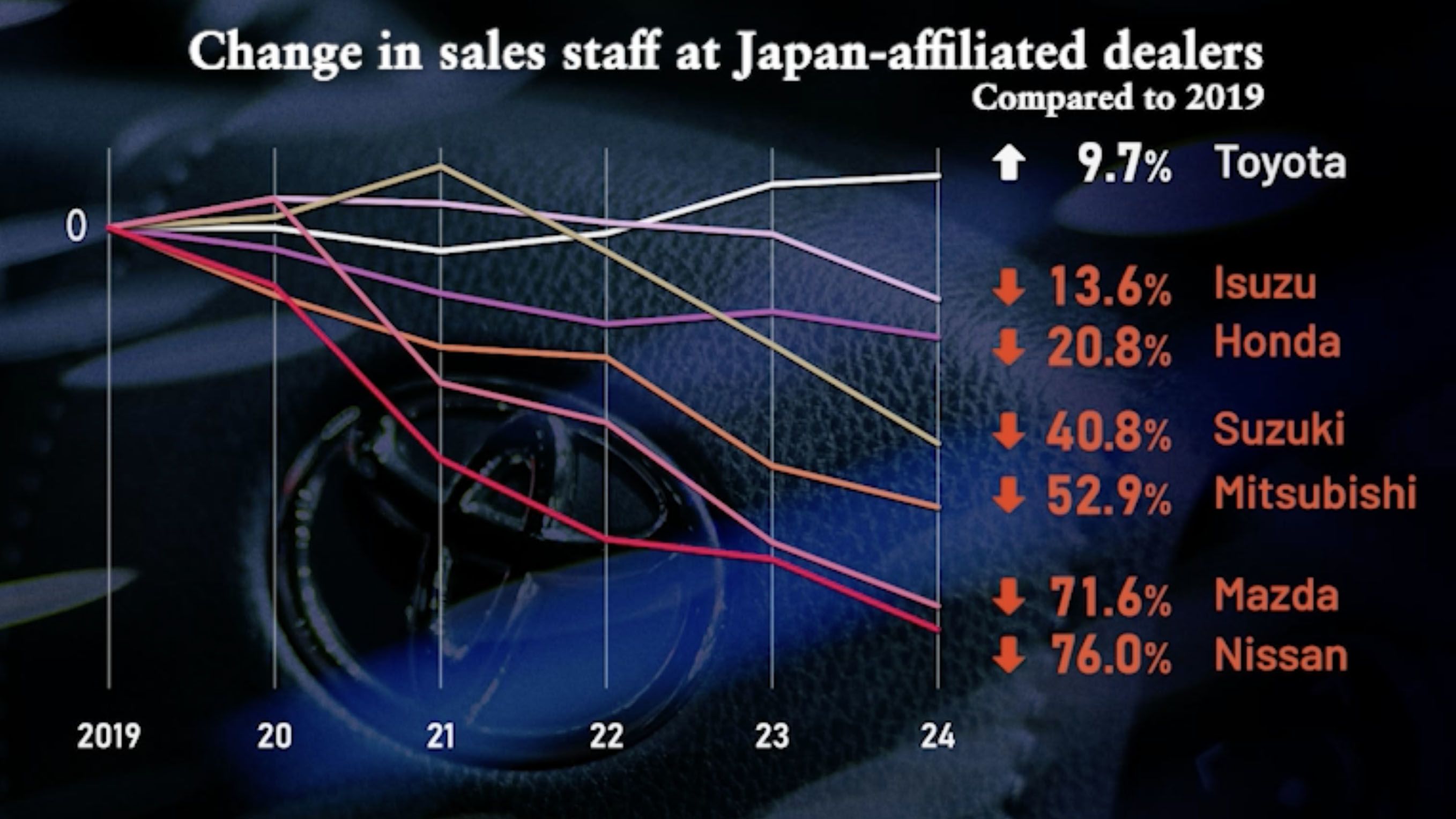
The truth is that Chinese companies' arrival is restructuring Thailand's auto industry. According to data obtained by Nikkei, in 2024 the number of Toyota dealerships in Thailand increased by 9.7% but decreased by 13.6% for Isuzu, 20.8% for Honda, 52.9% for Mitsubishi, and 76% for Nissan. Chinese companies have taken over many dealerships that were previously used by Japanese brands. Of BYD's nearly 120 dealerships, almost 50% used to sell Japanese cars.

Chinese companies are also setting up production facilities in Thailand. In July, BYD began operating its first full-scale passenger car factory outside of China, in Rayong, eastern Thailand. Great Wall Motor and Shanghai Automotive Industry Corporation's MG brand also began producing EVs locally in 2024. Many workers who had worked at Japanese automakers now work at Chinese factories. A woman at the BYD plant who used to work for Suzuki, which will end production in Thailand at the end of 2025, said that her pay doubled after she joined the Chinese company.

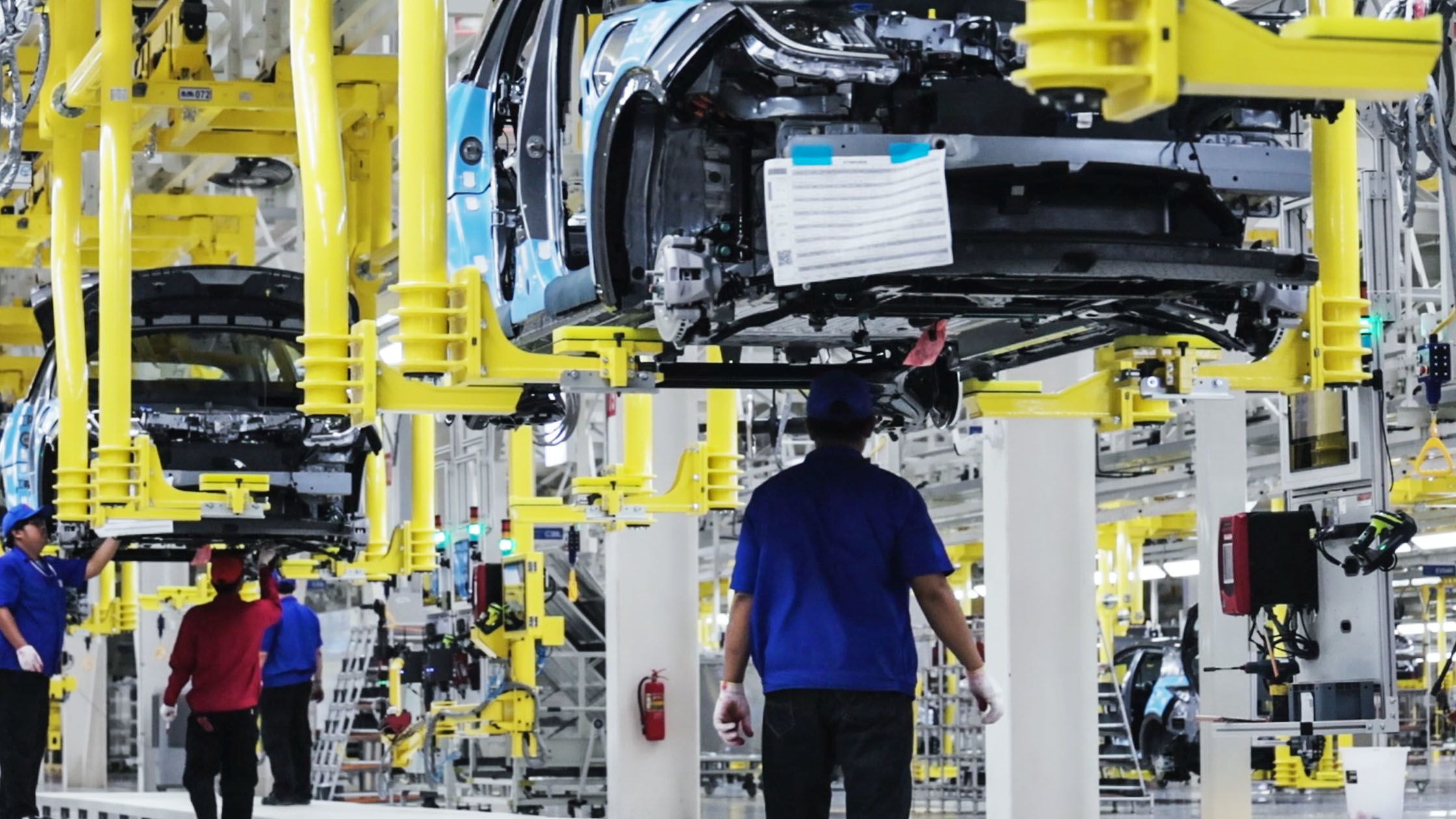
Workers assemble vehicles at BYD's first EV factory in Rayong, Thailand on July 4. (Photo by Shinya Sawai)
Workers assemble vehicles at BYD's first EV factory in Rayong, Thailand on July 4. (Photo by Shinya Sawai)
Executives are also leaving Japanese companies for their Chinese rivals. Vudhigorn Suriyachantananont, previously vice president at Toyota Motor Thailand, became vice president of Great Wall Motor Thailand in 2023. "We hired Mr. Vudhigorn to learn the Toyota production system," said Parker Shi, president of Great Wall Motor International. "What is happening in the Thai market is a war."

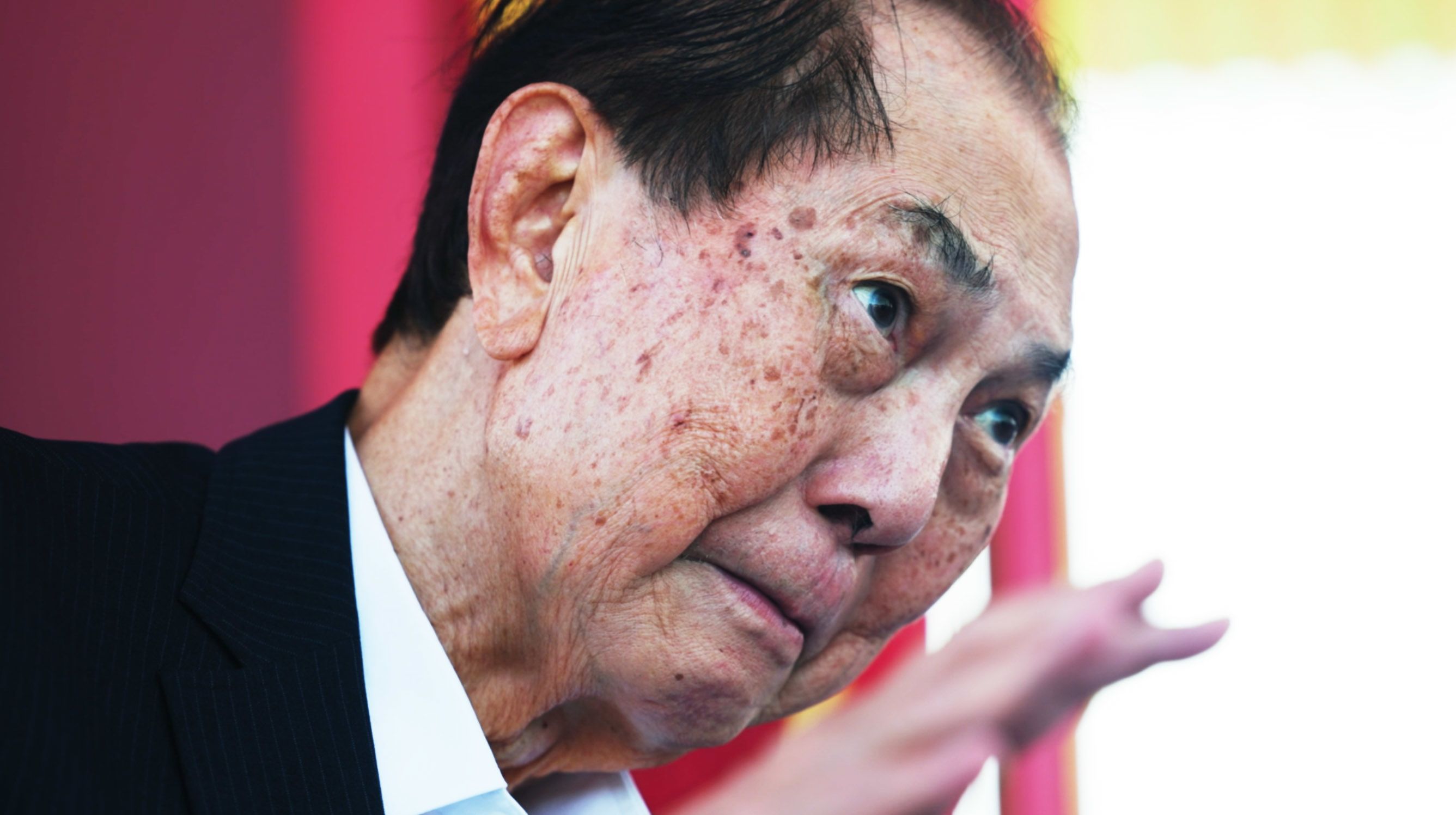
Saha Group chairman Boonsithi Chokwatana speaks with Nikkei Asia in Bangkok. (Photo by Shinya Sawai)
Saha Group chairman Boonsithi Chokwatana speaks with Nikkei Asia in Bangkok. (Photo by Shinya Sawai)
"Japanese manufacturers are still being influenced by their success in the analog era, and they are slow to make decisions," said Boonsithi Chokwatana, a "guide" for Japanese companies and chairman of the Saha Group, one of Thailand's largest conglomerates. Thai companies with close ties to Japanese companies are also voicing concerns. Hajime Yamamoto, a principal at Nomura Research Institute Thailand, notes that "steps like transferring authority to local staff are necessary."
Although EVs still must bridge a "chasm" before they are embraced on a wide scale, the majority of experts believe that sales of the battery-powered vehicles will continue to grow in the medium to long term. This insight has Chinese companies increasing their presence in the Thai market and Japanese companies playing defense.

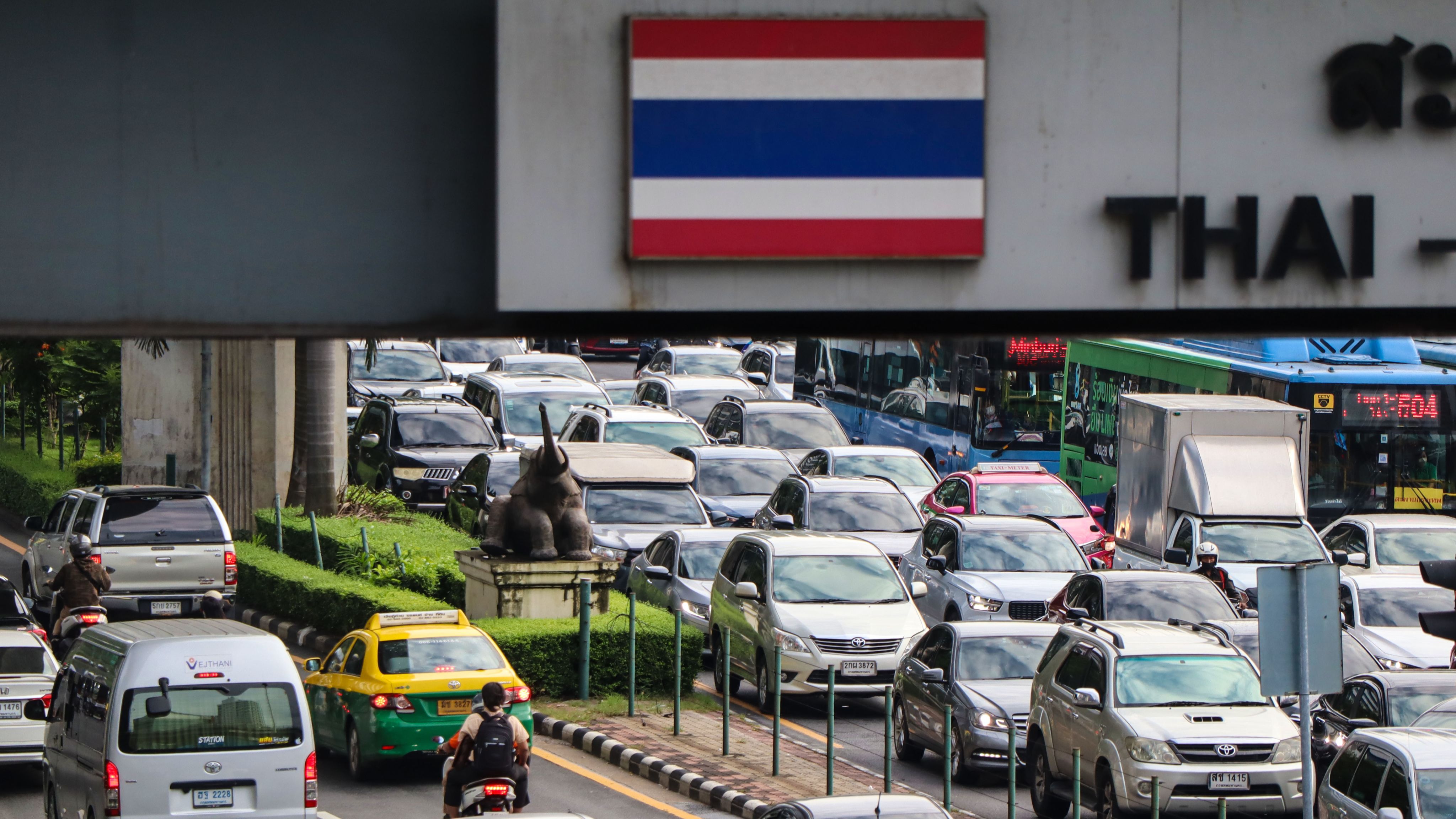
A traffic jam in Bangkok on Oct. 18. (Photo by Yuki Kohara)
A traffic jam in Bangkok on Oct. 18. (Photo by Yuki Kohara)
Reporters and photographers: Kenya Akama, Shinya Sawai, Anchalee Romruen, Niyakarn Atiyudhakul, Hiroki Endo, Yuki Kohara
Video editor: Jun Koguchi
Graphics: Ryo Osuga
Narration: Brian Chapman, Makiko Utsuda
Editor: Ken Kobayashi
Copy editor: John Geis
Producers: Hiroki Endo, Noritaka Yada
 Built with Shorthand


