
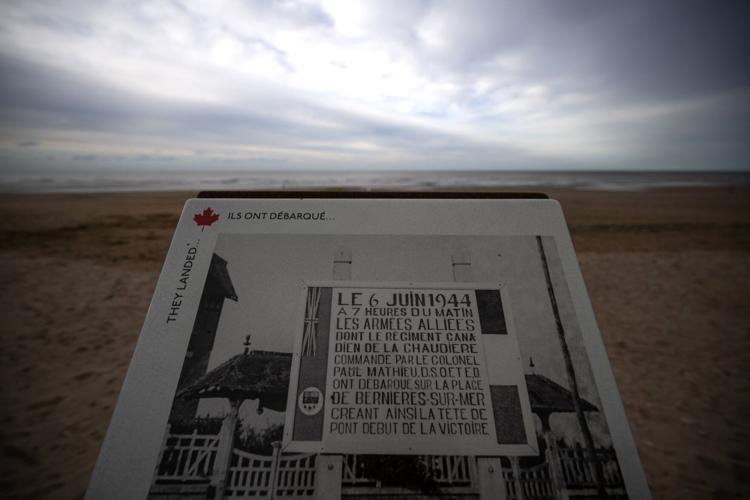

During a research junket to England this past April, my wife presented me with an unexpected 40th wedding anniversary gift. “We’re going to Normandy,” she declared. “I’ve made all the arrangements.”
It was a fabulous surprise. Ever since watching John Wayne in the 1962 classic “The Longest Day” as an eight-year-old kid sprawled in front of our Zenith TV set, I had longed to visit the D-Day beaches. Now we were going.
After touring the Juno Beach Centre celebrating Canada’s valiant D-Day role, and seeing the stark, ordered rows of crosses at Omaha Beach’s Normandy American Cemetery, I was deeply moved: stirred not only by the sacrifice of the thousands who fought and fell that day (and in the savage battles that followed), but also by the continuing dedication of the people of Normandy to honour their memory.
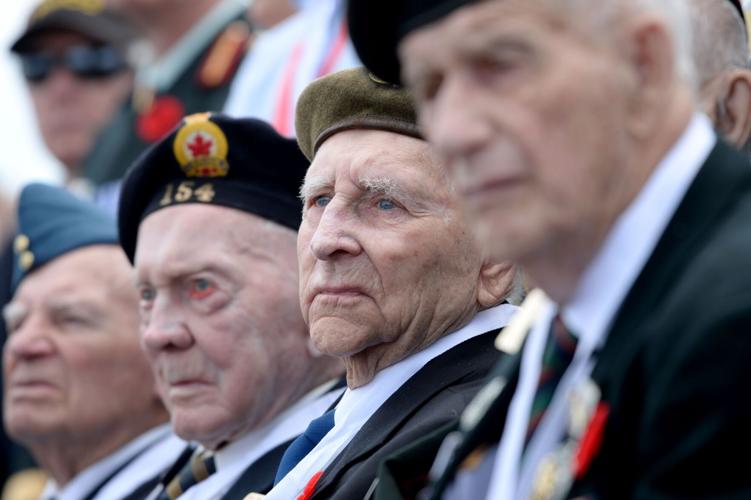
Today, on the 80th anniversary of the D-Day landings, Prime Minister Justin Trudeau and U.S. President Joe Biden will be joined by leaders from more than two dozen Allied nations. Along with a handful of surviving D-Day veterans, they will walk the beaches and visit the gravesites of this solemn landscape, which fourscore years ago was the world’s foremost frontline between democracy and jack-booted barbarity. They too will honour the memory of those who fought and died here.
Just as the 1930s witnessed the rise of authoritarian horror shows in Franco’s Spain, Mussolini’s Italy, and Hitler’s Third Reich, so too our time is experiencing a bumper crop of autocrats. Hungary’s Viktor Orbán, Poland’s Andrzej Duda, and India’s Narendra Modi are but a few exemplars of the “authoritarian turn” explored in a spate of recent books, including Jason Stanley’s “How Fascism Works” (2018).
Notably absent from today’s D-Day celebrations is Russian President Vladimir Putin, currently waging a ruthless, lawless invasion of Ukraine. Tellingly, Putin didn’t make the invite list; Ukrainian President Zelenskyy did.
Revealingly, another wannabe dictator who will not be in Normandy today is Donald J. Trump, a former US President who has called opponents “vermin” and whose fascist leanings have recently been explored in Henk de Berg’s book “Trump and Hitler” (2024).
When Trump did have a chance to honour fallen American soldiers in France, he refused. As reported by The Atlantic, Trump canceled a visit to the Aisne-Marne American Cemetery in 2018, blaming the rain for the last-minute decision. Senior staff members, however, reported Trump was afraid the rain would mess up his hair. They also reported that Trump said, “Why should I go to that cemetery? It’s filled with losers.”
How does a Hitler happen? How does a Trump become the presumptive Republican nominee, locked in a neck-and-neck race for the US. Presidency?
The answers are complex, but a key response can be found in William Shirer’s monumental “The Rise and Fall of the Third Reich,” in which he observes that the “cardinal error” of the Germans opposing Nazism was “their failure to unite against it.”
“At the crest of their popular strength, in July 1932,” Shirer writes, “the national socialists had attained but 37 per cent of the vote. But the 63 per cent of the German people who expressed their opposition to Hitler were much too divided and shortsighted to combine against a common danger which they must have known would overwhelm them unless they united, however temporarily, to stamp it out.”
We have the opportunity, right now, to fight for democracy, not on the horrific scale of a Normandy and a global, war-torn tragedy, but on the scale of people coming together, uniting across their differences and disgruntlements to defend the values of a free, open and democratic society.
Our democracies are far from perfect, and many feel disenfranchised within them. Many too, including women and people of colour, have had to fight for recognition of their courageous roles in toppling Hitler.
And yet, the Normandy beaches remain a stark and sustaining reminder that democracy is worth fighting for. Now.
Correction - June 6, 2024
This article was edited from a previous version that said former U.S. President Donald Trump called immigrants “vermin.” In fact, he compared his political opponents to “vermin.”




To join the conversation set a first and last name in your user profile.
Sign in or register for free to join the Conversation
Conversation
All Comments
Active Conversations
The following is a list of the most commented articles in the last 7 days.
A trending article titled "Trump says he had a ‘productive meeting’ with Trudeau after leaders met for surprise dinner in Florida" with 88 comments.
Trump says he had a ‘productive meeting’ with Trudeau after leaders met for surprise dinner in Florida
88
A trending article titled "Pierre Poilievre wants to defund the CBC. Here's what Canadians think of that" with 330 comments.
Pierre Poilievre wants to defund the CBC. Here's what Canadians think of that
330