Get Breaking news alerts in real-time.

Notifications can be turned off anytime from browser settings.

ADVERTISEMENTREMOVE AD
Members Only
lock close icon

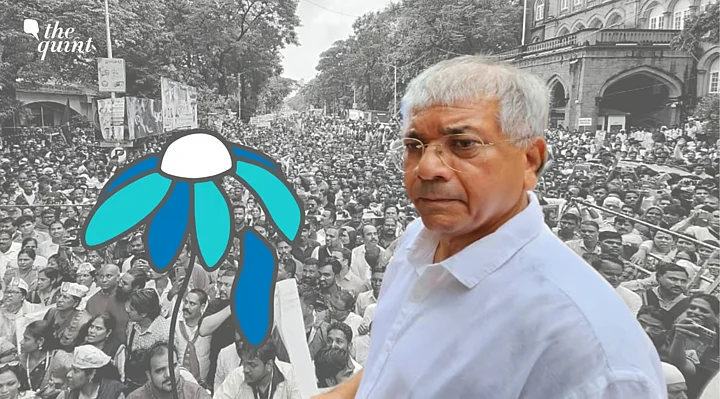
How Prakash Ambedkar's VBA May Have Harmed Opposition in 20 Maharashtra Seats

The Vanchit Bahujan Aghadi harmed Maha Vikas Aghadi in 20 seats in the Maharashtra Assembly elections.

Published: 
story-hero-img
i
Aa
Aa
Small
Aa
Medium
Aa
Large

Prakash Ambedkar's Vanchit Bahujan Aghadi (VBA) may not have won a single seat in the Maharashtra Assembly elections, but it may have affected the outcome in a number of seats. Supporters of the Maha Vikas Aghadi (MVA) have accused the VBA of splitting Opposition votes and helping the BJP-led Mahayuti win.

While the All India Majlis-e-Ittehadul Muslimeen (AIMIM), the Maharashtra Navnirman Sena (MNS), and the Bahujan Samaj Party (BSP) also harmed the MVA candidates, the split of votes among one or more of these players in some seats also handed over the victory to the candidate of the ruling Mahayuti alliance.

The MVA was impacted by the VBA in at least 20 seats against the Mahayuti. In 15 of these 20 seats, the MVA lost to the Mahayuti by less than 10,000 votes.
Become a Member to unlock
  • Access to all paywalled content on site
  • Ad-free experience across The Quint
  • Listen to paywalled content
  • Early previews of our Special Projects
Continue
×
×
ADVERTISEMENTREMOVE AD

Elections Round-up: BJP Dominant but Opposition Must Not Roll Over and Die

The overall results have demonstrated the internal resilience of the Sangh Parivar when it acts in unison.

Published: 
story-hero-img
i
Aa
Aa
Small
Aa
Medium
Aa
Large

While the NDA’s landslide victory in Maharashtra and the ease with which the INDIA bloc retained Jharkhand have hogged the headlines, the results of 46 assembly bypolls across the country held together also tell their own story of Indian politics today.

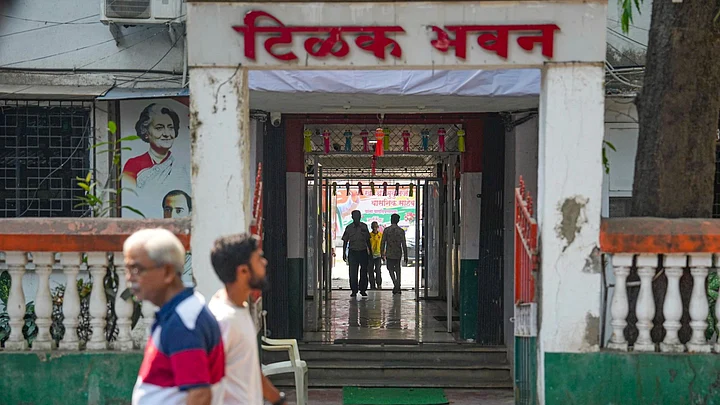
The most important takeaway from the assembly bypolls is from the country’s most populous and politically crucial state, Uttar Pradesh, in which the ruling BJP was stunned by the Samajwadi Party in the Lok Sabha polls with the former winning only 33/80 seats.

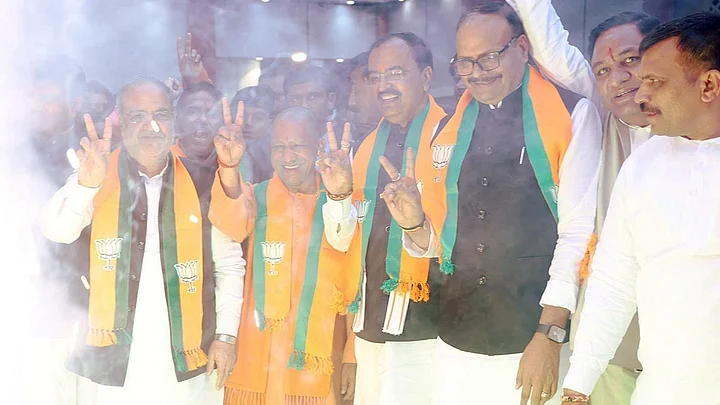
Winning seven out of the nine assembly bypolls is a huge comeback by the BJP and underscores the continuing political heft of Chief Minister Yogi Adityanath and that of the state BJP unit when it sorts out internal differences and works in collaboration with the party’s ideological mentor and electoral buttress, the Rashtriya Swayamsevak Samiti (RSS).
ADVERTISEMENTREMOVE AD

There is little doubt that after its dismal performance in the Lok Sabha polls, the BJP’s central leadership, as well as the ever-triumphalist duo of Prime Minister Narendra Modi and Home Minister Amit Shah, were humbled into a far more collaborative if not conciliatory relationship with Yogi Adityanath as well as the RSS ahead of the assembly bypolls. The bypolls were given top priority with everyone realising that if the BJP started badly sliding in Uttar Pradesh, the party’s hold over the country would become increasingly shaky, particularly in a Lok Sabha where it was well short of a clear majority of its own.

As for the Samajwadi party, which had shown great promise in the Lok Sabha polls, its leader Akhilesh Yadav appeared to underestimate the BJP’s ability to reinvent itself and crawl back into the political game. It is clear that the Yadav chieftain is far from attaining the political acumen of his father Mulayam Singh Yadav, from his party’s baffling rout in the Muslim majority assembly constituency of Kundarka, which should have been in the Samajwadi Party’s bag.

This shows the perils of taking for granted the palpable and justified antipathy of the Muslim minority towards the BJP as a blanket guarantee for electoral victory.

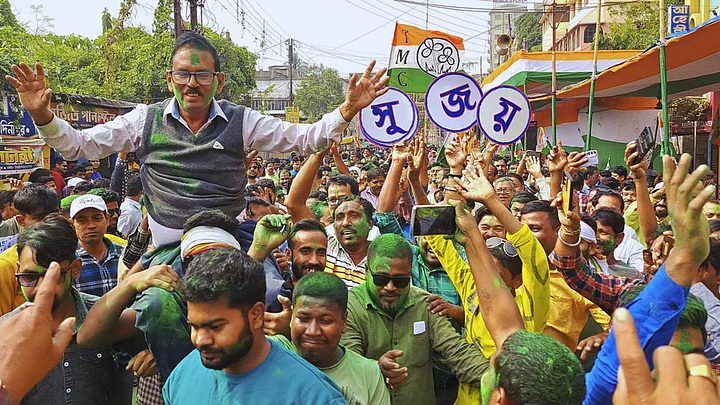
While the BJP will no doubt be relieved at setting its house in order in Uttar Pradesh, it cannot but be distressed at the hammering it has taken in the hands of the Mamata Banerjee-led Trinamool Congress in the six bypolls held in West Bengal. This was the first electoral test of the feisty chief minister after months and months of a campaign against her by both political opponents and the media, spearheaded by the BJP for being personally responsible for the horrendous rape and murder of a woman doctor in a Kolkata hospital several months ago.

Mamata Banerjee and her party apparatus has shown that despite the hundreds of protest demonstrations against her, they failed to even slightly dent the continuing popular support for her evident in the Lok Sabha polls as well.

The results speak for themselves. The victory margin of Trinamool candidates was huge: two of them with over 130000 votes, massive in assembly terms, and its lowest win margin was 28,168 votes in Madarihat, a seat that was with the BJP for the last eight years.

The BJP, which has spent so much time and money over the past decade to oust Mamata, was nowhere in the picture, showing why the party still has a long way before it can realise its dream of conquering West Bengal.

As for the Congress, the results present a mixed bag. There was good news from the South, with the massive victory of Priyanka Gandhi's debut to the Lok Sabha from Wayanad in Kerala, by a record four lakh vote margin. Again, it showed that the BJP has failed to make much headway even against the Congress when faced with strong local leaders, like Karnataka chief minister Siddaramaiah and D K Shivakumar, and in Kerala where it is unable to cross the political firewall created by the United Democratic Front and Left Democratic Front.

In Rajasthan, however, the Congress was humiliated, finishing third in as many as four constituencies and allowing the BJP to win five out of the seven assembly bypolls. The party also lost in the sole assembly bypoll in Chhattisgarh but put up a slightly better fight in Madhya Pradesh where it defeated a BJP cabinet minister, and significantly reduced the victory margin of the BJP candidate standing from former chief minister Shivraj Singh Chauhan’s constituency.

For Prime Minister Modi and the BJP, with the NDA winning not just a landslide victory in the prestigious state of Maharashtra elections but also bagging 26 out of the 46 assembly bypolls along with a huge comeback in Uttar Pradesh, and sweeping Bihar and the Northeast, it will be a welcome reprieve from the question mark that hung over the regime after it got clearly awakened during the Lok Sabha polls.

It has demonstrated the internal resilience of the Sangh Parivar when it acts in unison, quietly working on the ground without solely depending on the pyrotechnics of a supreme leader.

Nevertheless, this is no reason for the Opposition to roll over and die. As shown by Heman Soren in Jharkhand, Mamata Banerjee in West Bengal, and the Karnataka Congress leaders, it is possible to fight the Delhi Sultanate and its cohorts across various states through sound grassroots politics, not ideological posturing or parliamentary rhetoric.

Most importantly, Rahul Gandhi and other Opposition leaders need to recognise that the fading appeal of Prime Minister Modi as an invincible wizard after a decade, is not enough to ensure victory because he may well be the tip of a saffron iceberg far more difficult to dislodge.

(The writer is a Delhi-based senior journalist and the author of ‘Behenji: A Political Biography of Mayawati’. This is an opinion piece. The views expressed above are the author’s own. The Quint neither endorses nor is responsible for the same.)

(At The Quint, we question everything. Play an active role in shaping our journalism by becoming a member today.)

×
×
ADVERTISEMENTREMOVE AD
Members Only
lock close icon

A Trillion-Dollar Dilemma: War Budgets vs Climate Funds

It was a grim reality check that the world prioritises fortifying borders over securing a liveable planet.

Published: 
i
Aa
Aa
Small
Aa
Medium
Aa
Large

Are we prepared for the climate crisis staring us in the face? The Quint wants to go big on telling the most important stories of our time. Support us to tell them. Become a member now.

In an era defined by the twin existential crises of security and survival, two pledges stand as examples of human ambition and the competing narratives in 2024.

On one side is NATO's defence spending of over $1.4 trillion reported in 2024 (with most members stepping up on their war spending with a floor of 2 percent of their GDP) – an amount steeped in the urgency of geopolitical tensions and an evolving war landscape.

On the other is the global demand to mobilise $1.3 trillion for climate action in developing nations – a lifeline for countries most vulnerable to the ravages of climate change, yet least responsible for its causes.

Become a Member to unlock
  • Access to all paywalled content on site
  • Ad-free experience across The Quint
  • Listen to paywalled content
  • Early previews of our Special Projects
Continue
×
×