The Economic Times daily newspaper is available online now.

    India’s Rs 1.2 lakh crore nuclear submarine project closer to realisation

    Synopsis

    Nuclear attack submarines will give India a significant strike and area denial capability in the region.

    INS Chakra
    INS Chakra
    NEW DELHI: India is taking a crucial step for its Rs 1.2 lakh crore project to produce future nuclear-powered submarines, with top levels of the government processing clearances for the detailed design phase.

    The plan to build six advanced attack submarines — to be nuclear powered but armed with conventional missiles and torpedoes — is being monitored closely and the first of the boats could roll out in a decade if things go as per plan.

    Sources told ET that the initial design phase for the new boats has progressed successfully and more resources will now be deployed to move to the more complex detailed design and construction — to be undertaken by the Directorate of Naval Design (Submarine Design Group) with assistance from the Defence Research and Development Organisation (DRDO).
    sda


    The timing of the critical clearances coincides with the pace of current work at the Ship Building Centre (SBC) in Visakhapatnam, where the Arihant class of nucleararmed submarines are being built. Major structural work on the fourth of the class is nearing completion and the centre would be able to take on work for the next generation of vessels as early as next year, if need be. Though this is unlikely as the developmental phase will take longer.
    Growfast
    • 1
    • 2
    • 3
    • 4
    • 5
    • 6
    • 7
    • 8
    • 9
    • 10
    • 11

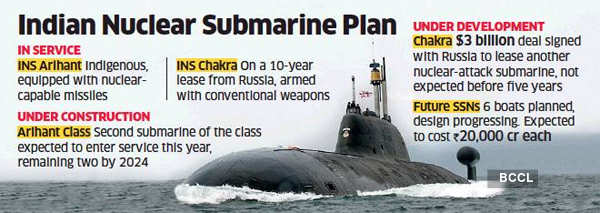
    Sources said the second of the Arihant class — the slightly bigger and better-armed INS Arighat — is expected to be commissioned this year, adding teeth to India’s nuclear deterrence. Two follow-on boats after that are likely to enter service before 2024.

    This would leave SBC with adequate space and resources to commence building the next generation of nuclear-attack submarines. While the Arihant project took over two decades to fructify, the next generation submarines are likely to progress at half the given time as adequate experience is now available, both in terms of design and construction of nuclear submarines.

    As reported by ET, work on the submarine project gained pace last year with a defence public sector unit working on a special metal alloy for the hull and testing of a scale model as part of the design process. The plan to build six nuclear-powered attack submarines (SSNs) kicked off in 2015 when the NDA government gave a go ahead to a long-pending project for the Indian Navy.

    India and Russia have also signed a $3 billion deal to lease an advanced nuclear attack submarine that will be fitted with indigenous communication systems and sensors. This submarine will fill in the gap and will be used for crew training before the indigenous boats are pressed into service.

    Nuclear attack submarines — powered by a nuclear reactor but armed with conventional weapons — will give India a significant strike and area denial capability in the region. These vessels can remain underwater for months, making them almost impossible to detect and are a big deterrence for enemy vessels. The US Navy operates over 55 nuclear attack submarines. China has at least 10 in service and is rapidly expanding the fleet, including deployments in the Indian Ocean and several port calls to neighbouring nations.

    The project will enter India to a select league of five nations that have such a capability. The last country to enter this club was China in 1974 with its Han class boats. Details are not known but a new, more powerful nuclear reactor is being designed for the programme as well by the Bhabha Atomic Research Centre. The INS Arihant and Chakra (on lease from Russia) are the two nuclear-powered submarines currently in service with the navy.

    View 31 Comments on this Story


    (You can now subscribe to our Economic Times WhatsApp channel)

    (Catch all the Business News, Breaking News, Budget 2024 Events and Latest News Updates on The Economic Times.)

    Subscribe to The Economic Times Prime and read the ET ePaper online.

    ...more
    NEXT STORY
    Advertorial

    The Compounding Impact of Cardiometabolic Factors: What It Means for Your Heart

    Synopsis

    Cardiovascular disease, a leading global cause of death, is worsened by risk factors like hypertension, hyperlipidemia, and diabetes. These factors often coexist, compounding their effects and leading to severe health scenarios. Weight management and lifestyle changes are key to mitigating these risks, emphasizing the need for a comprehensive and individualized healthcare approach.

    1200x900_C (1)ET Spotlight
    Cardiometabolic risks and their impact
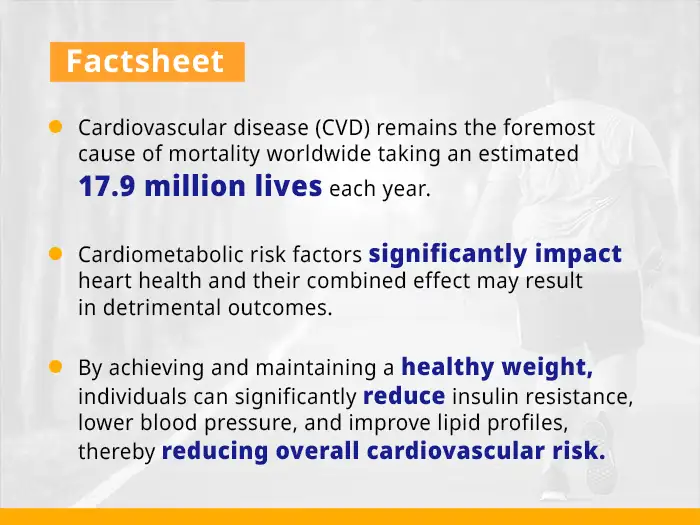
    Cardiovascular disease (CVD) is the foremost cause of mortality worldwide, taking an estimated 17.9 million lives each year.1 The development of CVD is influenced by various risk factors that often coexist and contribute synergistically to the progression of cardiovascular disease.2 These may include hypertension (high blood pressure), hyperlipidemia (elevated cholesterol levels), and diabetes mellitus.3,4

    Hypertension strains the heart by increasing the pressure against which it must pump blood, leading to arterial damage. Hyperlipidemia, characterised by high levels of low-density lipoprotein (LDL) cholesterol and triglycerides, results in plaque buildup in the arteries, narrowing them and restricting blood flow. This can lead to atherosclerosis, resulting in adverse cardiac events. Diabetes, with its chronic high blood glucose levels, accelerates the process of arterial damage and increases the likelihood of heart disease.5

    These risk factors do not act in isolation. Their combined presence compounds their individual effects, presenting a cascade of adverse health outcomes and creating a more complex and challenging health scenario.4
    Dr Tiny Nair1 1
    ET Spotlight

    Dr. Tiny Nair, MD, DM, FACC, FRCP, Head, Dept of cardiology,, PRS Hospital, Trivandrum 695002, Kerala, IN

    Link between weight and cardiometabolic risk factors
    The relationship between weight and cardiometabolic risk factors is bidirectional; while excess weight exacerbates these conditions, the presence of these risk factors can further contribute to weight gain.6

    Growfast
    • 1
    • 2
    • 3
    • 4
    • 5
    • 6
    • 7
    • 8
    • 9
    • 10
    • 11
    • 12
    Obesity can cause insulin resistance, making it harder for the body to control blood sugar and increasing the risk of Type 2 diabetes. The fat tissue releases fatty acids, raises inflammation markers, and lowers levels of a protein that helps improve insulin sensitivity. Extra fat, especially around the belly, also leads to higher blood pressure and unhealthy cholesterol levels, which are key parts of metabolic syndrome.6,7
    wod-logo.
    ET Spotlight
    Addressing the combined risks and moving forward
    Managing the combined effects of cardiometabolic risk factors requires a comprehensive approach. This involves modifying underlying risk factors and addressing each parameter individually while also considering their interactions.8 Effective management typically includes lifestyle modifications such as adopting a balanced diet, engaging in regular physical activity, and, where appropriate, using medications to control blood pressure, cholesterol levels, and blood glucose.6

    Losing weight can help lower inflammation and improve health, whether it's through diet, exercise, medication, or surgery. Maintaining a healthy weight can reduce insulin resistance, lower blood pressure, and improve cholesterol levels, which lowers the risk of heart disease. Since managing these factors can be challenging, it's important to get personalised advice from healthcare professionals.
    NOVO Factsheet_700x525_Article 11 (2)
    ET Spotlight
    Conclusion
    The combined effect of cardiometabolic risk factors on heart health underscores the importance of a comprehensive management approach. By addressing individual conditions and their interactions, particularly through weight management, patients can mitigate the risks and improve their cardiovascular health. Regular medical consultation is key to navigating the complexities of cardiometabolic health and achieving optimal outcomes.

    References:
    1. World Health Organization. Cardiovascular diseases. Available from: Link
    2. Bakhtiyari, M., et al. Sci Rep 12, 1544 (2022).
    3. Mayo Clinic. Metabolic syndrome: Symptoms and causes. Available from: Link on 22 aug 2024.
    4. Johns Hopkins Medicine. Metabolic syndrome. Available from: Link. on 22 aug 2024.
    5. American Heart Association. About metabolic syndrome. Available from: Link on 22 aug 2024.
    6. Repas, T, et al. The Journal of the American Osteopathic Association. 107. S4-11. 10.7556/jaoa.2007.20009.
    7. Piché ME, et al. Circulation Research. 2020;126(11):1477-1500.
    8. Rama Hritani,et al. Obesity Pillars, Volume 7, 2023, 100069.
    Disclaimer: This content is part of a disease awareness initiative by Novo Nordisk. The opinions and views are that of the Healthcare Professionals. The news and editorial staff of ET had no role in the creation of this article nor vouch for or endorse any of its content. While the content on this site provides general information about health and wellbeing. It is not intended as medical advice, nor is it a substitute for professional medical expertise or treatment. If you need help getting your health under control, we recommend speaking to your doctor.
    (This article is generated and published by ET Spotlight team. You can get in touch with them on etspotlight@timesinternet.in)

    Lessons from the Grandmasters

    • 1
    • 2
    • 3
    • 4
    • 5
    • 6
    • 7
    • 8
    • 9
    • 10
    • 11
    • 12
    NEXT STORY

    From exports to tourism, ET Make in India SME Regional Summit in Jaipur to showcase Rajasthan’s strengths

    Synopsis

    With the aim to gather, connect and engage with the thriving small businesses community of Jaipur, the ET Make in India SME Regional Summit is ready for its next destination.

    Speaker reveal Lead_1200x900 (1)ET Online
    The SME Summit will also serve as a platform providing networking opportunities to local small businesses and industry leaders. They can engage, connect, and have an open dialogue.
    The ET Make in India SME Regional Summit will host its next session in Jaipur on November 13. The pink city has established itself as a hub for both traditional and modern businesses and the summit theme of ‘Rajasthan Rising: From tourism to industry,’ will look to explore the opportunities and challenges for the state.

    From its thriving tourism industry to skilled artisans and handicraft-based small businesses, Jaipur has an enabling ecosystem for the MSMEs of the state. As per the Udyam portal, the city has 4,20,078 registered MSMEs. Out of these, 4,07,765 are micro enterprises, 11,156 are small and 1,157 medium enterprises. The district of Jaipur has the highest number of MSMEs in the state.

    The ET Make in India SME Regional Summit is a series of on-ground events held across India to bring together local MSMEs, policymakers, enablers and industry stakeholders. These summits aim to unravel opportunities, tackle challenges, and foster knowledge-sharing and networking to propel the next phase of growth for Indian MSMEs.

    The Jaipur summit will start with a keynote address on the topic- Driving forward: How the Government can be a catalyst for growth.

    This will be followed by a fireside chat with Rakesh Singh, MD & CEO, ABFL (Aditya Birla Finance Limited) where he will talk about ABFL’s vision and support to empower MSMEs. The topic of this chat will be ‘Empowering MSMEs and Driving Financial Inclusion: ABFL’s Vision for India’s Growth.’
    Growfast

      There will be a panel discussion discussing the economic diversity of the state. The topic- Economic diversity: How Rajasthan can change its fortunes. Present at the crux of the discussion will be Kuldeep Singh Chandela, President of Federation of Hospitality and Tourism of Rajasthan (FHTR); Raghushree Poddar, Chairperson, FICCI FLO; P. R. Sharma, Joint Director, Industries & Commerce, Govt. of Rajasthan & CEO, Rajasthan Export Promotion Council; Arvind Gupta, President, Sitapura Gem and Jewellery Industry Association (SGJIA) and K. L. Jain, Rajasthan Chamber of Commerce and Industry.

      The renowned carpet brand based in the city, Jaipur Rugs, will have its Director- Yogesh Chaudhary present at the event to speak on the topic- ‘Art of weaving: Is carpet-making dying or thriving in Jaipur?’

      Following this, a small panel discussion discussing the funding challenge for small businesses will be held where participating members include Pradeep Mehta, Secretary General, CUTS International and Neeta Boochra, Designer, Social Entrepreneur, Motivational Speaker and Celebrity Columnist.

      The event will end with a discussion focussing on the one of foremost challenges of small businesses- funding.

      The SME Summit will also serve as a platform providing networking opportunities to local small businesses and industry leaders. They can engage, connect, and have an open dialogue.

      This endeavour will be conducted under the theme of “Empowering MSMEs: Driving India's Century of Sustainable Growth,” to champion, acknowledge and fortify the Indian MSME sector. It will be conducted by Economictimes.com with Aditya Birla Finance Limited (ABFL) as the presenting partner. Each summit will comprise a diverse array of discussions and sessions, including panel discussions, masterclasses, and showcases of MSME solutions.

      This is the second annual edition of the ET Make in India Regional Summit series. In the inaugural year, the programme covered Ahmedabad, Chennai and Hyderabad. The events saw a stellar turnout. The previous edition’s theme was to enable the rise of future-ready MSMEs that can power the nation’s India@100 dream.

      Click here to register now
      ( Originally published on Nov 07, 2024 )
      The Economic Times

      Stories you might be interested in