🧔♂️ A friendly human checks it before it goes live. More news here
BYD surpasses Tesla in Q3 earnings
BYD, a leading Chinese electric vehicle (EV) manufacturer, surpassed Tesla’s quarterly earnings for the first time.
In the third quarter, BYD posted earnings of over 200 billion yuan (US$28.2 billion), marking a 24% increase from the same quarter last year.
Meanwhile, Tesla’s revenue totaled $25.2 billion during the same period.
Despite BYD’s revenue growth, Tesla outpaced BYD in electric vehicle sales during the quarter.
BYD’s revenue increase corresponded with a rise in EV sales in China. This rise was bolstered by government incentives promoting the transition from petrol to electric or hybrid vehicles.
🔗 Source: BBC
Recommended reads
 GoTo Group’s financial health in 5 charts
 Bukalapak’s financial health in 7 charts
 Indonesia’s govtech ambitions shadowed by concerns
 Weekly funding: DiDi races to top place with $298m deal
 Indonesia’s Sociolla says it hit profitability in Q1 2024
 Breaking down tech and startup perks in Malaysia’s Budget 2025
 Shopee’s YouTube tag team a retort to TikTok-Tokopedia
 Grab COO breaks down ‘triple pivot’ strategy for profit
 10 tech and startup companies hiring actively in Asia this week
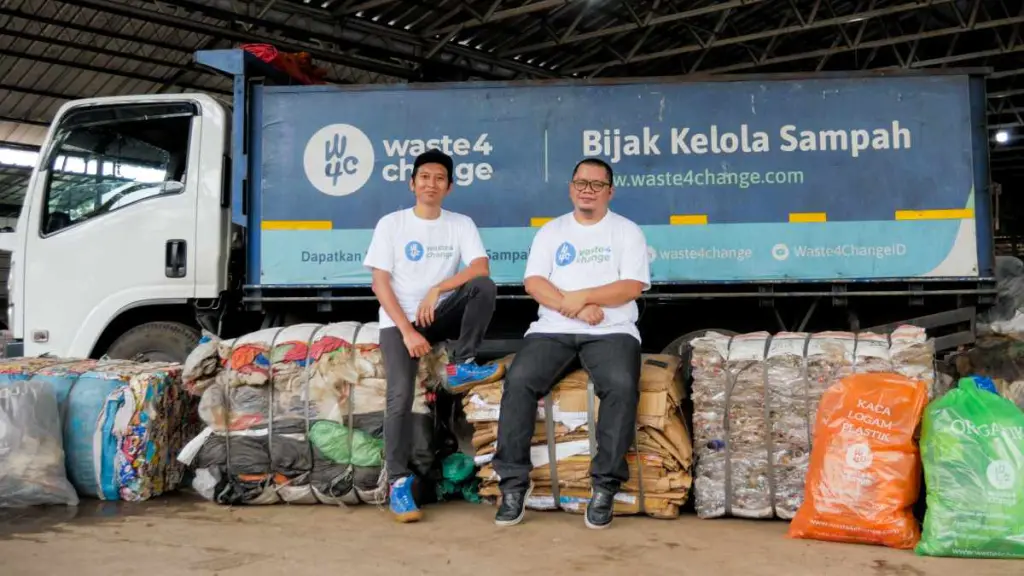
 Waste4Change to offer up to 20% stake in push for expansion





Share, tag us, and land on our Wall of ❤️!




Sign up for the Daily Newsletter, sent exclusively to our premium subscribers. We break down the big and messy topics of Asia’s tech and startup community. Get the newsletter in your inbox everyday with a premium subscription.
Hello reader,
Shopping isn’t how I like to spend my time when traveling, but I know that makes me in the minority.
Any of my Vietnamese friends who make the short trip to Singapore, for example, almost invariably come back laden with bags from designer outlets. To each their own, but shops are pretty much the same anywhere, in my opinion.
While I can afford to ignore travel shopping trends (at least while I’m single), retailers can’t.
That’s why Singaporean brands are flocking to market their wares on Xiaohongshu, an increasingly popular Chinese social media platform. Read today’s featured story to find out more about the Instagram of China.
Today we look at:
- Scroll, then shop till you drop
- Chickin Indonesia hatches US$20 million of funding
- Other newsy highlights such as Vietnamese fashion ecommerce brand Coolmate securing funding and OpenAI reportedly teaming up with chipmakers.
Premium summary
Pic for the gram, Chinese style

Image credit: Timmy Loen
Xiaohongshu is known as the Instagram of China, and Singaporean retail brands are betting that success on the social media platform will help translate to more sales.
Chinese tourists and Chinese nationals in Singapore use the app, but mastering the platform requires a different approach for brands.
- Reel impact: Xiaohongshu – or “little red book” – has some 300 million monthly active users and features user-generated content on fashion, beauty, lifestyle, and travel. Digital marketing agency Prizm Group has seen a significant uptick in inquiries by Singaporean brands about marketing on Xiaohongshu over the last year, as brands try to tap into the city-state’s biggest group of tourists.
- Trending: One Singaporean retailer using the platform is premium truffle snack brand Aroma Truffle, which has enjoyed a 50% spike in Chinese tourists visiting its stores in Singapore since setting up its Xiaohongshu account in June.
- Apples and oranges: While Xiaohongshu has similarities with Instagram, promoting a brand or product on the two platforms is markedly different. Tracking mechanisms such as promo codes, QR codes, or external links on posts are not allowed on the Chinese platform, and influencers must be careful not to exaggerate the quality of the products they’re hawking or risk being shadowbanned.
Read more: SG brands flock to ‘Chinese Instagram’ to woo mainland customers
News spotlight
Which came first, the funding or the egg?

Image credit: Timmy Loen
Agritech firm Chickin Indonesia has secured a series A+ funding round worth US$20 million.
The round was led by Singapore-headquartered VC firm Granite Asia.
- Friends in high places: Other investors participating in the round include East Ventures, Integra Partners, Asian Development Bank, 500 Southeast Asia, and Heracles.
- Chicken run: Chickin Indonesia plans to use the funding to expand its production capacity as well as to enhance its tech solutions.
- Origins: Founded in 2020, the company offers an IoT and data analytics system for broiler chicken production.
See also: Indonesian chicken startup’s 20x revenue jump sees it take off
Your next big break? Yeah, it’s probably here
It’s not just what you know; it’s who you know

What if you could walk into a room filled with the Philippines’ top tech investors and founders – all eager to connect and collaborate on game-changing projects
You could dissect groundbreaking ideas, work a room buzzing with opportunities, gain new perspectives from diverse minds, and solidify connections forged over shared passions.
Do all this and more when you join Founders Meetup Philippines in Manila on November 12. Surround yourself with the people shaping the future of tech in Southeast Asia. Get your complimentary pass today
Quick bytes
1️⃣ Fit for funding
Vietnamese men’s fashion ecommerce brand Coolmate has secured US$6 million in series B funding. The round was led by Vertex Ventures Southeast Asia and India.
2️⃣ Open to collaboration
OpenAI has reportedly teamed up with Broadcom and Taiwan Semiconductor Manufacturing Company to create its first in-house chip for AI systems. The ChatGPT developer is trying to cut its operational expenses by diversifying its chip supply.
3️⃣ Upvotes and shares up
Social media site Reddit saw its stock surge 22% in after-hours trading on Tuesday after the release of favorable third-quarter earnings results. The firm’s market cap has hit US$13.6 billion.
4️⃣ Cash money
Fintech startups in Hong Kong have a new source of funding to call upon thanks to a deal signed between Hong Kong Science and Technology Parks and Saudi Arabia’s Beta Lab. The agreement gives these startups access to a US$300 million investment fund.
Recommended reads
- GoTo Group’s financial health in 5 charts
- Bukalapak’s financial health in 7 charts
- Indonesia’s govtech ambitions shadowed by concerns
- Weekly funding: DiDi races to top place with $298m deal
- Indonesia’s Sociolla says it hit profitability in Q1 2024
- Breaking down tech and startup perks in Malaysia’s Budget 2025
- Shopee’s YouTube tag team a retort to TikTok-Tokopedia
- Grab COO breaks down ‘triple pivot’ strategy for profit
- 10 tech and startup companies hiring actively in Asia this week
- Waste4Change to offer up to 20% stake in push for expansion
Edited by Lorenzo Kyle Subido
(And yes, we’re serious about ethics and transparency. More information here.)
Share, tag us, and land on our Wall of ❤️!


 Jofie Yordan · · 4 min read
SCI Ecommerce growth slows as it readies IPO
IN FOCUS
In today’s newsletter, we look at:
- Singapore-based SCI Ecommerce’s slow growth in 2023
- Temu’s expansion into Vietnam hindered by regulations
Welcome to The Checkout! Delivered every fortnight, this free newsletter breaks down the biggest stories and trends in ecommerce. Get all our content, including The Checkout, by registering for a Tech in Asia account. Alternatively, sign up here if you just want to receive this newsletter.
Hi there,
We’ve seen a growing number of direct-to-consumer brands in recent years, many of which have secured funding from VC firms.
One reason for this is that the path to profitability is easier to measure for the consumer sector, says one investor I spoke with recently.
In the wake of the tech winter, investor strategies have shifted, and consumers remain open to new options, which has led to the rise of consumer brands.
However, this trend hasn’t lifted all boats in the industry. In fact, ecommerce enabler SCI Ecommerce’s growth slowed last year.
According to its financial statements, SCI’s revenue rose by around 12% year on year, much lower than the 2x surge it experienced from 2021 to 2022. Its operating profit also dropped by 39% over the same period.
My colleague, Miguel, dives deeper into SCI’s financials in this week’s Big Story. This slowdown, which comes as the startup is considering to go public in the middle of 2025, may be concerning for investors.
Meanwhile, in the Hot Take, I examine Temu’s latest expansion into Vietnam, which has been hindered by regulatory issues. Vietnam is crucial for Temu’s Southeast Asia strategy, especially as the company has been blocked from entering neighboring Indonesia.
— Jofie
THE BIG STORY
SCI Ecommerce logs slower revenue growth, lower profit for 2023
Image credit: Timmy Loen
THE HOT TAKE
Support quality journalism and content.
You've reached your 2 free content limit for the month. Consuming good content is clearly your thing. Subscribe at just $0.17 per day to get unlimited access.
Already a subscriber? Log in.
Our subscriber community includes professionals from these companies:


- Premium Content It takes our newsroom weeks - if not months - to investigate and produce stories for our premium content. You can’t find them anywhere else.
 Jeffrey Hutton · · 4 min read
Indonesia wants to turn bikes into EVs, but red tape stalls funds
Indonesia wants to convert at least 200,000 conventional two-wheelers into electric vehicles (EV) by 2030. This comes as part of its US$455 million national program to make EVs more affordable.
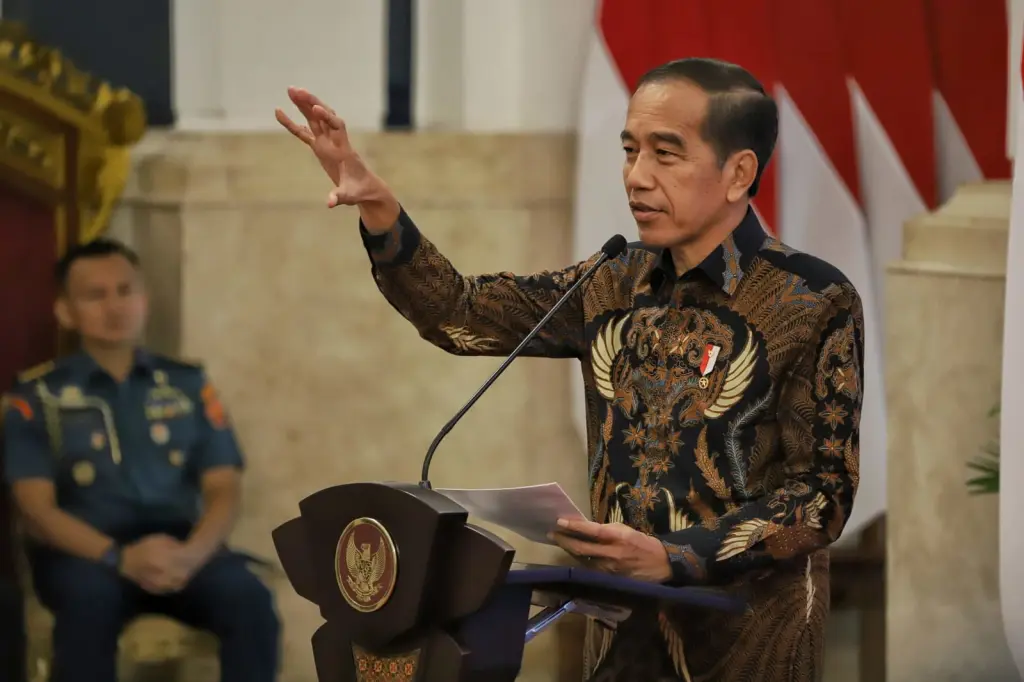
In 2019, the then President Joko Widodo, who left office on October 20 this year, set Indonesia on this ambitious path to build a robust EV industry.
Since then, EV-specialized repair shops have rapidly emerged and are gearing up for this transition.

Putra Darmagita, owner of Electric Wheel in Denpasar, Bali, instructs local high school students on EV conversion/ Photo credit: Amilia Rosa
For 2024, the government is aiming to convert 4,000 units, but the actual number will likely be just over 1,300, according to local media reports.
Bureaucratic hurdles and safety checks have reportedly hindered the process.
A paperwork problem
So far, only two dozen repair shops in Indonesia have secured certification from the Ministry of Energy to convert bikes into EVs, a process that involves replacing engine and fuel systems.
In the long term, Indonesia is hoping to turn some of its 130 million two-wheelers – a figure that is the third largest in the world – into zero-emission vehicles. This transition is expected to lower operating costs, reduce pollution, and avoid adding more vehicles to the country’s already congested streets.
For now, repair shops can get 10 million rupiah (US$640) in subsidies on each vehicle they convert. In all, the government has earmarked 1.4 trillion rupiah (US$90 million) for this program.
“It’s a good government program, but we have paperwork problems,” Heret Frastio, CEO of Jakarta-based repair shop Elders Garage, tells Tech in Asia.
Elders, which opened in 2021 with the hope of capitalizing on Indonesia’s switch to EVs, has so far converted 200 bikes this year, Frastio says.
When the Ministry of Energy launched an app last year to connect vehicle owners with garages that can turn their vehicles into EVs, Elders said it received around 1,200 applications.
See also: Behind the Gojek-Gogoro breakup in Indonesia’s EV push
Most of the initial applicants were owners looking to revive their unused bikes. However, many of these units had expired registrations, which disqualified their owners from receiving the subsidy.
Keeping faith
Support quality journalism and content.
This is a Premium Content. Subscribe to read the full story.
Already a subscriber? Log in.

Be the first to comment!
Comment now