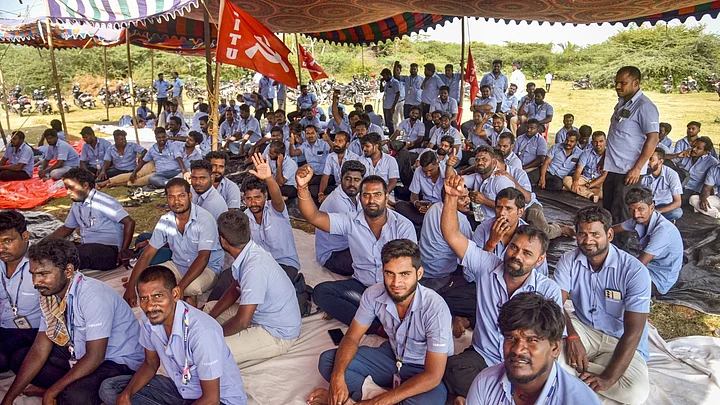
After stretching for over 37 days, the labour strike at Samsung India's plant in Tamil Nadu's Sriperumbudur – one of the bigger labour movements India has witnessed in recent years – came to an end on 15 October.
As the protests by over a thousand workers prolonged, demanding the recognition of their newly formed labour union – the Samsung India Workers Union (SIWU), backed by the CPI(M)-affiliated Centre for Indian Trade Unions (CITU) – a consensus wasn't reached before straining the seven-year political relationship between the ruling MK Stalin-led Dravida Munnetra Kazhagam (DMK) and its close ally CPI(M).
The DMK government's approach to the Samsung protest, which included police action against striking workers and its reluctance to recognise the SIWU, drew criticism from the CPM.
Adding to this were accusations that the ruling party was prioritising corporate interests over the welfare of labourers, undermining the CPM's base of trade unionists and working-class supporters. Moreover, the DMK's attempts to distance itself from the CPM by signalling that the alliance is not imperative for its political strategy further exacerbated tensions.