Nitrogen and Phosphorus
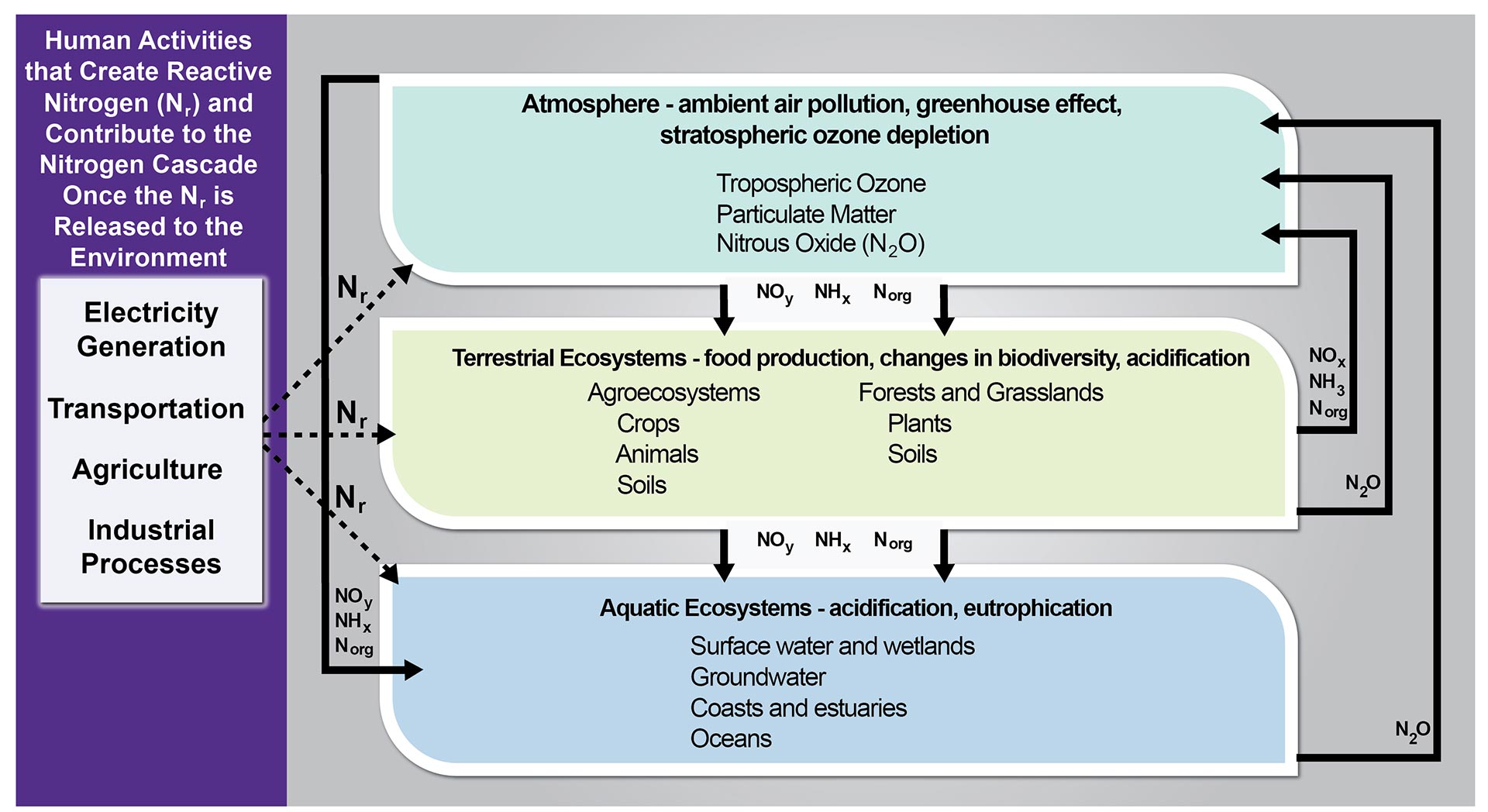
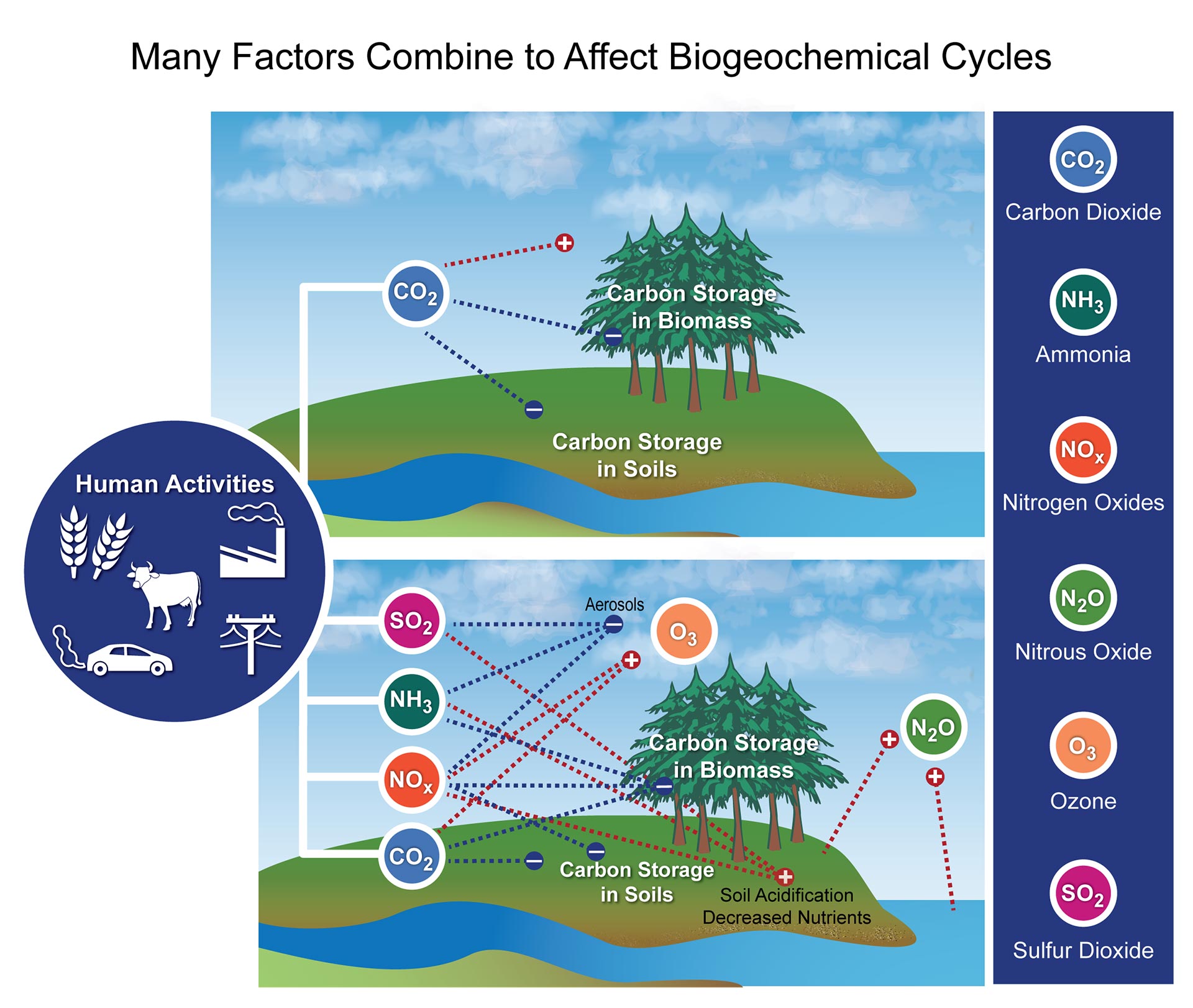
The climate effects of an altered nitrogen cycle are substantial and complex.,,,, Carbon dioxide, methane, and nitrous oxide contribute most of the human-caused increase in climate forcing, and the nitrogen cycle affects atmospheric concentrations of all three gases. Nitrogen cycling processes regulate ozone (O3) concentrations in the troposphere and stratosphere, and produce atmospheric aerosols, all of which have additional direct effects on climate. Excess reactive nitrogen also has multiple indirect effects that simultaneously amplify and mitigate changes in climate. Changes in ozone and organic aerosols are short-lived, whereas changes in carbon dioxide and nitrous oxide have persistent impacts on the atmosphere.
 ©Comstock
The strongest direct effect of an altered nitrogen cycle is through emissions of nitrous oxide (N2O), a long-lived and potent greenhouse gas that is increasing steadily in the atmosphere., Globally, agriculture has accounted for most of the atmospheric rise in N2O., Roughly 60% of agricultural N2O derives from elevated soil emissions resulting from the use of nitrogen fertilizer. Animal waste treatment accounts for about 30%, and the remaining 10% comes from crop-residue burning. The U.S. reflects this global trend: around 75% to 80% of U.S. human-caused N2O emissions are due to agricultural activities, with the majority being emissions from fertilized soil. The remaining 20% is derived from a variety of industrial and energy sectors., While N2O currently accounts for about 6% of human-caused warming, its long lifetime in the atmosphere and rising concentrations will increase N2O-based climate forcing over a 100-year time scale.,,,
Excess reactive nitrogen indirectly exacerbates changes in climate by several mechanisms. Emissions of nitrogen oxides (NOx) increase the production of tropospheric ozone, which is a greenhouse gas. Elevated tropospheric ozone may reduce CO2 uptake by plants and thereby reduce the terrestrial CO2 sink., Nitrogen deposition to ecosystems can also stimulate the release of nitrous oxide and methane and decrease methane uptake by soil microbes.
However, excess reactive nitrogen also mitigates changes in greenhouse gas concentrations and climate through several intersecting pathways. Over short time scales, NOx and ammonia emissions lead to the formation of atmospheric aerosols, which cool the climate by scattering or absorbing incoming radiation and by affecting cloud cover., In addition, the presence of NOx in the lower atmosphere increases the formation of sulfate and organic aerosols. At longer time scales, NOx can increase rates of methane oxidation, thereby reducing the lifetime of this important greenhouse gas.
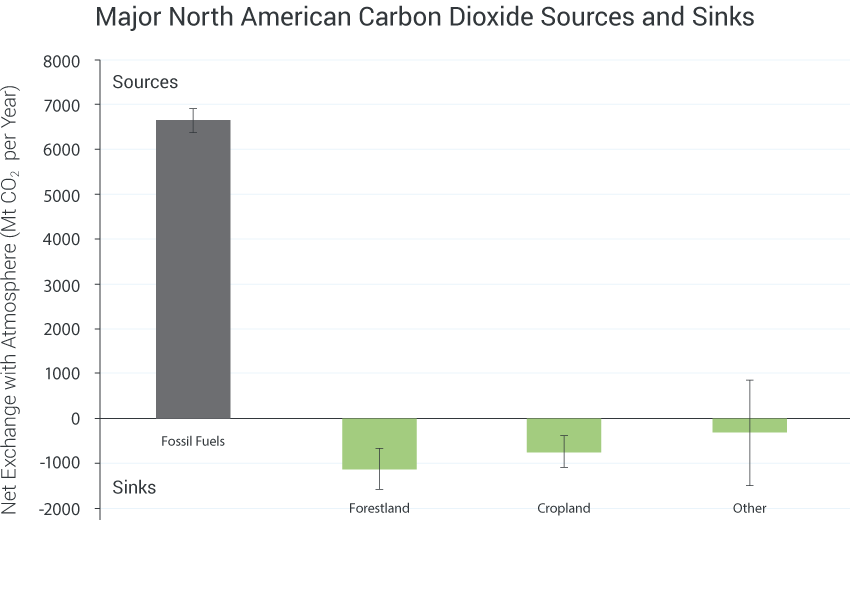
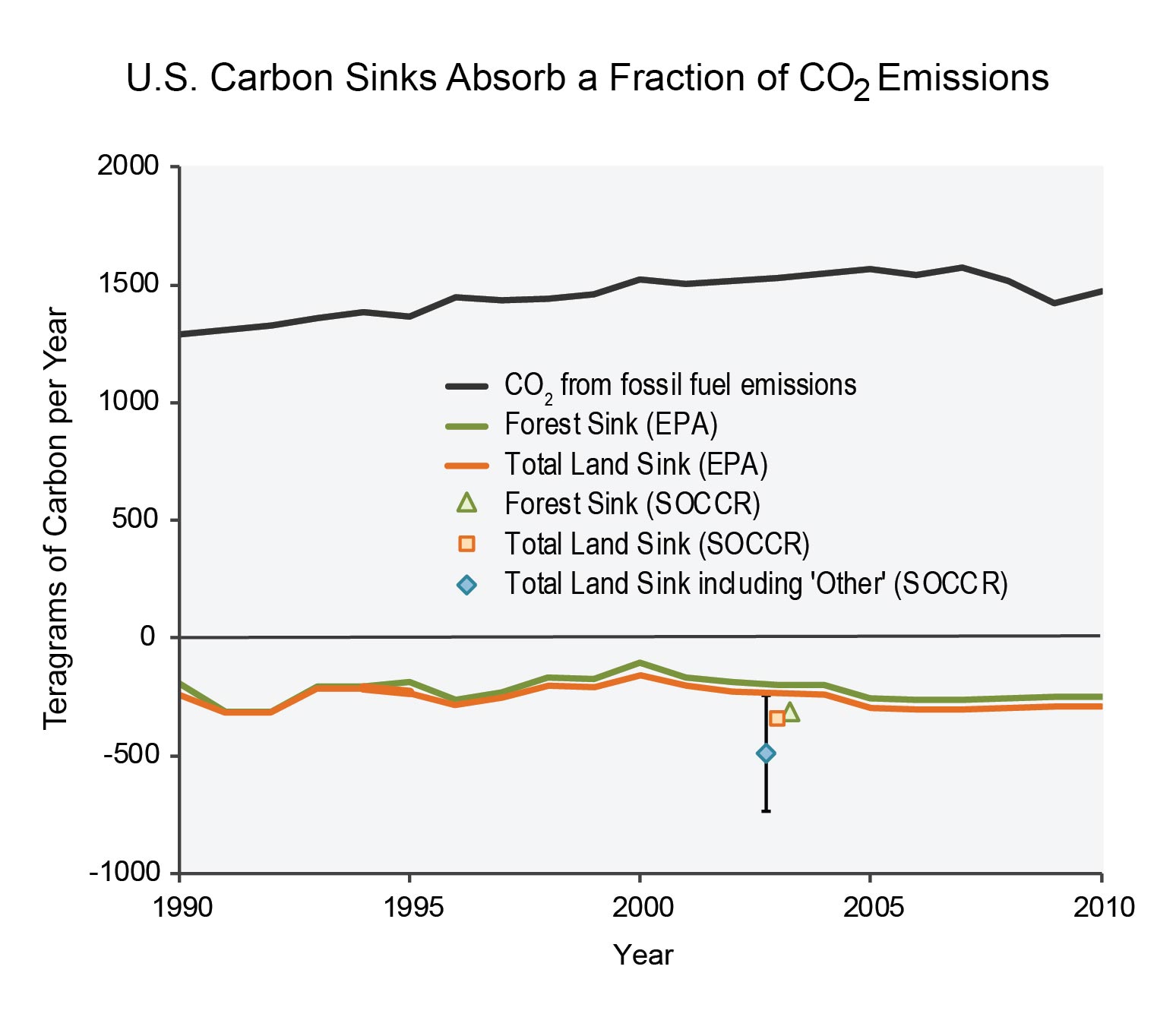
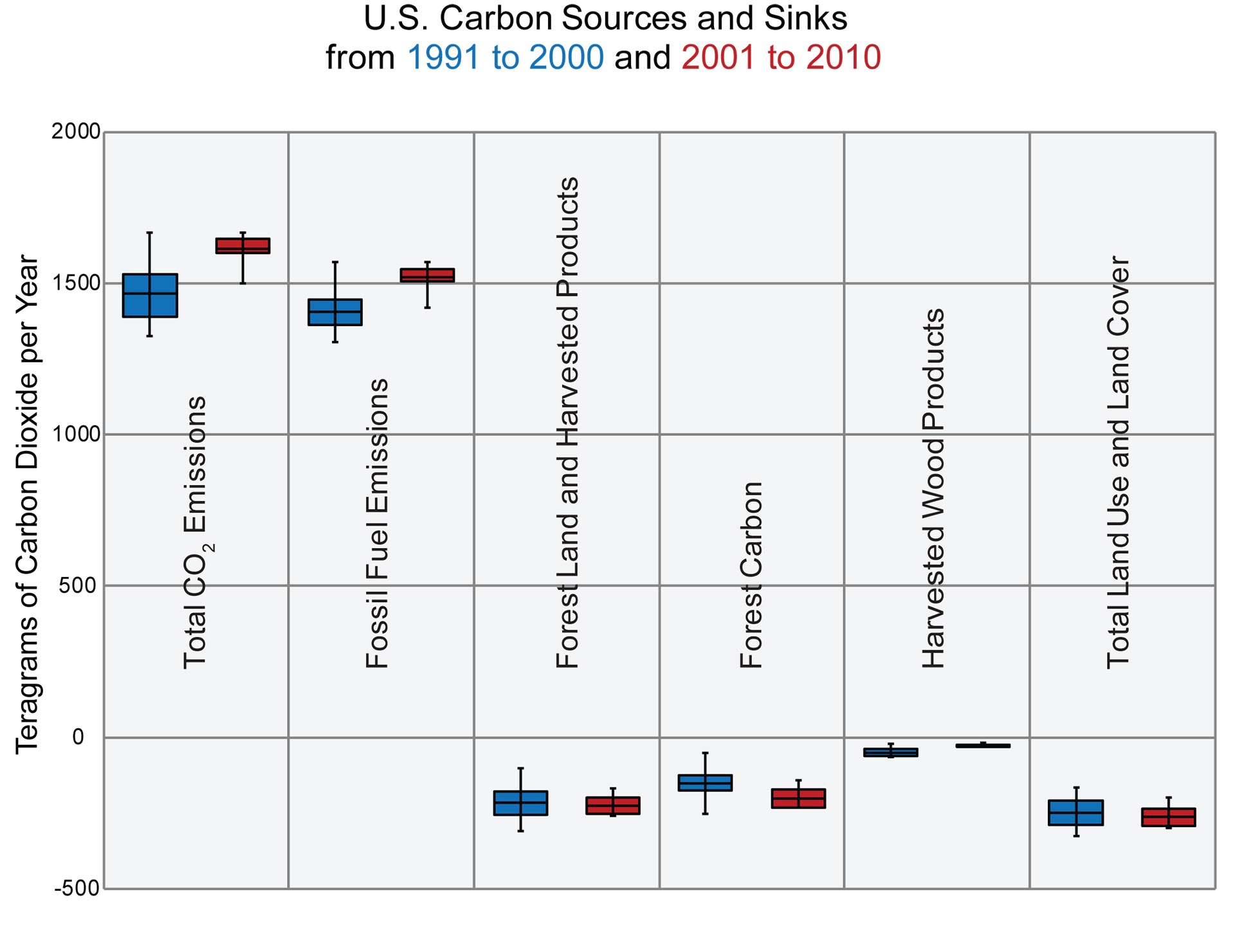
One of the dominant effects of reactive nitrogen on climate stems from how it interacts with ecosystem carbon capture and storage, and thus, the carbon sink. As mentioned previously, addition of reactive nitrogen to natural ecosystems can increase carbon storage as long as other factors are not limiting plant growth, such as water and nutrient availability. Nitrogen deposition from human sources is estimated to contribute to a global net carbon sink in land ecosystems of 917 to 1,830 million metric tons (1,010 to 2,020 million tons) of CO2 per year. These are model-based estimates, as comprehensive, observationally-based estimates at large spatial scales are hindered by the limited number of field experiments. This net land sink represents two components: 1) an increase in vegetation growth as nitrogen limitation is alleviated by human-caused nitrogen deposition, and 2) a contribution from the influence of increased reactive nitrogen availability on decomposition. While the former generally increases with increased reactive nitrogen, the net effect on decomposition in soils is not clear. The net effect on total ecosystem carbon storage was an average of 37 metric tons (41 tons) of carbon stored per metric ton of nitrogen added in forests in the U.S. and Europe.
When all direct and indirect links between reactive nitrogen and climate in the U.S. are added up, a recent estimate suggests a modest reduction in the rate of warming in the near term (next several decades), but a progressive switch to greater net warming over a 100-year timescale., That switch is due to a reduction in nitrogen oxide (NOx) emissions, which provide modest cooling effects, a reduction in the nitrogen-stimulated CO2 storage in forests, and a rising importance of agricultural nitrous oxide emissions. Current policies tend to reinforce this switch. For example, policies that reduce nitrogen oxide and sulfur oxide emissions have large public health benefits, but also reduce the indirect climate mitigation co-benefits by reducing carbon storage and aerosol formation.
Changes in the phosphorus cycle have no direct effects on climate, but phosphorus availability constrains plant and microbial activity in a wide variety of land- and water-based ecosystems., Changes in phosphorus availability due to human activity can therefore have indirect impacts on climate and the emissions of greenhouse gases in a variety of ways. For example, in land-based ecosystems, phosphorus availability can limit both CO2 storage and decomposition, as well as the rate of nitrogen accumulation. In turn, higher nitrogen inputs can alter phosphorus cycling via changes in the production and activity of enzymes that release phosphorus from decaying organic matter,, creating another mechanism by which rising nitrogen inputs can stimulate carbon uptake.