Kawaguchi Locals Speak Out on Concerns about Immigrant Influx
The influx of immigrants to Kawaguchi highlights residents' worries about maintaining law and order as the population diversifies. Readers share their views.
A photo sent to The Sankei Shimbun from a reader based in Kawaguchi, showing the area around Kawaguchi Municipal Medical Center, where an incident involving Kurdish immigrants is alleged to have occurred on July 4, 2023.
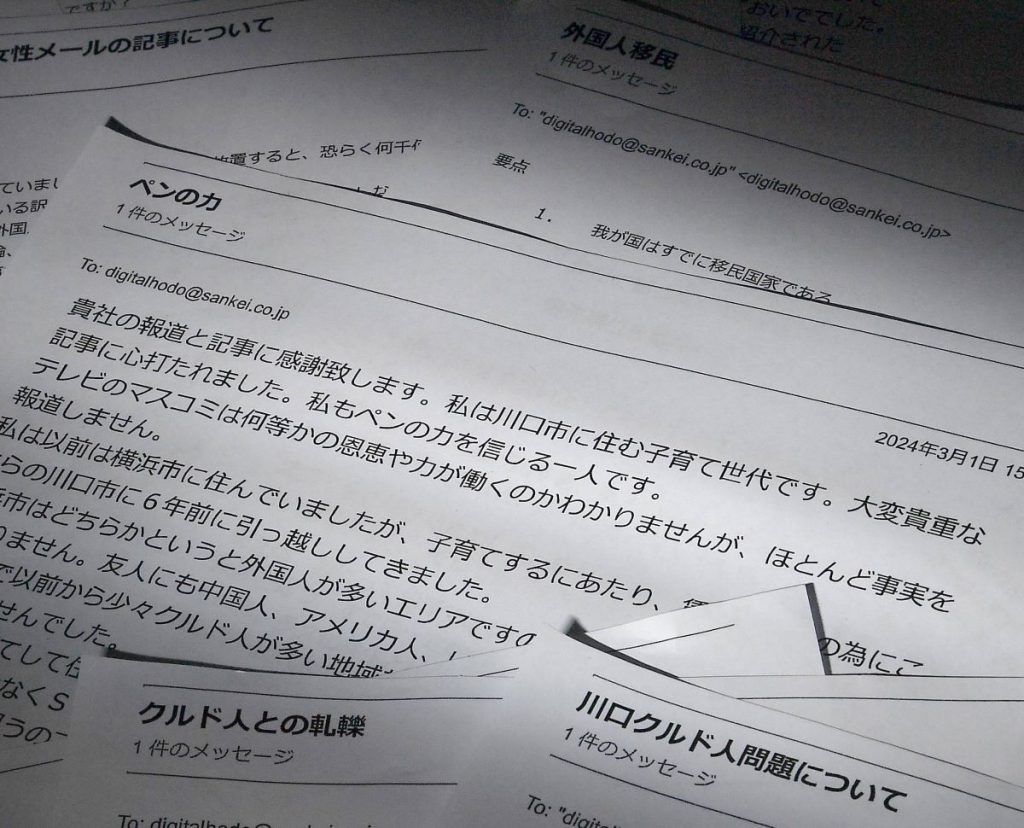
Friction between some groups of immigrants, and locals in Kawaguchi City, Saitama Prefecture, has come to the fore. After soliciting readers' opinions, The Sankei Shimbun has been inundated with letters, emails, and phone calls. Approximately 40% were from Saitama Prefecture residents, some 70% of whom live in Kawaguchi.
"The central and local governments aren't doing anything," one reader complained. Another reader said, "I'm not sure I can continue living in Kawaguchi." In their complaints, many cited specific acts allegedly committed by groups of Kurdish immigrants, indicating the urgency of the issue for residents. Politicians who dismiss all of these complaints by invoking diversity run the risk of furthering societal division.
No Way Out
One person who contacted us was a woman in her 60s who has lived in Kawaguchi for 20 years. "All of a sudden, the number of Kurds living in the area seems to have increased," she noted. She wrote candidly about garbage-strewn streets, abusive treatment of parks, and a nighttime experience at a convenience store. Despite contacting the police, there has been no improvement. "They won't even patrol the area," she lamented.
In addition, she explained her fears and the difficult circumstances she faces: "I have a grandchild. Is it really safe to keep living here? Honestly, I had no idea I would be dealing with these anxieties at my age. People say I should move, but I'm a pensioner with no money. Who would pay for it? The mayor?"
She added, "All we want to do is get on with our lives. I hope the voices of Kawaguchi citizens will be heard and stir the city and country into action!"
A 40-year-old male resident said gangs of young Kurds have been driving souped-up cars down the wrong side of one-way streets.
"Kurds often claim that 'only some' of them do these kinds of things," he says. "But at this point, we can no longer pretend this is limited to just a few troublemakers. I hope we can return to a safe and secure community as soon as possible."
Kawaguchi has a considerable foreign population. "We're more accustomed to foreigners than anywhere else in Japan," one 55-year-old male resident pointed out. "But the difference between Kurds and other foreigners," he said, "is that they're not afraid of the police. They don't care about the law or the police and move in groups."
He worried that "if somebody doesn't do something, this city will become completely lawless. Someone, please help us."
Nevertheless, he accepted, "There are probably many diligent, hardworking Kurdish people. I'm sure they are helping us on certain jobs Japanese people don't really do." On the other hand, he asked that Kurds who do not obey the law "leave Japan immediately." As he explained, "This is neither hate speech nor discrimination. For us Japanese, this is a reasonable reaction and a reasonable proposal."
Media Misses the Mark
One woman in her 50s, born and raised in Kawaguchi City, is raising her children there. "The way the Kurds act and behave frightens me," she confessed. "We, the citizens of Kawaguchi, are worried about whether we can continue to live here. I wish people would stop using all this talk about 'being fair' for their agenda."
"There are already thousands of them living in the area," said one 67-year-old man from Saitama. He continued, "What's more, it seems that some of them reside here illegally." Furthermore, he was concerned that "The government is rapidly increasing the number of 'immigrants.'"
A 56-year-old man from Saitama wrote, "The government and media preach 'coexistence' with foreigners. They always talk about not discriminating against foreigners. I am outraged at the government's lack of response to this issue."
Year Three of the Invasion of Ukraine: What Lessons for China?
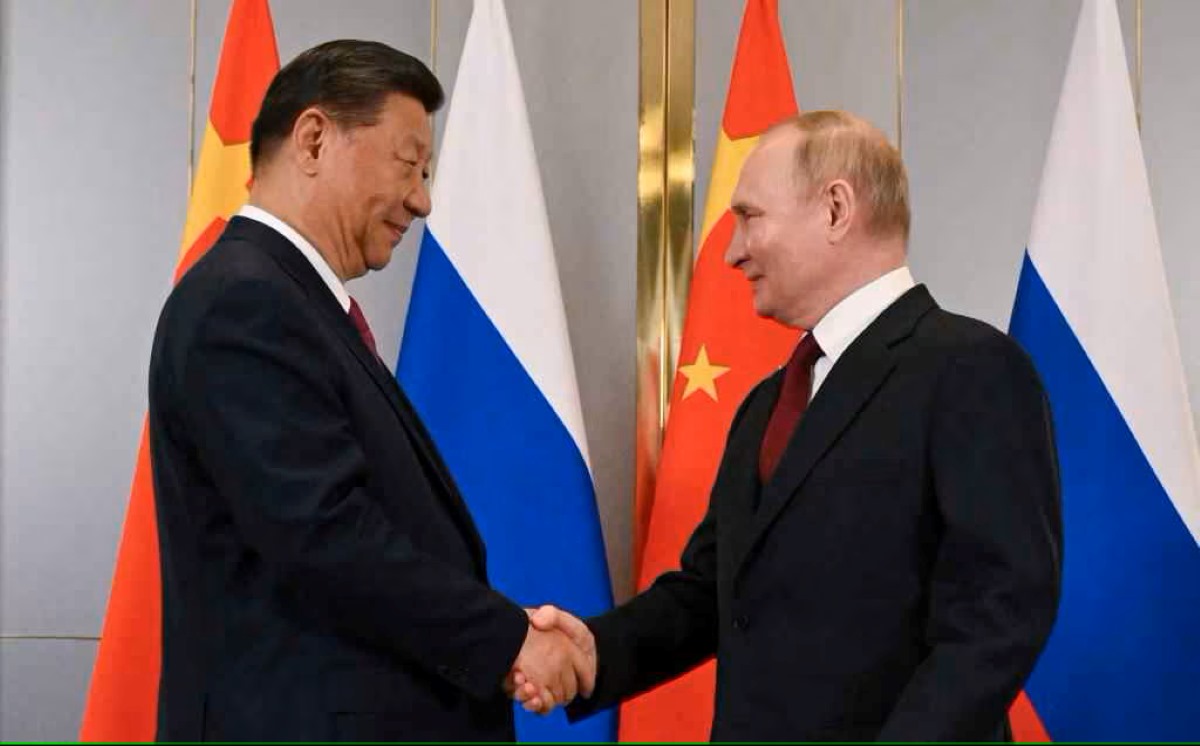
Xi Jinping has steadily maintained his "no limits" friendship with Vladimir Putin, but there are plenty of risks for China in Russia's war against Ukraine.
Until the armed forces of Ukraine launched their lightning foray into Russian territory in early August, many observers had concluded that Kyiv's prospects for maintaining control of much of its national territory were bleak. Close to half a million invading Russian troops were continuing to inexorably press forward along the more than 1,000km-long (620-mile) front line like a plague of locusts.
Calls for negotiations to end the war in Ukraine, even if the resulting "peace" means conceding considerable territory to Russia have become deafening in some quarters. That includes certain US politicians.
Any lasting peace would have to be worked out by the two belligerents, the sovereign nations of Ukraine and Russia. But Russian President Vladimir Putin has repeatedly declared that Ukraine is not a "real country."
On one occasion he even produced a 17th century map made by a cartographer for France's King Louis XIV (1643-1715) to emphasize his point. (I wonder how many times the map of Europe has changed since the days of the Sun King.)
Moreover, Putin elaborates in his infamous 5,000-word essay "On the Historical Unity of Russians and Ukrainians." Published on the Kremlin's official website in July 2021, Putin uses it to elaborate on his assertion that Ukrainians and Russians are "one people"
Now, the Russian leadership's position is that Ukraine is nothing but a "fake country." Furthermore, the self-professed Ukrainians are merely psychologically mixed-up Russians who need to be taught a lesson about their own history. As such, any peace treaty signed between Moscow and Kyiv is likely to be worth considerably less than an antique map. Putin will consider the concessions he receives as merely a down payment.
China's position on the Ukraine conflict can be characterized as ambivalent at best. Russia invaded a few short weeks after President Xi Jinping met Putin at the Beijing Winter Olympics. That was in early February 2022. It is also where the two proclaimed a "no limits" partnership between their two countries.
Although it has never explicitly endorsed the invasion, Beijing has adamantly refused to condemn it or even call it an "invasion." Moreover, it has expressed an understanding of Russia's position.
Foreign Minister Wang Yi, for example, declared sympathy for "Russia's legitimate concerns." Instead, China blamed the war on the United States and NATO. They "forced Putin" to launch his "special military operation" to protect Russia's own security.
China is well known for denouncing critics of its horrendous human rights record for interfering in its domestic affairs. But another pillar of Chinese foreign policy is respecting the territorial integrity of nations. How then is it able to defend Russia's actions? Through sophistry, it pins the blame for all the atrocities committed by the Russian invaders on the West.
You see, Beijing argues, by expanding the defensive alliance of NATO to countries that had once been part of the Russian and then Soviet empires, it backed Russia into a corner.
That is a dead giveaway that Beijing is obsessed with the spheres of influence model of international relations. In that model, major powers control large swaths of the map and smaller nations near them do as they are told.
Like Putin, Xi Jinping also has a self-serving fondness for old maps of dubious origin. He is especially fond of those that portray the South China Sea and East China Sea in a manner that he can use to back up Beijing's extensive territorial claims. In fact, for its own "security" Beijing would very much like to see East Asia become its very own sphere of influence. According to that scenario, it would push the United States out and a docile Japan would become resigned to its fate.
In short, nationalists in both China and Russia see eye to eye.
Jude Blanchette is a well-known China specialist currently serving as Freeman Chair in China Studies at the Center for Strategic and International Studies (CSIS). He has an interesting article in the current issue of Foreign Affairs This Week. It is entitled "China Is in Denial About the War in Ukraine: Why Chinese Thinkers Underestimate the Costs of Complicity in Russia's Aggression."
Blanchette traces the change in attitude of international relations experts at prominent Chinese universities and think tanks from when Russian forces first entered Ukraine. At first, there was considerable consternation about collateral damage China might suffer. "Chinese scholars consistently concluded that Russia's invasion would drive a major realignment of the international order."
In a way that was a validation of Xi's theory of a "new era" for the global order with "profound changes not seen in century." Xi sees that as leading to a shattering of US dominance. Many opinionmakers in China saw the invasion as ushering in this new era. However, the shambolic early days of the invasion might have given some second thoughts.
China particularly worried about the sanctions slapped on Russia, especially its expulsion from the SWIFT system. Those sanctions were imposed for facilitating transactions between banks across national borders.
Beijing has repeatedly condemned the sanctions. It worried that China could become the target for similar treatment in the event of a Taiwan invasion. There were even fears that a protracted war in Ukraine could short circuit the globalization process that is essential for the Chinese economy.
These days, however, Chinese opinion is much more sanguine. Russia has managed to evade many of the sanctions. Moreover, the Russian economy is booming and Russia's military-industrial complex has been reinvigorated. So much so, in fact, that some economists argue that stopping the war would result in the immediate collapse of the Russian economy.
China has played a role in keeping Putin's war machine humming. Despite proclaiming its neutrality, China has done everything it can to assist Russia. That includes furnishing dual-use and borderline military items that can be used in the conflict.
It has gotten to the point that in July, NATO members issued a joint declaration labeling China a "decisive enabler" of Russia's war against Ukraine. However, Xi apparently has concluded that alienating trade partners is a price worth paying to help his soul brother Putin.
Economic Problems for Putin
However, Beijing's high stakes bet may still come a cropper. Footage of Ukrainian tanks zipping through the Russian countryside does not make strongman Putin look all that strong.
And the Russian central bank admits that Russian businesses are being locked out of billions of dollars thanks to payment issues at foreign banks. Even countries that continued to do business as usual with Russia are starting to balk at not being able to be paid.
Russia's labor reserves and production capacities are practically exhausted. And the economy has overheated to the extent that the result could be stagflation and a deep recession in 2025. That certainly will not boost Putin's popularity.
Blanchette writes, "After watching two years of war in Ukraine, however, many have concluded that the West has no stomach for conflict and will grow tired of supporting democracies facing an invading force if the economic costs are high."
He believes that if the Chinese conclude that Russia's gamble paid off and they doubt Western resolve "it suggests that the Taiwan Strait—and the world at large—may be heading in a still more dangerous direction."
Author: John Carroll John Carroll is a Kyoto-based freelance writer and JAPAN Forward contributor. He is currently writing a book on the religious traditions and superstitions of Japan's ancient capital. And watch JAPAN Forward for his upcoming series on the CCP's United Front.
China Contradicts Its Own Fake News by Fishing Off Sanriku
In a classic CCP playbook, China spreads fake news to hurt Japan's economy while its fishermen enjoy the international fishing grounds just north of Fukushima.
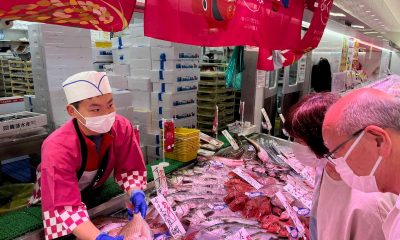
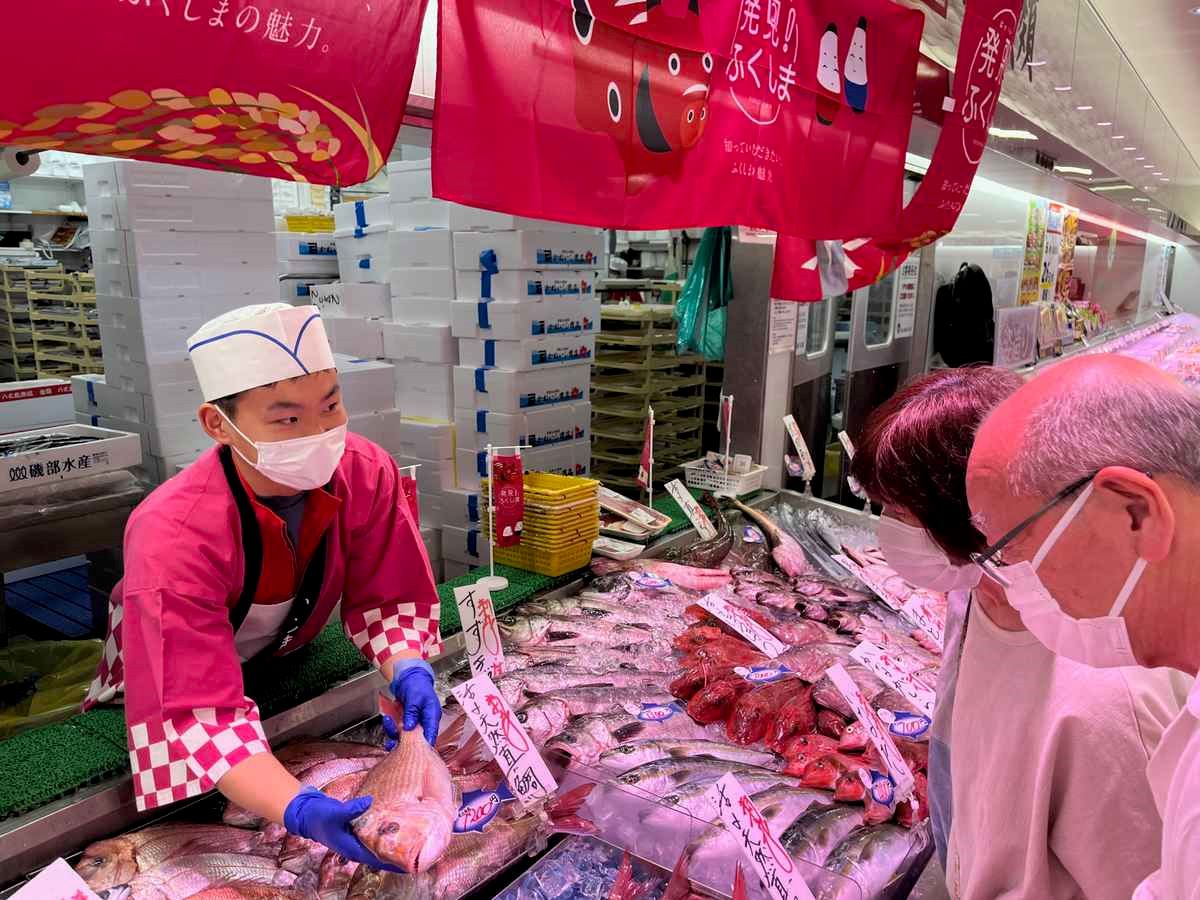
"Discover Fukushima! Fair" held at a Kawaguchi store offered 30 kinds of fresh seafood all lined up. June 7 in Kawaguchi City, Saitama Prefecture)
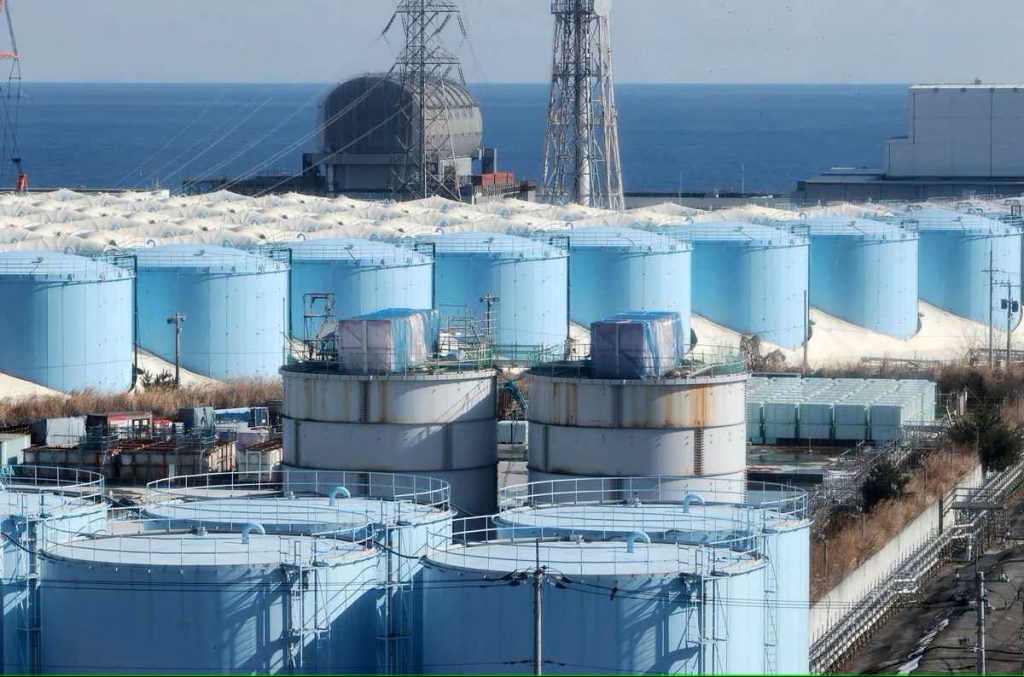
China has seized upon the first anniversary of the release of ALPS treated water from the Fukushima Daiichi nuclear power station to spread misleading claims that this is polluting Asia's seas. It offers no evidence for this damaging allegation.
In fact, the misinformation flies in the face of carefully considered official public information and reports in response to a disaster. That was the Great East Japan Earthquake of 2011.
In August 2003, the authorities began releasing processed water from the Fukushima site after treating it through the ALPS system. The environment agency concluded that the water was clean and safe. Indeed, they found any radiation was "below the lower limit of detection for all samples."
The fisheries agency has also done numerous tests on sea creatures from the region. It found that they are healthy and fit to eat. However, this has not stopped China from implying that radiation has somehow crept into the food chain.
Such stories deserve to be challenged. Rather than providing helpful guidance on what is safe to eat, the Chinese stories form part of a concerted effort to harm Japan's economy and undermine trust in the Japanese government.
At the same time, China is also seeking to undermine the reputation of a much-respected international body. That is the International Atomic Energy Agency (IAEA).
The scientific evidence gathered by the IAEA and other organizations has reached a clear conclusion. There is no risk to the health of humans as a result of the Fukushima discharge program.
Japan's government has pledged that monitoring of the discharged water will continue "with a high level of objectivity, transparency, and reliability." The aim of these safeguards is to prevent an adverse impact on Japan's reputation. However, little can be done to erase the smears, which are deliberately put online by Chinese agents and then repeated by unscrupulous websites and social media channels.
Within China itself, the online narrative is entirely controlled by the government. However, China is able to exploit the principle of free speech in other places to give readers the impression that its scientists have legitimate concerns. In fact, the goal of the propaganda is clear: hit out at all democratic governments and institutions that challenge the Chinese Communist Party. Some of the mud may stick.
Russia is also fond of flooding the internet with fake news. It is not surprising that agents from two autocratic states work in lockstep. Moscow imposed a ban on seafood imports from Japan in 2023, under pressure from China.
Xi Jinping has not wavered in his support for Russia's leader Vladimir Putin. The ongoing war in Ukraine has led to most democratic countries shunning Russia and imposing sanctions. Yet trade between China and Russia is increasing.
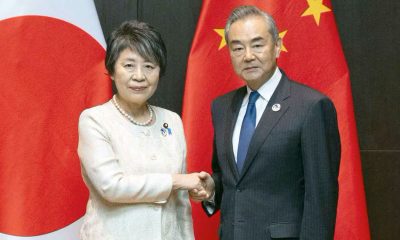
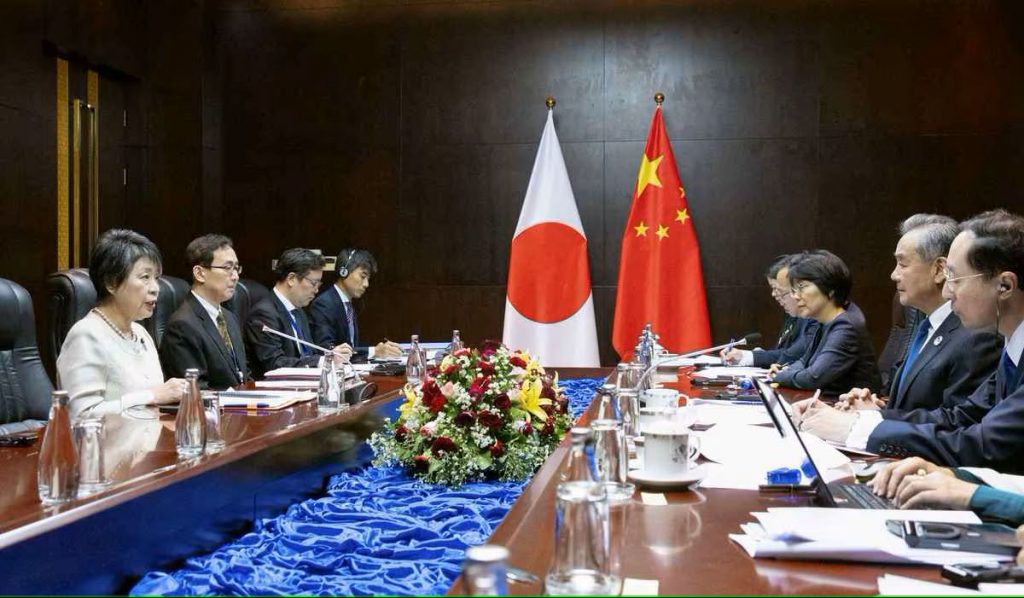
Foreign Minister Kamikawa, calling for the immediate lifting of restrictions on imports of Japanese food products, met with Chinese Foreign Minister Wang Yi on July 26, in Vientiane, Laos (Photo provided by the Ministry of Foreign Affairs)
Official Complaints
The Japanese Ministry of Foreign Affairs has lodged official complaints about the seafood ban with both Russia and China. Prime Minister Fumio Kishida has raised the issue at meetings of the World Trade Organization (WTO).
The Chinese claim that they will send "experts" to engage in a dialogue to try to find a resolution. This is disingenuous. No Chinese scientist would risk challenging the party line on any topic, especially one crucial to foreign relations.
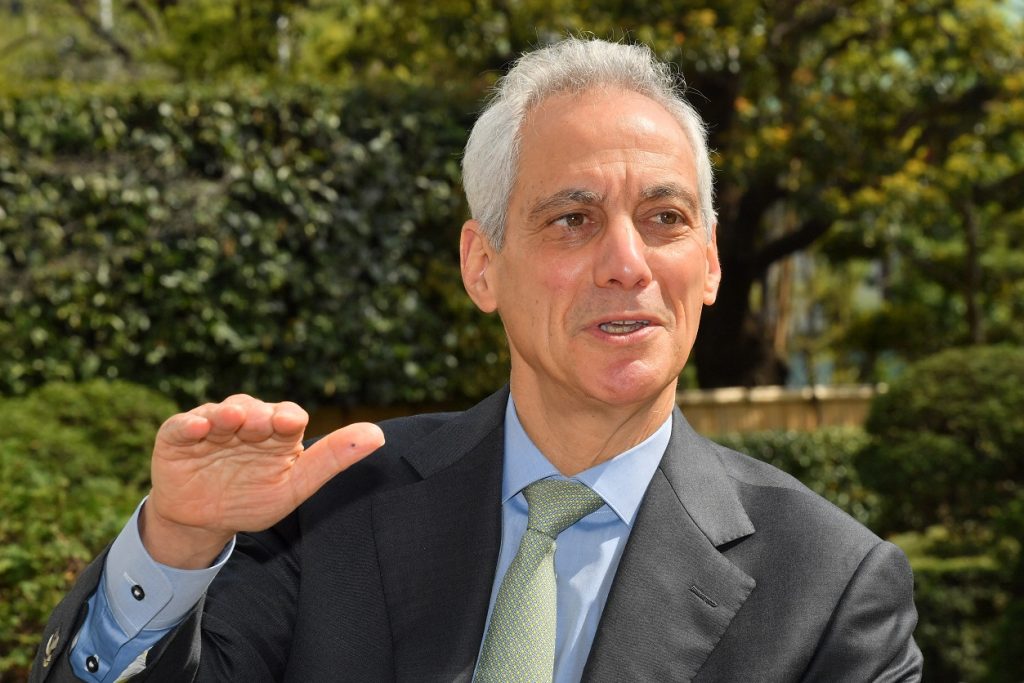
The clash over Fukushima has also become a forum for great-power rivalry between China and the United States. America's ambassador to Japan, Rahm Emanuel is a strident supporter of Japan's fishermen. He even appeared on camera, eating shellfish from Northeast Japan. In addition, he has encouraged people to enjoy more scallops.
Ambassador Emanuel is well aware of China's use of disinformation. He is also a critic of what he calls China's "persistent and pernicious strategy of coercion." Mr Emanuel has even gone so far as to say that China is engaged in an "economic war" with Japan. If this is the case, it explains why the embargo on marine products has been weaponized.
China cannot expect to fight an economic war without adverse consequences. Seafood traders in Hong Kong have watched with dismay as a lucrative line of business with Japan has dried up.
Furthermore, scallops, which used to be exported from Japan to China for shelling, are now being processed in Thailand, Vietnam, and other countries.
Meanwhile, Chinese fishermen continue to operate in international fishing grounds off Japan such as near the coast of Sanriku (just north of Fukushima). However, the items the Chinese bring ashore are not deemed a health risk. Instead, they are openly on sale in Chinese shops and markets.
Only Japan-branded goods from the same fishing grounds are banned in China. That fact shows how irrational and politically motivated the allegations about nuclear-contaminated water are.
Unfortunately, misleading stories have a habit of spreading around the world. Website users should therefore carefully consider the motivations of the authors of articles before deciding what to believe.
Mr Bartlett is the Diplomatic Correspondent for JAPAN Forward and a Research Associate at the SOAS China Institute. Read his other articles and essays.






























You must be logged in to post a comment Login