





In the 20th century, several generations of CHamoru children were punished in schools for speaking their native language.
Whether a complete sentence or a single word, the punishment could range from a fine of one’s lunch money, a slap on one’s legs or hands, or even having to wear a sign that indicated one’s stupidity, such as a dunce cap.
Today, many of us may not be too familiar with things like castor oil or cod fish liver oil, but CHamoru children were sometimes forced to drink it as a punishment for speaking their native language.
In some schools, before World War II and after, teachers or principals who were particularly aggressive in doing their part to eradicate the CHamoru language, would organize CHamoru students into “English Clubs.”
In these clubs, students would promote the supremacy of English both in terms of practicing it with each other and celebrating it, but also patrolling the hallways of their schools, sometimes wearing sashes that indicated their linguistic allegiance, seeking to catch and report their classmates who dared to utter CHamoru on playgrounds or in bathrooms.
These stories of language suppression are well-known and well-documented, almost every CHamoru family has them to some extent. The most dramatic impact of these experiences were not immediate, but rather delayed and felt not within the generation that experienced the oppression directly, but rather the generation that followed.
The language suppression policies that were started by the U.S. Navy prior to World War II and later continued by the Government of Guam around 1970, did not deter many CHamorus directly from speaking their native language.
It did not change their opinions and attitudes about speaking and using CHamoru with their parents and to their peers, who all could already speak CHamoru as well.
CHamorus navigated these oppressive policies and stopped speaking CHamoru in schools, but then continued to use the language elsewhere, in their homes, at church, at the ranch with others who could speak CHamoru. The language persisted, as CHamorus resisted the argument that they should not speak the language that they were born into.
The impact of these policies, however, was most tragically felt on the generations that followed.
The negative experiences that students had experienced with CHamoru, the negative associations that they were forced to make, and the many changes that were taking place around them in the 20th century, all congealed together to give the impression that while CHamoru was an important part of their lives, it had little to no life, beyond them, no future moving ahead in time. It was not something to pass on to the next generation, to teach them, to use with them.
As a result, even though the language was not silenced, life had been deprived of it for the future.
Those who had been students in classrooms where one of the lessons was that the CHamoru language was useless and didn’t belong in this world, had learned those lessons, and in increasing numbers made decisions to not speak CHamoru to their children and grandchildren based on them.
But all of this is the past, the history that informs our present. Where do we go from here, knowing how these experiences have impacted and continue to negatively affect the transmission of our language?
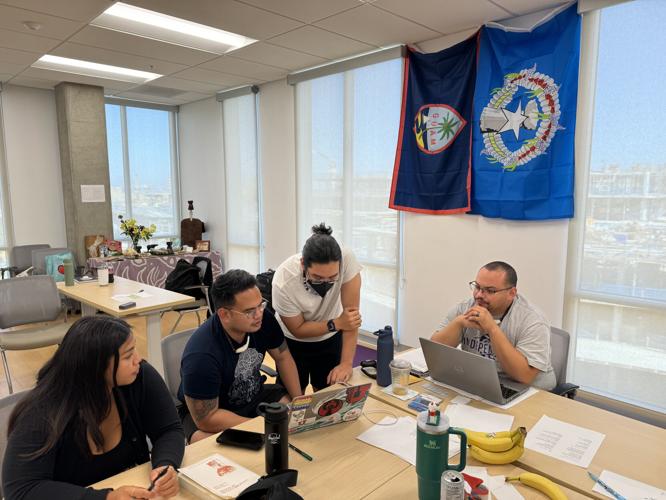
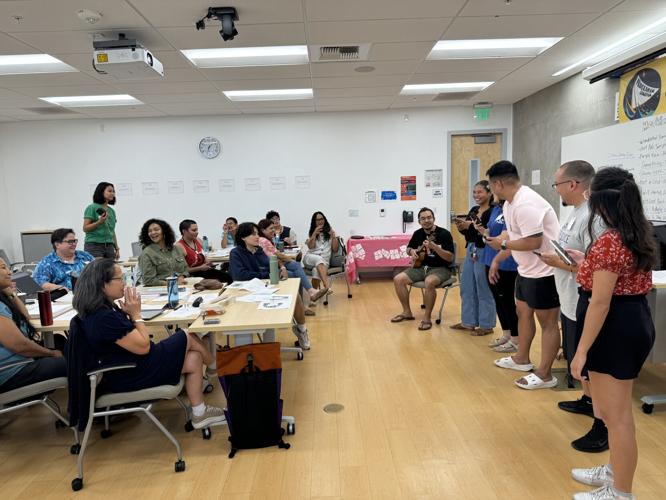
In the Prugråman Sinipok, the two-week language and cultural immersion program that I finished teaching last month, we decided to incorporate this history and language learning activities around it into the curriculum.
In next week’s column, we’ll learn more about this.















































































(0) comments
Welcome to the discussion.
Log In