

Is it time to hit the brakes on healthcare research?
Is it time to hit the brakes on healthcare research?
A response to systemic bias and waste


Let's talk about why TTE is calling for a halt on all medical research and what it could mean for the future of healthcare.
Thirty years ago, Doug Altman wrote about the Scandal of Medical Research in the BMJ, “We need less research, better research, and research done for the right reasons.” Altman considered vast sums of money were wasted on seriously flawed research that suffered from “inappropriate designs, unrepresentative samples, small samples, incorrect methods of analysis, and faulty interpretation.”
In the intervening years, we have seen the opposite. As we write this, PubMed contains 36,914,967 indexed results. In 1994, just under 440,000 articles were indexed, growing to 1,775,913 million in 2022. A paltry 26 million articles have been indexed in the intervening thirty years.
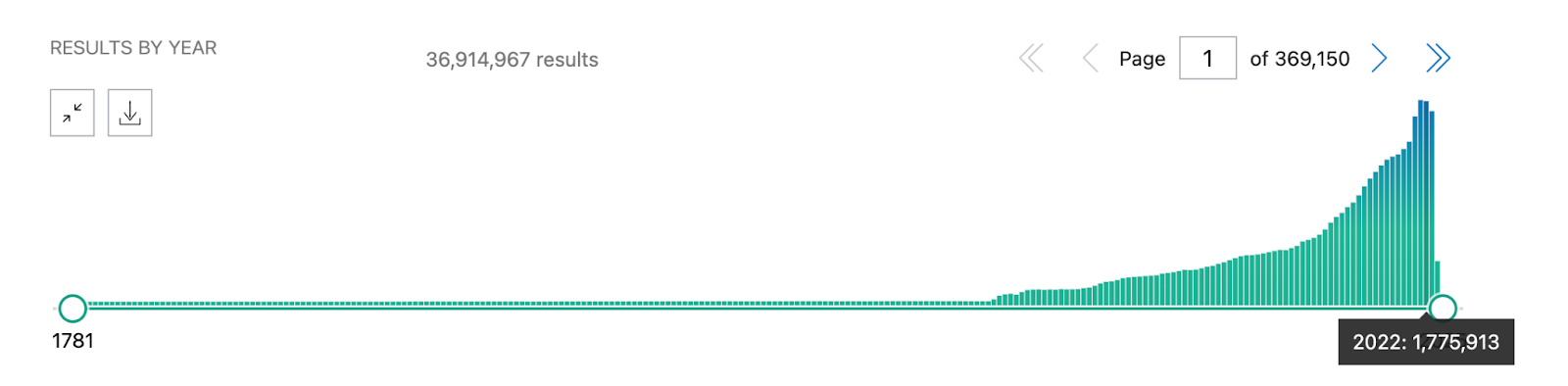
Over the past three decades, we've witnessed a concerning decline in the quality of research. It's become increasingly apparent that something needs to be done to address this issue and ensure we're producing high-quality, accurate evidence that we can rely on.
In 2005, John Ioannidis pointed out research is more likely to be false than true, particularly when effect sizes are small when too many outcomes are presented and when there are financial interests. Moreover, “with increasing bias, the chances that a research finding is true diminish considerably”.
In 2009, a Lancet series on avoidable waste in research estimated that 85% of research spending currently goes to waste.
In 2015, Dame Sally Davies, the chief medical officer of the time, recognised that the ongoing debate over statins – had dented the public’s faith. She wrote, “There seems to be a view that doctors over-medicate so it is difficult to trust them, and that clinical scientists are all beset by conflicts of interest from industry funding and are therefore untrustworthy too”.
In 2017, we wrote the EBM manifesto to respond to systematic bias, wastage, error, and fraud in research underpinning patient care. It was clear that the quality of research was deteriorating, with too many poorly designed and executed studies.
Furthermore, there have been substantial problems with the publication of research. Drug companies often hide evidence to the detriment of patient care. In 2004, an analysis of 102 randomised trials found that half of the efficacy and two-thirds of the harm outcomes were incompletely reported. The effects of reporting biases are widespread; they overestimate the benefits and underestimate the safety of treatments. For example, an analysis of 92 Cochrane reviews found that 86% did not include data from the primary harm outcome,
A substantial proportion of trials have ghost authorship, which often goes undisclosed and undermines results. Rofecoxib was withdrawn because of the increased risk of heart attack and stroke associated with its use. The manufacturer withheld information about the drug from doctors and patients for over five years. Legal disclosure revealed that sponsor employees authored the trial manuscripts but often attributed the first authorship to academically affiliated investigators who did not always disclose the financial support. The widespread financial and non-financial conflicts of interest among academic institutions and researchers exacerbate these problems. They are associated with pro-industry conclusions, restrictions on publication and data sharing and “private interests”.
Our antivirals series provided evidence that ghostwritten trials made unsubstantiated statements about the effects of influenza with the help of “authors” who had not seen the data but crafted the relevant WHO guidelines to ensure use and stockpiling at great public expense. Stockpiling at a colossal cost is continuing to this day.
If you're not concerned about the issues discussed so far, you might want to consider the criminal behaviour of the pharmaceutical industry. From 2009 to 2014, the sector faced fines totalling $13 billion for criminal behaviour and civil infringements – behaviour that largely went unnoticed. The three worst offenders were GSK (fine of $3 billion) for marketing Paxil to children and misleading the FDA; Pfizer ( $2.3 billion) for misbranding Bextra with “the intent to defraud or mislead,” and Johnson & Johnson ($2.2 billion) for illegal promotion of prescription drugs.
TTE contends that given the systemic biases within research, we must halt healthcare research to redefine how we develop, produce, and publish it.
In the meantime, while we work out how to deal with systemic waste and fraud, the research funding could be spent on fixing the dire problems within the NHS. This includes reducing the strain on A&E departments, shortening waiting lists, and expediting cancer treatments. Given the numerous issues present in research, it is currently evident that investing in implementation will yield much more significant benefits for health.


Is it time to hit the brakes on healthcare research?
For starters, shut down all research into coronaviruses, influenzaviruses and other respiratory viruses BECAUSE IT IS A DISASTER AREA, as evidenced by the manufactured Covid-19 debacle that has turned the world upside down for the past four years.
In an article published in January 2023, Anthony Fauci and fellow authors David Morens and Jeffrey Taubenberger basically admit influenza and SARS-CoV-2 vaccine products are rubbish, in their article Rethinking next-generation vaccines for coronaviruses, influenzaviruses, and other respiratory viruses.
They say: "As of 2022, after more than 60 years of experience with influenza vaccines, very little improvement in vaccine prevention of infection has been noted. As pointed out decades ago, and still true today, the rates of effectiveness of our best approved influenza vaccines would be inadequate for licensure for most other vaccine-preventable diseases."
Seriously?!?!?!?
Think of all the billions of dollars that has been poured into this research area, experimenting on the population without informed consent, for what result? Worse than useless vaccine products foisted upon the global population and even MANDATED!
It's unbelievable, and also unbelievable that there hasn't been uproar about Fauci and co's paper admitting this scam - why not?!
See more in my recent substack article: "A low risk infection... even in the absence of a vaccine"
So why was there a 'vaccine solution'? https://elizabethhart.substack.com/p/a-low-risk-infection-even-in-the
Rightly or wrongly I like to think that my knowledge of matters medical, such as it is, is unsullied by any medical dogma - the simple reason being that I never went to med. schhol/Uni or whatever.
I developed a deep interest in medical matters from a very young age, having railled against my first (and last) vaccination at about 5 years old. Never again...
I was always struck by the old wivves tale of "don't fall into the water otherwise you'll catch your death of cold/pneumonia and die". Why should this be? Is there a particularly lethal germ hovering above or in all lakes ready to infect the unwary - or is it something else? How come your average GP doesn't succumb to every disease known to man given the number of sick patients seen every day?
The more I think I know the more I realise I don't know and that, together with the above is a long winded way of saying that I don't think anyone else really knows either.
I've digested lots of material - and believe it or not, books, regarding immunology, vaccinology., childhood disease etc. over the years.
One of the best modern books I've read is - "The Beautiful Cure" by Daniel M. Davis, Professor of Immunology at Imperial College (!) London. Sets out the history of the endeavours of many great immunologists concluding with where we are mow in the field of immunology and understanding "disease". The fascinating thing about it is that it is littered with this phrase - "The process behind this isn't fully understood". Which in legalise usually means "you have't got a bloody clue".
Prof. Davis quite rightly heaps praise on scientists like Hench and Kendall re their work discovering cortisol and its benefits, particularly as their work directly benefitted the many peoplle like his young son who needs an inhaler.The really surprising thing to me though is that Prof. Davis praises this miracle of modern medicine - yet seemingly has no interest as to precisely what caused his son's asthma in the first place.
To me, that explains why we are where we are with medical research. There is no big money to be made in conducting hard reasearch into exacly how/why the immune system works. Even worse, is the virtual certainty that many elements of it are Misunderstood - with disastrous consequences. I give you Vioxx, gene therapy - correct the faulty gene and the body will be healed, but no, because the body recognises the new but correct gene as foreign and dangerous-with disastrous consequences, aand last but not least mRNA vaccine therapies whereby it's patently obvious that the genetic engineers had/have no clue as to how the immune system would react to their products.
There should be humility in recognising that the body is so complex that it is beyond any human understanding. There has to be more basic research into immunology and more notice taken of which pharma. products actually work or not and why. This will lead to better medical outcomes.
I've just thought of a new term for that , "Evidenced Based Medicine".