
Jimmie Tramel
Tulsa World Scene Writer
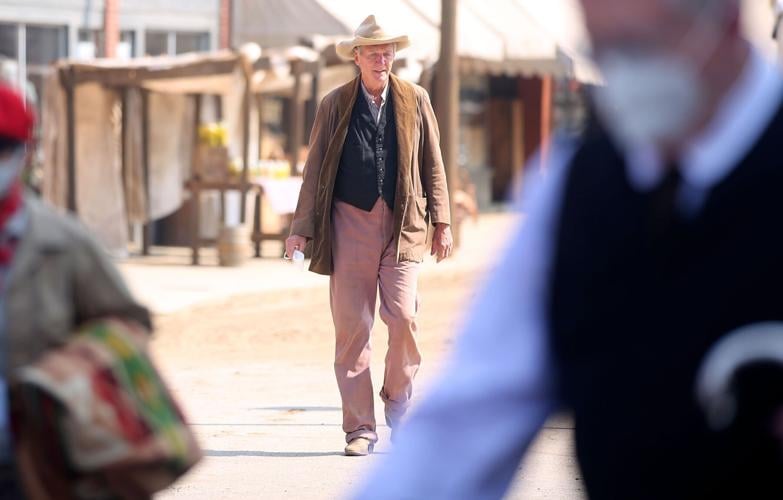
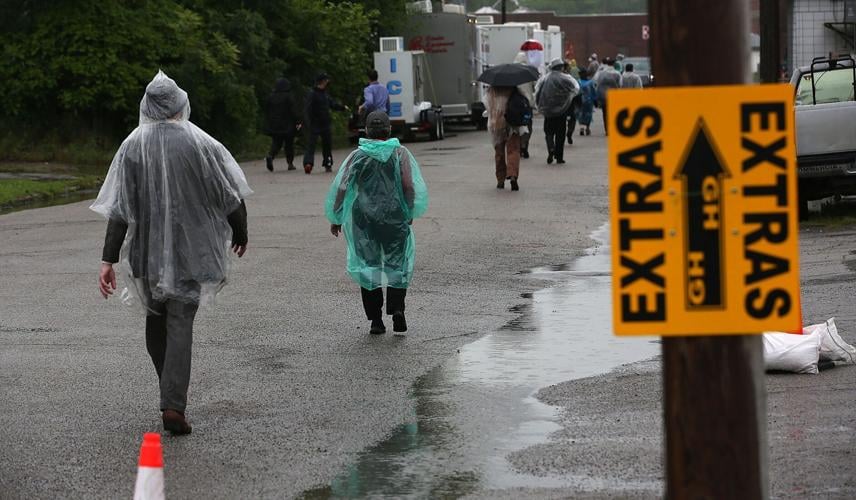
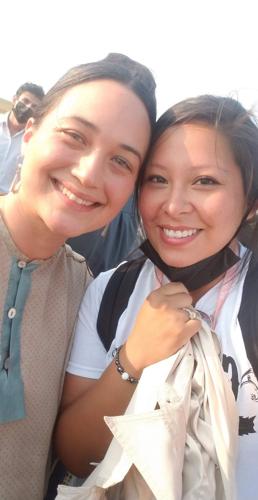
“Killers of the Flower Moon” has star power, but a constellation of extras and background players was enlisted to bring life to the Oklahoma of 100 years ago.
Because Martin Scorsese rightly chose to shoot “Killers of the Flower Moon” on Oklahoma soil, many Oklahomans got a chance to be part of the story.
In some instances, the opportunity led to being something other than just a face in the crowd.

Movie critic Bruce Miller says "Killers of the Flower Moon” is true cinema. It’s art in its highest form that never fails to entertain.
Many who were on the set shared their experiences with the Tulsa World:
• Stephanie Gilbert was cast as a wealthy Osage woman and worked two to three days per week for about four months.
“The most important thing I learned from this amazing opportunity was a whole new respect for the movie industry,” she said, indicating that the experience was unlike what anyone could imagine.
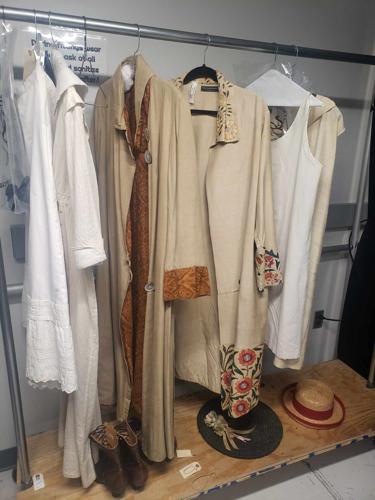
“The work was exhausting, with 15-hour days the norm and the heat nearly unbearable in those early 19th century costumes, most of which were authentic; mine were. The entire production — from headline actors, set builders, makeup, hair, wardrobe, food vendors, cooks, us extras, etc. — were all in this together.”

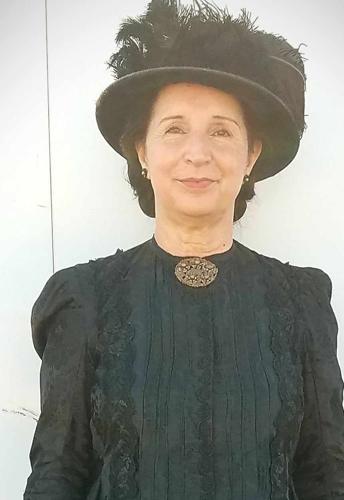
Shown in costume, Stephanie Gilbert was an extra in “Killers of the Flower Moon.”
Gilbert said the production crew took very good care of “us,” making sure the extras were well-fed and hydrated. Cooling stations were available, and breaks were available for rest and snacks.
Worth all that effort? Sure. Gilbert feels honored and blessed to be part of a “fantastic” film.
“Leonardo DiCaprio is really a great guy and seems more down-to-earth than people would think,” she said. “I almost collided with him in a street dance scene. I apologized, and he grinned and said, ‘It’s OK.’ I got to speak with him a couple of other times. Being an extra in this movie is a once in a lifetime experience that I will never forget.”
• Marty Smith’s acting in “Killers of the Flower Moon” included acting like he was a cigarette smoker.
An assistant director asked if anyone in a group of folks smoked cigarettes.
“They were looking for cigarette smokers for scenes in a very cramped underground speakeasy,” Smith said. “I’ve never smoked cigarettes. However, being turned down for an earlier scene, I decided to raise my hand. Suffice to say after smoking three cigarettes for the scenes and trying to resist the urge to cough and dealing with watering eyes, I never volunteered for a smoking scene again.”
Smith inhabited several roles, including train passenger and oil field worker, but he was primarily a rough, drunken cowboy type who spent time in a pool hall, at a street dance, in pedestrian scenes and at the speakeasy.
“In one scene, I was a pool player in a very old pool hall,” Smith said. “The pool hall had a wood floor and was filled with rough-looking cowboy types wearing boots. Being a perfectionist, Martin Scorsese asked everyone in the room to step lightly due to the loud sound of cowboy boots on a wooden floor. When that didn’t work, he then asked for soft rubber pads to be glued to our boot soles. Still unhappy with the noise, he eventually asked that everyone take their boots off. The visual of all of these tough-looking characters walking around in their socks was really amusing.”
• Nikki Burdett was cast to play a middle class “regular” person and took part in several scenes. She called it the best week of her life.
Burdett has a Leo story. She was hiking back from a port-a-potty in a muddy field, rain boots sucking into the ground, and her face was covered in train soot. (She didn’t wash it off because it was just going to get dirty again.) She was laughing with some other extras and was about to take a selfie when another extra informed her that DiCaprio was behind them.
“Partially it was embarrassing, but also I didn’t want him to think I was trying to get a picture of him,” she said.

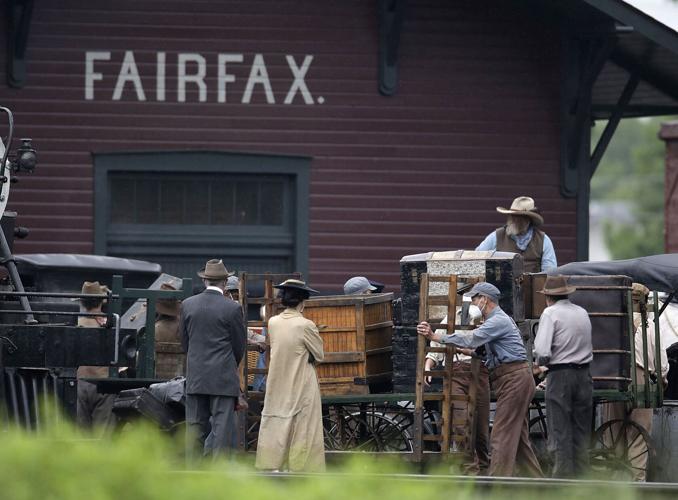
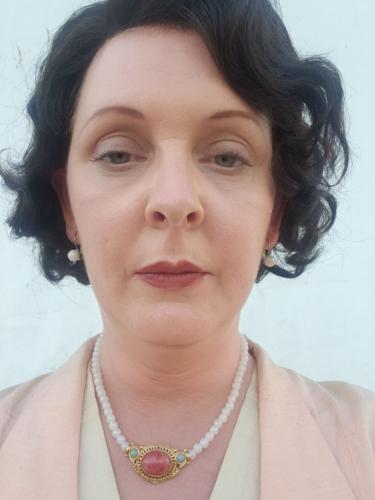
Nikki Burdett (tan coat, black hat) prepares for a scene alongside others on the set of “Killers of the Flower Moon” in Pawhuska on May 24, 2021.
“That poor guy had people hounding him left and right. … The last thing he needed was a goofy woman that should have washed her face sneaking a picture of him in a hot, muddy-ass field. I wouldn’t have known it was him if (the other extra) hadn’t told me.
“I really felt like a kid getting caught with a note in class. I just slipped my phone in my back pocket, shut up and speed-walked off. Not my finest moment. I don’t know if I was more worried about the soot or him thinking I was trying to take a picture, but it was very funny.”
Burdett said what really touched her heart — and was her favorite part of the experience — was the people she encountered.
“I met so many of the tribal elders and heard their stories from first-hand accounts of what the community went through,” she said.
“I have lived here in Oklahoma my whole life, and I have many friends and family from other tribes. I am no stranger to what has happened here in Oklahoma. But it’s totally different when you look into the eyes of these people. It’s gut-wrenching.”
Burdett hopes “Killers of the Flower Moon” opens other people’s eyes about the Osage “Reign of Terror.”
A clip in a trailer for the film shows townspeople glaring at Lily Gladstone’s Mollie Burkhart.
“I was there that day filming,” Burdett said. “We were given special instructions to glare at her, I couldn’t do it. It was easier to glare at Leo. I hope no one noticed.”
• Tamra Lairmore described her experience as surreal. At the end of March 2021, she was called to be an Osage driver. She expected to be in a scene or two and film for a couple of days and go back to “regular” life in Claremore.
“Then, before I knew it, I had about 13 costumes and four wigs and was not only an Osage driver but an Osage tribal member, Mollie’s family member, a princess, a dancer and a stand-in. What I thought would be a couple of days turned into seven months.”
It was also a blood, sweat and tears experience — blood from walking around on wood debris, sweat from the layers of wool clothing in the middle of summer, and tears from story lines and scenes that hit close to home.

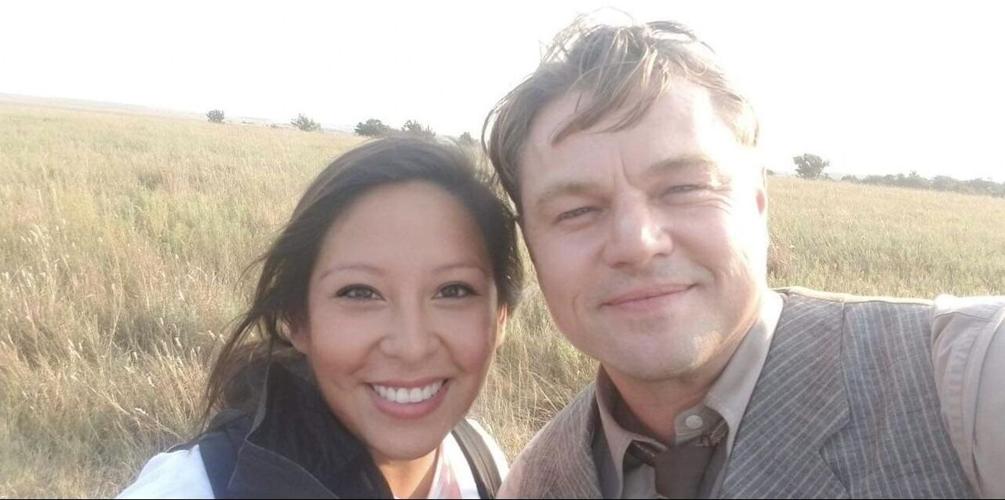
Tamra Lairmore and Leonardo DiCaprio posed for a photograph while working on “Killers of the Flower Moon.”
“It was emotional some days,” she said. “Other days, it was a relaxing ‘hurry up and wait’ kind of day. However, my every-day drives to and from set were full of excitement; I had the job that I actually loved and enjoyed going to.”
When September arrived, Lairmore saw the days on the call sheet that she was given and it hit her that she was in a major film production and it was all coming to an end. On her last day, she cried and hugged friends who were present for the last scene, plus costumers, makeup artists and producers who were still in town.
“And I feel fortunate that I was able to personally thank my sweet friend, Lily Gladstone, and Martin Scorsese, who we call ‘Uncle Marty,’ and Leo for letting me be a part of their production.”
• Bravery Nowlin, who is of Cheyenne and Arapaho descent, was chosen to play “Cowboy” Burkhart, the 2-year-old son of Ernest and Mollie Burkhart. Others youths of varying ages also were selected.
“We had seen something on Facebook saying they were looking for kids who could play half Osage,” Bravery’s mother, Annette Nowlin, said. “Our children, they are all Native American, but they are kind of light-skinned because we have Caucasian in us, as well.”
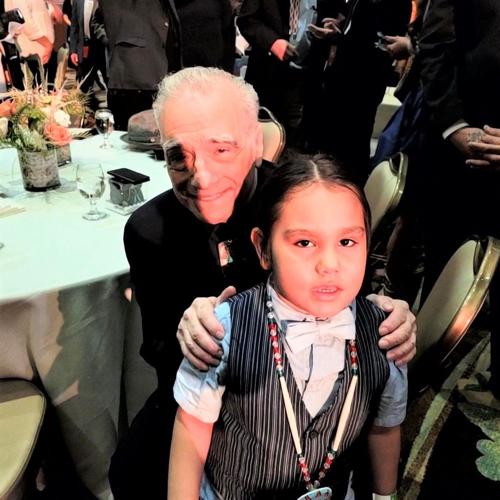
Bravery Nowlin, an Oklahoman who landed a part in “Killers of the Flower Moon,” stands in front of director Martin Scorsese at an event held in conjunction with an Osage Nation screening of the film.
Nowlin sent in pictures of her children and received a call about Bravery. He was offered the part after the family was asked to submit short videos of him doing certain things. Mom says Martin Scorsese loved Bravery’s name and personality.
“Bravery didn’t have to act,” she said. “They always set it up really well to where they just brought him on set and the AD or Leo would come and get him and say, ‘Hey, I’ve got some toys. Do you want to come with me?’ He would be like, ‘Yeah,’ and he would just follow whoever. It wasn’t ever acting to him. He would play or do whatever they needed him to do, or sit there.”
• Norval Kennedy, a background extra, said he experienced the “strangest culture shock” while working on the film.
“I would spend a full day living in the 1920s, surrounded by those sights and sounds,” he explained. “A dusty dirt street carried cars and horses and buggies; telephone wires were strung above a sidewalk; people wore clothing of the day, and the like. The instant I stepped off the closed set to head home, I was back in the 2020s. One moment was downtown Fairfax a hundred years ago; the next moment was downtown Pawhuska today. The transition caught me off guard.“
Kennedy said he was amazed by Scorsese’s willingness to go “physically hands-on” with the movie.
“I watched in awe as this 78-year-old man spent more than a half hour in searing summer heat single-handedly reworking decorations on a large movie prop,” Kennedy said, referring to a flatbed truck decorated as a parade float.
“A few other folks helped him by handling parts and pieces of the prop, but his direct efforts created his vision for the prop. I had to wonder if his mind already saw how the prop would look on screen, skipping past reality, the camera lens and editing.”
• Craig Deerinwater was cast as an Osage man and appears in multiple scenes. He enrolled in Arizona State University’s Film and Media Studies program about three months before he was cast — and then got an education on the set.
“As I was learning of the industry, history and technical aspects of the industry, I was able to ask questions,” he said. “The actors and film crew were very helpful in explaining everything to me.”
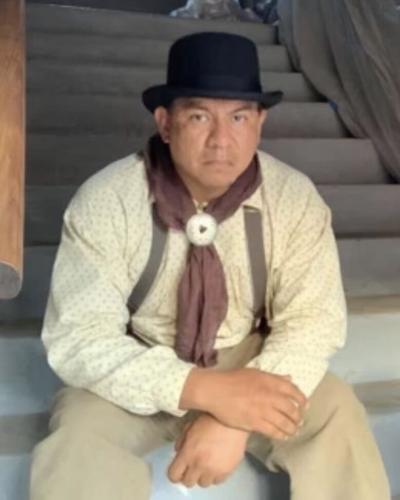
Craig Deerinwater is shown in his “Killers of the Flower Moon” wardrobe.
Because of the A-list actors and director involved with the film, Deerinwater couldn’t help but think he might be part of an Academy Award-winning film.
“Seeing it unfold in front of me daily was very exciting,” he said. “Now there is Oscar buzz about this film.”
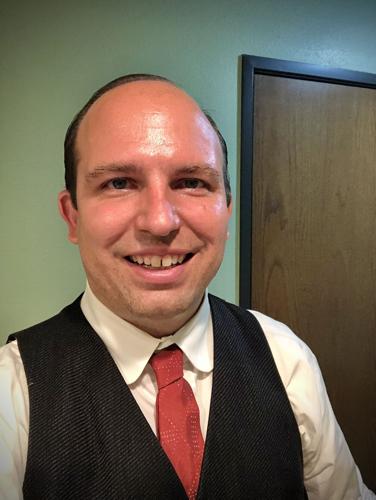
• Ron Hackney’s experiences on “Killers of the Flower Moon” include being a businessman in a three-piece suit and a storekeeper. He wore the same suit for both gigs but accessorized with a dirty apron for one of the roles.
“Everybody had experiences with rain, hot weather, mud and sore feet from wearing dress shoes,” Hackney said.
“I was amazed at how many assistants there were to help with the production. On break one day on the main street in Pawhuska, I noticed another guy cleaning his muddy dress shoes. He had just finished and had them looking brand new when an assistant came up and put dust and dirt back on them! They had a squeeze bulb setup that could put a fog of dust on items. There were costumers, hair/makeup, first aid, mask assistants and people with water always wandering around on the set.”
Hackney was mostly in Pawhuska for filming, but he also went to Drummond Ranch for square dance and wedding scenes. His Drummond Ranch story: “The production assistants would get groups of extras together and give instruction. There were a lot of them roaming around. They said several times, ‘I need to get you a wife.’ One day, I had a wife for about 15 minutes, and another PA swooped in and took her away. I was single for about five minutes until another assistant got me a new wife. I had three different wives one morning. By the afternoon, I had wife number four and she was pushing a baby carriage! You couldn’t get in a rut, because things were changing all the time. It wasn’t glamorous, but it was an interesting experience.”
• John Linhardt, who plays a baggage handler in the film, shot a few scenes on a train platform alongside other baggage handlers. Then came a couple of takes where he was instructed to walk next to the train as it was arriving.
Finally, Linhardt was advised to cut through the crowd toward DiCaprio while giving him a hateful look.
“I was taken by how that was going to happen and then … ‘action!’ So I cut through the crowd and, as I was giving Leo a scornful look, he gave me a solid right-arm shiver. I collected myself and continued walking to finish the scene. We shot that scene twice more, but the first had to be the best because I was so surprised. After the first take, the director just sort of gave me a thumbs up, so I figured I had (done it) successfully.”
Linhardt is excited to see if that sequence shows up in the film.
• Tom Angleton’s first day of filming included a scene where a bunch of folks arrive for the wedding of characters played by DiCaprio and Gladstone.
“The director said, ‘When the cars with the bridesmaids arrive, everyone follow in behind them.’ So when the cars went by, we all followed in behind. The director said, ‘Cut, cut, cut! People listen up. This is a wedding. You know people. Act like you know people. Don’t just walk in like a bunch of goofs.’”
One hot day, about two dozen extras were sitting in the shade when the assistant director said, “I want you and you and you,” and pointed at specific extras.
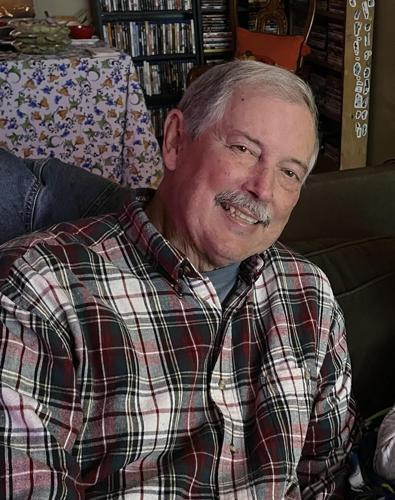
Tom Angleton was an extra in “Killers of the Flower Moon.”
“We all got excited thinking he was wanting us for a scene,” Angleton said. “Then he said, ‘You all go ahead and go to lunch.’”
Dang it. It was not what they were hoping to hear.
Angleton said he and some of the other extras got a kick out of watching the length some extras went to in an attempt to try to get on camera. Those measures included flirting with ADs and cutting in line, according to Angleton.
“The AD would ask for four people to come with him. Eight would go — whatever they could do that they thought might give them an edge to get on camera.”
• Nick Swezey was on set 12 days as an extra and stand-in. He said he played various characters and wore hot, authentic clothing, “some of which was used in the ‘Titanic’ movie.”
Favorite memory from the experience? He was the only extra in a small room with Robert De Niro.
“It was chaos, but I felt like a true movie star, as they gave me props to work with, touched up my hair and makeup, got the haze machine going and had me react to De Niro’s anger,” Swezey said.
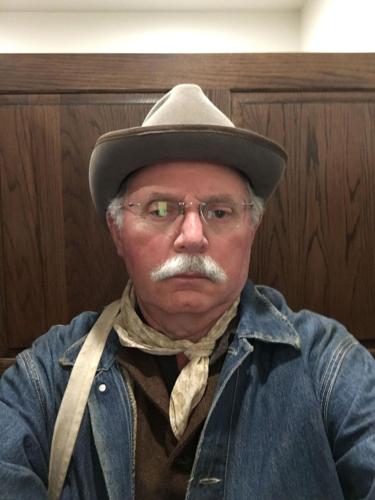
Nick Swezey was among extras in “Killers of the Flower Moon.”
“Another great memory was when I passed a nice, older, white-haired gentleman that said, ‘Hi, how are ya?’ That man was Scorsese, and that made my day. Also, passing Leo for the first time at the train scene was memorable.”
Swezey said he ruined one of the takes in that “complicated” scene.
“We had a moving steam train, tons of extras and cameras, horses, buggies, old cars and very thick mud,” he said. “During the fight sequence, I accidentally blocked Leo from the camera because of all the chaos. I was instructed not to do that again.”
• Phil Grayson agreed to work three days as a spectator in a courthouse scene, but, the night before filming, he got an email saying he was going to be a stand-in for Steve Eastin, who plays Judge Pollock.
Grayson read some of the judge’s lines for a sound check and then got an email from casting saying he had a chance to get his voice in the movie. He read lines into his phone for an audio recording and was chosen to be one of five oil recruiter characters in the film.
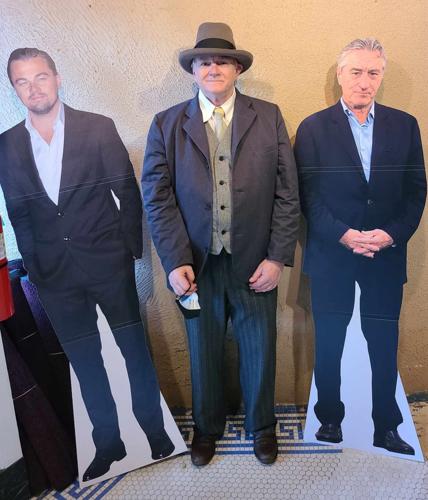
Phil Grayson poses next to stand-up cut-outs of Leonardo DiCaprio and Robert De Niro.
“We performed the voice-over on set in front of the pool hall in Pawhuska on the last day of production, Sept. 15th,” he said.
• Leland Prater was offered the role of the Rex Theater manager following a long casting process. He read for a role (Undertaker Turton) that went to veteran actor Barry Corbin, and another possible role (Scott Mathis) went to country music artist Randy Houser.
“During the process, since I’m Cherokee, I kept pointing out that here was their chance to cast an Indian as a white man for a change,” Prater said. “I’m not sure if it made a difference, really, offering to flip the typical casting history, but you try.”
Prater shared a funny wardrobe story. He was waiting with cast mates Jason Isbell, Jane Collins and Scott Shepherd when a wardrobe worker tried to discreetly inform Prater that the fly on his trousers was open. Prater responded that the trousers had no button or zipper. You didn’t notice that in fitting?
“I told her that I had, but while I own several pretty-old pairs of pants, none of them go back to the 1920s, so I just figured they were made like that,” Prater said.
The wardrobe worker replied, “You’re so cute,” and decided double-sided tape would fix the problem. She also chose to let him handle the task.
After the wardrobe incident, Crocs footwear randomly became a conversation topic.
“The wardrobe lady mentioned Kevin Bacon kept a pair from a project,” Prater said. “It was the only piece he took from set. He hated them ’til he suddenly wore, and loved, a pair. And that day happened to be his birthday, so she pulled out her cellphone, gathered us all together, and shot us singing ‘Happy Birthday’ to him, which she then sent. And shortly he texted back (saying) he loved it. So, that’s my one degree from Kevin Bacon claim — plus the only time I sang with Jason Isbell.”
• Christie Duty was cast as background for several scenes. Her son (Osage kid) and daughter (Osage pedestrian) also took part in the making of the film.
“No matter what we were doing, whether it be the countless COVID tests or standing in line for hair and makeup or being on set and waiting for them to yell, ‘Background — rolling,’ every single moment — no matter how big or small — was full of excitement,” Duty said.
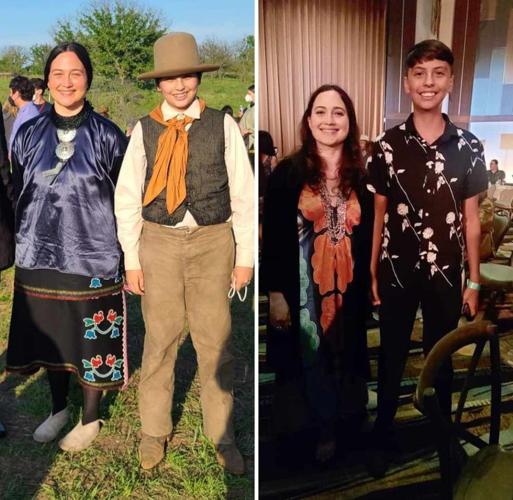
Christie Duty’s son, Brandon Hight, posed with “Killers of the Flower Moon” actors in two photos. At left, he was 14 when the movie was being filmed. At right, he was 16 during a special Osage Nation screening of the film. Lily Gladstone took off her shoes to help show how much he had grown since the movie was filmed.
“Just to be a part of a small group of people who were fortunate to have the opportunity to take part in telling history — a history that was not taught, that was rarely spoken of and that most people never knew existed — is indescribable,” Duty said.
“I am not Osage, but my children are, and this is their people, their story, their history and a part of who they are. I am so grateful that I was able share this experience with them and to see the excitement in their eyes and for them to know what we were actually doing. Absolutely priceless!”
• Steve Davis volunteers at the Oklahoma Railway Museum in Oklahoma City. Aware that the “Killers of the Flower Moon” team had built a track and train depot in Pawhuska to double as a Fairfax depot, Davis figured extras would be needed to play conductors. Armed with photos of himself in conductor gear, he figured he would be cast accordingly. Instead, he was cast as a barber.
Davis also did additional background work. When walking down the street with other extras, he tried to interact with others as a person might do in the 1920s, tipping his hat to women and girls, for instance.
One of the storefronts Davis and the extras walked past was a bakery with cookies and other baked goods.
“So they would send us on a take and we would be walking down a sidewalk, and I would reach through the open door and grab me a cookie out of a display,” he said.
Davis said he did that two or three times. Once he grabbed two cookies and gave one to an extra alongside him.
“The assistant director came over after one of these particular times and he said, ‘So you’re the cookie monster!’”
• Mike Phillips was cast as an “unscrupulous grifter.”
“It was an amazing experience, but due to circumstances — weather and health — I was only able to spend one day on set,” he said.
Phillips said he was there for 15½ hours during his lone day on the set, and he spent another hour and a half driving home. It was 10 p.m. by the time he got home, and, because he would need to be up at 3 a.m. to go back to the set the following day, he came to the conclusion that his film career was over.
Phillips said he and about 100 other extras got to participate in several scenes with DiCaprio: “It was a bucket list experience to have spent just one day and see Scorcese and DiCaprio work their magic.”
• James McGraw, who plays a businessman and a juror, said he was in quite a few scenes with the major players, “and it was just fascinating to see them up close and see and hear them working out their scenes with Scorsese between takes. Also, watching Rodrigo Prieto set up and frame the shots was very cool. I could tell it was going to look great on film.”
McGraw said one uncomfortable experience was shooting a winter scene in 90-degree Oklahoma heat.
“I wore a three-piece suit in all of my scenes, which was hot enough, but in this scene I had to wear a long wool coat over my suit. At the end of most days we were drenched in sweat, but that day moreso.”
• Tony Sellars’ experience as an extra was different from most. He was in a scene shot at the state Capitol in Oklahoma City, and no principal actors were involved.
“But it was still exciting to be part of this historic story, and the best part was getting to meet and interact with many of the Native background players and getting to know their stories,” he said.
Tony Sellars filmed a scene for “Killers of the Flower Moon” in Oklahoma City.
“It was obvious that working on this film was personal for them, and they all conveyed a tremendous amount of pride in their origins and the various tribes they represented. I tried to make sure I found out the backgrounds of the people who were assembled with me. Even though this horrific era was experienced primarily by the Osage, it was a microcosm of the aggressions all tribes in Oklahoma have experienced.”
Sellars plays an official who is involved with negotiating and signing a treaty with tribal representatives.
“There were about a hundred of us gathered on the Capitol steps to commemorate the signing with a group photo,” he said.
• Cally Tull was in a town dance scene for two days. She said the set was amazing. A regular street was turned into a dirt road. Store fronts were constructed for businesses such as a barber shop and a pool hall.
Cally Tull was among extras who participated in the making of “Killers of the Flower Moon.”
“I was paired up with a wonderful guy to be my movie husband,” Tull said. “He was so much fun. I’m proud to call him a friend now. I remember we walked around the dance arm-in-arm until we were told at one point to go to the end of the street to look like we were walking into the dance. A black SUV pulled up, and we stepped onto the curb. The door of the SUV opened, and there was Robert De Niro. Huge fan here! So he glanced our direction and gave us a quick smile. Later that night as my movie husband and I danced, Mr. De Niro was right next to us, dancing the night away.”
Tull said the first thing that stood out to her was how genuinely kind (“just happy and polite”) all the extras were. She complimented the entirety of the movie staff — hair, makeup, dance choreographer, wardrobe.
“These folks worked their tails off and were always kind and patient,” she said.
“The true star has to be the story — a piece of history that was absolutely horrible but unfortunately happened. Mr. Scorsese told the true story with no fluff, the way it should be. I can only hope it changes minds, opens hearts and helps the world turn against hate.”
• John Bielich said he was was initially brought onto the production to do utility stunts.
“But when De Niro injured his leg, the stunt coordinator added doubling De Niro to my workload.”
Asked if it was flattering to be chosen to double De Niro, Bielich said, “Flattering. Good timing. Lucky timing. Affirming. It was one of those long-term goals you’re not sure you can obtain — to double a big-name actor. The next thing you know, you’re in a scene with Leonardo DiCaprio, Jesse Plemons and Scott Shepherd.”
• Ed Briner was told he would be unrecognizable as an extra, which freed him up for multiple roles, though his official role was non-Osage male.
“The shoot days were really long — 10 to 15 hours,” he said. “Since I live in Tulsa and they were filming in Pawhuska, many times I had to get up about 3 o’clock in the morning to be on set on time. My wife reminded me that this was a really big deal, both the story and the movie, and I would be really happy I worked those long days.”
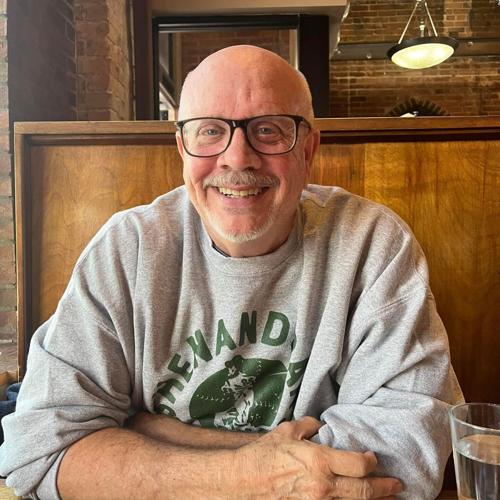
Ed Briner was an extra in “Killers of the Flower Moon.”
Briner, who had rocked a beard since 1975, sacrificed the beard in order to be in the film.
“I was amazed at just how many extras there were in this movie,” he said. “A lot of my days were spent walking up and down the sidewalk across the street from the action. I learned a lot about extras in TV shows and movies. Now when I’m watching television I’m paying more attention to the extras that are in the background. I now know that there’s people lined up (just out of camera range) waiting for a PA to tap them and say ‘go.’”
Briner described the attention to detail during filming as incredible. Tasked with buying a cigar from a vendor in a pool hall scene, the three nickels he was given to pay for the cigar were 1920s-era nickels.
“In another scene in the pool hall, I was selected to play pool at a table next to Robert De Niro and Leonardo DiCaprio,” Briner said. “Right beside my table, behind the screen, was Martin Scorsese giving orders for the shoot. It was terribly exciting to be in the middle of it.
“While waiting for another scene to be shot, I was standing around not too far from Robert De Niro. Barry Corbin walked over to him, introduced himself and shook his hand, telling him he was a big fan of his work. I guess I kind of assumed all these people all knew each other already, but they are fans just like we are.”
Briner said he got to be in courthouse scenes with De Niro, DiCaprio, John Lithgow and Brendan Fraser.
“We had a lot of sit-around time, which gave me plenty of opportunity to chat with many of the other extras,” Briner said. “The Osage extras were very gracious in telling the stories of how this event affected their families. Sometimes I felt some shame about the treatment of Native Americans. I decided for the most part, if you were a white person in this movie, you probably were a bad guy. It didn’t feel very good.”
• Pre-COVID, Faren Bunny auditioned for “Killers of the Flower Moon” after seeing an advertisement on social media. When (long delay) he finally got a call, he was asked if he could drive a Model T automobile. He said he could drive a stick shift, but had never driven a Model T. “Want to try it?”
Bunny said he got paid extra -- maybe $35 -- to drive the vehicle. He said it was a neat experience.
Bunny learned that it was wise to make friends with PAs because they will pick you out for things or get you into a scene. He made friends with a few of them and was summoned to drive in a scene that should have wound up getting him in the background behind DiCaprio, who was in a different vehicle.
The first two attempts resulted in Bunny’s car being on not quite the preferred paths.
“The third time, which was probably the ‘print’ scene, they were getting ready to do it and the car went ‘poof’ and backfired. Once it does that, it’s toast. They just don’t go after that. Of course you are driving a 100-year-old car and it’s hot. So I missed out on that scene.”
Bunny encountered nice people, made a lot of friends and got to meet some of the film’s stars.
“When we first got there, they had a funeral scene,” Bunny said. “They had a lot of Natives and non-Natives there for the funeral. Leonardo DiCaprio and all the other people were there and so we got to interact with them, but also we had to be kind of careful because of the COVID thing. These days you could probably go shake hands with anybody, but they were really careful about us interacting with them because they didn’t want anybody getting COVID, whether it was us or the actors, especially the big names.”
Bunny indicated background workers got paid extra for getting COVID tests.
“It wasn’t that big of a deal,” he said. “It was just an inconvenience. But that’s what kept it going because that movie got pushed back, what, a year and a half because of COVID?”
“Killers of the Flower Moon” wasn’t Bunny’s first time to be on a film set. He was in the 1998 film “Chasing the Wind,” directed by Charles B. Pierce, the filmmaker behind “The Legend of Boggy Creek” and “The Town that Dreaded Sundown.”
• Cliff Wofford was on the set for at least a month and his work included being a member of the Osage Tribal Council for a courtroom scene.
"Getting the opportunity to watch such artists at Lily Gladstone, Leonardo DiCaprio, Robert De Niro and director Martin Scorsese was amazing and to witness the amount of dedication that they offered to present this important movie was truly fascinating," he said.
Wofford said he is Ketoowah, but members of his family are Osage. He said he had the opportunity to make many friends on the set, including people from the Osage Nation and other tribes.
"I feel really blessed to experience what goes into making a movie of this magnitude and it has allowed me to also see the potential of other Indigenous filmmaking opportunities, too. I would like to see other tribal films being made throughout Indian Country where all tribes have a chance to tell their important stories. I am so grateful to the Osage Nation, Martin Scorsese and Leonardo DiCaprio for the opportunity to be a part of this. They were great to work with!"
The new Tulsa World app offers personalized features. Download it today.
Users can customize the app so you see the stories most important to you. You can also sign up for personalized notifications so you don't miss any important news.
If you're on your phone, download it here now: Apple Store or Google Play
In this Series
Killers of the Flower Moon: See all our coverage going back to when scenes were shot here to reaction to the movie
-
Updated
Osage chief talks about thrill of being present for Lily Gladstone's historic Golden Globes triumph
-
Updated
Award-worthy: Robbie Robertson's 'Killers of the Flower Moon' score helps tell film's story
-
Updated
'Flower Moon' stirs debate on whether Native stories should only be told by Native filmmakers
- 88 updates
Jimmie Tramel
Tulsa World Scene Writer