It's midnight inside a dimly lit banquet room on Detroit's east side. The place is like any low-frills dining space — cheap carpeting, plain walls and rounded booths on the room's edges, with padded seats and small tables.

But this one is different: People are having sex with each other in the booths. In full view of everyone else in the room.

It's Saturday night at the Schvitz in Detroit, and this is couples' night, which really means swingers night, when men and women come to have public sex and sometimes swap partners with others as strangers watch the action.

The air's thick and musty from the steam bath downstairs. Loud moans peal out from a porno flick cranked up in a movie room, mixing with breathing sounds rising from massage booths and unseen areas. Some couples sip booze at a table to gain courage before joining the group in the big room upstairs, while others sit back to watch the scene unfold.


THE SCHVITZ, located on Oakland Avenue near Clay, is a Jekyll and Hyde of a place. Though it's been notorious over the years for rumors of orgies held here, on most days it's simply a spot for older men who enjoy the Old World tradition of the steam, a place with a rich history long before the lurid stories spread. Built in 1930, it was the hangout of the notorious Purple Gang, the Detroit-based Jewish mobsters who made a fortune bootlegging alcohol from Canada to Detroit during Prohibition. They were famously violent, blamed for several hundred grisly and very public murders in the city.

The bathhouse they adopted was modeled on steam rooms that local immigrants like them had patronized back in Eastern European ghettos. Though there were several smaller bathhouses in this part of the west side, which for a time was a Jewish neighborhood centered on Oakland Avenue, this was the grandest of them. Now it's the last one left.

It began as the Oakland Health Club, back when health clubs consisted of such things as steam baths, liquor and big meals. "This place doesn't have any sort of exercise equipment," says Ronnie Smith, 73. He's been taking steams here for nearly a half-century. "Never did in all the years I've been coming here." It was eventually renamed the Schvitz, after the Yiddish word for "sweat."

The roots of its Russian-style steam room go back centuries, back to the days before indoor plumbing.

"They started using bath houses because they didn't have personal showers," says Daniel Vayse, who manages the Schvitz. "In Russia, lot of people they build small house like steam room just from wood; it's for two, three people, and they mostly use in wintertime, so when they hot they go outside and they jump in the ice water or they roll in the snow."

Vayse, 64, came to Detroit from Russia in 1980, and was hired at the bathhouse soon after. A former track and field athlete for the Soviets in St. Petersburg, he's stocky and soft-spoken with a thick Russian accent, and spends his days bustling around the building, taking care of innumerable tasks.

The steam room he runs has bleacher-style wood seats along two walls. The higher the seat, the hotter the heat, which is created by a gas oven holding several tons of superheated rocks taken from the bottom of a river. Steam is made by pouring water on top of them.

"It's amazing," says Nick Bahaweg, 68, toweling off after a schvitz. "Your body goes through some kind of instant response to it when you come in here. Within five minutes you start to perspire, and after about seven minutes you feel the oils and the salt come out through the pores, and that lasts you a good 20 minutes, a half-hour. It's a very, very relaxing thing."

Central to the experience is the plaetza, spelled several ways but always consisting of a massage one schvitzer gives another using a bouquet of oak leaves that have been soaked in a bucket of warm water, softening them and causing them to give off a tea-like odor as the recipient is rubbed from head to toe with it.

The steam is followed by its opposite, a jump into a cold-water swimming pool that snaps the pores shut. "You almost feel like you're neutered," Bahaweg says. "The minute that you jump in there your nuts disappear. Really. It's cold."

The Schvitz also has massage tables, a dining area, hot tubs and a movie room with a projector and screen. In the old days it even had sleeping quarters for members who got kicked out of their homes or had to hide from the law.

But you'd never know any of that by looking at the building. The exterior has no signs. Its windows are bricked in with cinderblocks. The whole structure is painted gray. It's drab and boring, as if to avoid drawing curiosity. The front door is always locked, and the only way inside is for someone at the front desk to buzz you in after getting a look at you.

It looks like an old-time men's club inside. Several garish, old-fashioned paintings of nude women languishing on satin sheets hang on the dark-wood walls. There's a 60-year-old African gray parrot named Nemo who sometimes squawks vulgarities from his cage at the dining room's edge. Small metal lockers hold belongings, and thick leather couches hold lounging schvitzers.

Framed newspaper accounts and photos of the Purple Gang line the front hallway and the dining room walls. The white-tiled basement, which houses the pool and the steam room, is the same as when it was built, with the founding year "1930" spelled out in black inset tiles.

Weekdays draw the die-hards, the regulars with a strict routine. "Wednesday and Thursdays we have the purists," says Eric Austin, 56. His family's been schvitzing here since the beginning. He even had a couple of uncles in the Purple Gang. "I'd never hear the truth about it, just kind of sideway stories because my mother was embarrassed."

He swears by the therapeutic benefits of a steam for the sick and injured. "We had a friend that we literally carried downstairs so he could get the heat," Austin says. "There's all kinds of miracle stories about people supposed to get surgery on their backs, get some heat and they don't go through with the surgery. It's a healthy thing because it opens up all of your pores and it gets your circulation going, gets rid of poisons in you."


BUT THE SCHVITZ is quite different on Friday and Saturday evenings, the nights referred to obliquely as "couples' night." It began so men could bring their wives to share in the steam experience. It evolved into an orgy.

"I was here when they first started," Smith says. "We had no clue. I came about three months after they started with my wife and we all brought bathing suits. We didn't know what the hell was going on. It was quite funny. We walked into the steam room and nobody's got clothes on." This was nearly three decades ago. Little has changed.

Though the employees here know what goes on, they turn a blind eye to it. What happens here, they say, is between consenting adults. There is no sex for sale, as a TV station found out in a fruitless undercover investigation a few years back, and the Schvitz itself does nothing to promote or facilitate these parties. The participants decide everything — raw or safe sex, swap or stick with the one you brought tonight, watch or participate.

One schvitzer, a middle-aged suburbanite who, like most everyone involved in it didn't want his name used, remembers the first time he went to couples' night. He and a girlfriend went into the movie room and sat in a chair at the front. "Another couple came and sat down in the La-Z-Boy by us, and as soon as they sat down immediately the girl got down on her knees and started giving him a blow job like it was nothing," he says. "And I'd never seen anything like that in my life. And then I turn and look around me and the whole room is having sex. This was the craziest thing I'd ever seen."

The rules of couples' night are simple: only pairs of men and women allowed. No membership is required, just a $70 per-couple entrance fee. Bring your own booze. Out by 2 a.m. No photos whatsoever. Otherwise, almost anything goes.

The one thing not allowed is privacy. If people choose to play, it must be in public. "We don't have private places," Vayse says. "That's one thing we don't have. We don't want to have something illegal, so whatever, everything in public, and everybody can see what's going on. It's up to them, but what they do there nobody cares. As long as nobody complains, I really don't have problem with it."

The night usually starts in the steam room or a hot tub, then moves to the dining room, where people drink and mingle as in a bar — except, in this bar, everybody will get laid tonight.

There are several places to do so — the massage tables, the steam room, the movie room with pornos blaring at high volume. The most popular spot, though, is the upstairs dining area, known as the Party Room.

Late on a wintry Saturday night, the first sight inside the Party Room door is a thin, blond, thirtysomething woman kneeling on the floor, giving blow jobs to two men standing on either side of her, concentrating on one, then the other, then back again. The fourth of this group, like others in the room, is watching.

At the next booth, an older couple screws on a padded seat. In a dark corner, a naked couple contort to a slightly different position. There's something sexual going on in every booth all around the room. Some people simply watch quietly or fondle each other in the dim light.

Back in the dining room downstairs, 57-year-old George sits in a loose white robe at a table, drinking pop and whiskey with his companion, 58-year-old LaNatasha. They characterize themselves as "childhood sweethearts" who'd known each other for decades. Her husband isn't there, and is not aware that she is. Such is the nature of couples' night.

"I come for sauna and massage and watch the hot-ass men walk by," she says, swaying tipsily. She's ready to party.

"This is one of the well-kept secrets in Detroit," says George. He mentions other swingers' venues in Detroit, but says most serve merely as meeting points from which couples must go elsewhere to hook up. "I don't know if you know anything about 'The Lifestyle,' but this is one of the few places in Detroit that's on-site."

Most nights the couples are middle-aged; a few are old, a handful are younger.

"It's mostly older people, just like me," George says. "I came into it late. What I realized now, I was living a pretty sheltered life. I got married at 18, stayed married 20 years." After a divorce, he heard about couples' nights from a friend at work, and has been a regular ever since.

Orgy etiquette is in effect here. "It's the same as anywhere else — no means no," says George, a retired bus driver. "Like if somebody's having sex and you say, 'Can I watch?' and they say no, I say 'Have a good time,' and move on. Just like it would be outside, except you might be naked."

The crowd is usually diverse — fit and fat, black and white, spouses and strangers. Some couples come to reignite dormant sex lives, live out exhibitionist fantasies or to add third parties to the mix without going further than being watched. Most, though, keep to themselves, getting their thrill out of watching and being watched, as shapes of bodies blur in the faint light.


DAYS LATER, the halls and rooms of the Schvitz are roamed by older naked men, joined by a growing contingent of younger Russians thrilled to find a steam room like those back home. No women tonight.

For these guys, the Schvitz will always be about the steam room and the camaraderie. Couples' night will be little more than the subject of whispers and jokes.

"Even with all this craziness over the years, there's always been a common thread of guys coming down, wanting to relax and enjoy the steam," says 49-year-old Alan Havis. "Ultimately, it comes down to the steam."

He sat in the dining room one weeknight as a small group of middle-aged and elderly men, fresh from the steam room and wrapped in white robes or towels, ate big meals like steak and French fries. "My dad has been coming down for like 50 years, and I've been coming down almost 30 years, and my father's uncle used to come down here a long time ago," Havis says. "It was a place to really bond. And it still gives me a chance every week to spend some time with my dad. It's really something that I cherish." His 85-year-old dad sits upright on a nearby couch, towel on his head, dozing. Havis patiently waits for him to awaken.

"It's just a place where you can go and relax and no one's looking over your shoulder, no one's judging you," Havis adds. "It's so opposite of what goes on outside."

And if the bonding time and companionship isn't enough, there's always couples' night, where marriages get tested, inhibitions are challenged, and secret fantasies are indulged.

Or as Vayse puts it, "Well, they can hump here, yes."

Detroitblogger John scours Detroit for Metro Times. Send comments to letters@metrotimes.com
Scroll to read more Culture articles

Newsletters

Join Detroit Metro Times Newsletters

Subscribe now to get the latest news delivered right to your inbox.

Comedian T Barb’s videos are the most Detroit thing we’ve ever seen

Her ‘Only in Detroit’ clips are blowing up on Instagram

click to enlarge “What up doe!” Tiffany Barber, aka T Barb. - Courtesy photo
Courtesy photo
“What up doe!” Tiffany Barber, aka T Barb.

Tiffany Barber is sitting quietly in front of her laptop at the North End’s Black Coffee Cafe when I arrive to meet her. She greets me with a hug like a long-lost auntie. I halfway expect her to say “What up doe!!” like she does on her Instagram videos, but her natural voice is softer and upbeat — with just a touch of hood.

You may know Barber better as T Barb, the comedian who makes those “Only in Detroit” voiceover videos showing random sights of the Motor City like guys riding in a car with no doors.

“What up doe!! Only in Detroit do we give a new meaning to the word ‘buzzing,’” she says in a video of a sex toy vibrating in a circle in a rain puddle as the theme from Unsolved Mysteries plays. “It’s some girl digging in a City Trends purse right now mad as hell.”

Her “Eastside Power Ranger” series of a man dressed as the Black Ranger at the corner of Cadieux and Harper is one of her most popular, with nearly 50,000 likes. The content in the videos is real, but T Barb’s commentary is what takes them to the next level. It’s the epitome of reality being stranger than fiction, with just a touch of embellishment.

“‘Only in Detroit’ presents another exciting episode of Eastside Power Ranger,” she says in one episode, singing the words like it’s the theme song for a spin-off of the ’90s TV show. A shirtless man taunts the Black Ranger in the middle of the street, smashing what looks like a long piece of wood on the ground. “As you can see, today we have a villain… but he’s no match for Eastside Power Ranger or that Suburban because guess what? He has the thrifty tools to keep us all safe on the east side of Detroit. Get ready, get ready. HADOUKEN,” she says as the “power ranger” throws a piece of concrete at the “villain.”

“You’d be surprised at the things that you see just riding through the city,” T Barb says back at the coffee shop. “People always say, ‘How did you see that?’ I don’t know! Then you get flack, with people saying, ‘Oh, you’re making fun of these people,’ but they are doing it for the notoriety. If you on the corner and you dressed up as a Power Ranger, you probably wouldn’t mind if a billion people saw you actin’ a fool.”

T Barb has been a stand-up comedian for seven years but says she started making the Only in Detroit videos just a few years ago. Initially, they were green-screen TikToks, but she came up with her trademark voice and catchphrase as she started posting more consistently.

At first, she would come across random things and record them herself, but now people send her videos. She also uses content from Instagram media pages like Crime News in the D and Metro Detroit News.

“You know, ‘Let’s get ready to rumble?’” she says, mimicking legendary boxing announcer Michael Buffer. “I did a couple like that and then I wanted to put my own spin on it, so I came up with ‘What up doe!!’ … It’s kinda like if I was a news reporter reporting this on hood news. If you’ve ever watched L.A. traffic videos [where] they got the helicopter man, when they’re chasing people the commentary is next level. It’s so serious, but it’s funny because it’s serious, so that’s kinda how I do the videos.”

Retired hoodrat?

T Barb considers herself a “retired hoodrat,” though she makes sure to point out that “relapse is a part of recovery.” She switches in and out of character without blinking throughout our long conversation and sometimes it’s hard to tell what’s a joke and what’s not.

Barber grew up on Joy Road and says she didn’t have the best upbringing. Her parents met fresh out of prison and her mother struggled with mental health issues, which landed her back behind bars several times.

“I grew up real hood — gang banging, fighting, and all that kind of stuff,” she remembers. “I started making jokes as a defense mechanism. You know, I grew up when ‘Yo Mama’s on Crack Rock’ was out. So imagine yo mama really was on crack rock and then here comes the song and it’s like, we bout to scrap. So it’s either let’s laugh or imma beat your ass. Which one you want? You wanna be friends or imma stomp you? At that time, I lacked emotional intelligence.”

After high school, she caught a Greyhound bus to New Orleans and attended Dillard University where she says she “discovered a new way of life.” There, she studied to become a social worker so she could help kids who came from troubled families.

“My mother grew up in foster care and I think that caused a lot of her issues, so I thought I’d be a community advocate,” she says.

So she moved back to Detroit and worked for Wayne County for about 14 years in foster care and protective services.

“I was still goofy even on the job,” she remembers. “I felt like I understood people. If I come over to your house from protective services and I walk off the porch and we all laughing, that means I got a gift... You know any time child protective services is coming to your house, it’s not a good, happy thing.”

She adds, more seriously, “I’ve bought people hotel rooms. I’ve bought people food because they didn’t have nothing. Who wants to take somebody’s kids because they can’t afford to feed them? I’m not making light of it, but it’s true. It was a lot of stuff I probably would have gotten in trouble for but my thing is, if all you need is a ride over your auntie’s house because your lights got cut off then I’m gone take you over there… After doing it for 14 years, it was just a lot.”

T Barb got her first taste of comedy when a fellow social worker who did stand up on the side invited her to a show. Entranced by the stage and laughter from the audience, T Barb asked if she could try it, so her friend gave her a three-minute spot at the former Maccabees Trader on Woodward, which is now a Shield’s Pizza.

“It was a Friday and I invited everybody I knew, crackheads included,” T Barb says. “I already talk fast because I definitely got a little ADD… I had like 27 minutes of jokes that I put in that three minutes. After that, I was like ‘I really wanna do this’ and I never stopped.”

In addition to being a social worker and exploring her newfound love for stand-up, T Barb had another side hustle — a hot dog cart called “Delicious Dogs” that she ran in downtown Detroit for 15 years. She started in Cadillac Square, moved to Randolph Street, and then switched to private events after the pandemic.

“I just did [an event] yesterday in a girl’s backyard,” she says. “People always recognize me like, ‘Is that T Barb?’ Yes, bitch, now do you want a hot sausage or Italian? Ketchup or mustard?”

She adds, “I’m the hot dog princess,” noting that she’s actually vegan.

T Barb did stand up for about a year before she decided to leave her job with Wayne County. She kept doing shows locally, grew her social media presence, and started booking tours for herself. When we meet for coffee, she’s just gotten back from Los Angeles where she did a string of gigs. She averages anywhere from five to 25 stand-up shows a month, but still says, “I ain’t made it big yet!”

Family ties

Besides having a natural knack for making people laugh, T Barb is also breaking a generational curse.

“I would have been the third generation of people incarcerated in my family,” she says. “One of my grandmothers was institutionalized, the other one went to prison, both of my parents went to prison. So we were the first generation not to go to prison or be institutionalized. I love laughing, I love smiling, and I’m just happy to be here.”

She also has family ties to comedy that she didn’t realize when she first started performing. It turns out her great grandparents were the 1930s-era comedic duo and vaudeville act Butterbeans and Susie.

She didn’t know about them until her aunt, shocked that T Barb was now a comedian, called her one day.

“She said, ‘I can’t believe this. I just wanted to share this with you,’” T Barb says. “My aunt is 73 and for one Christmas she made me a binder with their whole history, their CDs, all the newspaper clippings she had been saving. They sang songs together, and they have one called ‘I Want a Hot Dog for My Roll.’ Yes, they was nasty freaks back then in the 1930s.”

The lyrics read like an old-timey version of Cardi B and Megan Thee Stallion’s “WAP”:

BUTTERBEANS: Come and let me straighten you out
Now here’s a dog that's long and lean
SUSIE: Oh-oh, that ain’t the kind of dog I mean
BUTTERBEANS: Now here’s a dog, Sue, that’s short and fat
SUSIE: But I sure need somethin’ different from that

By working as a standup comedian, T Barb feels she’s continuing her family’s legacy. And yes, some of her jokes can get dirty.

The irony isn’t lost on T Barb that she’s a comedian who runs a hot dog cart and whose great grandparents made naughty vaudeville songs about one stuffing their hot dog in the other’s roll. The joke just writes itself.

And yet, innuendos aside, T Barb still finds a way to give back to her community. Her nonprofit T Barb and Friends does a yearly hygiene drive for a different underfunded school every year where they collect items for students like deodorant, toothpaste, menstrual products, laundry detergent, and quarters for the laundromat.

It goes back to her being a social worker and wanting to help people, but it’s also personal as she knows how embarrassing it can be to go to school without clean clothes.

“A lot of kids are coming to school and aren’t performing well because they have hygiene issues,” she says. “We didn’t have a washing machine so I used to wash my jeans in the tub. Do you know how hard it is to get soap out of jeans? I’m talking like Farmer Jack overalls, trying to rinse Palmolive dish soap out because we didn’t have the right soap. So just thinking back, I’m like, it’s somebody else going through that now.”

T Barb and Friends also hosts an event where they feed the homeless and give away clothing around Thanksgiving and Christmas every year.

“I grew up on hand-me-downs,” she says. “We never really had a lot of new stuff like furniture growing up and I remember all of that. If somebody wouldn’t have given us an extra bed, I probably would have been sleeping on the floor.”

Despite her community efforts, more people know T Barb for her stand-up and silly voiceovers than her good deeds or even her downtown hot dog cart. This isn’t always a good thing, as she’s had several people attack and threaten her online because they find the videos offensive.

One time she posted a video poking fun at a house that was for sale that also had a teddy bear memorial for someone who was killed in front of it. People who knew the murder victim found the video and sent T Barb messages threatening to kill her.

“It wasn’t about somebody getting killed, it was about the real estate agent posting this house not thinking, who wants to buy this house where somebody was murdered?” she says. “But that’s when I knew I had to watch my back, even though it wasn’t my intent to be disrespectful. I’m not going to take the original one down, but I don’t repost it for that reason.”

She’s also had people trash her, saying that her videos reinforce stereotypes of Black people and spread negativity.

“I’ve done the work,” she says responding to her critics. “I’ve been out here for years keeping Black kids in Black homes. I’ve helped a lot of homeless people get on their feet. So I don’t pay attention to that because you probably ain’t never did nothing for nobody, nowhere. I’m still on the ground doing things for the community.”

You can catch T Barb as part of the “Eyes Up Here” show starting at 9 p.m. on Saturday, Sept. 23 at the Independent Comedy Club; 2320 Caniff St., Hamtramck; planetant.com. Tickets are $15-25. More information is available at tbarbisfunny.com.

Subscribe to Metro Times newsletters.

Follow us: Google News | NewsBreak | Reddit | Instagram | Facebook | Twitter

About The Author

Randiah Camille Green

After living in Japan and traveling across Asia, Randiah Camille Green realized Detroit will always be home. And when she says Detroit, she's talking about the hood, not the suburbs. She has bylines in Planet Detroit News , Bridge Detroit , BLAC magazine, and Model D .Her favorite pastimes are meditating on...
Scroll to read more Culture articles

Newsletters

Join Detroit Metro Times Newsletters

Subscribe now to get the latest news delivered right to your inbox.

Eastside Detroit’s Next Chapter Books finds permanent home

The bookstore’s brick-and-mortar is a block from the Alger Theater, where it started as a pop-up

click to enlarge Next Chapter Books co-owners Jay and Sarah Williams. - Randiah Camille Green
Randiah Camille Green
Next Chapter Books co-owners Jay and Sarah Williams.

Next Chapter Books is getting ready for its grand opening on Thursday, but it’s already well known on Detroit’s Eastside.

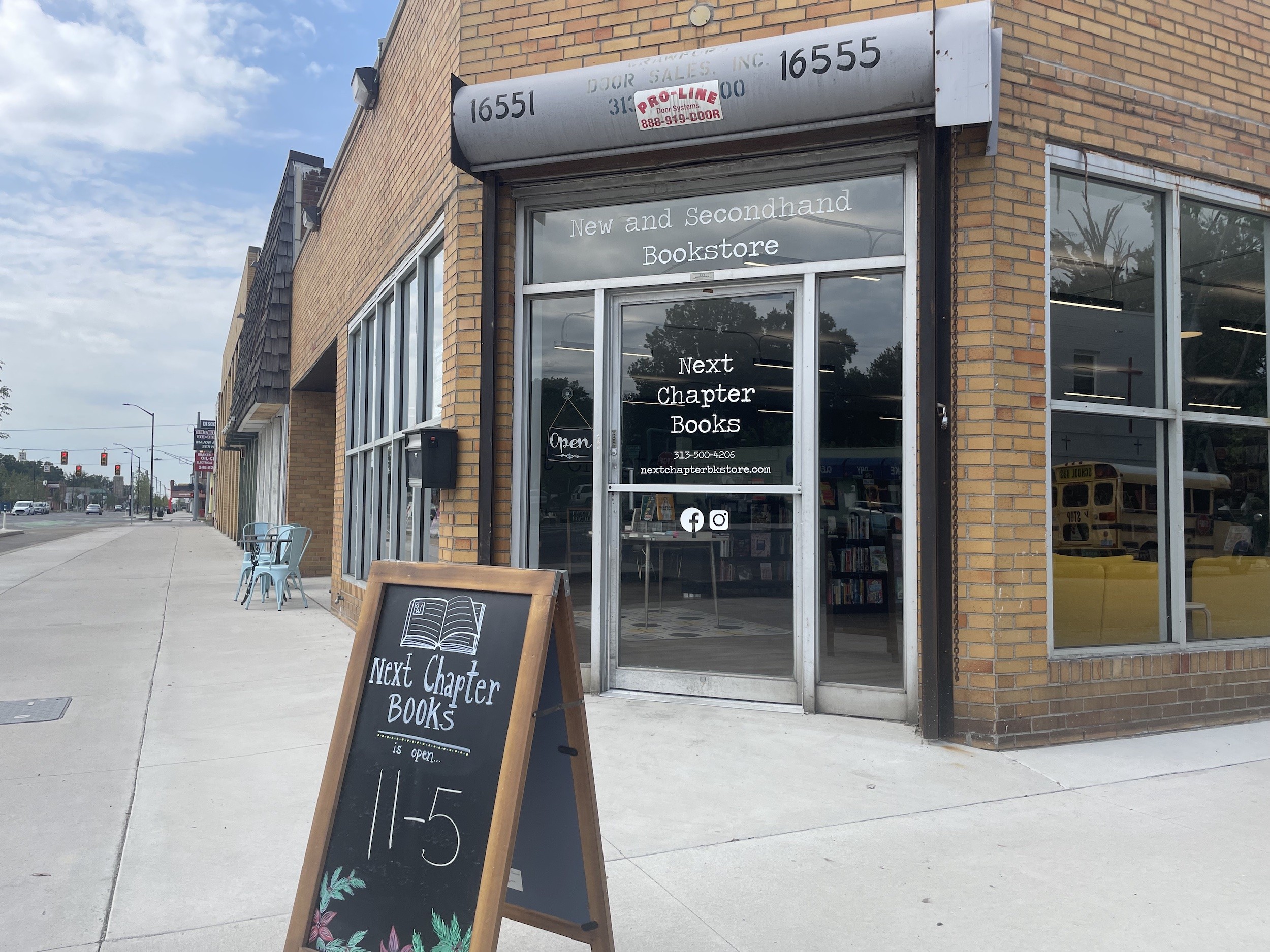
After running as a pop-up inside the Alger Theater for several months, the independent bookstore has secured a brick-and-mortar location at 16555 E. Warren Ave., just a block from the theater.

Bookshelves in the store are stocked with new and gently used classics by James Baldwin, Ralph Ellison, and Zora Neale Hurston along with children’s books, fiction, cookbooks, and more. A section dedicated to local authors proudly displays titles by Michigan Poet Laureate Nandi Comer, Terry Blackhawk, Anna Clark, MARS Marshall, and Kelsey Ronan.

Co-owners and married couple Sarah and Jay Williams started the pop-up just after Thanksgiving last year after realizing the lack of independent bookstores in the area. Sarah tells Metro Times they chose the Eastside neighborhood, partially because she grew up near the area.

“I definitely had emotional ties with being here as a kid, walking into the Jefferson branch Library with my parents and falling in love with reading there,” she says. “There’s Pages [Bookshop], our friends have 27th Letter, and there’s Book Suey in Hamtramck, but between Woodward and the Pointes, there is no full-time independent bookstore in the city.” (There’s also Source Booksellers in Midtown.)

Next Chapter Books had a soft opening on Sept. 19 and will have a grand opening on Saturday, Sept. 23. During the inaugural E. Warrenfest on Thursday, Sept. 21, the bookstore will have a bounce house and family area. The festival celebrates the area’s businesses and will include food trucks, three stages of live entertainment, and a hop-on hop-off shuttle to take people between shops.

The Williams are a bonafide pair of book lovers (Sarah calls herself a “two-fisted reader”) but they wondered if people in the neighborhood felt the need for a bookstore or cared about having one nearby. They got confirmation, Sarah says, when Joe Rashid of the East Warren Development Corporation told them a bookstore was in the top five things residents requested in community surveys.

“That gave us enough reason to come and try it,” Sarah says. “People really seemed to want to have a bookstore both here in the neighborhood, but we also had Jefferson Chalmers folks coming over, really from places around the city, and then Grosse Pointers coming over as well… This is such a vibrant community with so many people that love where they live but [who] have to leave where they're at to do a lot of their shopping.”

click to enlarge The Next Chapter Books brick-and-mortar is on E. Warren a block from the Alger Theater, where it used to operate as a pop-up. - Randiah Camille Green
Randiah Camille Green
The Next Chapter Books brick-and-mortar is on E. Warren a block from the Alger Theater, where it used to operate as a pop-up.

The couple secured the space on E. Warren Avenue in April and have been working on getting it up and running since. They’ve had regular book club meetings in the shop since February, even though it was half-finished. The shop also plans to add regular events like author talks, poetry readings, and storytime for the kids.

Next Chapter Books shares the space with Eastside Roasters, which is working on setting up a coffee shop in the back of the building. For now, they have a small table set up in front of the store for a quick pour-over or Italian soda for visitors while they pursue the bookshelves. Eventually, Eastside Roasters will have a separate entrance on the other side of the building on Kensington.

Sarah and Jay won a $50,000 Motor City Match grant for the bookstore earlier this year. They have a five-year lease for the space, which is across the street from a new mixed-use apartment complex called The Ribbon that will house Gajiza Dumplins. The Ribbon is still under construction. Popular East African restaurant Baobab Fare is plotting a second location just down the road.

Beyond books and coffee, the shop also sells products like T-shirts and tote bags that are printed by Midtown print shop Ocelot, postcards from Detroit artist collective Live Coal Gallery, and baked goods from Been There Bake That, which is helmed by the couple’s daughter.

“What’s great about a physical bookstore is not only supporting local businesses and keeping that money in the community but also finding that book that speaks to you,” Sarah says. “I love when kids are already coming to the kids section, and they’re just going right towards a book and figuring out what it is that makes them want to read… For me, [reading is] just a great way to build my understanding of other people and experiences I haven’t had.”

Next Chapter Books is open 11 a.m. to 5 p.m. Tuesday, Wednesday, and Friday; 11 a.m. to 7 p.m. on Thursday; and 10 a.m. to 5 p.m. on Saturday.

Location Details

Next Chapter Books

16555 E Warren Ave, Detroit Detroit

1 article

Subscribe to Metro Times newsletters.

Follow us: Google News | NewsBreak | Reddit | Instagram | Facebook | Twitter

About The Author

Randiah Camille Green

After living in Japan and traveling across Asia, Randiah Camille Green realized Detroit will always be home. And when she says Detroit, she's talking about the hood, not the suburbs. She has bylines in Planet Detroit News , Bridge Detroit , BLAC magazine, and Model D .Her favorite pastimes are meditating on...

Newsletters

Join Detroit Metro Times Newsletters

Subscribe now to get the latest news delivered right to your inbox.

The Black Footwear Forum returns to Detroit’s Pensole Lewis College of Business & Design

It opens on Thursday with a ribbon cutting for a new student-designed lounge

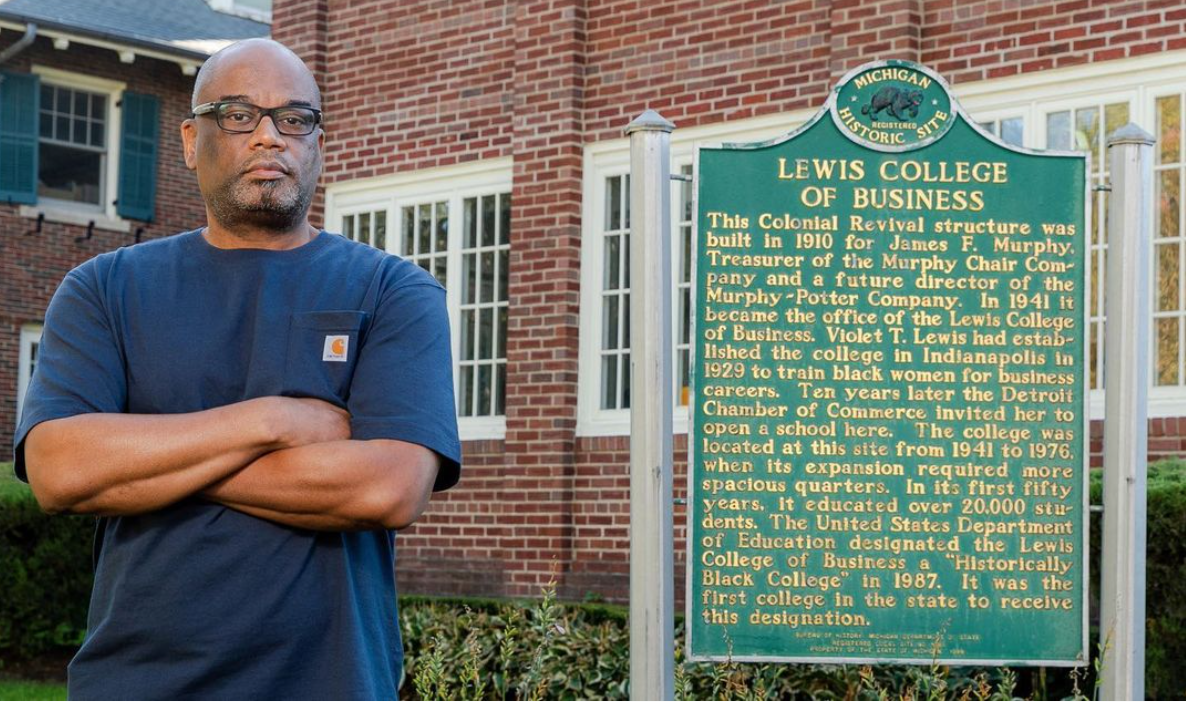
click to enlarge Dr. D’Wayne Edwards in front of the historic Lewis College of Business. - PENSOLE/ Instagram
PENSOLE/ Instagram
Dr. D’Wayne Edwards in front of the historic Lewis College of Business.

Hosted at Detroit’s HBCU Pensole Lewis College of Business & Design, the Black Footwear Forum will feature a host of panel talks and wellness events. This year’s guest speakers include costume designer Ruth Carter — who won two Academy Awards for her work on Black Panther and Black Panther: Wakanda Forever — and hip-hop pioneer Grandmaster Caz. It opens on Thursday, with a ribbon cutting for a new student-designed Pepsi x Frito-Lay Refresh and Relax Lounge at Pensole Lewis College. Grandmaster Caz will give a keynote speech “Culture is Currency: Know Your Worth” on Friday, followed by a hip-hop design panel led by fashion designer April Walker. Saturday will include opening remarks from a surprise guest followed by “Black Genius Conversation” sessions with Nike executive Larry Miller. It ends on Sunday with a wellness day for women that includes a leadership workshop, R&B yoga, and brunch, plus a separate wellness workshop for men led by Jason Mayden, Kenneth Anand, and Trevor Edwards.

Subscribe to Metro Times newsletters.

Follow us: Google News | NewsBreak | Reddit | Instagram | Facebook | Twitter

About The Author

Randiah Camille Green

After living in Japan and traveling across Asia, Randiah Camille Green realized Detroit will always be home. And when she says Detroit, she's talking about the hood, not the suburbs. She has bylines in Planet Detroit News , Bridge Detroit , BLAC magazine, and Model D .Her favorite pastimes are meditating on...

Newsletters

Join Detroit Metro Times Newsletters

Subscribe now to get the latest news delivered right to your inbox.

Tepfirah Rushdan is Detroit’s first director of urban agriculture

The longtime food sovereignty champion is just the person for the job

Director of Urban Agriculture of Detroit Tepfirah Rushdan. - City of Detroit/Courtesy photo
City of Detroit/Courtesy photo
Director of Urban Agriculture of Detroit Tepfirah Rushdan.

In many ways, Tepfirah Rushdan was already acting as Detroit’s unofficial director of urban agriculture for years before she was officially given the title.

Rushdan is the co-director of Keep Growing Detroit, one of the city’s biggest urban farms. She’s also one of the co-founders of the Detroit Black Farmer Land Fund, which helps buy land for Black farmers. She’s a board member of Black to the Land Coalition, helping people of color reconnect with nature. She owns her own business, Detroit Mobile Kayak, where she takes people on guided tours of local waterways. All that on top of being a mom, not just to her biological children, but to people who are just finding their way in the urban agriculture space.

So when Mayor Mike Duggan announced that she was chosen as Detroit’s first Director of Agriculture on Monday afternoon, it just made sense. In her new role, she will help influence policies around urban farming in the city, acting as a liaison between the Mayor’s office and the farming community.

“To create a position like this within the city solely for urban agriculture is a bold move and speaks volumes about the Mayor’s commitment to urban farms and really all land-based projects,” Rushdan said. “There are so many people and organizations doing amazing work in this space and I hope to use my position to support their efforts and promote the benefits of a strong local food system.”

As a longtime champion of urban agriculture, Rushdan knows the work being done to sow the seeds of a more sustainable landscape for growers in the city. When farmers started voicing their concerns to her about Duggan’s proposed Land Value Tax Plan, she held community meetings and was asked by the mayor’s office to draft a proposal to protect those farmers. Following meetings with Duggan, and eventually an agreement to make urban farms and community gardens exempt from the tax increase, Rushdan was asked to become Detroit’s director of urban agriculture.

“The urban agriculture community is doing incredible work in Detroit and as demand increases for land in the city, it became clear we needed someone who understands these issues in our administration to support their work,” Duggan said. “Tepfirah has been one of the leading voices and activists in the urban agriculture movement and is the perfect person to help make sure the city is helping to support this important segment of our local economy and environment.”

Detroit follows cities like Philadelphia, Boston, Atlanta, and Washington D.C. in creating the urban agriculture director role.

Duggan said Rushdan was the unanimous choice among the urban farming community.

“She obviously has the experience, but she has so many other qualities,” urban agriculture advocate Kathryn Underwood said at the press conference. “She has basically a quiet demeanor, but don't be fooled. She will speak truth to power.”

Executive Director of the Detroit Black Community Food Security Network Malik Yakini said there is no one better for the job than Rushdan to help protect Detroit’s urban farmers as they move toward food sovereignty.

“As you might know, Detroit is the urban ag capital of the United States,” he said. “So it’s fitting that we have Tepfirah in this position in order to move our collective work forward. The movement in Detroit is growing. Each year we have more and more and more new growers, and so we need someone to help steward this growing movement and give it some shape. And to make sure also, as I know Tepfirah will, that it’s rooted in justice and equity.”

Subscribe to Metro Times newsletters.

Follow us: Google News | NewsBreak | Reddit | Instagram | Facebook | Twitter

About The Author

Randiah Camille Green

After living in Japan and traveling across Asia, Randiah Camille Green realized Detroit will always be home. And when she says Detroit, she's talking about the hood, not the suburbs. She has bylines in Planet Detroit News , Bridge Detroit , BLAC magazine, and Model D .Her favorite pastimes are meditating on...

Newsletters

Join Detroit Metro Times Newsletters

Subscribe now to get the latest news delivered right to your inbox.

Room Project announces closure after five years as a safe haven for writers

More than a co-working space, Room members call it a ‘literary family’

click to enlarge A packed poetry reading at Room Project. - Room Project/Instagram
Room Project/Instagram
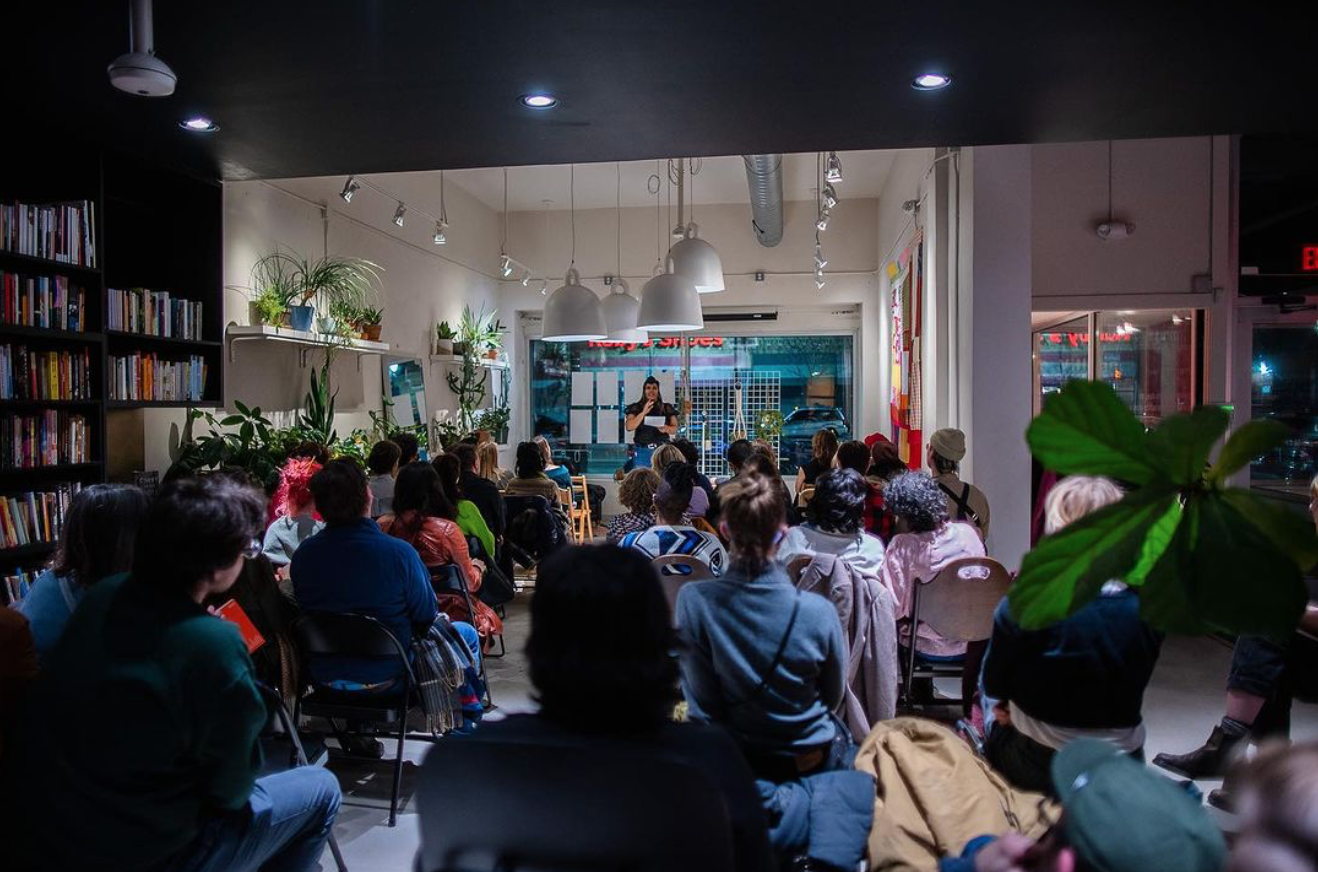
A packed poetry reading at Room Project.

Room Project will be closing its doors in November, in a blow to Detroit’s literary community.

The co-working space located at 6513 Woodward Ave. announced the closing in a social media post on Monday morning.

Room Project opened as a nonprofit in 2018 to give women, nonbinary, and trans writers and artists a safe space to write, create, commune, and rest. It has since held hundreds of poetry readings, film screenings, music performances, workshops, book release parties, and more.

“We did all of this without full time staff, without corporate grants or endowments,” the social media post reads. “Hundreds of members paid their member dues, volunteered to put up flyers and set out the chairs. Friends donated their money and talents. Room Project grew and grew, and that success belongs to all of you. We are grieving this loss and we know you are too.”

The space Room Project has been renting is owned by Midtown Detroit Inc. Metro Times has reached out to Midtown Detroit Inc. for comment.

Many a Metro Times story has been penned at Room (this writer is a member). It was opened by Christin Lee, who moved to Detroit from Los Angeles after finishing grad school in Ann Arbor. Lee stepped away from the space last year, leaving Flint-born writer Kelsey Ronan at the helm.

Room released its first anthology of metro Detroit writers called Room Object earlier this year featuring work by Ronan, Liana Imam, Brittany Rogers, Rochelle Marrett, Franny Choi, and more. The book was a 2019 Knights Arts Challenge winner.

MARS Marshall, a 2021 Kresge Artist Fellow who co-edited Room Object, says Room has been one of the most important community spaces for Detroit’s literary artists over the past five years.

“It’s given me the critical space I needed to grow as a poet/writer, from expanding my literary community in this space to deepening my writing practice,” Marshall tells Metro Times. “Room Project has been more than a home to me and my work — it’s been my literary family.”

Another member and poet Katelyn Rivas calls Room “the light that got left on” for her to continue exploring her writing.

“Room Project is where I made incredible friends, launched my chapbook, and shared my thesis work for radical self-care for Black femmes. It’s where I had big conversations and big healing laughter,” she says. “The work of Room Project doesn’t end just because the doors are closing. Somewhere another light is on, and space is being carved for the brilliance that we cultivated to live on.”

Michaela Ayers, who hosts the Black Her Stories podcast, adds that Room has been an essential place for Detroit-based writers to connect.

“As an emerging artist and fairly new Detroiter, I have benefited greatly from having access to such a welcoming community,” Ayers, who moved to Detroit from Seattle in 2021, says. “The creative energy of this important third-place will be sorely missed.”

Room Project will still be open for members and a slew of public events until November.

We’ve had the privilege of witnessing what Room has meant to this community of women, trans + nonbinary writers + artists,” the announcement reads. “Room has been your place to reconnect with a lost creative practice. Your place to rest. Your place where you are only asked to be you. We ask that you enjoy this room of our own while we have it. Come to an event & celebrate each other. Join a meetup and tell us what you’re working on. Share your Room memories & tag us. There’s a whole season left, and it’s the harvest season. Let’s celebrate our abundance.”

Subscribe to Metro Times newsletters.

Follow us: Google News | NewsBreak | Reddit | Instagram | Facebook | Twitter

About The Author

Randiah Camille Green

After living in Japan and traveling across Asia, Randiah Camille Green realized Detroit will always be home. And when she says Detroit, she's talking about the hood, not the suburbs. She has bylines in Planet Detroit News , Bridge Detroit , BLAC magazine, and Model D .Her favorite pastimes are meditating on...

Newsletters

Join Detroit Metro Times Newsletters

Subscribe now to get the latest news delivered right to your inbox.