


From the caged ape on the roof of Bangkok's Pata shopping mall to the kickboxing chimpanzees at Safari World in Chiang Mai, animal advocates have long been appalled by what takes place at Thailand's private zoos.

These complaints have been amplified in recent years as wildlife-themed attractions filled with exotic beasts to draw in the tourists have multiplied across the country.
Responsible authorities usually conduct inspections following complaints, but only rarely do these result in any serious action being taken against the operators of privately run zoos, aquariums and animal parks.
There are rare exceptions, such as the raids conducted at two large snake farms in Chiang Mai carried out earlier this year. But for the most part, as one animal welfare activist told Spectrum, most cases just get lost in the legal system.
It's a situation that infuriates the activist who cites the example of a zoo in the Northeast that was raided several times after DNA evidence showed tiger cubs were not the offspring of tigers legally owned by the zoo. The facility's owner was also linked to other cases of tiger smuggling. When asked for comment, the owner of the zoo referred Spectrum to his lawyer, who did not return our calls.
An official with the Natural Resources and Environmental Crime Suppression Division of the Royal Thai Police confirmed to Spectrum that the case is going through the legal process. While the official said that the licence would be revoked if the zoo owner was found guilty, this kind of legal limbo upsets the activist.
''Why are such people allowed to set up zoos in the first place?'' the activist said.
ZOOS GONE WILD
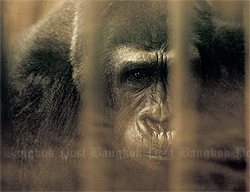
DON’T PRY, MATE: Activists say better protection is needed for exotic animals, like the great apes, held in Thailand’s private zoos.
The 1992 National Wildlife Conservation Act mandates that permission from the Parks Department is required to open a private zoo. It also stipulates that operators must report to the department the number of animals of all species at their zoos, and all births and deaths. Similarly, aquarium operators must get a permit from the Fisheries Department, and all licences must be renewed every five years.
In practice, these regulations are regularly flouted. Speaking at a recent conference on the subject, Theerapat Prayoonsit, deputy director-general of the National Parks, Wildlife and Plant Conservation Department, said that zoos regularly open without the required licences.
Parks Department records indicate that there are 40 legally operated private zoos in the country, while the Fisheries Department says there are 30 legal private aquariums.
Sophon Damnui, chairman of the Thai Zoo Association, said there are about 30 private zoos registered with his association.
''But many private zoos, especially the new ones, have not registered _ the actual number must be much higher,'' he said.
In the past, the Zoo Association had more members because small facilities were operated either by municipal organisations or temples registered with it.
At the conference Mr Theerapat said that both legal and illegal zoos have been the subject of complaints that they fail to meet standards on safety, hygiene and providing an appropriate environment for the animals in their care.
The location of the zoos is also a major concern. Private zoos located near populated areas could pose a danger in the event of animals escaping. Moreover, with facilities located near wildlife conservation areas, such as national parks and animal reserves, there is both the fear of poaching and the possibility of zoo animals passing on infections to creatures living in the wild.
Real examples of this issue are the four tiger zoos and a small elephant park located near Khao Yai National Park in Nakhon Ratchasima province.
Participants at the conference agreed that buffer zones should be established between zoos and wildlife conservation areas.
Mr Sophon, however, warned against tarring all private zoos with the same brush.
''We cannot jump to the conclusion that every private zoo acts illegally,'' he said
It's important to remember that many zoos, both government and private, are authorised to breed endangered species as part of wildlife conservation programmes, Mr Sophon said.
''However, any that have been proven to be in possession of illegal wildlife must face the penalties.''
Even state-operated facilities can get into legal difficulties. Viwek Sookaid, director of Songkhla province's large government-run zoo, said it had been through a legal tussle with the Parks Department's conservation office because a villager had donated a pair of flat-headed cats (Prionailurus planiceps). The cats are a local species threatened with extinction and listed on the Convention on International Trade in Endangered Species of Wild Fauna and Flora's Appendix I, which prohibits trade in any form. (Permission to import Cites-listed animals requires approval from the body's offices in Thailand).
After much legal wrangling, the court granted the zoo authority to take care of the cats and it has since developed a successful breeding programme.
NO PLACE TO CALL HOME
Several private zoos fail financially and are forced to close. When they do the question of what to do with the animals housed there becomes pressing.
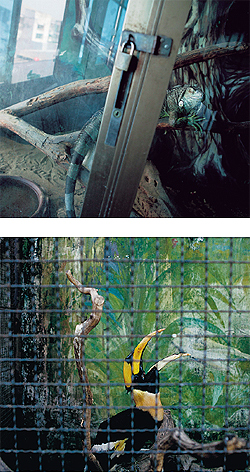
Mr Viwek said that when private zoos close their owners will sometimes trade their animals with other privately run facilities. However, some animals, such as bears and gibbons, can be difficult to re-house as many private zoos lack the necessary enclosures.
''So they end up turning to government zoos,'' said Mr Viwek.
He said the facility he runs in Songkhla is frequently approached by private and municipal zoos _ which also frequently close down due to a lack of funds _ looking to donate animals.
''We can usually accommodate some of the animals, as long as they have the proper identification documents, but we generally turn most of them down because we're already overstocked with that particular species,'' he said.
''We can't just keep accepting more and more animals when we don't have the facilities or budget to care for them.''
This problem is compounded by officials also having to deal with animals seized in raids on trafficking gangs. (See Jan 20 Spectrum, ''Seized wildlife trapped in legal limbo''). This means they are often reluctant to shut down private zoos as they lack places to relocate the animals once they do.
Finding a replacement home has certainly been a problem for Bua Noi (little lotus), the female gorilla who lives at Pata shopping mall.
She was bought by the rooftop zoo in 1987, four years after a male gorilla had become its star attraction. Now aged about 30, Bua Noi has spent the past eight years living alone as her partner died in 2005.
Over the years there have been several attempts to relocate her to a more appropriate home.
Mr Sophon said that on one occasion, he and an official at Khon Kaen Zoo tried to have her moved there.
''We thought she would be much happier in a bigger enclosure. And we even talked to a foreign zoo about finding her a mate.''
Unfortunately for Bua Noi, the plan fell through when it was discovered that the soil at Khon Kaen Zoo contains a microorganism that causes illness in primates.
So for the time being at least she remains in a too-small enclosure at a shopping mall in central Bangkok. Let's hope for her sake it's not forever.
LIFE'S (DEFINITELY) NOT ALL WHITE FOR CAPTIVE BELUGAS
For beluga whales, a life in captivity generally means an untimely death.
According to studies, these mighty mammals often live for 50 or 60 years in the wild. In aquariums and marine parks, they seldom make it to 30.
Despite these shocking statistics, belugas, or white whales as they are also known, remain highly sought-after by the operators of ocean-themed tourist attractions.
An attempt last year by the Safari World Marine Park in Bangkok to import six belugas reignited the debate here in Thailand on the ethical and ecological implications of using wild animals for entertainment.
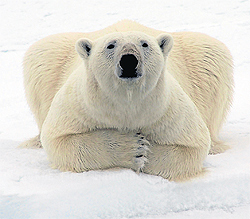
Local conservation groups launched a campaign demanding that the Fisheries Department decline Safari World's application for a permit to import the creatures. They reasoned that keeping them in captivity would shorten their lives.
The white whales had been captured in Russian waters, where their numbers have been steadily falling over recent years.
According to the website of global charity Whale and Dolphin Conservation (WDC), ''Beluga populations in Russia have been decimated by overhunting, and the same populations are targeted for capture, preventing their recovery.''
Safari World has for many years operated a popular marine mammal show, which includes whales and dolphins. But of the four belugas it imported from Russia in 2008, just one is still alive, WDC said.
As for the intended replacements, they are now in new waters. Tired of waiting for approval from the Fisheries Department, the Russian supplier sold them on to an aquarium in China.
But the issue remains unresolved. Unless unchecked, Safari World and attractions like it will continue to seek to bring belugas and other exotic mammals into the country, because for them, it's good business.
While belugas are protected under the US Marine Mammal Protections Act, they are not considered a seriously endangered species. They are, however, listed under Appendix II of the Convention on International Trade in Endangered Species of Flora and Fauna, which means companies need a special permit to export or import them.
But it's not just belugas that are of concern to animal rights groups in Thailand and abroad. In recent years, government-run zoos here have come under growing pressure to restrict the purchase of exotic animals of all types.
Two years ago, animal rights activists and the general public staged a protest against Chiang Mai Zoo after hearing of its plan to import a pair of polar bears as its new star attractions.
The zoo reportedly spent 70 million baht on an enclosure for the bears, and even brought in a colony of king penguins to provide ''company'' for them.
As a result of public pressure, however, the zoo eventually abandoned the idea, though there have been rumours that officials at the Zoological Parks Organisation of Thailand, a body under the Natural Resources and Environment Ministry, have discussed the possibility of reviving it. Time will tell.
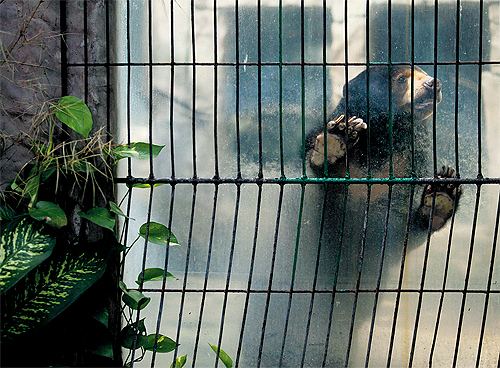
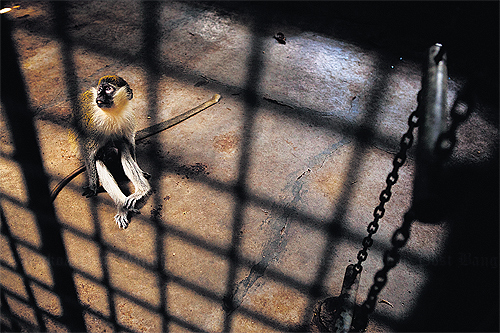
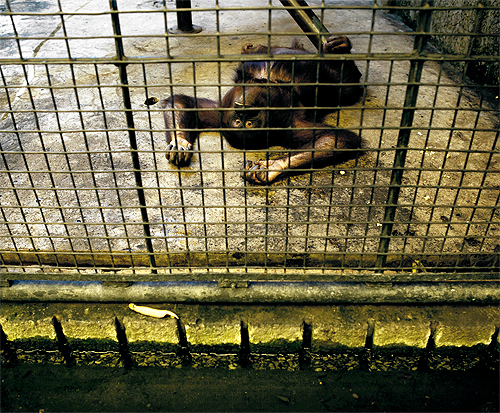
BEASTS BEHIND BARS: This page, the zoo at Pata mall is home to a variety of animals, though activists claim that many of their enclosures are too small.
