BANGKOK – The Fisheries Department is prepared to give Safari World permission to import six beluga whales from Russia if it improves its aquarium facilities, senior official Manop Chaengkit said.
The zoo’s plan to import the whales has sparked protests from wildlife activists who argue that keeping the marine mammals in captivity in tropical Thailand could kill them.
Mr Manop, director of the Fishery Management Bureau, said officials had inspected Safari World’s aquarium to see whether it is suitable for the marine mammals which usually live in the Arctic Ocean.
Nancy Gibson, chief executive of the Love Wildlife Foundation, said her group would continue to campaign against the zoo’s plan to import the beluga whales.
The bureau also asked the zoo to detail what caused the deaths of beluga whales it previously had in its aquarium. Ten years ago, Safari World imported four young beluga whales from Russia. Only one is still alive.
Mr Manop said the bureau wanted to know if the zoo has implemented any measures to ensure the whales can adapt and survive.
”We have some recommendations regarding the water system. If the zoo agrees to improve it, we have no reason to object to an import licence,” Mr Manop said.
A subcommittee will decide whether to grant the licence in two weeks.
The Convention on International Trade of Endangered Species of Wild Fauna and Flora (Cites) has added the beluga whale to its Annex II list, which includes species not necessarily threatened by extinction but whose trade must be controlled.
Russia is the only country allowed by the convention to hunt for the mammal under a quota.
This quota has rapidly decreased from 100 a year on average to only 30 as a result of declining numbers.
Nancy Gibson, chief executive of the Love Wildlife Foundation, said her group would continue to campaign against the zoo’s plan to import the beluga whales.
She said there would be no compromise on the issue as keeping marine mammals in a zoo shortens their lifespan.
”On average, the lifespan of a captured beluga whale is less than 20 years, compared with 40 years in the wild,” she said.
”People going to a zoo can’t learn anything about its true nature. They only come to see them jumping and parading around a pool in sunglasses,” Ms Gibson said.
She said her group would submit a protest letter to Safari World signed by more than 12,000 people if the zoo continues with its attempt to import the whales.
The group last month launched an online campaign called Free Beluga on the change.org website that has drawn thousands of supporters.
Tul Pinkaew, the website’s campaign director, said strong support in social media has played a key role in the campaign. He hopes it will make the bureau consider the import permit carefully.

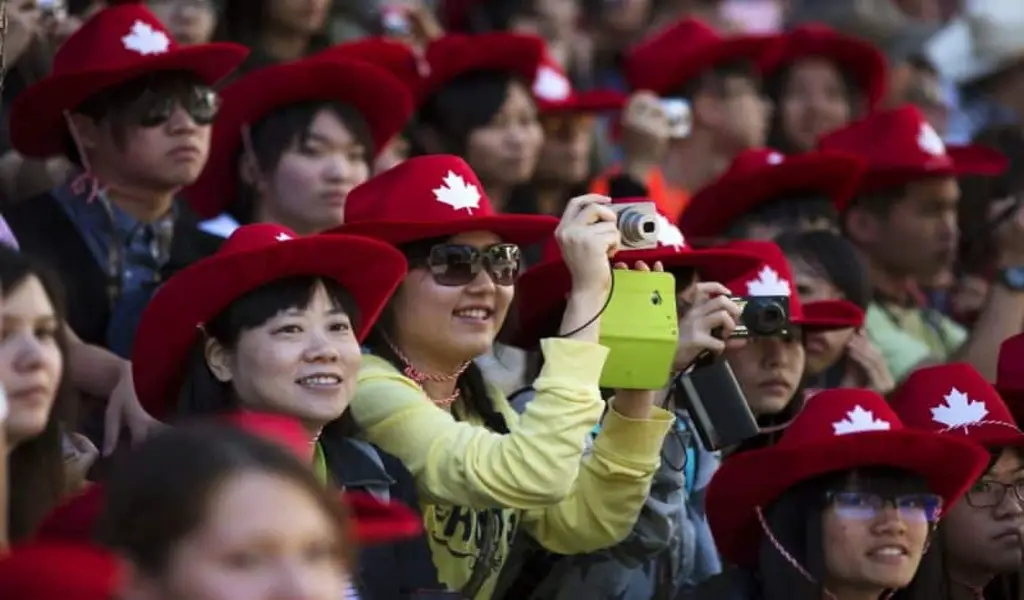
(CTN NEWS) – China has eased restrictions on group travel to several nations, including the United States and the United Kingdom, while excluding Canada from the list.
This move reflects a deterioration in relations following Canada’s recent accusations of Beijing’s interference in its internal politics.
Chinese authorities have justified the exclusion of Canada by citing allegations of foreign meddling.
This travel restriction could significantly impact Canada’s tourism industry, which had previously received a boost of over C$1 billion (£580 million; $740 million) from Chinese tourists before the onset of the Covid pandemic.
China’s Tourism Control as a Diplomatic Lever: Recent Developments and Strained Relations with Canada
The Ministry of Culture and Tourism in China controls the selection of countries that Chinese tour companies can visit, ostensibly to safeguard the well-being of travelers abroad. However, this mechanism has also been employed as a tool for advancing China’s foreign policy objectives.
In a recent development, China expanded its list of approved group vacation destinations to include 78 additional countries, conspicuously omitting Canada.
Notably, other key G20 nations such as the United States, Germany, Australia, and South Korea were included in the list, which now encompasses 138 countries.
The Chinese embassy in Ottawa expressed its concern in an official statement, criticizing Canada’s emphasis on alleged “Chinese interference.”
Beijing stressed its commitment to ensuring the safety and lawful rights of Chinese citizens abroad, expressing the desire for their travel in a secure and welcoming environment.
This latest development further exacerbates the already strained diplomatic ties between the two countries, which had significantly deteriorated earlier this year.
The deterioration was prompted by a series of leaks to Canadian media, wherein domestic intelligence agencies raised allegations of Chinese intervention in recent federal elections.
Canada’s Accusations and Diplomatic Tensions with China: Impacts on Tourism and Bilateral Relations
Canada has lodged allegations against Beijing, accusing them of engaging in efforts to intimidate Conservative MP Michael Chong and orchestrating a disinformation campaign against him through the widely-used Chinese messaging platform WeChat.
Several of these claims led to the expulsion of Chinese diplomat Zhao Wei from Canada in the month of May. In response, China took action by recalling Jennifer Lynn Lalonde, a Canadian diplomat stationed at its embassy in Shanghai.
The significance of China as a key contributor to Canada’s tourism sector is evident through data provided by Destination Canada, an organization dedicated to promoting tourism in the country.
China stands as the primary source of visitor arrivals from the Asia-Pacific region and holds the second-largest position in the category of long-distance markets, trailing only behind the United Kingdom.
A study conducted in 2021 by the Canada China Business Council reveals that the year 2018 witnessed over 700,000 Chinese tourists visiting Canada, with each traveler averaging an expenditure of around C$2,600.
During that period, the business council expressed apprehensions about the outlook of Chinese tourism to Canada due to escalating bilateral tensions. They cited statements from Chinese officials that hinted at the dependency of Chinese tourism on favorable diplomatic relations.
It is worth noting that the inception of group travel from China to Canada was officially sanctioned in 2010, which subsequently spurred increased air travel and tourism activities between the two nations.
Changing Perceptions: Canada’s Shifting Appeal among Chinese Travelers and its Impact on Bilateral Dynamics
Bilateral relations encountered a setback in 2018 when Canada imprisoned Huawei executive Meng Wanzhou at the behest of the United States. Subsequently, two Canadians were detained in China, a move that Canada and its allies labeled as a form of “hostage diplomacy.”
The Canada China Business Council reported a decline in the number of Chinese visitors to Canada in 2019.
In 2021, Ms. Meng and the two men were released after reaching an agreement with US authorities. Earlier this year, China began easing travel restrictions related to the pandemic for both domestic and international travelers.
Conversely, recent findings from a survey conducted by the state-run Global Times indicate a significant shift in sentiment. Canada, once a favored destination among Chinese travelers, has now emerged as China’s least favored country.
The survey, a collaborative effort between the Global Times Research Centre and market research firm DATA100, collected 2,148 responses from 16 cities in China. The results highlight that a mere 0.4% of respondents expressed a preference for Canada.
In contrast, Singapore garnered positive feedback from 14% of participants, sharing the top spot with China. Following closely were Germany, France, the United States, Russia, and the Maldives as the next most preferred destinations.
Singapore also emerged as the leading desired travel location, with 17.1% of Chinese respondents expressing interest, followed by the Maldives and France.
Interestingly, historical data spanning from 2018 indicated that Singapore had not ranked within the top six until recently.
The outcomes of this survey underscore the ongoing tensions between Ottawa and Beijing.