SeaWorld Orlando is ending its theatrical orca shows, but they still have a long road ahead

click to enlarge SeaWorld Orlando is ending its theatrical orca shows, but they still have a long road ahead
Photo via Wikimedia Commons
With a new CEO at the helm, SeaWorld looks to be back on track with previously announced plans to phase out entertainment-driven animal shows. Its orca show, "One Ocean," is retiring at the end of December in both Orlando and San Antonio.

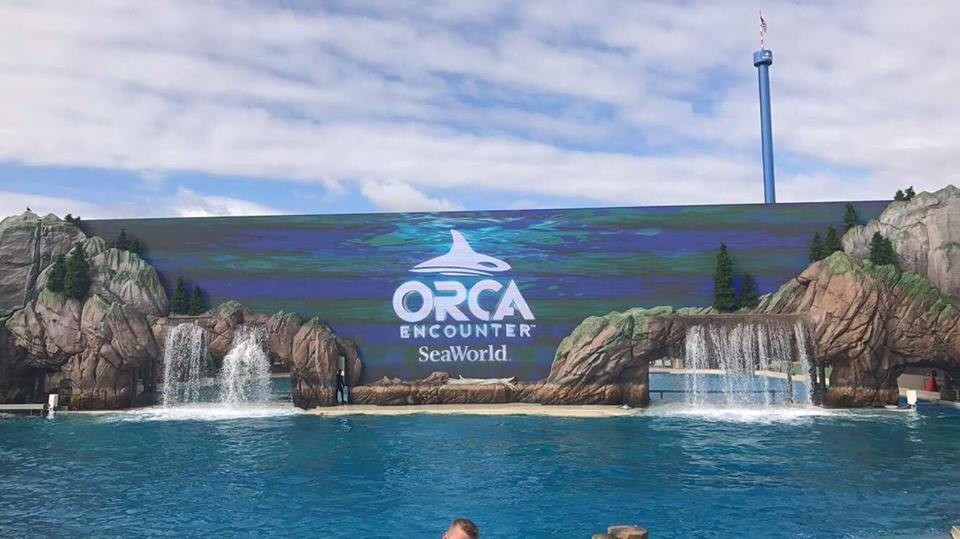
During the heat of SeaWorld's rough seas, former CEO Joel Manby made a splash in 2016 by announcing the end of orca breeding, and plans to phase out its theatrical orca shows. A year later, "Orca Encounter" debuted in San Diego in a newly remodeled orca theater that more closely resembled the natural Pacific Northwest where many orcas are found. The show opened to mixed reviews, but it was clear that this would be the future of the parks.
click to enlarge SeaWorld Orlando is ending its theatrical orca shows, but they still have a long road ahead
Photo via SeaWorld
Less than a year after the new show debuted, controversial CEO Joel Manby was out. Since then, the company has seen a revolving door of CEOs, with the most recent one, Sergio Rivera, coming aboard in November.

In the two and a half years since "Orca Encounter" debuted in San Diego, the company has been silent on what the future holds for its other two SeaWorld parks. But now with a new CEO in place, the plans to roll out the more educational presentations are now moving forward. An updated version of "Orca Encounter" will debut in Orlando on Jan. 1. In San Antonio, "One Ocean" will close Dec. 31 and "Orca Encounter" will debut when the park reopens in late February. Through Jan. 5, while the park wraps up its holiday openings, the short educational presentation "Killer Whales Up Close" will remain in the rotation, giving guests an opportunity to see the orcas.

Nearly four decades ago, the company pledged not to receive any wild-caught orcas.

tweet this
For now, the stadium enhancements that San Diego saw won’t happen in Orlando, where the new show will debut less than 24 hours after the final "One Ocean" show. It’s expected that the Orlando and San Antonio shows will feature much of the same video content as the San Diego show, which focuses on orca biology and characteristics. Gone are the big musical numbers, emotional storyline, and trainers dancing to music. Instead, the orcas explore the tank as trainers talk about them. In between videos, trainers display many of the same tricks as the current show features, but now the tricks are presented in a more educational format that helps explain how they mimic natural tendencies of the orcas and why they’re necessary to ensure the continued health of the animals.

Dr. Chris Dold, Chief Zoological Officer at SeaWorld Parks explained, "SeaWorld is excited about our new Killer Whale educational presentation, 'Orca Encounter.' Guests will learn about killer whales' role in the ocean ecosystem, behaviors the animals exhibit in the wild, the importance of conservation to their habitat, and animal welfare practices at SeaWorld. This educational presentation reflects our company’s mission to inspire people and protect the animals and wild wonders of our world through education, research, animal rescue and conservation."
click to enlarge An artist's rendering of the canceled Blue World orca habitat at SeaWorld - Image via SeaWorld
Image via SeaWorld
An artist's rendering of the canceled Blue World orca habitat at SeaWorld
The new show is a bit of a throwback to some of SeaWorld's earlier shows, before the spectacles they're now known for began. When "One Ocean," with its original soundtrack, debuted in 2011, it made history as the first show to remove trainers from the water with the orcas.

A year prior, trainer Dawn Brancheau was killed by an orca during a Dine with Shamu presentation. Surprisingly, both "One Ocean" and San Diego's version of "Orca Encounter" still feature trainers in close proximity to the orcas during the shows, including times where the trainers kiss the killer whales in a slide-out area near the front of the stadium.

While the educational show may appease some critics, SeaWorld still faces decades of criticism due to the use of captive orcas. Of the five orcas currently at SeaWorld Orlando, only one is above the age of 15 years old. Half of San Diego’s ten orcas are 18 years old or younger. Two of San Antonio’s orcas are less than ten years old.

According to the nonprofit whale advocacy group the Whale and Dolphin Conservation, in the wild male orcas can live up to 60 years, with an average lifespan of 30, while female orcas can live up to 90 years, with an average lifespan of 46. One female orca at SeaWorld Orlando, Katina, is currently 44 years old, while the oldest orca in SeaWorld’s care is 54-year-old Corky II in San Diego.

Katina and Corky II are two of the three orcas still in SeaWorld’s care that were wild-caught. Nearly four decades ago, the company pledged not to receive any wild-caught orcas. That pledge, along with the 2016 one to end breeding, means the current 20 orcas in SeaWorld’s care will be the last ones that park, and likely the nation, will see. Online speculation that SeaWorld may introduce another "wow" animal to replace the orcas is also hamstrung by this pledge, since many of the more impressive species of sea life, like whale sharks, have yet to be successful breed in captivity.

click to enlarge An artist's rendering of the proposed Blue World orca habitat - Image via SeaWorld
Image via SeaWorld
An artist's rendering of the proposed Blue World orca habitat
The new educational presentations are important, but some have pointed out that valid criticism of the tank size remains. Previous proposals to increase the size of the orca tanks, already some of the largest in the world, and provide "water treadmills" were quietly canceled, but the question remains what SeaWorld plans to do with the orcas in the long term.

Insiders have reported that trainers who work with the orcas are attempting to train the mostly captive breed whales how to catch live bait, which is preferred for multiple physical and mental health reasons. Much like a domesticated dog, the orcas in SeaWorld's care have lost many of their natural tendencies. It’s also unclear how robust their immune systems are. These concerns have meant the theoretical sea pens that some advocate for may not be a possibility. But as animal welfare concerns become more mainstream, many animal facilities with large mammals are struggling to keep up with public expectations.

In recent years, wellbeing concerns for orcas have overshadowed those of many other animals, but there remains an increasing push for improved conditions for other animals, including elephants and dolphins. Some zoos, such as the Central Florida Zoo in Sanford, have phased out elephants altogether, replacing them with smaller, easier to care for animals. Many animal care facilities are also turning to new technology, like virtual reality, to shift how they tell the stories of these crucial species, but an orca-themed VR experience at SeaWorld San Diego received less than optimal reviews. As of now, there has been no indication that SeaWorld will offer the VR experience in Orlando.

Many of the more impressive species of sea life, like whale sharks, have yet to be successful breed in captivity.

tweet this
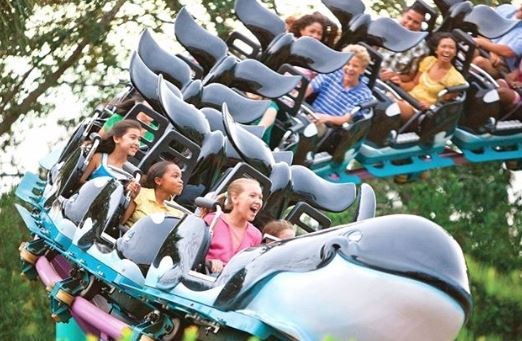
The last significant new animal habitat at SeaWorld Orlando was the Manta aquariums in 2009, with the most recent animal habitat improvement being the Antarctica penguin exhibit in 2013. Since then, the company has focused on bringing non-animal attractions to the park, including the Mako coaster, the Sesame Street Land, and the upcoming Ice Breaker roller coaster. A similar thrill ride reliant growth strategy has been used at all of SeaWorld’s other parks, including Busch Gardens Tampa and the other two SeaWorld-branded parks.

The company has also been quietly phasing out the Shamu branding, with the San Diego Shamu stadium being rebranded when it opened the new "Orca Encounter" show. Across all three SeaWorld parks, Dine with Shamu was 
click to enlarge SeaWorld Orlando is ending its theatrical orca shows, but they still have a long road ahead
Image via SeaWorld
replaced by a more generic Dine with Orcas branding. The Shamu Express kiddie coasters in Orlando and San Antonio were replaced by a Sesame Street theme in early 2019. They were the final Shamu-branded ride, though other references to the park chain’s most famous orca remain.
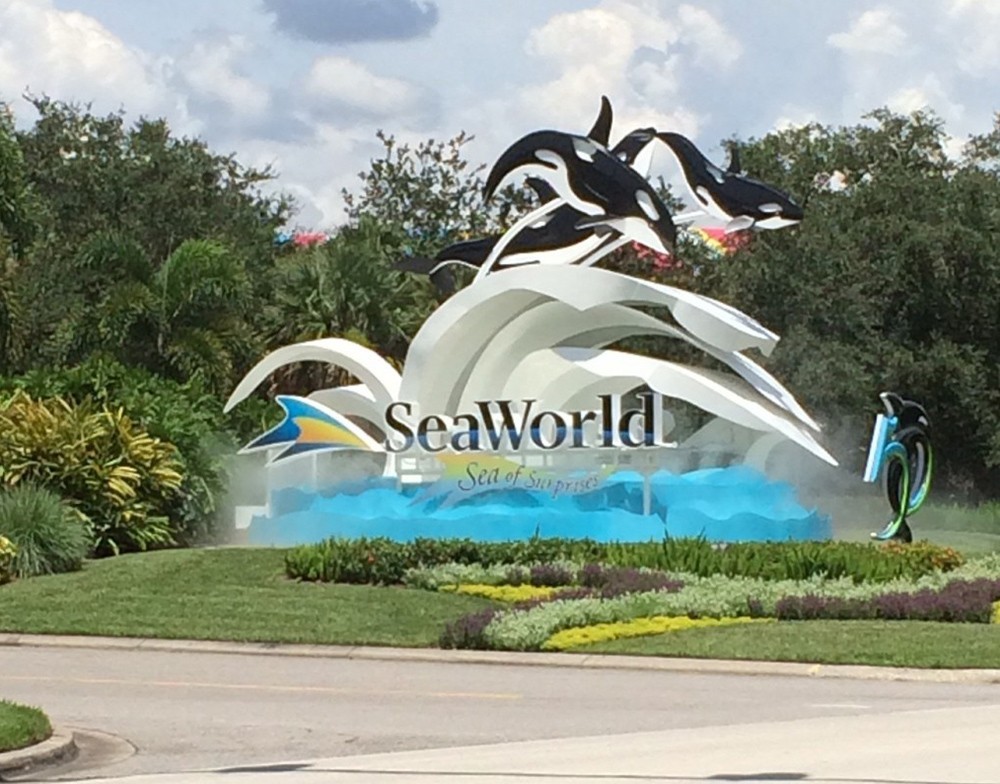
Despite the shift away from Shamu, orcas remain a paramount part of SeaWorld’s identity. In Orlando, the orca stadium still has a large Shamu Stadium sign and the park has a statue of orcas along its entrance on Central Florida Parkway. Nearby hotels have an orca-themed splash pad and bus stops in the area feature the park’s iconic orca-tail design. Orca plushes are sold in gift shops throughout the tourist corridor and orca whale-tail ornaments hang from Christmas trees at SeaWorld. For the foreseeable future, orcas will remain a part of SeaWorld parks, for better or worse.

After the nearly universal approval of the orca retirement plan laid out by previous CEO Joel Manb in 2016, any backtracking would likely reignite controversies the company has mostly been able to settle. But with the orcas likely to remain around for decades, SeaWorld still has plenty to grapple with, from its past to how it shapes its future.
click to enlarge Orca Encounter at SeaWorld San Diego - Image via Stand with SeaWorld/Facebook
Image via Stand with SeaWorld/Facebook
Orca Encounter at SeaWorld San Diego
Stay on top of Orlando news and views. Sign up for our weekly Headlines newsletter.
Scroll to read more Arts Stories + Interviews articles

Newsletters

Join Orlando Weekly Newsletters

Subscribe now to get the latest news delivered right to your inbox.

Orlando venue Steinmetz Hall named one of ' the most beautiful theaters in the world' by Architectural Digest

Steinmetz joined worthies like the Sydney Opera House on the list

click to enlarge Steinmetz Hall honored by Architectural Digest - Photo by Brian Soderlind
Photo by Brian Soderlind
Steinmetz Hall honored by Architectural Digest
Downtown Orlando venue Steinmetz Hall has been named one of the "The 11 Most Beautiful Theaters in the World" by Architectural Digest.

in a round-up piece on aesthetically pleasing halls published on Tuesday by the magazine the “acoustically perfect” Steinmetz Hall — part of the Dr. Phillips Center for the Performing Arts complex — was hailed for being "one of the world’s most acoustically advanced theaters" as well as the ability to "morph [the seats'] shape and orientation depending on the type of arrangement needed for various performances."

Steinmetz joined other well-regarded performance spaces like the Sydney Opera House in Australia, the Vienna State Opera in Austria and the Palacio del Bellas Artes in Mexico City.

If you want to check out this most beautiful theater space for yourself, snap up tickets for this Sunday's performance by comedian Igor Guimarães.

Location Details

Steinmetz Hall, Dr. Phillips Center for the Performing Arts

445 S. Magnolia Ave., Orlando Downtown

407-358-6603

32 events 5 articles

Subscribe to Orlando Weekly newsletters.

Follow us: Google News | NewsBreak | Reddit | Instagram | Facebook | Twitter
Scroll to read more Arts Stories + Interviews articles

Newsletters

Join Orlando Weekly Newsletters

Subscribe now to get the latest news delivered right to your inbox.

Orlando-based home chef featured on ‘The Great American Recipe’ season two

PBS show aims to uplift the multiculturalism that both defines and unites American cooking

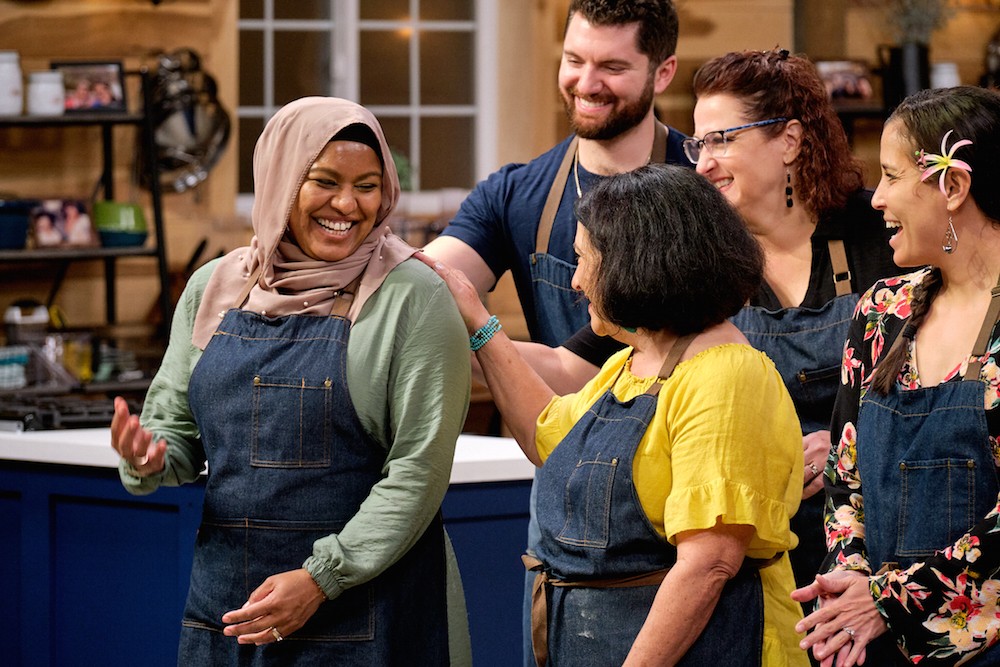
click to enlarge Orlando-based home chef featured on ‘The Great American Recipe’ season two
Photo courtesy WUCF TV
When Salmah Hack moved to Florida from the comforts of the New York City neighborhood she was raised in, it meant she was leaving the place enveloped by her family and heritage.

Hack grew up in Little Guyana, where she was immersed in her family's culture and cooking, where her bedroom literally opened up into the kitchen. When she got married, she knew she'd have to make the move to her husband's new home in Central Florida.

That was in 2005. Now, after adjusting to the city's energy (and figuring out how to source essential curry powders and seasonings in a new place) Hack is representing Orlando and her culture as a contestant in the second season of PBS's The Great American Recipe.

The series spotlights talented home cooks from all ends of the country as they share dishes that best represent them, in an effort to pinpoint the great American recipe.

First aired in June, 2022, The Great American Recipe aims to uplift the multiculturalism in cooking that both defines and unites American cuisine. The series focuses on home chefs, ensuring a kind of passion often unseen in professional cooking competitions.

For Hack, a project manager by day, the show encapsulated storytelling through food.

"I had the opportunity of coming on each week and preparing a dish based around a theme that reflected my family, my culture, my background and my upbringing," she said.

Much of what Hack cooks is heavily influenced by her Guyanese heritage. The Guyanese love of food is reflective of the indigenous people that make up Guyana, she said.

Guyana is made up of seven different ethnicities, all of which Hack works to reflect in her cooking. Authentic Guyanese cuisine draws from many influences, like Indo-Caribbean, Indian, Chinese, African, Dutch, Portuguese and more.

So far, only three episodes of the season are available to viewers. Some of Hack's recipes in those episode include Geera lamb chops and hummus, vamazelli (a sweet vermicelli noodle cake) and kitchri with stewed chicken.

click to enlarge Orlando-based home chef featured on ‘The Great American Recipe’ season two (2)
Photo via WUCF TV

In episode three, Salmah introduces her kitchri dish through tears, connecting the meal with familial comfort. She calls the dish "a hug from my grandmother."

Guyanese cooking is not widely known, but Hack is proud to share it. Since the episodes have aired, she's received messages from viewers all over: from Canada to England to, of course, Guyana, celebrating her ability to represent a culture not often seen.

"They were touched and they felt represented in seeing, one, a Guyanese person on TV, two, someone wearing hijab on TV," she said.

Hack set off on the show to do just that; she started with the intent that she was there to represent not only herself, but the kind of person she would have wanted to see on a cooking show when she was growing up.

"Typically when you do turn on any type of food competition or Food TV, you see someone of Indian descent," she said. "And there are so many different Indians on the spectrum in terms of where we fall within the world and the map. So, that was my intent: to stay true and authentic to who I am."

The Great American Recipe episodes one through three are available to watch now via PBS. (If you live in Orlando, that means you'll see it on WUCF.) While the winner of the series won't be announced until the season's final episode, viewers can tune in to watch Hack continue to share her story through culturally rich cooking.

Subscribe to Orlando Weekly newsletters.

Follow us: Apple News | Google News | NewsBreak | Reddit | Instagram | Facebook | Twitter | Or sign up for our RSS Feed

About The Author

Chloe Greenberg

Chloe Greenberg is the Digital Content Editor for Orlando Weekly.

Newsletters

Join Orlando Weekly Newsletters

Subscribe now to get the latest news delivered right to your inbox.

Broadway in Orlando: ‘Beetlejuice’ is a devilish delight despite deviating from the film

Musical adaptation of the Tim Burton fantasy plays at Dr. Phillips Center through July 2

click to enlarge Britney Coleman (Barbara), Will Burton (Adam), Isabella Esler (Lydia) and Justin Collette (Beetlejuice) in Beetlejuice: The Musical - Photo by Matthew Murphy
Photo by Matthew Murphy
Britney Coleman (Barbara), Will Burton (Adam), Isabella Esler (Lydia) and Justin Collette (Beetlejuice) in Beetlejuice: The Musical
I’ve lost count how many lifeless Broadway adaptations of beloved 1980s films have limped through the Dr. Phillips Center in the last few years, most slavishly re-creating fan-favorite scenes on stage like a mega-budget Rocky Horror shadowcast. So imagine my surprise when a show about a dead guy that breaks all the rules about musicalizing movies — along with the fourth wall — ended up breathing life back into this zombified genre.

Don’t worry if you don’t remember (or have never seen) Tim Burton’s brilliant Beetlejuice, because book writers Scott Brown & Anthony King retain only the bare bones of Michael McDowell & Larry Wilson’s original screen story, drastically reshuffling plot points and character relationships. But Lydia (Isabella Esler) is still a lonely, afterlife-obsessed teen who befriends Adam (Will Burton) and Barbara (Britney Coleman), a klutzy couple of recently-deceased ghosts. Together, they unwittingly unleash a foul-mouthed demon named Beetlejuice (Justin Collette), whose name must be uttered thrice before he can molest mortals.

The requisite minimum of iconic onscreen moments are reproduced — from the possessed partygoers’ “Day-O” dance to the shrunken-headed hunter in the Netherworld — but an equal number of quotable monologues are omitted entirely, and there’s nary an aural homage to Danny Elfman’s unforgettable score. Eddie Perfect’s songs are a mix of angsty pop power-ballads and hard-rock pastiche, leaning on Hamilton-lite patter. The tunes aren’t especially memorable, no matter how insistently they are reprised, but they make a perfect platform for Perfect’s profane and pun-peppered lyrics, which work in tandem with the sharp, snarky script to skewer audiences’ expectations.

Apart from the frequent F-bombs, the musical’s tone and mythology seem more influenced by Universal Orlando’s old Beetlejuice’s Graveyard Revue show or the Saturday-morning cartoon series than by Burton’s gothic vision. However, novel interpolations such as the new motivation behind Beetlejuice’s manipulations, as well as the reasons behind Lydia’s gloom, add unexpected emotional depth for both fans of the film and newcomers alike ... even if I couldn’t make heads or tails of the cosmological rules by the conclusion.

The fact that Beetlejuice: The Musical proves to be a devilish delight despite its deviations from the source material and middling music is largely attributable to three factors. First, Alex Timbers’ breakneck direction, in cooperation with Connor Gallagher’s phantasmagorical choreography, imbues the show a manic energy that doesn’t allow viewers time to analyze the logical lapses. Second, William Ivey Long’s imaginative costume designs and Michael Curry’s monstrous puppets, framed against David Korins’ pop-up-book sets, perfectly evoke the essence of Tim Burton’s eerie aesthetic.

Most importantly, Beetlejuice’s cast shamelessly embraces these over-the-top shenanigans, displaying obvious delight at being inside a live-action Scooby Doo episode, and their enthusiasm is instantly infectious. From Collette’s titular poltergeist (who is both ickier and more endearing than Michael Keaton’s spook) and the extraordinary young Esler’s wily heroine (more Jenna “Wednesday Addams” Ortega than Winona Ryder), each actor remakes these familiar characters as their own, rather than simply standing in the shadows of their silver screen originators. A special shout-out goes to opening night understudy Lexie Dorsett Sharp for stealing scenes as dotty Delia, normally played by Kate Marilley.

It may not have delivered all the fan service I expected, and I’m frankly mystified how the soundtrack became a social media sensation. But I’m thrilled that Beetlejuice finally washed the lingering aftertaste of flavorless film-musicals out of my mouth, and ended this Broadway touring season on a deliciously naughty note.

Newsletters

Join Orlando Weekly Newsletters

Subscribe now to get the latest news delivered right to your inbox.

Latina-led Orlando nonprofit Open Scene chosen for Fringe’s relaunched incubator program

The Spanish-language arts group is one of three in a new 18-month mentoring program

Open Scene presented ‘Noche de Zarzuela’ at Fringe Artspace
Open Scene presented ‘Noche de Zarzuela’ at Fringe Artspace photo by Seth Kubersky

Orlando's arts institutions are increasingly emphasizing the diversity of Central Florida's cultural community, offering creative outlets for members of historically marginalized communities. But despite those outreach efforts, the fact remains that the vast majority of mainstream artistic opportunities are oriented toward English-speakers, which leaves out a significant swath of our area's Latinx population. In a bid to redress that imbalance, downtown's Fringe ArtSpace teamed up last weekend with the Latina-led nonprofit Open Scene to present the third annual Festival Latinoamericano de Artes Escénicas (Latin American Festival of Performing Arts) — or FLAE — featuring three days devoted to Spanish-language theater and Latin American artists.

Open Scene was founded in 2019 by Venezuelan journalist Thamara Bejarano, debuting with a performance art piece on Church Street at the Creative City Project's Immerse festival, where they also presented the intriguing "Exquisite Corpse" virtual reality experience three years later. During the pandemic period in between, Open Scene streamed readings of Lorca and Ibsen en español, but it was their Fringe 2022 production of Claudia Vargas Vega's Raquel, a searing drama about anti-trans violence, that really caught my attention. In addition, Open Scene has held several playwriting contests (their latest, "Escena Abierta," closes June 30) and created three installments of "Voices," a series of dramatic documentaries and socially conscious shows.

For this year's FLAE, Open Scene returned to Church Street and brought to ArtSpace Miami's Havanafama for a kabuki-inspired interpretation of La Casa de Bernarda Alba and Texas' Teatro Dallas with Gustavo Ott's tragicomedy Passport. I stopped by on Saturday for the festival's grand finale, a "Noche de Zarzuela" revue of the 17th-century Hispanic operatic subgenre by Central Florida Vocal Arts' Opera del Sol.

The evening began with an hour of live guitar music in the ArtSpace lobby, which was temporarily transformed into a visual art gallery, prior to the main presentation starring soprano Mariangel Cestari, mezzo-soprano Stefanie Diaz, tenor John Teixeira and baritone Jose-Manuel Lopez, under the direction of Bert Rodriguez. These internationally experienced vocalists were supported by a superb chamber quartet fronted by dynamic viola player Daniel Cortes, along with a twirling trio of human chrysanthemums from Raymi Dance.

My last experience with Open Scene, their 2023 Fringe drama La Cantante Vuelve, was undermined by unintelligible high-tech translation devices, so I was thankful they weren't needed to thoroughly enjoy the Zarzuela; after all, opera has been appreciated across linguistic lines for centuries before supertitles arrived. Bejarano says her company will continue experimenting with "state-of-the-art artificial intelligence technology" that will allow them to offer all their content with subtitles and audio in more than 25 languages.

However, it was evident from the audience's enthusiastic reception that this colorful, emotionally charged concert didn't need a school of bionic Babel fish to make an artistic impact.

"The reaction to this week's festival from both patrons and artists has been overwhelmingly positive," says Open Scene production director Mariela Saad. "The fact that the public was captivated by every performance is a testament to the quality and appeal of our offer. The great feedback received further reinforces the success of the event. These reactions make us feel extremely pleased and excited about the future. They validate our efforts in building an Open Scene Community that fosters a shared passion for the arts, culture and their universality."

If you didn't make it to this year's FLAE, you'll have plenty of future opportunities to see Open Scene in action at Fringe ArtSpace, because they are one of three organizations chosen to join the Collective, Orlando Fringe's recently relaunched incubator program. Along with Meka King's Sonflower Joy Music and Without Fear Theatre, Open Space will participate in an 18-month mentoring program, and receive up to $20,000 (plus over $35,000 in in-kind services) to produce multiple shows in Fringe ArtSpace's season starting next spring. This new program is sponsored by the Downtown Development Board, and spearheaded by Fringe's newly promoted Creative Learning Producer, Genevieve Bernard [aka, full disclosure, my wife].

"Our hopes for our time with the Collective incubator are filled with excitement and anticipation," says Saad. "We see this opportunity as a valuable platform for collaboration and growth. Through it, we aim to foster meaningful partnerships, exchange ideas and explore new possibilities together. This collaborative environment will provide us with resources, support and networking opportunities that can help us bring new and innovative projects to our audience. Our goal is to accelerate our growth, expand our reach and continue bringing exciting experiences to the community we serve. We are grateful for this opportunity and optimistic about the positive impact it will have on our organization and all the parties involved."


Subscribe to Orlando Weekly newsletters.

Follow us: Apple News | Google News | NewsBreak | Reddit | Instagram | Facebook | Twitter | or sign up for our RSS Feed

Newsletters

Join Orlando Weekly Newsletters

Subscribe now to get the latest news delivered right to your inbox.

Orlando theater creator Jeremy Seghers joins the exodus of artists out of Florida

He leaves us with one last show, a reimagined ‘Streetcar’ at Timucua Arts Foundation

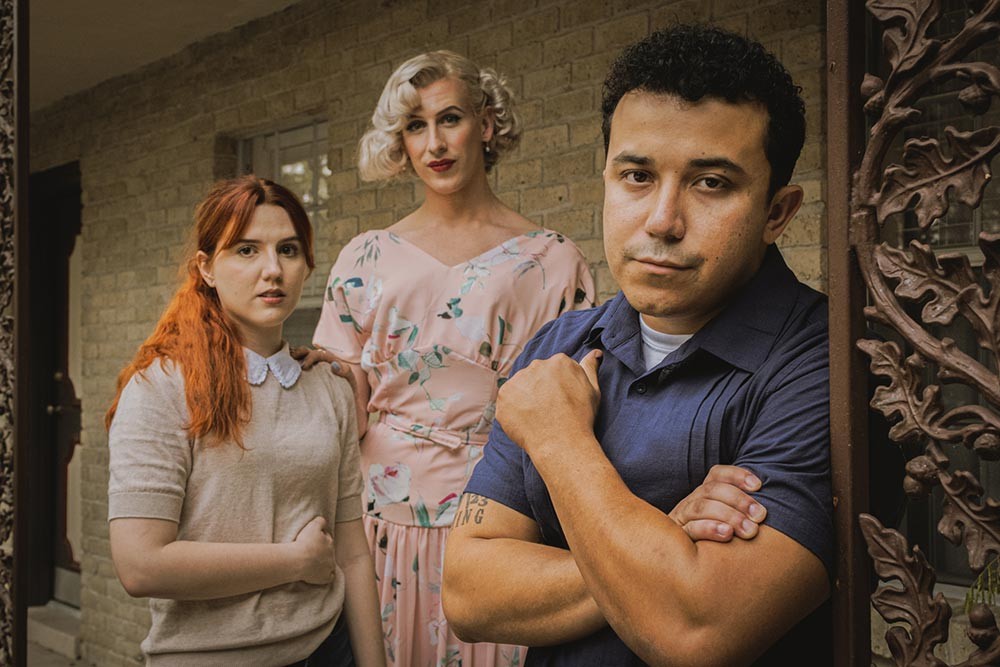
click to enlarge Caroline Hull, Indigo Leigh, and Daniel Luis Molina star in "A Streetcar Named Desire" at Timucua Arts Foundation. - photo courtesy of the producer
photo courtesy of the producer
Caroline Hull, Indigo Leigh, and Daniel Luis Molina star in "A Streetcar Named Desire" at Timucua Arts Foundation.

Thanks to Florida’s current governor, creative artists and members of vulnerable minorities (often the same thing) have been exiting our state en masse via planes, trains, automobiles ... and even streetcars. You can add producer/director Jeremy Seghers to that list; after nearly 20 years contributing to Orlando’s cultural scene, he is (in the immortal words of MuppetVision 3D) moving to Pittsburgh, but not before shaking up Central Florida’s stages one last time with this weekend’s groundbreaking production of A Streetcar Named Desire at Timucua. I recently sat down for a “moving moment” with Jeremy to reflect on his wide-ranging legacy and hear how his swan song sheds new light on Tennessee Williams’ classic.

A native of Jacksonville, Seghers studied at Savannah College of Art and Design and lived briefly in Chicago before returning to Florida in the mid-aughts. Wanting to stay close to family, but seeking more culture than Jacksonville could provide, Jeremy was lured to Orlando by the Fringe Festival, first serving as an unpaid assistant to then-producer Beth Marshall; to pay the bills, he worked at Barnes & Noble alongside much-missed OW columnist Billy Manes. 

By 2007, he was producing his own Fringe shows, including an ill-fated puppetry fable with Heather Henson, a searing stage adaptation of Mysterious Skin, and the Adventures of Normal People in 3D, a free performance where nothing happened for an hour, and patrons were forced to pay if they wanted to leave early.

“We had the guy who took the fire extinguisher off the wall and sprayed it around,” recalls Seghers of the infamous social experiment. “That was the show that Beth [Marshall] was in, along with [performance artist] Brian Feldman, who had fallen asleep on the ground in sort of a Dracula position. And so he had this outline of white powder all around him, and we had to wake him up and say, ‘you're laying in this toxic dust.’ So that was fun.”

Following a sojourn in New York, Seghers returned with a remarkable run of innovative site-specific experiences, including A Clockwork Orange on I-Drive, Dracula inside a taxidermy shop, and Equus in an actual barn (without working air conditioning).

“It was kind of like ‘necessity is the mother of invention,’ really, because I came back, I didn't have a venue, and I didn’t want to waste any more time,” Seghers says.

In the years since then, Seghers has become sought-after as a freelance director, working across the region from the Villages to Winter Garden; most recently, he mounted Misery at Osceola Arts and the epic two-part Angels in America at Valencia College. 

For his final local production, Seghers revived a concept he had previously pitched at Osceola Arts, inspired by his friend and collaborator Indigo Leigh, the openly transgender actress and designer who plays the fragile heroine, Blanche DuBois.

“When I was doing pre-production for Angels, I think that kind of sparked something, because there are there are so many connections [and] parallels between Kushner and Williams,” says Seghers. “It's been widely noted that Blanche and Tennessee Williams are the same. … He wrote a character with queer camp sensibilities; she has a flair for the dramatic, she is an outsider, and Tennessee was an outsider, [so] it's not that far of a leap to make — having Blanche as a queer character, and as a trans character — because there is so much about her past that she wants to avoid talking about, that's dark [and] in some way scandalous.”

Although Leigh and Seghers are using this Streetcar to emphasize Williams’ interrogation of gender norms — with Blanche’s sister, Stella (Caroline Hull), and boorish brother-in-law, Stanley (Daniel Luis Molina), as Exhibits A and B of toxic heteronormativity — they’ve done so while sticking to the original script, without “adding anything to it; we’re not changing the text at all, [and] not taking anything away from it either.”

What Seghers is adding is an immersive element that fully utilizes Timucua’s multilevel venue (“it's gonna happen all over, so people are going to have to turn around to see stuff”), as well as a commitment to assembling a diverse cast that “looked like a New Orleans that I knew.”

When asked his reasons for leaving town, Seghers cites both “the political stuff that's happening right now in Florida,” and also the tribal competitiveness of Orlando’s cliquish theater community.

“If we don't unify against the real enemy of artists, which is fascism, [then] there's not going to be anything left,” Jeremy says in farewell. “I hope that a new generation of theater makers will work with their friends to start something and keep it going, [and] then welcome new people in who can bring things that are different from them, not the same. Inclusion is not exclusion, and people need to know the difference. … Have a vision. Have your own perspective about things [because] there's so much talent here, and there's so much potential with that talent.”


Subscribe to Orlando Weekly newsletters.

Follow us: Apple News | Google News | NewsBreak | Reddit | Instagram | Facebook | Twitter | or sign up for our RSS Feed

Newsletters

Join Orlando Weekly Newsletters

Subscribe now to get the latest news delivered right to your inbox.