Kamil Galeev Profile picture
Feb 5 18 tweets 6 min read
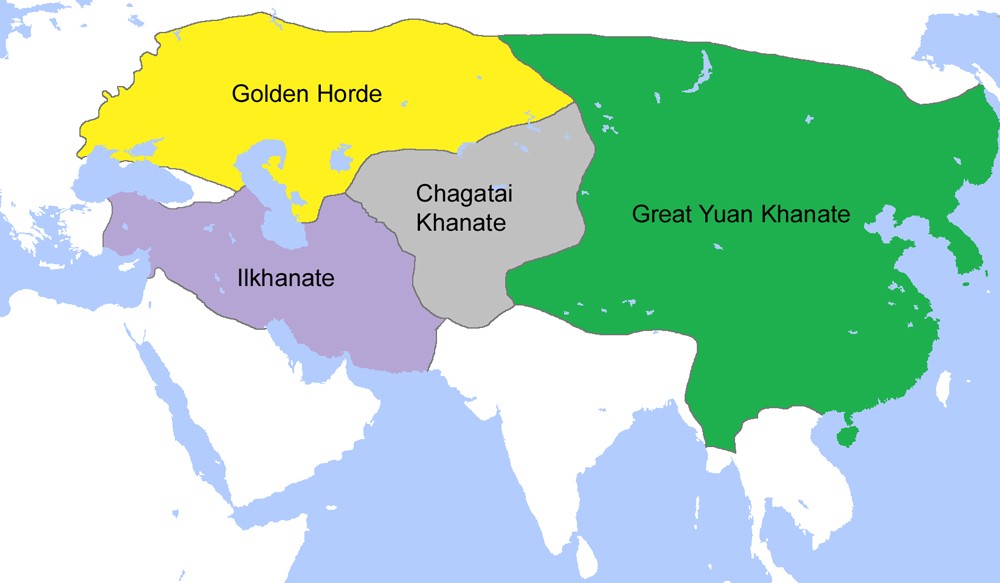
Let's talk of political, institutional and legal culture of the Horde. Firstly, to understand how did the Horde impact others we need to check how it was organised

Furthermore, this case has broader significance when considering the imperiogenesis effect of the Steppe
(thread) Image
Let's start with a question. What are the four largest inland capital cities of Eurasia? Well, obviously, Beijing, Delhi, Tehran and Moscow. What is in common between these inland megacities that also serve as the political cities of huge empires/states? Image
They all four rose to prominence as the fiscal and administrative centers of nomadic conquerors, specialising on collecting taxes from the subjugated sedentary population Image
Moscow was a tiny and unimportant principality until princes of Moscow got the right to collect the taxes (выход) for the Horde from all the other Russian polities. We now ofc think of Muscovy as of political and military power. But at first it was just a fiscal intermediary Image
It is quite telling that the prince who made Moscow the most powerful Russian state was nicknamed Ivan Kalita (= the Wallet). Collecting taxes for the Horde, he got rich and purchased tons if fiefs. Yes, at first Moscow wasn't conquering much, it was mostly buying land for cash Image
Tehran was chosen as a capital of Iran by Agha Mohammad Khan Qajar. This Turcoman leader chose Tehran, because he wanted to avoid former capital Isfahan associated with the previous also Turkic and originally nomadic dynasty - the Safavids Image
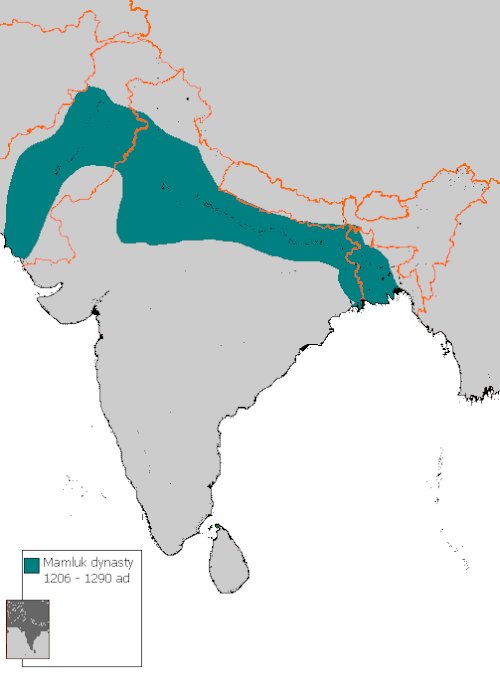
With Delhi it's even more interesting. It was the capital of Slave Dynasty. Around 1190 Eastern Iranian ruler Muhammad Ghor sent his Turkic slave armies on the conquest of Indostan. And these slave generals indeed conquered the Indo-Ganghetic valley Image
Where were these slave generals garrisoned? Yildiz sat in Ghazni, Bakhtiyar Khilji in Bengal, Qabacha in Punjab. And Aibak in Delhi. In the fight for power that followed Muhammad Ghor's death Aibak won. That's the beginning of the Slave Dynasty and of the imperial ascent of Delhi
The case of Slave Dynasty where one slave succeeded to another highlights an important sociopolitical pattern - slave-elites. Bernard Lewis called it 'a peculiar social structure of Muslim society', I prefer to talk of the Inner Asian Military Bondage. But I'll cover it later
Finally, Beijing was am unimportant city until it became a capital of Inner Asian conquerors. First of Khitans, then of Jurchens, then of Mongols and finally of Manchus. To put it in other words, Beijing rose to prominence as the HQ of mounted horse archers from beyond the wall Image
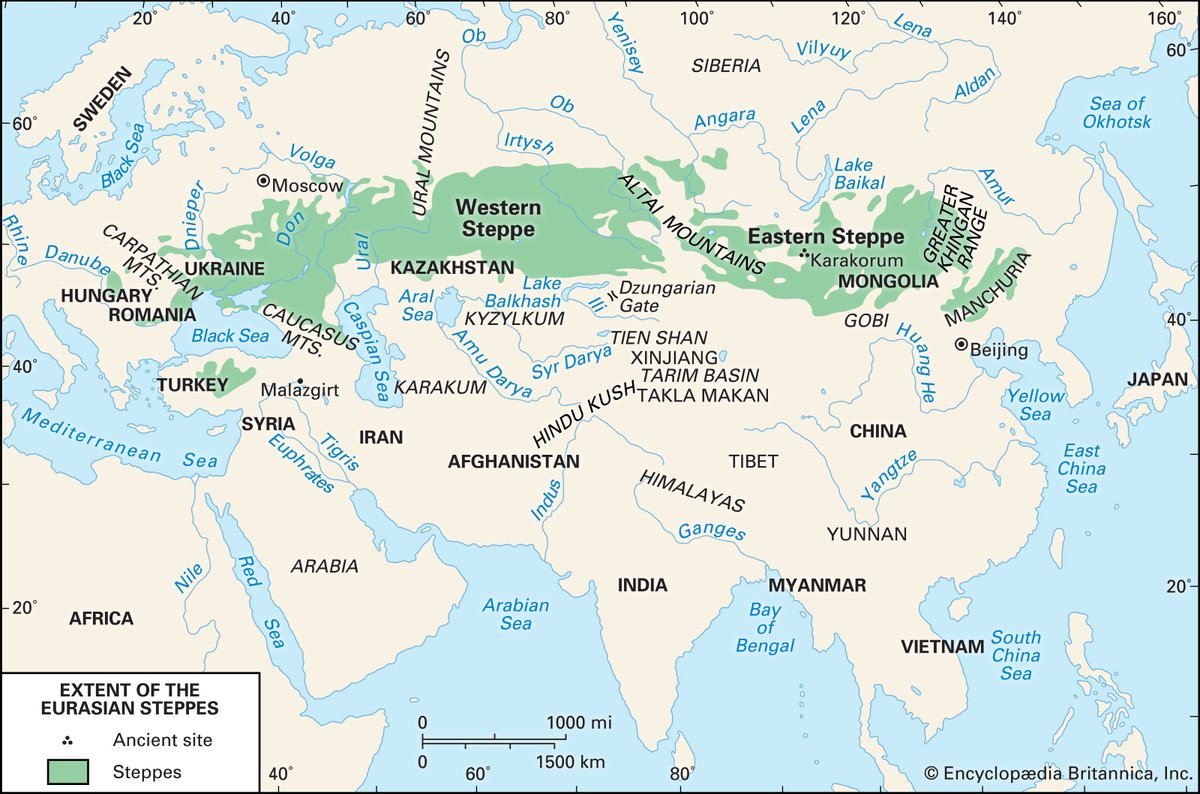
What do these cases show? They show the imperiogenesis effect of the steppe. Those who live near the steppe will be conquered by nomads and will spend much of their history under the nomadic overlords. And these nomadic overlords tend to create very large empires Image
This imperiogenesis argument raises a question of how did nomadic rule impact the conquered. Russian intelligentsia traditionally ascribed Russian imperial despotism to this nomadic legacy. Kinda 'Russians were liberals, but under the Asian rule they picked up the Asian ways' Image
Interestingly enough very similar arguments were raised in China circa 1900. Now we find it self-obvious that the Qing Empire would just transform to Republic and then PRC keeping the same terrirory. But many of early 20th c Han nationalists would disagree Image
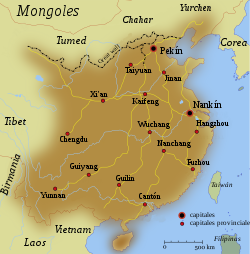
Some of them argued that China would be better off dropping the Qing conquests such as Mongolia, Xinjiang, Tibet and possibly even Manchuria and returning to the old borders of Ming empire. Basically to its Han core, limited by the Great Wall Image
Zhang Binglin went even further. He argued that the entire imperial structure - centralisation, bureaucracy, provincial system are the legacy of the nomads to be dropped. Instead China should break into many independent states - to break with the alien past Image
In the past this was casually admitted by the rulers. In 1957 Zhou Enlai, the first Prime Minister of the People's Republic of China explicitly stated that 'The extensive territory of our country today is the legacy of the Qing dynasty'.= China is so big, because it was conquered Image
Let's summarise. Sedentary people living by the steppe will be conquered. It's not a 'risk', it's the certainty. And they will spend much of their history within huge empires created by the nomadic conquest elites. So one effect of nomadic conquest legacy = very, very big state
What are other, may be less obvious effects? To meditate on this question, next time I will cover the political, institutional and legal culture of one specific nomadic empire - which is now a-historically called the Golden Horde. See you on Monday Image
• • •

Missing some Tweet in this thread? You can try to force a refresh
 

Keep Current with Kamil Galeev

Kamil Galeev Profile picture

Stay in touch and get notified when new unrolls are available from this author!

Read all threads

This Thread may be Removed Anytime!

PDF

Twitter may remove this content at anytime! Save it as PDF for later use!

Try unrolling a thread yourself!

how to unroll video
  1. Follow @ThreadReaderApp to mention us!

  2. From a Twitter thread mention us with a keyword "unroll"
@threadreaderapp unroll

Practice here first or read more on our help page!

More from @kamilkazani

Jul 27
Die Fürstenstadt

There was a Soviet joke:

- What is long, green and smells with sausage?
- Moscow-Tver train

Why? Well, under the USSR provincials had to go shopping to Moscow. Their shops had no food, often very literally. Today we'll learn an expression "supply category"🧵 Image
Under the centrally planned economy it was the state which supplied food to the localities. It would assign each city one of four "supply categories" determining how much food there will be on shelves. Moscow was supplied far better than anyone while cities like Tver - horribly Image
Provincial Soviet cities of the lower supply categories might have no food on the shelves at all. Sometimes very literally. Sometimes they would have only the scraps from the table of the higher status city: like some algae, or the disgusting paste "Ocean" Image
Read 26 tweets
Jul 25
I find this line of argumentation illustrative of the general state of Russian discourse, whether "patriotic" or "liberal". Everything Turkic occupies the same place in the Russian debates as everything Irish in the Imperial British. The Inner Other and the source of all the evil
Reading the Russian-Ukrainian debates with both sides accusing each other of racial impurity and having too many Steppe admixtures or influences, I noticed that their argumentation is mirroring each other. See this Russian nationalist material for example sputnikipogrom.com/history/15934/…
This mutuality and almost exact symmetry of Russian-Ukrainian accusations reminds me of a brilliant thread on the British rule over the Ionian Isles. Bach then the discourse was similar. Brits and Greeks were constantly accusing each other of Irishness
Read 14 tweets
Jul 24
Russian bureaucracy is *massive*. It's also diverse. Judging from my observations, it's less integrated than let's say the apparatus of the U.S. federal bureaucracy. Different agencies have different cultures and operate by different rules. Avoid sweeping generalisations (not🧵)
I see a very common attitude among the Russian pro-war community. It can be summarised this way:

"We expected dumb and incompetent bureaucrats to destroy our economy. But our glorious army would prevail against all odds. It turned out we were wrong. It's the other way around"
Now much of the Z-community argues that they greatly overestimated the Russian army (and the military apparatus). It's very, very much worse than anyone thought before. But they underestimated the economic bureaucracy. Which is very much better than they could have thought
Read 22 tweets
Jul 23
No. Describing Russian regime as "kleptocracy" is misrepresentation. It's not technically false, just absurdly reductionist. Let's be honest, if Putinism was *entirely* about stealing it would not be able to wage wars or produce armaments. And it produces hella lots of them
Keep in mind that public rhetorics work according to the rhetorical logic. Public position doesn't have to be factually accurate, it has to be rhetorically advantageous for it to work. They talk about "corruption" so much because it's rhetorically advantageous. That's it
When you don't have a positive agenda/vision of future or it's too hideous, you talk about "corruption". Examples - Lukashenko or Yeltsin. "Anti-corruption fight" is an ideal topic for a power hungry politician. Because talking about corruption = avoiding the actual conversation
Read 19 tweets
Jul 23
Kremlin may not have a grey cardinal. But it has a bald engineer. The Kinder Egg is a major architect of Putinism. In 1998 he made Putin the FSB Chief. In 2000s he dismantled the regional autonomy imposing the centralised rule. Now he manages Putin's domestic policy and Ukraine🧵
Sergey Kirienko was born as Sergey Israitel in a mixed Russian-Jewish family. After the divorce his mother changed his surname from father's "Israitel" to her own "Kirienko". That could be a pragmatic decision. A boy with a Slavic name would have better career chances in the USSR
In childhood Kirienko lived with his mom in subtropical Sochi. Here he started the bureaucrat career as a Komsomol manager (комсорг) of his high school class. NB: the role of Komsomol in Soviet to post-Soviet transition is underrated. Komsomol management were its main benefactors
Read 35 tweets
Jul 21
Last time I discussed Volgograd - the poorest large city in Russia. Today I read a news about relatives of a Volgograd corporal KIA in Ukraine who are fighting over 12 million rubles of compensation. His aunt illegally appropriated all the money, so other relatives are suing her
That's something that misses from most of discussions. Compensations for soldiers KIA in Ukraine are huge. They are absolutely enormous by the standards of poor Russian province. 12 million rubles is the entire fortune for Volgograd

volgasib.ru/virtual/skanda…
Average salary in the Volgograd oblast is about 38 000 rubles. So 12 million is 315 average monthly salaries (median is lower). In other words, the coffin money amount to 26 average yearly salaries in Volgograd region. Average guy will never ever earn that much money in his life Image
Read 8 tweets

Did Thread Reader help you today?

Support us! We are indie developers!


This site is made by just two indie developers on a laptop doing marketing, support and development! Read more about the story.

Become a Premium Member ($3/month or $30/year) and get exclusive features!

Become Premium

Don't want to be a Premium member but still want to support us?

Make a small donation by buying us coffee ($5) or help with server cost ($10)

Donate via Paypal

Or Donate anonymously using crypto!

Ethereum

0xfe58350B80634f60Fa6Dc149a72b4DFbc17D341E copy

Bitcoin

3ATGMxNzCUFzxpMCHL5sWSt4DVtS8UqXpi copy

Thank you for your support!

Follow Us on Twitter!

:(