Trump’s appeal to liberal Chinese thinkers in China and the United States is rooted in antagonism and trauma, experts say.
On the night of April 25, 2012, a bright yellow phone in Hillary Clinton’s home in northwest Washington rang. An urgent crisis was unfolding in the streets of Beijing, the former secretary of state learned on the secure call, and she had to act fast.
In a move that risked angering China, she authorized an operation to pick up a Chinese dissident and shelter him in the US embassy. “Go get him,” Hillary recalled telling her staff in her 2014 memoir. The decision, she wrote, demonstrated America as a “beacon of freedom and opportunity.”
Eight years later, on August 26, Chen Guangcheng, the Chinese rights activist whom the Obama administration eventually helped escape to America, spoke at the Republican National Convention – and endorsed US President Donald Trump.
“I was speechless,” said Teng Biao, a Chinese human rights activist in the US and Chen’s former lawyer. “There is no common ground between supporting Trump and advocating for human rights.”
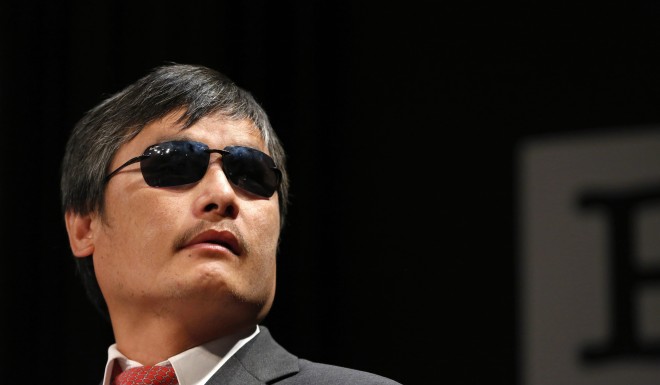
Chen’s high-profile endorsement of Trump has shocked Teng and other Chinese democracy advocates who have accused the president of debasing American democracy and the very values that they have sought to promote in China.
But Chen, a self-taught lawyer who challenged China’s forced abortion and sterilization practices, is hardly an outlier. He’s one of many Chinese critics of Beijing, in both China and the United States, rooting for Trump in the November election.
Their affinity for Trump illustrates the appeal of anti-Beijing rhetoric, which the president has sought to use to differentiate himself from his Democratic rival Joe Biden.
Scholars and observers interviewed by Inkstone said the Chinese liberals’ support of Trump came also from a glorified view of the US and historical trauma that shaped their distaste for left-wing politics, factors that could color perception of their calls for political change in China.
Tough talk sells
Speaking on stage in front of the gold-lit columns of the Andrew W Mellon Auditorium in Washington in August, Chen Guangcheng said the US must stop the Chinese Communist Party’s “aggression,” and Trump was leading the world in this fight.
Chen’s remarks underscored Trump’s success in depicting himself as the more hawkish candidate who would act tough on China.
Trump has called the Democratic nominee “Beijing Biden,” even as Trump himself quietly supported Beijing’s suppression of ethnic minorities in Xinjiang, according to his former national security adviser John Bolton.
And though Trump has blamed China for America’s coronavirus woes, he initially downplayed the danger of the pandemic and publicly praised Chinese President Xi Jinping’s handling of the crisis.
While Trump’s critics may see these episodes as proof of the president’s hypocrisy, Zhang Qianfan, a law professor at Peking University and an advocate for constitutional reform in China, said many Chinese liberals see it as pragmatism.
“Trump didn’t talk as much about human rights issues in China as his predecessors, but he acted on trade imbalances between the US and China and imposed tariffs and sanctions, which are more effective strategies when confronting China,” Zhang told Inkstone, adding that he would vote for Biden if he were American because Trump was “stretching the limits of constitutional democracy.”
While it’s hard to quantify support for Trump among China’s liberal intellectual circles, the interviewees who talked to Inkstone suggest that Trumpers are in the majority.
Prominent Trump supporters include Sui Muqing, a human rights activist who took part in the 1989 Tiananmen Square protest; Liu Junning, a prolific liberal author who was expelled from a government think tank for calling for political reform; and He Qinglian, an economist known for her criticism of media censorship in China.
An increasingly unfavorable view of China in America, fanned in part by the Trump administration, has pushed Trump’s opponent to adopt toughened rhetoric against Beijing.
At the Democratic presidential candidate debate on February 25, Biden called Chinese President Xi Jinping a “thug” and “a guy who doesn’t have a democratic bone in his body.” In September, the former vice-president called China a “serious competitor.”
The rising pressure to take Beijing’s human rights record and trade practices to task has coincided with rising antagonism in the US toward China. A poll in March by the Washington think tank Pew Research Center found 66% of respondents held an unfavorable view of China, up from 47% in 2017 when Trump took office.
Regardless of which candidate becomes the next president, political analysts said US-China relations are likely to remain tense in the coming years.
American beaconism
Scholars of the phenomenon of Trump’s large following among Chinese liberals have attributed it in part to their glorification of the American system.
Yao Lin, a political scientist and author of a paper about pro-Trump Chinese liberals, said they often carried a “beacon complex” and are prone to idolizing the US because of their strong aversion to China’s flaws.
This sanitized view of the US can be illustrated by Chinese liberals’ muted response to issues such as persistent racism in the United States, if not outright denial.
“America’s systemic racism has already been resolved,” said Guo Yuhua, 64, an anthropologist at the prestigious Tsinghua University and an advocate for political reforms in China.
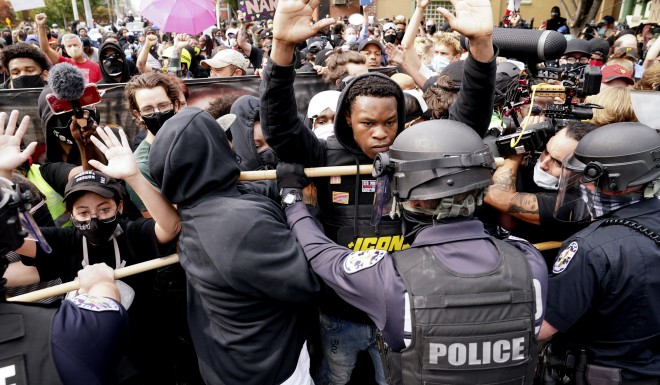
Guo cites the election of Barack Obama as proof that the American system doesn’t prevent African Americans from achieving higher social status.
Lin said that this Chinese view of the US as a “model society” was reinforced by the sharp contrast between a prosperous US and a dilapidated China in the 80s, when the country had just opened its doors to the world.
The Chinese liberal’s beaconism, Lin said, demonstrates an inability to differentiate the American ideals from the Trump administration’s policies, which could undercut their argument for political change at home and elsewhere.
Product of trauma
The Chinese liberals’ support of Trump also came from their rejection of policy on the left that they see as reminiscent of China’s political and economic system, Lin wrote in his paper.
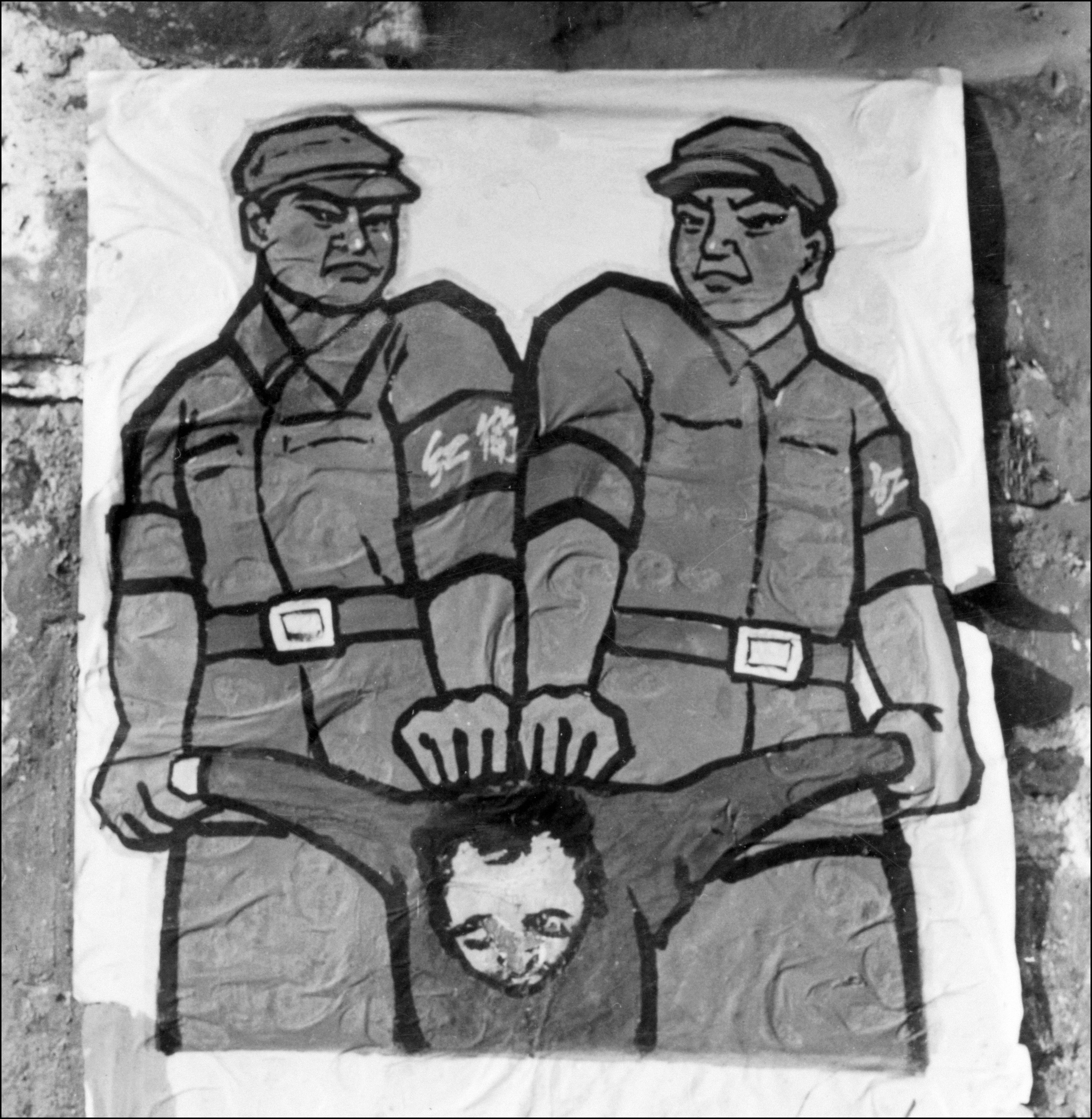
They were traumatized in the decade-long Cultural Revolution, where Maoist gangs persecuted, and sometimes killed, those considered to be anti-socialist or “capitalist roaders.”
Those dark memories made some Chinese liberal intellectuals shudder at any campaigns that carry elements of “socialism” and sowed skepticism among them about government intervention.
This puts them at odds with progressive politicians such as Bernie Sanders and Alexandria Ocasio-Cortez, as well as large segments of the Democratic Party, despite the differences between their advocacies and the violent campaign that roiled China from 1967 to 1977.
Guo Yuhua, the Tsinghua scholar, criticized the progressive push for a more distributive political system, calling it “utopianism.”
“Economic inequality exists in all societies. There is no way that wealth can be equally distributed among people,” she said. “China’s communism revolution has shown the total destruction of that kind of idealism.”
Dr Chenchen Zhang, a lecturer in politics and international relations at the Queen’s University in Belfast, said Chinese liberals often don’t understand “the struggles for racial and social justice in the US” and that lack of knowledge has led them to place “false analogy between those struggles and the Cultural Revolution.”
Giving rise to racism
Chinese liberals who see Trump as a threat to democracy have bemoaned what they say is their peers’ misguided belief in Trump.
Yao Lin, the Yale researcher, told Inkstone that these Trump-supporting Chinese liberals are risking cultivating far-right supporters in China.
“Liberal scholars should have rallied the public to resist racism and nationalism, but now they are supporting Trump and his racist policies, attracting more people to far-right thoughts,” said Yao.
Zhang said the affinity for right-wing politics in the US has given rise to Chinese liberals who are “straightforwardly racists.”
Sui Muqing, the pro-democracy Tiananmen Square protester and a Trump supporter, was accused of being racist after he tweeted in August that Michelle Obama was “uglier than gorillas” after the former first lady campaigned for Biden at the Democratic National Convention.
In a response to Inkstone, Sui rejected accusations of racism and called his critics “politically correct leftists.”
“Many scholars and media are too far left and they have lost their basic sense of judgment,” he said.
Teng Biao, the human rights lawyer, said those Chinese liberals are also damaging their own credibility.
“Many Americans who followed these Chinese activists are disappointed by their support of Trump and tweets of racist content. People can’t get around the fact that these human rights advocates would support racism policies in America,” said Teng.