• Biz & IT
  • Tech
  • Science
  • Policy
  • Cars
  • Gaming & Culture
  • Store
  • Forums
Subscribe
Close
Sign in

Boob beef —

Plant-based burgers will make men grow boobs, Livestock News reports

There's still no evidence to support this claim.

Beth Mole - 12/27/2019, 4:45 PM

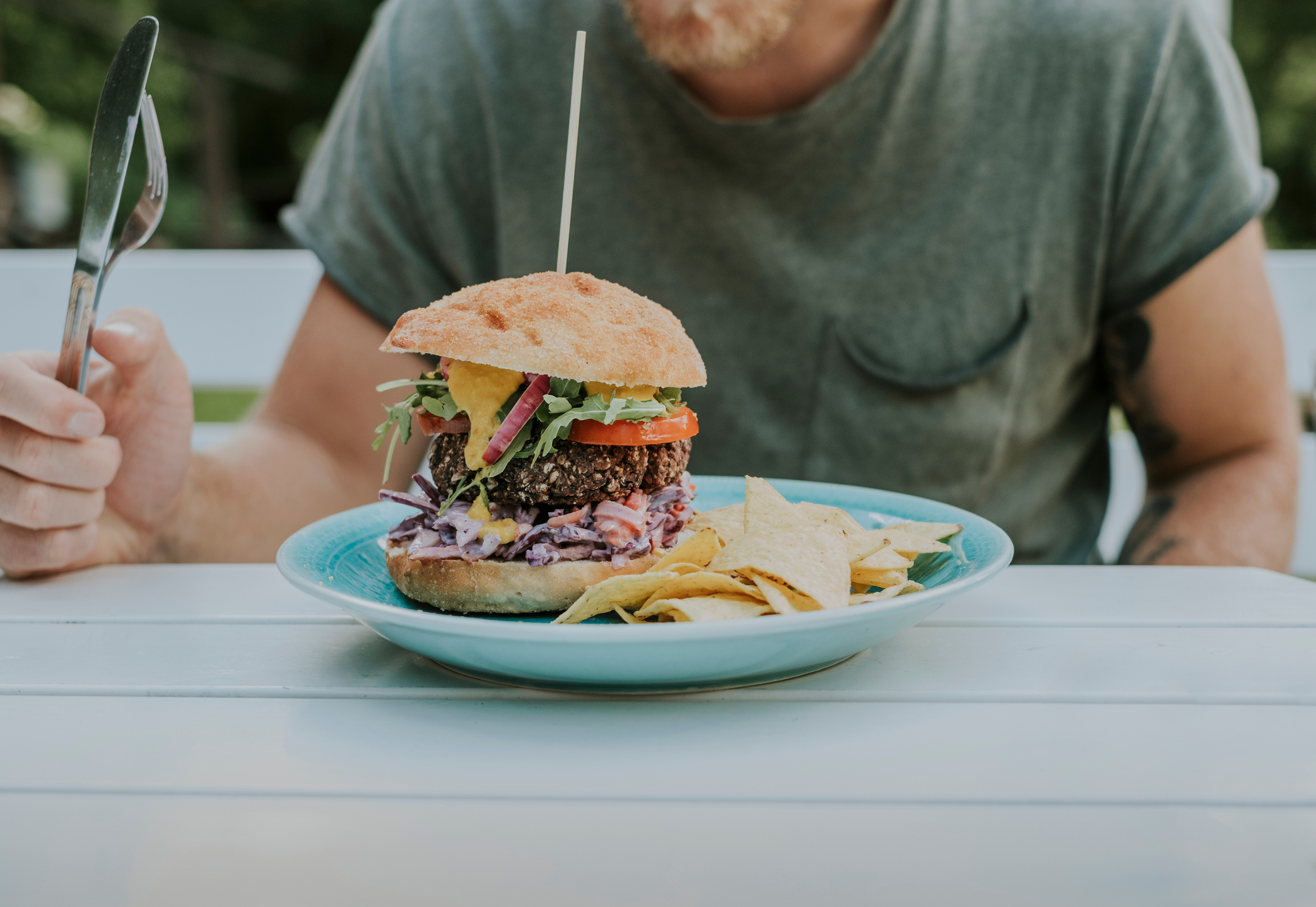
Photo taken in Borl_nge, Sweden
Enlarge / Photo taken in Borl_nge, Sweden
Svante Berg | EyeEm | Getty Images

reader comments

609 with 192 posters participating

Share this story

  • Share on Facebook
  • Share on Twitter
  • Share on Reddit

Amid the growing popularity of the Impossible Burger, Beyond Meat products, and other plant-based meat alternatives, the meat industry has declared war.

Further Reading

Plant-based burgers are “ultra-processed” like dog food, meat-backed ads say
Despite coming out with their own competing alternative and plant-based products, various meat industry-backed efforts have claimed that the vegetarian-friendly foods are harmful and “ultra-processed.” They’ve also compared them to dog food.

Now, there’s a new claim: that they’ll make men grow breasts.

As first noted by The Washington Post, an article labeled as “news” in the trade publication Tri-State Livestock News claims that eating Burger King’s Impossible Whopper—a new faux-beef menu item—could cause men to grow breasts.

Author James Stangle, a doctor of veterinary medicine in South Dakota, orders up some sizzling math, hold the evidence. He writes:

The impossible whopper has 44mg of estrogen and the whopper has 2.5ng of estrogen. Now let me refresh your metric system. There are 1 million nanograms (ng) in one milligram (mg). That means an impossible whopper has 18 million times as much estrogen as a regular whopper. Just six glasses of soy milk per day has enough estrogen to grow boobs on a male. That’s the equivalent of eating four impossible whoppers per day. You would have to eat 880 pounds of beef from an implanted steer to equal the amount of estrogen in one birth control pill.

The Post also notes that conservative news outlets, such as National File and MichaelSavage.com, have parroted the claims. “In short, the Impossible Burger is a genetically modified organism filled with calorie-dense oils that can make a man grow breasts if eaten in sufficient quantity,” Tom Pappert, editor in chief of the National File, concluded.

Plant-based bull

The claim that soy-based foods, like the Impossible Whopper, will “feminize” men is a tired one that has been around for years—and still lacks evidence to back it up.

It’s based on the fact that soy contains a high concentration of isoflavones. These are plant-derived chemicals that can act like estrogen in some tissues in mammals but are much weaker than the real sex hormone.

Further Reading

Fake-meat fans have beef with Big Meat for trying to cut into plant-based market
Soy consumption and its isoflavones have been studied extensively. There have been thousands of studies on its hypothetical benefits and harms to human health—from possibly protecting against certain types of cancers, possibly preventing heart disease, and possibly easing the symptoms of menopause, as well as possibly contributing to poor cognition in older age, and possibly reducing thyroid hormone levels. For general reviews of the findings, click here and here.

Then there are the studies that have looked into whether isoflavones can feminize men and infants and interfere with fertility and development. The general concern goes back decades and has been bolstered by the occasional case report and animal study, which have questionable applicability to human health overall.

In particular, the fear of men growing breasts from soy consumption was highlighted in a 2008 case report in which a 60-year-old man developed benign swelling of male breast tissue and elevated estrogen levels. Doctors reported that the man consumed a whopping three quarts of soymilk a day. That would provide around eight times the intake of isoflavones that have been recorded in older men in Japan and Shanghai who eat soy-heavy diets.

One nutrition researcher noted of the case report that such excessive intake of pretty much any nutritious food could result in untoward effects. For instance, if the soymilk had been fortified with calcium, it would have resulted in an overdose that can cause hypercalcemia.

Overall, analyses of numerous studies have found no evidence that isoflavone consumption in normal ranges affects male hormone levels or sperm and semen quality. Likewise, there is no conclusive evidence that soy-based infant formula has adverse effects, either. The American Academy of Pediatrics has concluded that “soy protein-based formulas are a safe and nutritionally equivalent alternative to cow milk-based formula for term infants whose nutritional needs are not met from breast milk.”

While nutrition researchers say long-term human studies could help provide more concrete conclusions, for now, there's no reason to think eating an Impossible Whopper will increase anyone's cup size.

reader comments

609 with 192 posters participating

Share this story

  • Share on Facebook
  • Share on Twitter
  • Share on Reddit
Ars Technica
close dialog
Join Ars Technica and
Get Our Best Tech Stories
Delivered Straight to your Inbox.
Please enter above
Will be used in accordance with our
Privacy Policy
close dialog
Beth Mole Beth is Ars Technica’s health reporter. She’s interested in biomedical research, infectious disease, health policy and law, and has a Ph.D. in microbiology.
Email beth.mole@arstechnica.com // Twitter @BethMarieMole

Channel Ars Technica

Teach the Controversy: Dowsing

Ars Technica's John Timmer explains why dowsing (often called divining or witching) is nothing more than pseudoscience.

  • Teach the Controversy: Dowsing
    Teach the Controversy: Dowsing
  • Teach the Conspiracy: GMOs
    Teach the Conspiracy: GMOs
  • How Does That Work?: Rising sea levels
    How Does That Work?: Rising sea levels
  • Teach the Controversy: Flat Earthers
    Teach the Controversy: Flat Earthers
  • How Does That Work?: Radiometric Dating
    How Does That Work?: Radiometric Dating
  • How Does That Work?: The Large Hadron Collider
    How Does That Work?: The Large Hadron Collider
  • What "First Man" tells you about Neil Armstrong, and what it doesn't
    What "First Man" tells you about Neil Armstrong, and what it doesn't
  • Delta V: The Burgeoning World of Small Rockets, Paul Allen's Huge Plane, and SpaceX Gets a Crucial Green-light
    Delta V: The Burgeoning World of Small Rockets, Paul Allen's Huge Plane, and SpaceX Gets a Crucial Green-light
  • Inside the International Space Station with Scott Kelly
    Inside the International Space Station with Scott Kelly
  • Chris Hadfield explains his 'Space Oddity' video
    Chris Hadfield explains his 'Space Oddity' video
  • Astronaut Scott Kelly teaches orbital mechanics with Kerbal Space Program
    Astronaut Scott Kelly teaches orbital mechanics with Kerbal Space Program
  • Go Inside the Aerodrome, Where the Future of Flight Takes Shape
    Go Inside the Aerodrome, Where the Future of Flight Takes Shape
  • The soft future of robotics
    The soft future of robotics
  • See the Gear the CDC's Disease Detectives Use in the Field
    See the Gear the CDC's Disease Detectives Use in the Field
  • Ars Technica interviews Peggy Whitson
    Ars Technica interviews Peggy Whitson
  • The Ice Age Secrets of White Sands National Monument
    The Ice Age Secrets of White Sands National Monument
  • InSight Landing On Mars
    InSight Landing On Mars
  • Talking Space and Robots with NASA's Terry Fong
    Talking Space and Robots with NASA's Terry Fong
More videos
← Previous story Next story →

Related Stories

    Sponsored Stories

    Powered by

      Today on Ars

        • Store
        • Subscribe
        • About Us
        • RSS Feeds
        • View Mobile Site
        • Contact Us
        • Staff
        • Advertise with us
        • Reprints

        Newsletter Signup

        Join the Ars Orbital Transmission mailing list to get weekly updates delivered to your inbox.

        Sign me up →

        CNMN Collection
        WIRED Media Group
        © 2020 Condé Nast. All rights reserved. Use of and/or registration on any portion of this site constitutes acceptance of our User Agreement (updated 5/25/18) and Privacy Policy and Cookie Statement (updated 5/25/18) and Ars Technica Addendum (effective 8/21/2018). Ars may earn compensation on sales from links on this site. Read our affiliate link policy.
        Your California Privacy Rights
        The material on this site may not be reproduced, distributed, transmitted, cached or otherwise used, except with the prior written permission of Condé Nast.
        Ad Choices

        // // //