
The Forbidden Rice
Despite being less popular than brown rice or wild rice, black rice, known as forbidden rice, is an ancient grain that has even more impressive health benefits than most other closely related rice varieties.
Not only is it the type of rice that is richest in powerful disease-fighting antioxidants, but it also contains dietary fiber, anti-inflammatory properties, and has the ability to help stop the development of diabetes, cancer, heart disease and even weight gain.
Black rice has been eaten in regions of Asia for thousands of years; in fact for centuries it was reserved for only Chinese royalty. Today this type of rice is picking up in popularity and popping up in more health food stores across the US, Australia, and Europe, as people discover the numerous health benefits that whole grain black rice has to offer.
Black Rice / Forbidden Rice Nutrition
One serving of black or forbidden rice contains only around 160 calories, but offers a very high amount of flavanoid phytonutrients, a good source of important fiber, substantial mineral content including iron and copper, and even a good source of plant based protein. Just the outside hull of the grain has one of the highest levels of anthocyanin antioxidants of any food!
A one-half cup serving of cooked black rice, or about ¼ cup uncooked, contains approximately (in daily recommended values):
- 160 calories
- 1.5 grams of fat
- 34 grams of carbohydrates
- 2 grams of fiber
- 5 grams of protein
- 4% DV for iron
Wondering how black rice compares to other rice varieties? Here’s how the different types of rice differ in terms of nutrient content when we compare an 100gm serving of each kind:
- Polished white rice – contains 6.8 protein, 1.2 iron, 0.6 fiber.
- Brown rice: 7.9 protein, 2.2 iron, and 2.8 fiber.
- Red rice: 7.0 protein, 5.5 iron, and 2.0 fiber.
- Black rice: 8.5 protein, 3.5 iron, 4.9 fiber, and the highest amount of antioxidants of any rice variety.
You can see that black rice contains the highest amount of antioxidants, protein and dietary fiber of all rices varieties; plus black rice is also a good source of iron, which can be hard to get for plant based eaters who rely on grains and legumes for protein.
And although scientists are finding that some rice contains the heavy metal arsenic, you can perform simple cooking tricks to avoid low-level arsenic poisoning from rice. Cooking rice more like pasta — in 6 to 10 parts water per one part rice — drastically reduces arsenic levels. (1) UK researchers also found cooking rice in a coffee pot reduces arsenic by up to 85 percent. (2)
Health Benefits of Black Rice
1. Full of Antioxidants
The bran hull of black rice, which is the outermost layer of the rice grain, contains one of the highest levels of the antioxidant anthocyanin found in any known food.
Black rice has a deep black or purple color, which is an indication of its high antioxidant properties, similarly to how deeply colored antioxidant berries like blueberries, raspberries, and cranberries appear.
Sources show that the anthocyanin content of black rice is higher than any other grain, including brown rice, red rice, red quinoa, or other colored whole grain varieties.
Anthocryanin has the ability to help prevent a myriad of common but serious illnesses according to numerous studies that have looked at the benefits of this antioxidant.
Anthocyanin antioxidants have been correlated with: helping to prevent cardiovascular disease, protecting against cancer that can be caused by free radical damage, improving brain function, reducing inflammation and more (3).
Nutrients are lost from whole grains when the outer layer, the hull and bran, are removed. Only whole grains which include all of their naturally occurring parts retain their antioxidants, vitamins, minerals, and fiber. White rice, in addition to other refined grains, lose these beneficial properties during the milling process.
While whole grain brown rice and red rice also contain beneficial antioxidants, only black rice contains anthocyanin. Additionally, black rice also contains important antioxidant Vitamin E, which is useful in maintaining eye, skin, and immune health in addition to other important functions.
2. Protects Heart Health
Studies have shown that black rice decreases dangerous atherosclerotic plaque formation in the arteries, which is very important for keeping arteries clear and preventing heart attacks and stroke (4).
The specific anthocyanins phytochemicals found in black rice help to maintain healthy cholesterol levels by reducing total cholesterol, LDL “bad” cholesterol, and total triacylglycerol concentrations. These are 3 factors commonly involved in cardiovascular disease (5).
Considering how common heart disease is in almost every western developed nation today, this is one reason why consuming healing foods like black rice is so important.
3. Can Help Detoxify the Body
Studies have demonstrated that consuming black rice can help to detox the body and cleanse the liver of harmful toxic build-up thanks to the rice’s high antioxidant content.
In a recent animal study, the antioxidant status of blood, the liver, and one of the main arteries, the aorta, were evaluated in rabbits that were either fed refined white rice or black rice.
Results showed that the rabbits fed black rice experienced less oxidative stress (also called free radical damage), contained more antioxidants in their blood, experienced detoxification in the liver, and also had reduced plaque build-up in the arteries (6).
The phytonutrients found in black rice help the body to reduce inflammation and to cleanse the body of harmful substances that can contribute to a wide range of conditions.
4. Good Source of Fiber Which Improves Digestive Health
Black rice and other whole grain rice varieties- like wild, red, or brown rices- have a similar amount of fiber, with about 2-3 grams per half cup serving. The fiber in black rice helps to prevent constipation, bloating, and other unwanted digestive symptoms. Fiber binds to waste and toxins within the digestive tract, helping to pull them out and to contribute to regular bowel function.
The dietary fiber found in black rice can also importantly help you to feel full after eating and to stay satisfied for a longer period of time between meals, potentially aiding in weight loss.
Studies have found that a diet high in dietary fiber from whole grain rice varieties is protective against obesity, heart disease, diabetes, and digestive disorders like irritable bowel syndrome (IBS) (7). This is because fiber has the important job of clearing the body of toxins, helping to reduce inflammation and to clear the arteries as it removes waste and plague from the body (8) (9). Black rice can also help prevent or cure cases of diarrhea, since fiber adds bulk to your stool.

5. A Naturally Gluten Free Grain
Like other rice varieties, black rice naturally contains no gluten, the protein found in all wheat, rye, and barley products. It’s estimated that 1 in 7 people are sensitive to gluten- whether they are aware of it or not- but still test negative for Celiac Disease.
After eating something with gluten in it, those with a gluten sensitivity suffer many of the same symptoms as those with Celiac Disease (a confirmed allergy to gluten), including bloating, constipation, diarrhea, nutrient deficiencies, and an increased risk for developing leaky gut syndrome. Consuming black rice in place of not only refined grains and processed flour products, but also all wheat, barley, and rye containing foods- even those that are whole grain- can help eliminate digestive problems associated with eating gluten for many people.
6. Helps Slow Down Absorption of Sugar in the Blood, Helping to Prevent Diabetes
Studies have shown that when it comes to the risk of developing diabetes and even obesity, consuming whole grains is much more beneficial and preventative than consuming refined carbohydrates (10).
Compared to eating processed carbohydrates which are stripped of their fiber, antioxidants, and other nutrients that help to slow down the absorption of sugar in the blood stream, black rice is a much healthier option.
Black rice contains the entire bran of the grain where the fiber is stored, and fiber is able to help glucose (sugar) from the grain to be absorbed by the body over a longer period of time.
When researchers examined white and brown rice consumption in relation to type 2 diabetes risk, they found that white rice was more likely to contribute to insulin resistance and diabetes risk (11).
The substitution of whole grains, including brown or black rice, in place of white rice, white bread, pasta, and sweetened cereals may lower the risk of type 2 diabetes and other complications, in addition to keeping your weight in check and your energy levels balanced.
 7. Better at Preventing Obesity than Refined Grains
 7. Better at Preventing Obesity than Refined Grains
 It is very important for those with pre-diabetes, diabetes, or other forms of metabolic syndrome and insulin resistance to consume 100% whole grains, as opposed to processed “white” types that lack fiber.
The same can be said for those who struggle with losing weight, since the fiber and nutrients in whole grain rice helps to shut off hunger signals and prevents overeating. Research has shown that whole grain rice varieties can help prevent insulin resistance that is related to an increased risk for obesity (10).

The History of Forbidden Rice
Black rice is commonly referred to as “forbidden rice” because of its long and interesting history. As you probably know, all rice varieties are a substantial and important crop in the diet of nearly every Asian population, and have been for thousands of years. In China, black rice has been known for being good for the kidneys, stomach and liver since ancient times.
Thousands of years ago in ancient China, noble Chinese men took possession of every grain of the black forbidden rice, banning its consumption among anyone who was not royalty or very wealthy.
The crop was only grown in very limited quantities, closely monitored, and reserved for only the highest elite class.The common Chinese people were not allowed to grow or consume this black forbidden rice, which led to its unique name that it still carries with it today.
Black rice was actually only first introduced to the United States in the 1990’s, although it’s been enjoyed in other parts of the world for many more years. Today it is no longer forbidden, but still is grown in relatively small amounts especially compared to other types of widely available rice varieties.
Where to Purchase Black Rice
The popularity of black rice and knowledge about its numerous health benefits is growing in western nations, including in the U.S, but it still remains much less popular than less healthy white rice and even similar brown rice.
At this time, you can likely find it in most health food stores and large gourmet food markets, in addition to Asian supermarkets. The hope is that as more people learn about black rice’s benefits and demand it, black rice will probably become more widely available at larger chain supermarkets and restaurants.
Because the mentioned health benefits of black rice are found in the bran of the rice, you always want to purchase 100% whole grain black rice. You can be sure you’re getting the correct type by checking the ingredient label and looking for the words “whole black rice” as the first, and ideally the only, ingredient on the list.
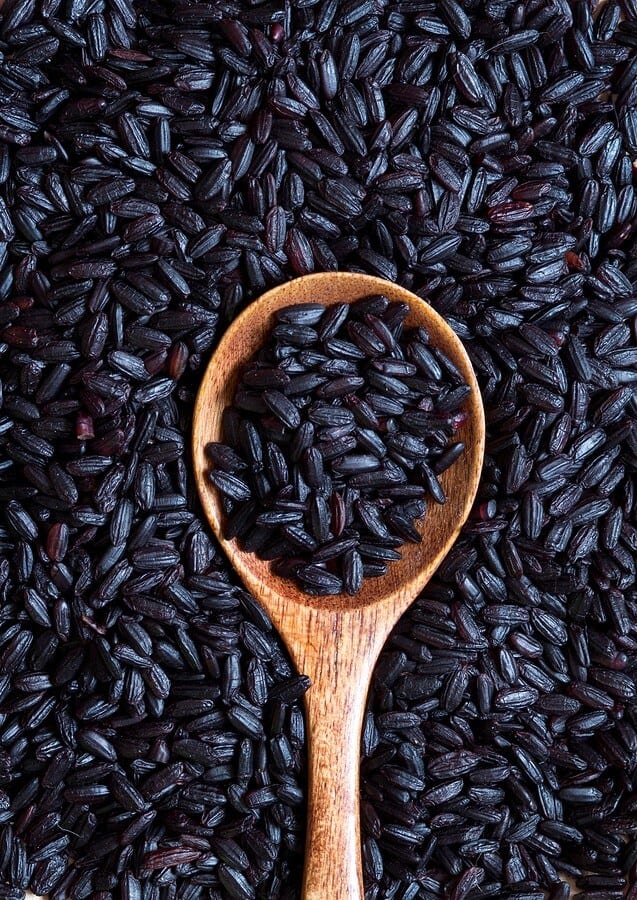
How to Cook Black Rice
Black rice comes from the same plant family as other colored rices and includes several varieties, such as Indonesian black rice and Thai jasmine black rice. The different types of black rice contain very similar health benefits and all have a mild, nutty taste which is similar to the taste of more familiar brown rice.
Because it is unrefined and denser than white rice, black rice takes longer to cook. The best results can be achieved by first soaking your black rice for at least one hour before cooking it, but preferably for several hours.
If you can plan ahead of time and soak your rice, you will cut down on the amount of cooking time required and also make the nutrients in the rice more absorbable.
After soaking your rice, rinse the rice clean and then place it on the stove top with two cups of water for every one cup of rice. Boil the rice for at least one half hour if you did soak the rice, and for one hour if you didn’t.
Check the texture of the rice after this time to see if it is chewy and cooked through; if not, keep boiling until it reaches the texture you’re looking for.
Black Rice Recipes
Not sure what to do with black rice? It makes a delicious side dish all on its own with some salt and pepper, but can also be added to stir fries, soups and stews, or sprinkled on top of a salad. Add cooked black rice to homemade veggie burgers, in burritos instead of white rice, or served with fresh roasted vegetables and your favorite source of protein.
Some people even chose to grind the dry rice kernels in a coffee grinder or food processor and then use the ground rice to bake with, coat fish with, or just to sprinkle over other foods for an extra antioxidant boost.
Black rice has been used in traditional Chinese desserts and snacks to make a dessert porridge, black rice cakes or breads, noodles, and more. So as you can see, there are plenty of options for adding some to your diet.
Another interesting application for black rice is to use it as a natural food coloring agent. Currently some small manufacturers add black rice either ground or in extract form to beverages and foods in order to avoid using artificial dyes and ingredients which can be harmful in numerous ways.
Try using black rice in place of brown rice in these healthy recipes:
Rice, Tomatoes and Basil Recipe
Serves: 4 Total Time: 45 minutes
INGREDIENTS:
- 1 C black rice (soaked overnight)
- 2 tsp Sea Salt
- ¼ C Coconut Vinegar
- 2 tsp honey
- 1 tbsp coconut oil
- Black Pepper to taste
- 1 lb heirloom tomatoes
- 1 C basil leaves, chopped
DIRECTIONS:
- Bring 2 C water to a boil and add the rice and salt. Return it to a boil and simmer for 30-40 minutes until rice is cooked and the water is evaporated.
- Whisk together the vinegar, honey, coconut oil, salt and pepper. Pour over the rice. Add the tomatoes and basil. Mix and serve.

Photo: Rice Tomatoes & Basil Recipe / Dr. Axe
Rice Salad Recipe
INGREDIENTS:
- 3 cups cooked black rice
- 1 apple, diced
- 1 red bell pepper, chopped
- 2 celery stalks, chopped
- ½ cups walnuts, chopped
- 3 tbsp parsley, chopped
- ¼ cups Coconut Vinegar
- 3 Tbsp coconut oil
- Sea Salt and Black Pepper to taste
DIRECTIONS:
- In a bowl, combine cooked rice with all ingredients. Mix lightly and serve.

Photo: Rice Salad Recipe / Dr. Axe
You can also try subbing in black rice for wild rice in this Quinoa Salad with Dark Cherries and Kale recipe, or using black rice in this Rice Pudding Recipe in place of cauliflower.
Concerns with Black Rice
Although black rice contains beneficial nutrients, grains are usually most beneficial when they are eaten in moderation as part of an otherwise healthy and well-rounded diet.
Even though black rice does contain more fiber and antioxidants than refined grains or carbohydrate foods, all grains still have the ability to effect blood sugar levels, so keeping an eye on portion sizes of all grains is always a good idea.
It also helps to consume grains like black rice with a source of healthy fat and some protein. This further delays the time it takes the carbohydrate’s sugars to impact blood glucose levels.
Ancient, whole grains like black rice can play a healthy part in someone’s diet, as long as they are mindful of how much they consume and also make sure to get plenty of filling protein and healthy fats from other food sources that are better suppliers of these important macro-nutrients.
From the sound of it, you might think leaky gut only affects the digestive system, but in reality it can affect more. Because Leaky Gut is so common, and such an enigma, I’m offering a free webinar on all things leaky gut. Click here to learn more about the webinar.









I love black rice. I buy it at Whole Foods bulk area, it’s cheaper there. Please note, I’ve never soaked it. I cook it in organic broth. I bring it up to a boil, turn it down to low simmer (#3 on my electric stove), put the lid on and cook it for 25-30 minutes without removing the lid. Really simple. The texture is great. I just put salt and pepper on it, toasted sesame oil is fantastic on it! Hope this helps someone. Thx Dr. Axe for the fabulous article on the benefits.
Is black rice OK to eat if you have SIBO, as I believe other types of rice are not?
What about antinutrients that grains are known to have? The reason why white rice is recommended over other types of rice is that cooked white rice is not known to have toxins or antinutrients (according to Paul Jaminet), yet it provides the needed glucose.
Would appreciate further detail about arsenic levels if possible. I know the research shows that brown rice has significantly higher levels
of arsenic than white rice (that is why I switched), and also that arsenic levels can be lower depending on the soil it is grown in. The research came from Consumer Reports but I do not remember them mentioning black rice. Do you know if black has lower levels than white or brown, or
anything else of significance? If I find out arsenic levels are lower, then I would switch in a minute!!. Thanks for your time. Great article!
Like Chandra, I’ve also been reading about arsenic levels in rice, that it is prevalent in the bran, and that proper sourcing helps somewhat. Not sure I understand what you’re saying about organic v inorganic. Could you please be a bit more specific?
I was wondering if black rice should be avoided by Type 2 diabetics. Rice is a problem for me, since it raises my glucose number. This looks interesting to me and I would like to try it.
I would consult with your physician
I’m just starting on a gluten free food plan, and your web site was recommended. Thank you for all your great information. I suffer from very bad pollen allergies, and diarrhea and fatigue., and bloating. I am 81 years old in good health otherwise. I think these changes in my diet will help.
I can’t find organic black rice, but have heard that rice in general is supposed to be something that is important to get organic. Does anyone know if different varieties of rice are more or less necessary to get organic? Thanks.
I’m w/ Chaundra. I’ve read a number of articles about the high levels of arsenic being found in even organic rice and that you really need to pay attention to where the rice is from/grown. Seems like I remember that most rices from CA weren’t too bad, but those from Texas, China and a number of other places needed to be avoided. I think this is a great article, but I think info about this particular topic should have been included. I would love to know what the findings have been as far as arsenic levels in black rice and where the cleanest sources are.
Is phytic acid high in forbidden rice? Dose soaking hep?